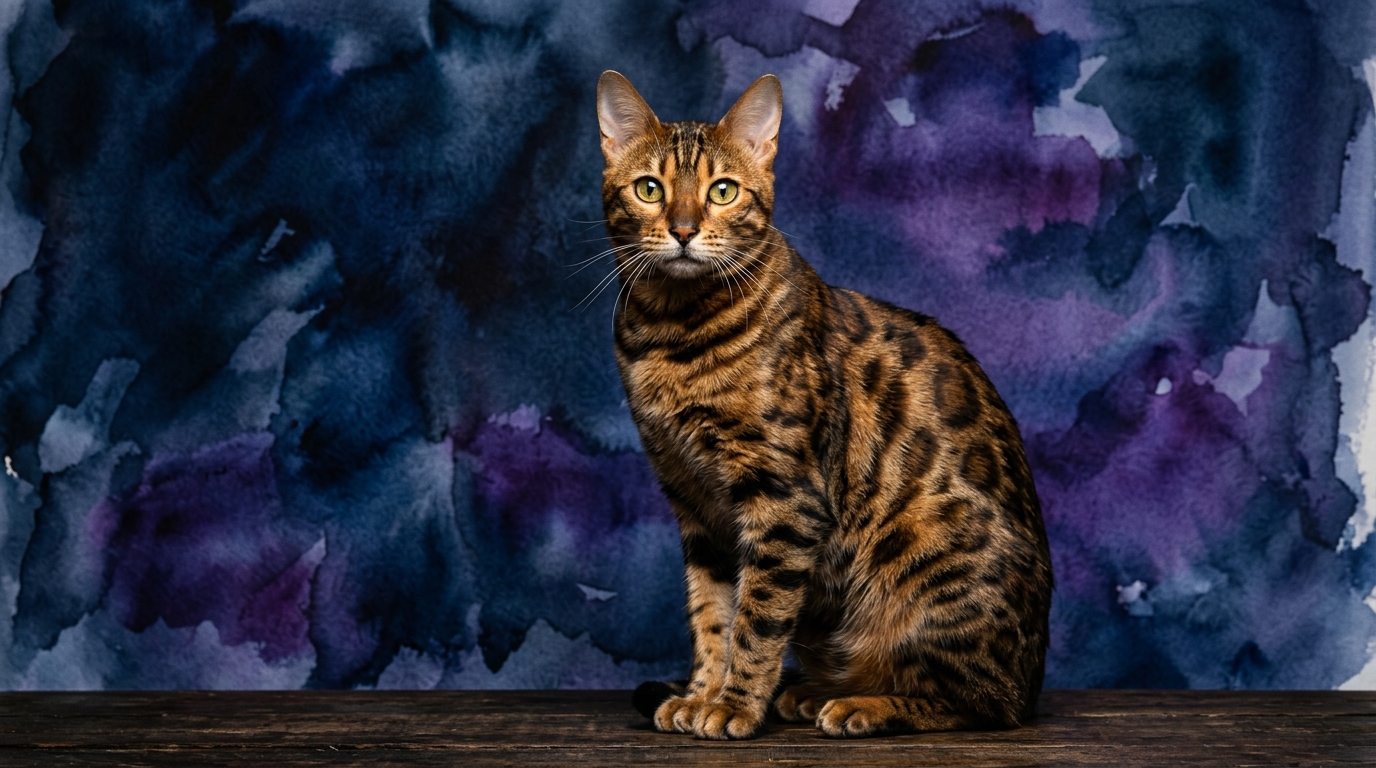
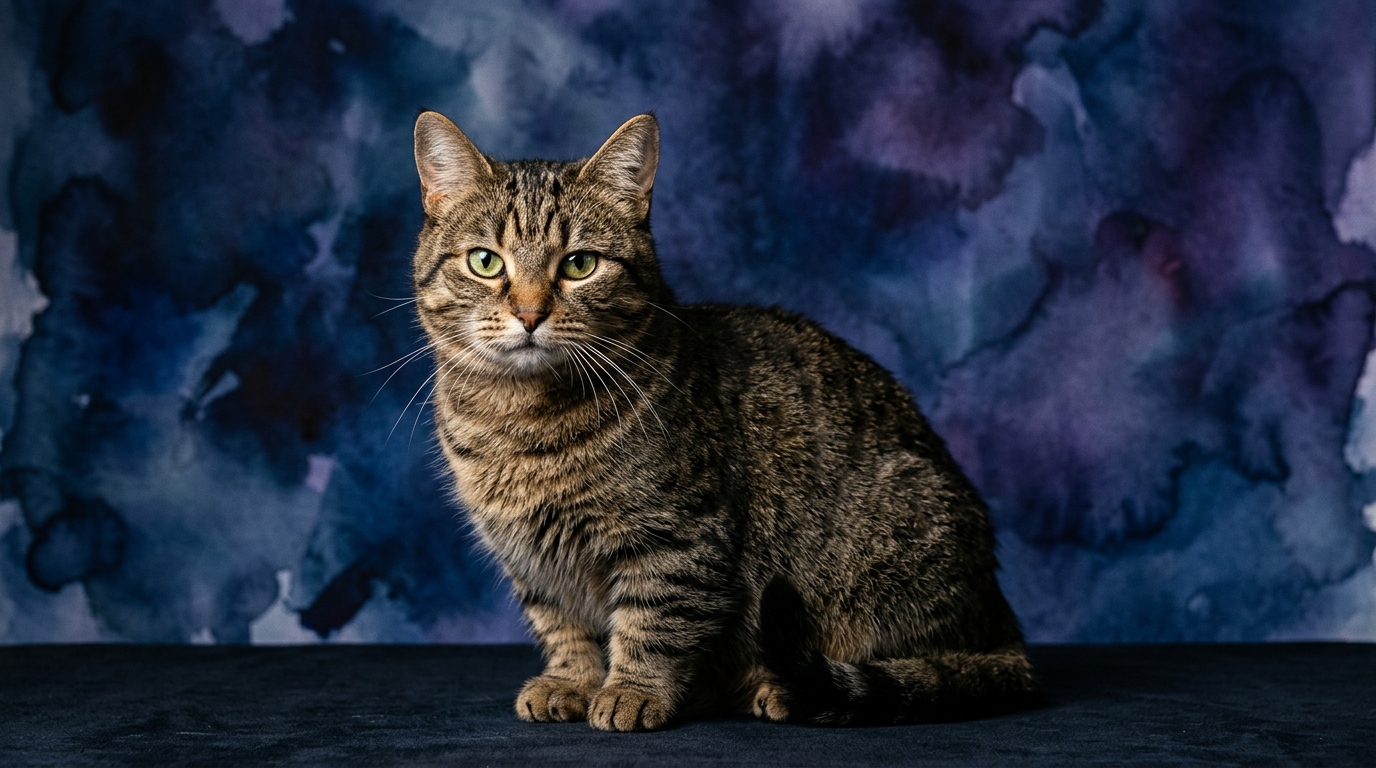
Side-by-side IQ profile
The Cosmic Pet Pet IQ Lab provides a granular look at feline cognitive dimensions, offering a clear contrast between the Bengal and the Munchkin. For the Bengal, problem Solving registers a remarkable 5/5, indicating an exceptional capacity for navigating complex challenges and devising novel solutions. Training Speed is rated 4/5, suggesting these cats grasp new commands and routines with impressive alacrity. Their social Intelligence, at 4/5, points to a strong ability to interpret and respond to human cues and establish intricate relationships. An Instinctive Drive of 5/5 underscores their deeply ingrained predatory behaviors and exploratory urges, while Memory, also at 5/5, highlights their superb recall of experiences, learned pathways, and routines.
In contrast, the Munchkin presents a more moderate cognitive profile across the board. Their problem Solving capability stands at 3/5, signifying a competent but less inventive approach to obstacles. Training Speed is likewise 3/5, meaning they are capable of learning, though perhaps at a more measured pace than their Bengal counterparts. Social Intelligence also scores 3/5, indicating they are amenable companions who engage adequately with their human families without exhibiting the same depth of social interpretation. An Instinctive Drive of 3/5 suggests a present but less intense urge for hunting and exploration, making them generally less demanding in terms of environmental enrichment. Finally, their Memory is also rated 3/5, implying a solid but not extraordinary ability to retain information over time.
Where Bengal wins cognitively
The Bengal's cognitive strengths distinctly outshine the Munchkin's in areas demanding high mental agility and sustained engagement. Their 5/5 problem Solving score means a Bengal is more likely to figure out how to open child-proof latches, manipulate puzzle feeders designed for larger animals, or even devise strategies to access forbidden areas. This isn't just about mischief; it reflects a genuine drive to understand and interact with their environment at a complex level. Coupled with a 5/5 in Memory, Bengals demonstrate a remarkable capacity to recall intricate sequences of events, remember where specific toys are hidden, or even retain learned behaviors over long periods without reinforcement. This allows them to build a complex mental map of their territory and past experiences. Furthermore, their 5/5 Instinctive Drive translates into a relentless curiosity and a powerful urge to hunt and explore, making them particularly adept at engaging with interactive toys that simulate prey, or navigating novel environments with confidence and purpose. This strong drive, combined with superior problem-solving, means they will persistently work at challenges until they succeed, often outmaneuvering or outthinking their human companions in the process.
Where Munchkin wins cognitively
While the Munchkin's cognitive scores are generally lower than the Bengal's, these ratings don't signify a deficit but rather a different, often equally desirable, cognitive orientation. The Munchkin's "wins" lie in their suitability for a less demanding, more placid lifestyle, where their moderate cognitive profile contributes to an easier domestic integration. Their 3/5 Instinctive Drive, for example, means they are less compelled by intense hunting urges or boundless exploration compared to a Bengal. This can be a significant "win" for owners seeking a cat less prone to scaling curtains, incessantly demanding play, or attempting daring escapes. Their 3/5 in problem Solving and Training Speed suggests they are less likely to actively seek out and exploit complex household challenges, leading to a generally more predictable and less disruptive presence. This cognitive baseline allows Munchkins to thrive in environments where constant high-level mental stimulation isn't paramount, making them content with simpler forms of play and interaction. Their 3/5 Social Intelligence ensures they are amiable and affectionate companions, perfectly capable of forming strong bonds and understanding basic human interactions without requiring the intricate social decoding that a Bengal might engage in. In essence, the Munchkin's cognitive profile is a "win" for those who value a gentle, less cognitively intense companion that integrates smoothly into a relaxed home setting.
Which is easier to train and why
Determining which breed is "easier" to train depends heavily on the training goals and the owner's approach. The Bengal, with a Training Speed of 4/5 and problem Solving at 5/5, will typically pick up complex commands, tricks, and leash training much faster than a Munchkin. Their quick grasp of concepts and their ability to connect actions with rewards make them excellent candidates for advanced training. However, their 5/5 Instinctive Drive means they can also be easily distracted by environmental stimuli, and their strong will might lead to resistance if they don't perceive the training as engaging or rewarding. Training a Bengal often requires creativity, consistency, and the ability to channel their substantial energy and predatory instincts into productive activities.
The Munchkin, with a Training Speed of 3/5 and problem Solving also at 3/5, will learn at a more deliberate pace. Simple commands like "sit" or coming when called are certainly achievable, but more intricate tricks might take longer to master and require more repetition. Their lower Instinctive Drive, however, can make them easier to manage during training sessions, as they are less likely to be sidetracked by every rustle or shadow. They generally exhibit less resistance and are more amenable to routine, making them suitable for owners who prefer a steady, patient approach to training. While they may not perform complex sequences with the same flair as a Bengal, their eagerness to please and moderate cognitive demands can make for a more straightforward, less challenging training experience for the average pet owner.
Which suits active owners vs relaxed owners
The cognitive profiles of these two breeds offer a clear distinction in their suitability for different owner lifestyles. The Bengal, with its 5/5 Instinctive Drive, 5/5 problem Solving, and 4/5 Training Speed, is an ideal match for active owners who thrive on engagement and can provide consistent mental and physical stimulation. These cats need puzzle toys, climbing structures, regular interactive play sessions that mimic hunting, and potentially even leash walks or agility training to satisfy their robust cognitive and physical needs. An owner who enjoys teaching tricks, playing fetch, or simply spending significant time engaging their cat's sharp mind will find a Bengal endlessly rewarding. Without sufficient outlets, a Bengal's high drive and problem-solving abilities can manifest as destructive behaviors or incessant demands for attention, making them a poor fit for a relaxed, hands-off owner.
Conversely, the Munchkin, with its moderate scores across all cognitive dimensions (3/5), is perfectly suited for more relaxed owners or those with less time for intense, daily interactive play. Their lower Instinctive Drive means they are generally content with simpler forms of entertainment and do not possess the same relentless need for high-octane stimulation. While they still enjoy play and companionship, they are less likely to become bored or destructive if left to their own devices for periods. Their moderate problem-solving skills mean they won't constantly be trying to outwit their environment, and their social intelligence ensures they are affectionate and pleasant companions without requiring overly complex social interactions. A Munchkin fits well into a calm household where a charming, playful, and relatively low-maintenance companion is desired.
The Verdict
Opt for a Bengal if you desire a highly interactive, problem-solving companion that will thrive with extensive mental and physical stimulation and an owner committed to channeling their substantial drive.
Choose a Munchkin if you prefer a more placid, charming companion whose moderate cognitive demands align perfectly with a relaxed home environment and a preference for simpler, affectionate interactions.
🧠 Find Your Pet's IQ Score
Our Pet IQ Lab assessment covers 25+ tests across 5 cognitive dimensions — personalized to your breed.
Take the Full IQ Test →Frequently Asked Questions
Are Bengals good family cats?
Bengals can be wonderful family cats, especially for active families who understand their need for engagement. Their 4/5 social intelligence means they form strong bonds, but their 5/5 instinctive drive requires consistent playtime and mental stimulation to prevent boredom and potential mischief. They thrive when their curiosity and energy are positively channeled.
Do Munchkins need a lot of mental stimulation?
Munchkins have a moderate need for mental stimulation, rated 3/5 for problem-solving and instinctive drive. While they enjoy playtime and enrichment, they are generally content with less intense and frequent engagement compared to more cognitively demanding breeds. Simple toys and regular affection usually suffice to keep them happy.
Can Munchkins learn tricks?
Yes, Munchkins can certainly learn tricks, though perhaps at a more measured pace than some other breeds, given their 3/5 training speed. With patience, positive reinforcement, and consistent practice, they can master various commands and simple tricks, making training a rewarding experience for both cat and owner.