Side-by-Side IQ Profile: Basenji vs. Afghan Hound
The Cosmic Pet Pet IQ Lab offers a unique lens to examine the nuanced intelligence of the Basenji and Afghan Hound, revealing both common ground and stark contrasts across five key dimensions.
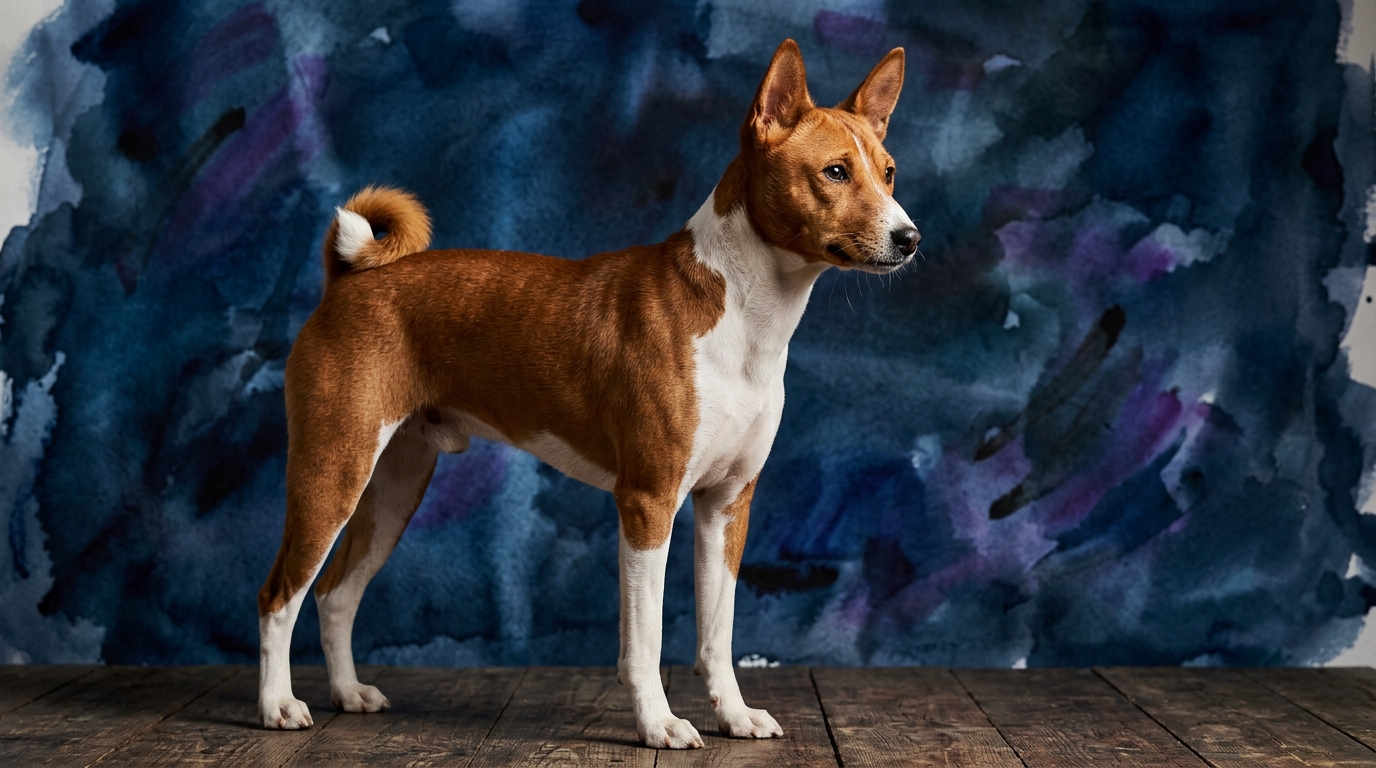
The Basenji, with a Coren rank of #78, is noted for its exceptional Problem Solving ability, scoring an impressive 5 out of 5. This indicates a high capacity for independent thought and figuring out complex situations, often devising clever strategies to achieve its goals. However, its Training Speed is a modest 1 out of 5, suggesting that while it can solve problems, it doesn't always readily comply with human commands. Social Intelligence for the Basenji sits at a 3 out of 5, implying a moderate understanding of social cues and a capacity for forming bonds, though often on its own terms. Its Instinctive Drive is a perfect 5 out of 5, reflecting a powerful urge to hunt, chase, and follow scents, a primal force influencing much of its behavior. The Basenji's Memory is rated 4 out of 5, indicating it retains experiences and learned behaviors quite effectively.
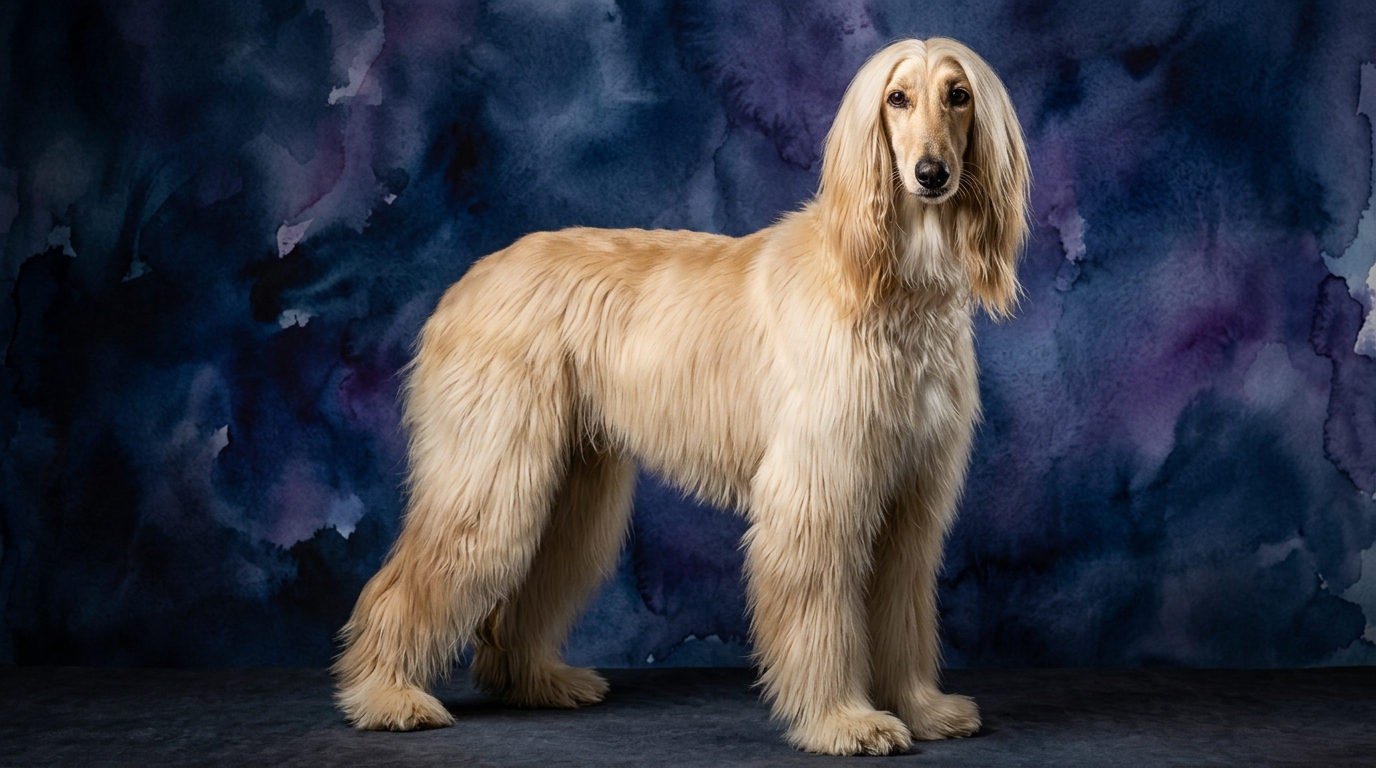
The Afghan Hound, with a Coren rank of #79, sits just one spot behind, sharing a similar independent spirit. Its Problem Solving score is 4 out of 5, highlighting a strong capacity for independent thought, particularly in pursuit or navigating challenging terrain, though perhaps less intricate than the Basenji's. Like the Basenji, its Training Speed is also 1 out of 5, underscoring the sighthound trait of valuing self-directed action over eager compliance. The Afghan Hound's Social Intelligence is rated 2 out of 5, indicating a more reserved and less outwardly expressive understanding of social dynamics, often appearing aloof. Its Instinctive Drive matches the Basenji at 5 out of 5, a testament to its profound predatory instincts. The Afghan's Memory is rated 3 out of 5, suggesting it retains information adequately, but perhaps with less long-term precision compared to its Basenji counterpart.
Where the Basenji Wins Cognitively
The Basenji consistently edges out the Afghan Hound in several key cognitive dimensions. Its Problem Solving score of 5/5, compared to the Afghan's 4/5, points to a remarkably resourceful and cunning mind. A Basenji is more likely to devise intricate plans, such as figuring out childproof latches or escaping enclosures. This superior problem-solving ability means they thrive on mental challenges and can become destructive if not adequately stimulated, often finding their own “puzzles” if not provided with appropriate outlets. Furthermore, the Basenji's Memory at 4/5 surpasses the Afghan Hound's 3/5. This enhanced recall means a Basenji remembers past experiences, commands (even if selectively obeyed), and environmental layouts with greater clarity and for longer durations. This can be a double-edged sword, as they'll remember both positive and negative interactions vividly. Lastly, the Basenji's slightly higher Social Intelligence (3/5 vs. 2/5) suggests a greater, albeit still independent, capacity to read human intentions and interact within a household dynamic, often interpreting subtle cues more readily than the more self-contained Afghan.
Where the Afghan Hound Excels Cognitively
While the Basenji generally scores higher in direct cognitive metrics, the Afghan Hound possesses a unique blend of traits that can be considered a distinct advantage for specific lifestyles. Its Problem Solving score of 4/5, though slightly lower, manifests as a profound, independent decision-making capacity tailored for endurance and pursuit over complex manipulation. An Afghan Hound excels at assessing large, open environments and making swift, autonomous choices during a chase, prioritizing immediate, efficient action. Their lower Social Intelligence (2/5) means they are generally less dependent on constant human interaction for emotional fulfillment or guidance, embodying a majestic self-sufficiency. For owners who appreciate a dog that is less clingy and more reserved, the Afghan Hound's aloofness isn't a deficit but a defining characteristic. This self-contained nature implies less demand for constant interactive mental engagement, allowing them to be serene companions without the incessant need for human-directed mental stimulation a Basenji might crave. This distinct cognitive makeup allows them to be dignified partners for owners who value independence.
Which is Easier to Train and Why
Neither the Basenji nor the Afghan Hound can be accurately described as “easy” to train, a fact reflected in their identical Training Speed score of 1 out of 5 and their low Coren ranks (78 and 79). Both breeds possess a profound independent streak, a hallmark of their sighthound heritage where they were bred to hunt autonomously. For the Basenji, its high Problem Solving ability (5/5) means it understands commands but will weigh them against its own desires, often choosing its own path. They are masters of selective deafness. Training a Basenji requires immense patience, consistency, and making the training feel like their idea or highly rewarding. Similarly, the Afghan Hound's 1/5 Training Speed is driven by its equally strong independence and lower social intelligence. They are not inherently motivated by pleasing their human companions in the same way many other breeds are, often appearing stubborn. While they can learn, their compliance is rarely enthusiastic or immediate. Both demand a deep commitment to positive reinforcement and understanding their unique motivations, making them unsuitable for owners seeking a highly biddable companion.
Suitability for Active vs. Relaxed Owners
The cognitive profiles of both the Basenji and the Afghan Hound suggest they are best suited for active owners, though the type of activity differs. The Basenji, with its 5/5 Instinctive Drive and 5/5 Problem Solving, requires significant mental and physical exertion. Active owners who enjoy hiking, scent work, agility, or providing complex puzzle toys will find the Basenji thrives, preventing them from inventing their own mischief. Their moderate social intelligence means they appreciate interaction but also value independent exploration. A relaxed owner who cannot provide consistent mental stimulation and ample exercise will find a Basenji a handful. The Afghan Hound, also possessing a 5/5 Instinctive Drive, demands considerable physical exercise to satisfy its deep-seated urge to run and chase. They are built for speed and endurance, ideal for owners who enjoy long, vigorous runs or secure, expansive off-leash areas. While their problem-solving is high, their lower social intelligence means they are less inclined to intricate mental games with their human. They are content to be physically active, then retreat for quiet contemplation, making them less demanding of constant interactive mental engagement than a Basenji. Active owners appreciating a dignified, self-sufficient dog requiring significant physical output will suit the Afghan Hound, while those also enjoying intricate mental games will lean towards the Basenji.
The Verdict
Choose a Basenji if you are an experienced owner seeking a highly resourceful companion who thrives on mental puzzles and independent thought, and you are prepared for their cunning nature and selective obedience.
Opt for an Afghan Hound if you appreciate a majestic, independent, and physically enduring companion who requires extensive exercise but less constant social interaction, and you are patient with their aloof yet affectionate demeanor.
🧠 Find Your Pet's IQ Score
Our Pet IQ Lab assessment covers 25+ tests across 5 cognitive dimensions — personalized to your breed.
Take the Full IQ Test →Frequently Asked Questions
Are Basenjis or Afghan Hounds good for first-time dog owners?
Neither breed is typically recommended for first-time dog owners due to their profound independence, high instinctive drives, and challenging training speeds. They both require experienced handlers who understand sighthound temperaments and are committed to consistent, positive reinforcement training.
Do Basenjis or Afghan Hounds bark a lot?
Basenjis are famously known as the “barkless dog” because they produce a unique yodel-like sound rather than a traditional bark. Afghan Hounds generally do not bark excessively, but they will use their voice to alert or express themselves when they deem it necessary.
Which breed is more affectionate, Basenji or Afghan Hound?
While both breeds can be affectionate on their own terms, Basenjis, with their slightly higher social intelligence, tend to be more outwardly engaged and demonstrative with their families, often forming strong bonds. Afghan Hounds are more reserved and aloof, showing affection subtly and preferring a dignified independence, though they can be deeply devoted to their chosen people.