Side-by-Side Cognitive Profiles
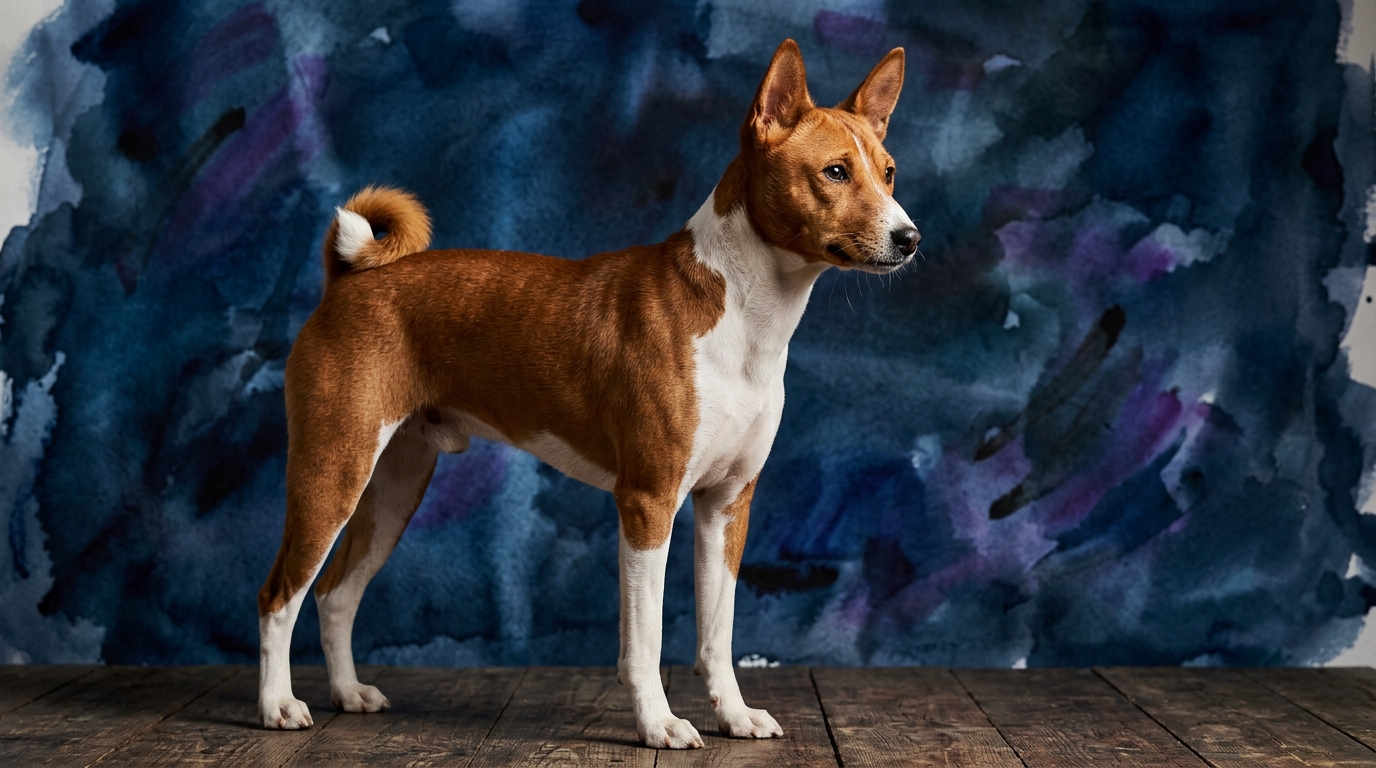
The Cosmic Pet Pet IQ Lab employs a multi-dimensional approach to assess canine cognition, moving beyond simple obedience to explore five key areas. For the Basenji, a Hound breed with a Coren rank of #78, its profile paints a picture of a self-reliant thinker: Problem Solving at an exceptional 5/5, Training Speed a challenging 1/5, Social Intelligence at 3/5, Instinctive Drive a dominant 5/5, and Memory at a solid 4/5.
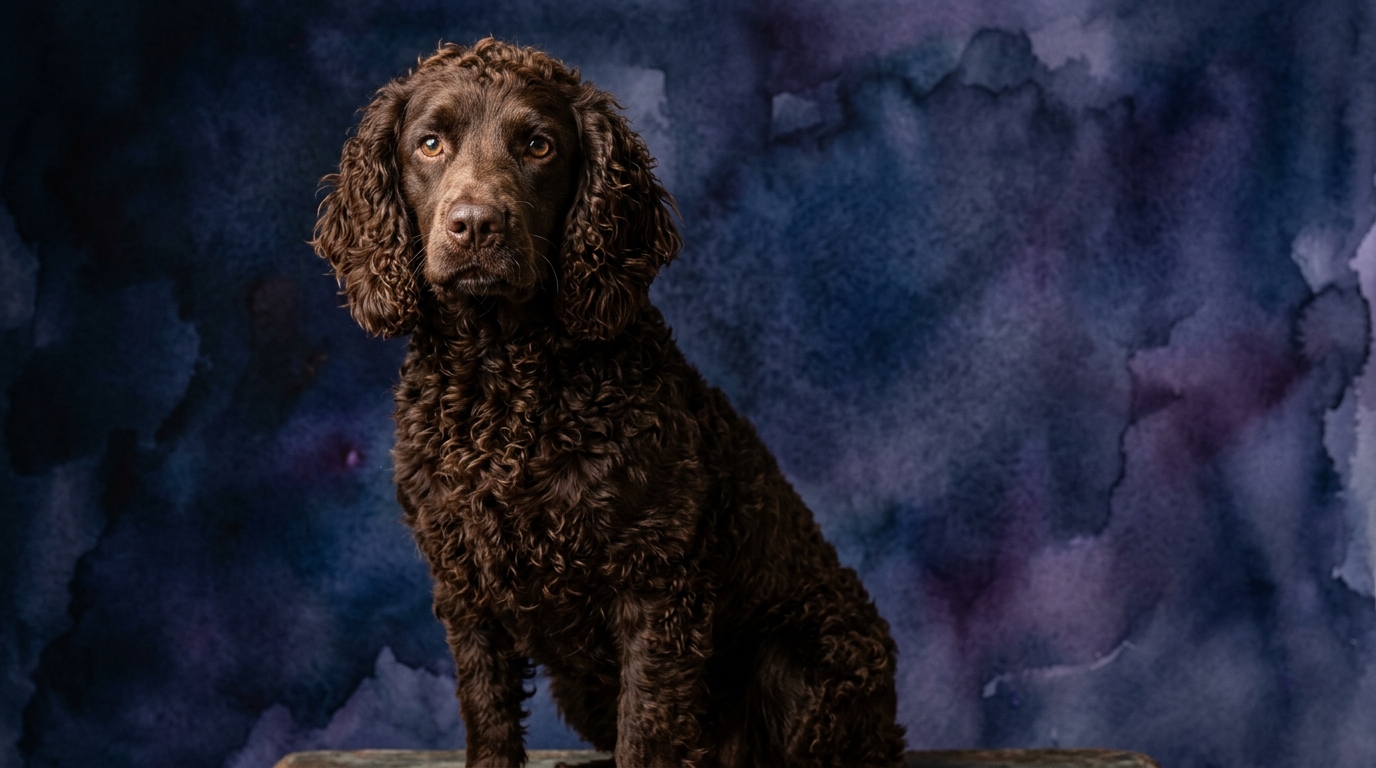
In contrast, the American Water Spaniel (AWS), a Sporting breed ranked #44 by Coren, presents a more balanced, cooperative cognitive blueprint. Its scores include Problem Solving at 3/5, Training Speed at a moderate 3/5, Social Intelligence also at 3/5, Instinctive Drive at 3/5, and Memory matching the Basenji at 4/5. These numbers immediately highlight diverging cognitive priorities and strengths between the two breeds.
Where the Basenji Excels Cognitively
The Basenji's unparalleled Problem Solving score of 5/5 is its crowning cognitive achievement. These dogs are masters of independent thought and creative strategizing, consistently demonstrating an ability to figure out complex situations on their own terms. Whether it’s manipulating latches, scaling fences, or devising methods to access desired objects, a Basenji approaches challenges with an intrinsic ingenuity that often surprises and sometimes outsmarts their human companions. Their solutions are often self-directed, aimed at achieving *their* goals, not necessarily following human directives.
Coupled with this is their formidable Instinctive Drive, also rated at 5/5. This intense drive means Basenjis are acutely perceptive of their environment, constantly processing sensory information related to movement, scent, and potential opportunities for exploration or pursuit. This heightened awareness fuels their self-directed problem-solving, making them incredibly astute observers and adaptable navigators of their surroundings. Their strong memory (4/5) further supports this, allowing them to recall past successes and apply learned solutions to new, similar problems.
Where the American Water Spaniel Excels Cognitively
The American Water Spaniel's cognitive strengths shine in areas that foster partnership and cooperation. Its moderate Training Speed of 3/5, significantly higher than the Basenji's 1/5, is a key advantage. AWS dogs are generally eager to please and responsive to human guidance, making them more receptive to learning new commands and behaviors. Their adaptability allows them to engage effectively in structured learning environments, finding satisfaction in performing tasks alongside their owners.
While both breeds share a Social Intelligence score of 3/5, the AWS applies this intelligence in a distinctly more human-centric way. They are attuned to human expectations and emotional states, making them better partners in activities that require collaboration and responsiveness. This social engagement facilitates their learning within a human-defined framework, allowing them to integrate more smoothly into family routines and activities. Their good memory (4/5) ensures they retain these learned behaviors and positive interactions effectively.
Trainability: Basenji vs. American Water Spaniel
When considering ease of training, the American Water Spaniel clearly has the advantage. Their moderate Training Speed (3/5) is a direct reflection of their cooperative nature and desire to work alongside humans. AWS dogs typically respond well to positive reinforcement, are motivated by praise and treats, and genuinely enjoy the engagement that comes with learning new skills. Their eagerness to please means they are more likely to offer desired behaviors and quickly form associations between commands and actions, making the training process a rewarding experience for both dog and owner.
The Basenji, with its 1/5 Training Speed, presents a substantially different training challenge. Their powerful problem-solving abilities are primarily self-directed; they are far more interested in solving *their own* problems than in meticulously following human instructions. This independence, while a cognitive strength, translates to a lower intrinsic motivation to perform tasks for human approval. Training a Basenji requires immense patience, creative motivation, and a deep understanding of their unique psychology. While they are certainly capable of learning, they will do so on their own terms and timeline, often requiring motivation that appeals directly to their instincts or problem-solving drive rather than simple compliance.
Matching Breeds to Lifestyles: Active vs. Relaxed Owners
Both the Basenji and the American Water Spaniel require engaged, active owners, but the nature of that activity differs. The Basenji's high instinctive drive and profound need for mental stimulation mean they thrive with owners who can provide outlets for their problem-solving and hunting instincts. This could involve activities like lure coursing, scent work, or complex puzzle toys that challenge their cunning. Their physical activity needs are substantial, requiring consistent, vigorous exercise to prevent boredom and potential destructive behaviors stemming from their inventive minds. An owner must be prepared to be outsmarted and to consistently provide engaging challenges.
The American Water Spaniel also thrives with active owners, particularly those who enjoy outdoor pursuits like water sports, hunting, or retrieving games. They are excellent companions for hiking, swimming, and field work, enjoying activities that involve working collaboratively alongside their human. While they need regular exercise, their activity is often more focused on partnership and shared tasks. Neither breed is well-suited for a truly 'relaxed' owner who prefers minimal engagement. However, if 'relaxed' implies less structured, command-based interaction, a Basenji might *seem* to fit due to its independence, but this can quickly lead to a bored, destructive, and challenging dog that creates its own 'fun.' The AWS, while needing activity, is more adaptable to a routine that includes structured play and walks rather than constant, high-stakes 'job' demands.
The Verdict
If you are captivated by a dog with unparalleled independent problem-solving abilities, a strong will, and the patience to engage with a truly unique canine mind that operates on its own terms, the Basenji could be your match.
Opt for the American Water Spaniel if you seek a cooperative, adaptable companion eager to engage in activities with you, valuing a moderate trainability and a strong desire to be a part of the family's adventures.
🧠 Find Your Pet's IQ Score
Our Pet IQ Lab assessment covers 25+ tests across 5 cognitive dimensions — personalized to your breed.
Take the Full IQ Test →Frequently Asked Questions
Are Basenjis truly untrainable?
Basenjis are not untrainable, but their training approach differs significantly. They learn best through positive reinforcement, consistency, and making training feel like their idea, rather than direct instruction, due to their independent nature and high problem-solving drive.
Do American Water Spaniels need to hunt to be happy?
American Water Spaniels don't strictly need to hunt, but their innate retrieving and water instincts mean they thrive with activities that mimic these roles, such as fetch, swimming, scent games, or dock diving. Providing these outlets fulfills their natural drives and keeps them content.
Which breed is better for first-time dog owners?
The American Water Spaniel is generally a better choice for first-time owners due to its cooperative nature and moderate trainability, making the learning curve for both dog and owner smoother. The Basenji's profound independence and unique cognitive profile require a more experienced hand and a deep understanding of canine behavior.