
Side-by-Side Cognitive Profiles
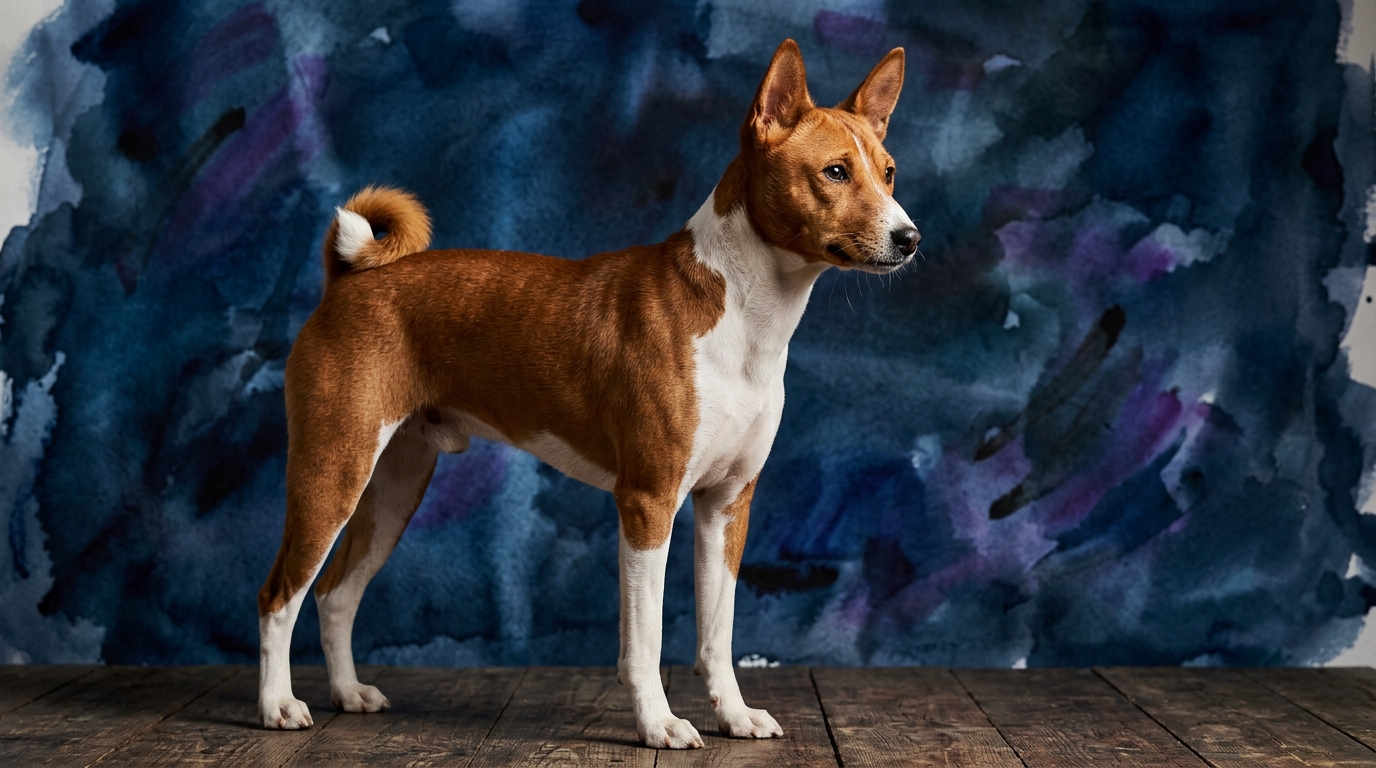
The Cosmic Pet Pet IQ Lab provides a unique lens through which to understand canine cognition, breaking down intelligence into five distinct dimensions. For the Basenji, a hound breed, its profile is particularly striking: Problem Solving (5/5), Training Speed (1/5), Social Intelligence (3/5), Instinctive Drive (5/5), and Memory (4/5). This combination paints a picture of a dog with exceptional intellectual capacity for independent thought, yet a strong disinclination towards conventional training methods. Their high instinctive drive speaks to their ancient hunting heritage, while their memory ensures they retain complex information, for better or worse.
In contrast, the Australian Terrier, a terrier breed, presents a more balanced, moderate cognitive profile across the board: Problem Solving (3/5), Training Speed (3/5), Social Intelligence (3/5), Instinctive Drive (3/5), and Memory (3/5). This breed, while not reaching the extreme peaks seen in some Basenji dimensions, offers a consistent and practical level of intelligence. Their moderate scores suggest a dog that is capable of learning, socially aware, and possesses a typical terrier enthusiasm without the profound independence or ancient drives of the Basenji.
Where the Basenji Excels Cognitively
The Basenji's cognitive strengths are pronounced in areas demanding self-reliance and ingenious thought. Their Problem Solving score of 5/5 signifies an exceptional capacity for devising original solutions, often in unexpected ways. This isn't about following instructions, but about independently navigating complex situations, such as figuring out how to open child-proof latches, escaping seemingly secure enclosures, or manipulating their environment to achieve a desired outcome. This inventive intellect means they are constantly assessing and adapting, making them endlessly fascinating companions.
Furthermore, their Instinctive Drive, also rated at 5/5, is a profound cognitive asset rooted in their ancestral survival. Basenjis possess an ancient, highly refined predatory instinct, making them exceptionally adept at tracking, scent work, and independent pursuit. This drive is not merely physical; it involves a sophisticated cognitive process of observation, planning, and execution in their hunting behaviors. Paired with a Memory score of 4/5, they retain complex information and experiences with notable clarity, allowing them to learn from past successes and failures, whether that's remembering the best route to escape or the most effective way to beg for a treat.
Where the Australian Terrier Excels Cognitively
The Australian Terrier's cognitive advantages lie in its well-rounded and adaptable nature, making it a more predictable and generally cooperative companion within a typical household setting. While their Problem Solving is rated at 3/5, this indicates a practical intelligence for navigating daily challenges and learning routines, without the Basenji's inclination for self-serving ingenuity. Their moderate scores across the board mean they are less likely to present extreme behavioral puzzles for owners.
Their Training Speed and Social Intelligence, both rated at 3/5, suggest a greater willingness to engage with human directives and a more straightforward understanding of social cues in a family context. Unlike the Basenji's profound independence, the Australian Terrier is typically more inclined to seek interaction and respond to guidance, making them more amenable to standard training protocols. Their balanced instinctive drive (3/5) is present for typical terrier activities like digging and chasing, but generally more manageable than the deep-seated, ancient drives of a Basenji, allowing for easier integration into domestic life.
Which is Easier to Train, and Why?
When it comes to ease of training, the Australian Terrier generally presents a more straightforward experience for the average owner. Their Training Speed of 3/5 indicates they are reasonably responsive to commands and grasp new concepts at a moderate pace, especially when motivated by positive reinforcement. While they possess a characteristic terrier tenacity, their desire for interaction and moderate biddability means they are often eager to please and find satisfaction in cooperative tasks. Owners can expect consistent progress with patient, reward-based methods.
The Basenji, with a Training Speed of 1/5, is notoriously challenging to train in the conventional sense. Their independence and high problem-solving mean they are not inherently biddable; they learn what benefits them and often resist commands that don't align with their own agenda. Training a Basenji requires immense patience, creativity, and a deep understanding of their unique motivations. Owners often describe it as a negotiation rather than simple instruction, needing to convince the Basenji that compliance is its own idea or offers a superior reward. Their profound instinctive drive can also make recall exceptionally difficult when distractions are present, demanding rigorous, consistent effort.
Suitability for Active vs. Relaxed Owners
For owners with an active lifestyle and a desire for a truly engaging, albeit challenging, canine partner, the Basenji is a compelling choice. Their high instinctive drive and exceptional problem-solving necessitate substantial mental and physical engagement. They thrive on exploration, novel challenges, and extensive exercise that allows them to utilize their natural abilities. A Basenji needs an owner who appreciates their independence and can provide consistent, stimulating outlets for their cleverness and energy, otherwise, their ingenuity can turn towards destructive or escape-oriented behaviors. They are not suited for a relaxed, hands-off approach.
The Australian Terrier, with its balanced cognitive profile, suits moderately active owners. They enjoy daily walks, playtime, and participating in family activities, but their energy levels are generally more adaptable than a Basenji's. While they appreciate mental stimulation and regular exercise to keep them content, they are also quite capable of settling down for quiet time with their family. They are a good fit for owners seeking a spirited companion who balances activity with periods of calm, making them a more versatile choice for various household dynamics.
The Verdict
Choose the Basenji if you are an experienced, patient, and highly active owner seeking a truly independent, clever companion who will constantly challenge and intrigue you with their unique problem-solving abilities.
Choose the Australian Terrier if you desire a spirited, responsive, and generally biddable companion who is eager to engage in family life and offers a more balanced cognitive profile for everyday training and companionship.
🧠 Find Your Pet's IQ Score
Our Pet IQ Lab assessment covers 25+ tests across 5 cognitive dimensions — personalized to your breed.
Take the Full IQ Test →Frequently Asked Questions
Are Basenjis truly untrainable due to their low training speed?
No, Basenjis are not untrainable, but their training speed of 1/5 indicates they learn on their own terms and require exceptional patience and creativity from their owners. They respond best to positive reinforcement and methods that make them feel like they are choosing to cooperate, rather than being forced.
How does the Basenji's high problem-solving manifest in daily life?
A Basenji's 5/5 problem-solving often appears as clever escapes, opening cupboards, figuring out complex puzzle toys quickly, or devising unique ways to get what they want. They are masters at observing and exploiting weaknesses in their environment or routine, often surprising their owners with their ingenuity.
Is the Australian Terrier's moderate instinctive drive a challenge for owners?
While an Australian Terrier's instinctive drive (3/5) is moderate, it still means they possess a natural inclination for digging, chasing small animals, and barking, characteristic of their terrier heritage. Owners should provide appropriate outlets for these behaviors through toys, games, and secure environments to manage them effectively, preventing unwanted manifestations.