
Side-by-Side Cognitive Profiles
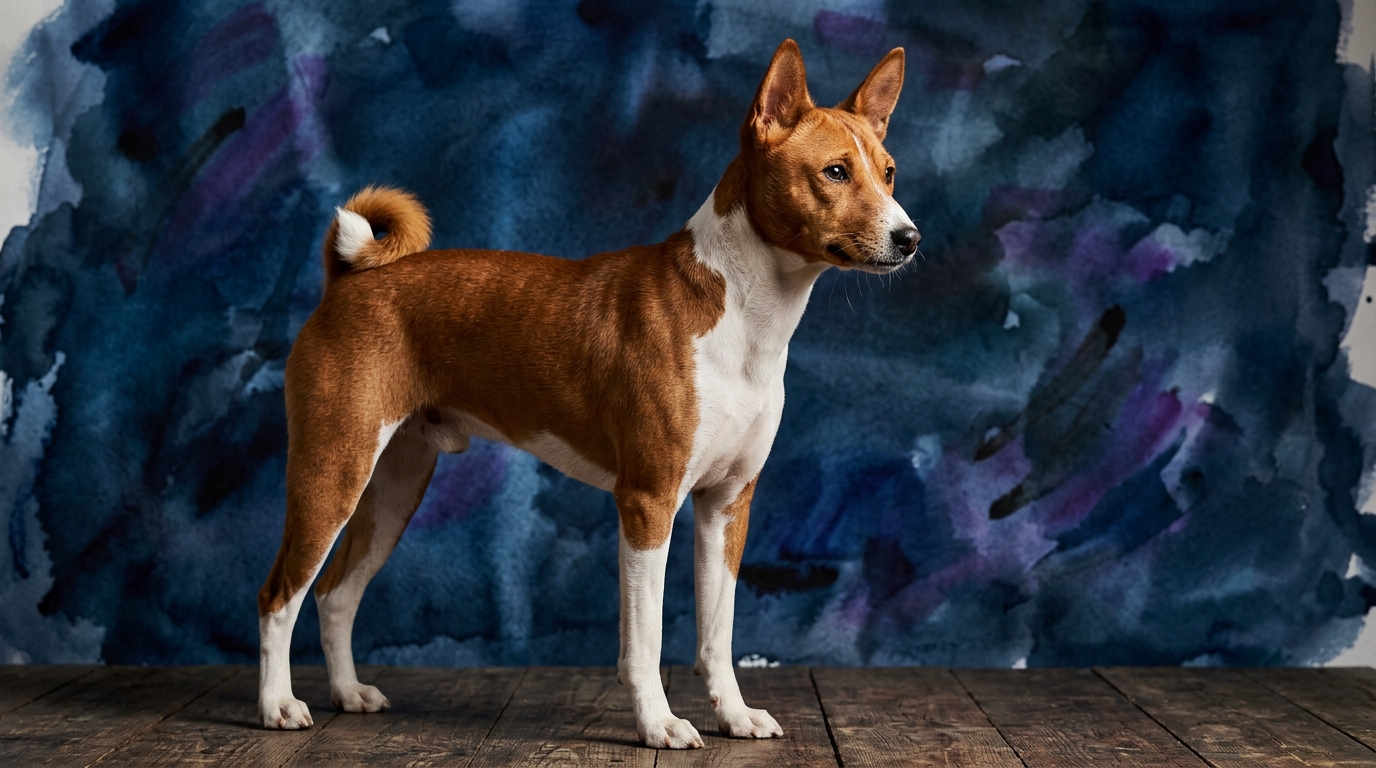
The Cosmic Pet Pet IQ Lab employs five key dimensions to map canine cognition, and these two breeds present contrasting scores that illuminate their unique mental architectures. The Basenji, ranking #78 on the Coren scale, showcases a mind geared towards independent action. Its Problem Solving is rated 5/5, indicating exceptional ingenuity in navigating environments and achieving goals through self-devised methods. Training Speed, however, stands at 1/5, reflecting a strong independent streak rather than a desire for instruction. Social Intelligence is 3/5, suggesting they form bonds but maintain a degree of aloofness, while their Instinctive Drive is a powerful 5/5, fueling their innate impulses. Finally, their Memory is a robust 4/5, allowing them to recall experiences and spatial information effectively.
In contrast, the Belgian Sheepdog (Groenendael), with a much higher Coren rank of #15, exemplifies a breed designed for cooperative partnership. Their Problem Solving also scores 5/5, though often applied within a structured context or towards a handler's objective. Their Training Speed is a perfect 5/5, highlighting an extraordinary capacity for rapid learning and command assimilation. Social Intelligence mirrors the Basenji at 3/5, indicating attentiveness to their family but potential reserve with strangers. The Groenendael's Instinctive Drive is 3/5, present but typically more controlled than the Basenji's, often channeled into specific tasks. Their Memory is an outstanding 5/5, crucial for retaining complex routines and a vast array of learned behaviors.
Where the Basenji's Cognition Excels
The Basenji's cognitive strengths truly shine in scenarios demanding self-reliance and autonomous decision-making. Their perfect 5/5 score in instinctive drive means they possess an unparalleled internal compass, urging them to explore, track, and pursue with unwavering focus. This isn't just a physical drive; it's a cognitive framework that allows them to independently assess their environment for opportunities, whether it's finding a dropped treat or locating a perceived escape route. Their equally high 5/5 in problem-solving often manifests as cunning ingenuity, finding novel solutions to challenges without human prompting. For example, a Basenji might figure out how to open a complex latch after only a few observations, or devise a strategy to retrieve a toy from an inaccessible spot, purely driven by their own desire. This independent problem-solving, fueled by intense instinctive drives, makes them masters of their own destiny, requiring minimal external direction to achieve their self-appointed goals.
Where the Belgian Sheepdog (Groenendael) Leads Cognitively
The Belgian Sheepdog (Groenendael) takes a decisive cognitive lead in areas demanding rapid learning, precise recall, and cooperative execution. Their perfect 5/5 score in training speed is a testament to their remarkable capacity to quickly grasp and implement new commands, making them exceptionally receptive students. This rapid assimilation is underpinned by their flawless 5/5 memory, allowing them to retain complex sequences of actions and a broad vocabulary of cues. A Groenendael can learn a multi-step routine in a fraction of the time it would take many other breeds, and recall it flawlessly weeks later. This combination of swift learning and enduring memory is why they excel in demanding disciplines like advanced obedience, agility, and protection work, where precision and reliability are paramount. Their cognitive architecture is optimized for partnership, thriving on structured tasks and the intellectual challenge of mastering new skills alongside their human companions. This cooperative intelligence is a hallmark of their breed and is a significant factor in their high Coren rank.
Trainability: Cooperation vs. Independence
There is a stark difference in trainability between these two breeds, primarily due to their divergent motivations and cognitive priorities. The Belgian Sheepdog (Groenendael) is unequivocally easier to train, scoring a perfect 5/5 in training speed. Their inherent desire to work collaboratively and their quick retention of information mean they thrive on structured learning. A Groenendael typically seeks to understand and execute commands, finding satisfaction in pleasing their handler and mastering tasks. They are often eager to repeat exercises and demonstrate what they’ve learned, making training sessions productive and rewarding for both dog and owner. In contrast, the Basenji, with a 1/5 training speed score, presents a significant challenge. Their strong 5/5 instinctive drive and independent problem-solving often mean they prefer to follow their own impulses rather than human direction. A Basenji might understand a command perfectly but choose not to obey if it conflicts with a more pressing self-interest, such as chasing a squirrel or exploring a novel scent. Their training requires immense patience, creativity, and a deep understanding of their unique motivations, often relying on positive reinforcement that appeals directly to their independent desires rather than a desire to please. This isn't a lack of mental capacity, but a fundamental difference in how their cognition is applied, making the Groenendael the far more straightforward student.
Matching Cognitive Needs to Lifestyles
Determining which breed suits an active versus a more relaxed owner requires considering their cognitive energy and engagement styles. The Belgian Sheepdog (Groenendael) is an ideal match for highly active owners who thrive on structured engagement and mental challenges. Their high training speed and memory mean they require consistent mental stimulation through training, sports, and tasks, alongside significant physical exercise. A Groenendael without a job or sufficient mental outlet can become bored and potentially destructive, channeling their cooperative intelligence into less desirable behaviors. They excel in environments where their cognitive prowess is regularly tested and rewarded. Conversely, while the Basenji also requires substantial physical activity to satisfy its intense instinctive drive, their cognitive needs are different. They suit active owners who appreciate a dog's independent spirit and are prepared for a less cooperative partnership. A Basenji needs freedom to explore and engage its problem-solving and instinctive drives, often through long, varied walks, secure off-leash areas, or challenging puzzle toys. They are not necessarily looking for constant instruction or structured tasks from their owner, but rather opportunities to fulfill their own mental agenda. For a truly relaxed owner, neither breed is an ideal fit, as both possess significant energy and cognitive needs that demand consistent attention, albeit in different ways.
The Verdict
Choose a Basenji if you admire profound canine independence and a self-sufficient problem-solver, and are prepared to engage with their strong instinctive drives and unique training approach.
Choose a Belgian Sheepdog (Groenendael) if you seek a highly trainable, cooperative partner eager for structured mental and physical challenges, thriving on joint activities and precise command execution.
🧠 Find Your Pet's IQ Score
Our Pet IQ Lab assessment covers 25+ tests across 5 cognitive dimensions — personalized to your breed.
Take the Full IQ Test →Frequently Asked Questions
Do Basenjis understand commands as well as Groenendaels?
Basenjis can certainly understand commands, backed by their good memory and problem-solving abilities. However, their independent nature means they often choose whether or not to comply, contrasting with the Groenendael's strong desire to cooperate and execute instructions.
Which breed is better for dog sports like agility?
The Belgian Sheepdog (Groenendael) is generally far better suited for dog sports like agility due to their exceptional training speed, memory, and eagerness to work with a handler. Basenjis, while agile, often lack the consistent focus and motivation to perform complex courses under instruction.
How does their social intelligence impact their family life?
Both breeds score moderately in social intelligence, meaning they form strong bonds with their families but might be reserved with strangers. Groenendaels often display a protective loyalty, while Basenjis maintain a more independent, observant presence within the household.