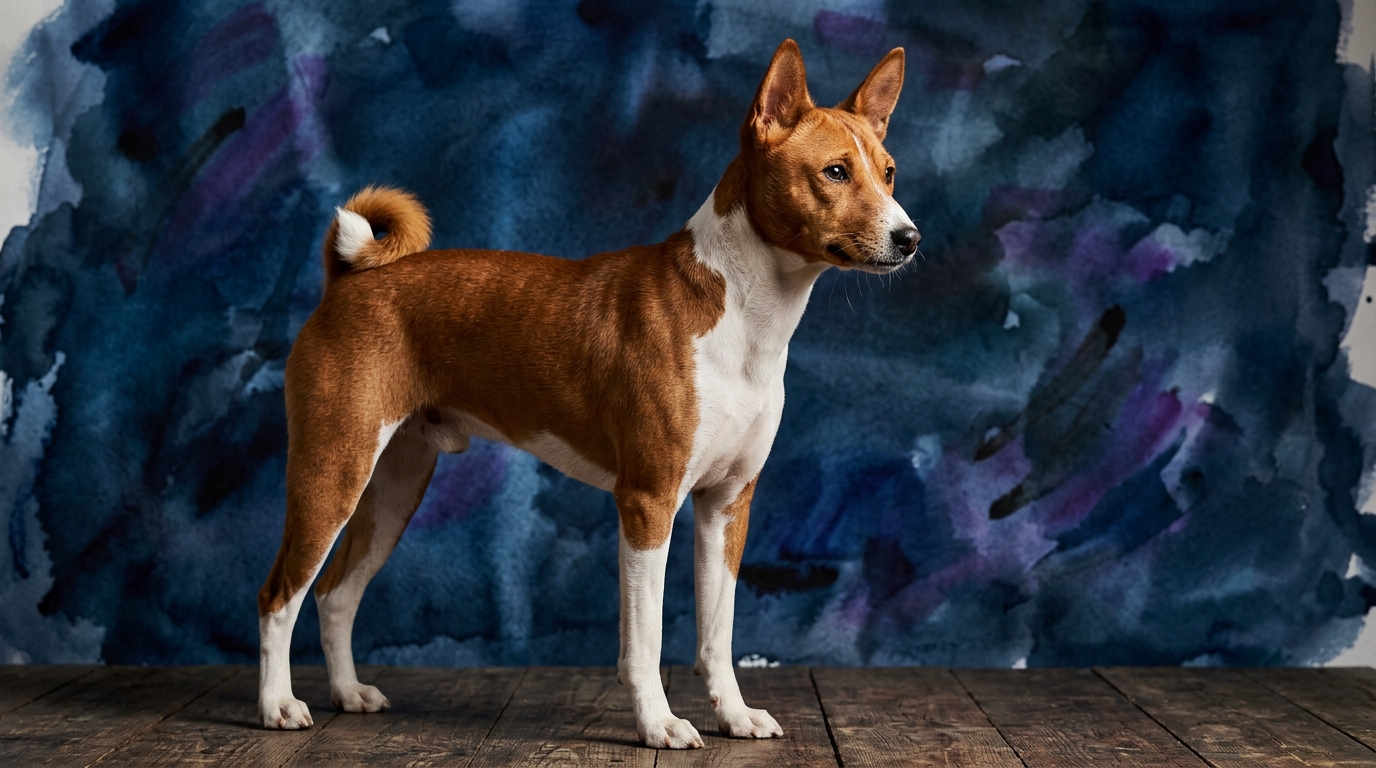
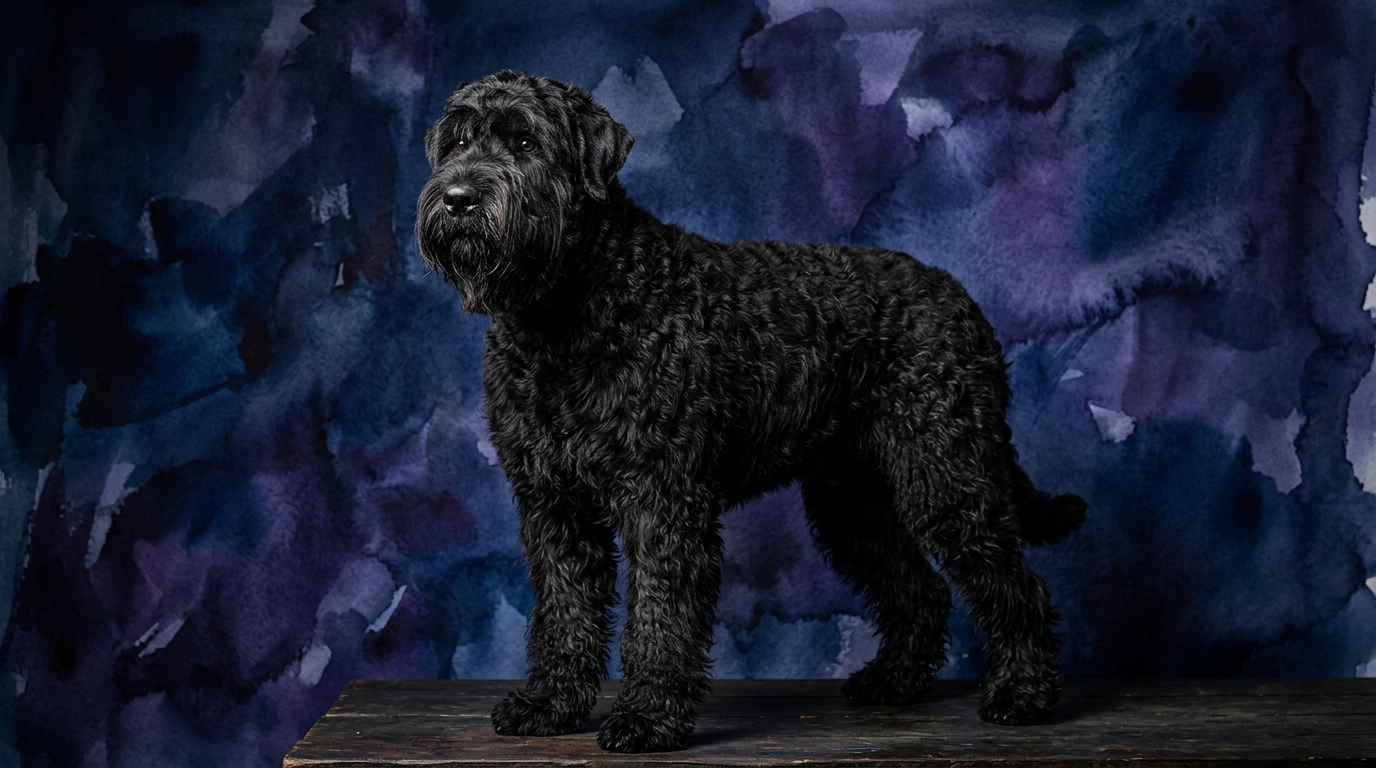
Side-by-Side IQ Profile: Basenji vs. Black Russian Terrier
The Cosmic Pet Pet IQ Lab evaluates canine cognition across five crucial dimensions, offering a granular view of each breed's mental aptitudes. Understanding these profiles helps us appreciate the nuances beyond simple labels of 'smart' or 'challenging'.
**Basenji (Hound Group):** This breed, ranked #78 by Coren, presents a unique cognitive blueprint. Their **Problem Solving** ability scores an exceptional 5/5, indicating a profound capacity for independent thought and strategic thinking when faced with obstacles. However, their **Training Speed** is a notably low 1/5, suggesting a strong will and a disinterest in rapid obedience to human directives. **Social Intelligence** sits at an average 3/5, meaning they can interpret human cues but often choose their own path. Their **Instinctive Drive** is a powerful 5/5, reflecting their deep-seated hunting and tracking heritage. Finally, their **Memory** is a robust 4/5, allowing them to recall complex sequences and past experiences effectively.
**Black Russian Terrier (Working Group):** This breed is not Coren-ranked, yet possesses a distinct and purposeful cognitive makeup. Their **Problem Solving** aptitude is a balanced 3/5, indicating an average ability to navigate new situations without extreme cunning or profound struggle. **Training Speed** also registers at a respectable 3/5, meaning they learn commands at an average pace with consistent instruction. Like the Basenji, their **Social Intelligence** is 3/5, suggesting a competent but not overly effusive understanding of human social signals. Their **Instinctive Drive** is a moderate 3/5, reflecting a controlled working drive rather than an overwhelming primal urge. Their **Memory** is also an average 3/5, allowing them to retain learned information and routines without exceptional recall.
Where the Basenji Excels Cognitively
The Basenji's cognitive strengths lie in their profound independence and innate cunning. Their 5/5 **Problem Solving** score means they are adept at figuring out complex environmental challenges, from opening latches to devising escape routes from seemingly secure enclosures. This isn't about following instructions; it's about innovative, self-directed solutions to achieve their own objectives, often to their human's bemusement.
Furthermore, their 5/5 **Instinctive Drive** is a powerful asset in contexts requiring intense focus on sensory input. As sighthounds and scent hounds, this translates into an unparalleled ability to detect subtle movements or faint odours, allowing them to track and pursue with unwavering determination. This drive, while challenging for owners, is a testament to their specialized cognitive processing for hunting. Their 4/5 **Memory** complements these traits, enabling them to recall successful strategies for obtaining desired outcomes or remembering the exact location of a squirrel's last appearance, reinforcing their independent pursuit of interests.
Where the Black Russian Terrier Holds the Cognitive Edge
The Black Russian Terrier's cognitive advantages stem from a more balanced and cooperative mental framework, particularly evident in their approach to learning and directed tasks. Their 3/5 **Training Speed** is a significant win over the Basenji's 1/5, indicating a far greater receptivity to formal instruction and a willingness to integrate new commands into their behavioral repertoire. This average learning curve makes them considerably more pliable for structured training programs.
While their individual scores for problem-solving, social intelligence, instinctive drive, and memory are all 3/5, this balance itself is a cognitive strength. It means their various mental faculties work in concert without any single extreme trait overriding their capacity for cooperative work. They possess sufficient problem-solving ability to navigate routine tasks, enough social intelligence to work effectively with a handler, and a manageable instinctive drive that can be channeled into productive activities rather than constantly diverting their attention. Their cognitive profile is geared towards practical application and partnership, a hallmark of their working dog heritage.
Training Dynamics: Which Breed Is Easier and Why?
When it comes to ease of training, the Black Russian Terrier clearly takes the lead. Their 3/5 **Training Speed** means they are generally responsive to consistent, positive reinforcement methods, learning new commands and routines within a reasonable timeframe. Their working dog background instilled a desire for purpose and a capacity to follow direction, making them more inclined to engage in structured learning sessions.
The Basenji, with its 1/5 **Training Speed**, is notoriously challenging to train in the conventional sense. Their formidable 5/5 **Problem Solving** ability, coupled with a strong independent streak and 5/5 **Instinctive Drive**, often means they are more interested in outsmarting their owners or pursuing their own agenda (like a scent trail) than in performing a requested behavior. They frequently operate on their own terms, requiring immense patience, creativity, and a deep understanding of their unique motivations. Basenjis tend to view commands as suggestions, making obedience training a continuous negotiation rather than a straightforward teaching process.
Matching Breeds to Owner Lifestyles: Active vs. Relaxed Owners
The Basenji is best suited for active owners who appreciate a dog with a profound sense of self and a need for considerable mental engagement. Their high problem-solving capacity means they will quickly become bored without intellectual challenges, potentially leading to destructive or escape behaviors. Owners must be prepared to provide extensive physical activity to satisfy their 5/5 instinctive drive, including opportunities for running, exploring, and engaging in scent work or agility to channel their keen minds and bodies. A relaxed owner might find the Basenji's independent nature and relentless curiosity overwhelming.
The Black Russian Terrier can also thrive with active owners, given their powerful build and working heritage, but their cognitive profile allows for a different kind of 'activity'. They suit owners who are active in providing consistent structure, firm leadership, and engaging mental tasks, rather than solely high-intensity physical output. While they need regular exercise, their balanced instinctive drive (3/5) means they are less likely to be constantly distracted by environmental stimuli compared to a Basenji. They are not for truly relaxed or passive owners, as their size, strength, and protective instincts demand an owner who is confident, consistent, and committed to ongoing training and socialization to direct their formidable presence effectively.
The Verdict: When to Choose Each Breed
Choosing between a Basenji and a Black Russian Terrier comes down to an owner's lifestyle, training philosophy, and appreciation for distinct canine intelligences. Both breeds offer unique companionship, but require different approaches.
If you are drawn to a cunning, independent, and often challenging companion that will constantly engage your problem-solving skills, and you can provide extensive stimulation for a powerful instinctive drive, the Basenji might be your match. They are for those who value a dog with a mind of its own and derive satisfaction from understanding and adapting to a truly unique canine personality.
If you seek a loyal, protective, and trainable working dog that thrives on purpose and consistent guidance, and you are prepared to offer firm, positive training and structured engagement, the Black Russian Terrier could be an excellent fit. They are for owners who appreciate a powerful dog whose cognitive abilities are readily directed towards cooperative tasks and who can provide confident leadership.
The Verdict
Choose the Basenji if you appreciate a highly independent, cunning companion, enjoy a significant challenge in training, and can provide extensive mental and physical stimulation to satisfy a potent prey drive and problem-solving mind.
Choose the Black Russian Terrier if you seek a loyal, protective, and trainable working dog who thrives on purpose and consistent guidance, and you are prepared to offer firm, positive training and structured engagement.
🧠 Find Your Pet's IQ Score
Our Pet IQ Lab assessment covers 25+ tests across 5 cognitive dimensions — personalized to your breed.
Take the Full IQ Test →Frequently Asked Questions
Are Basenjis truly 'barkless'?
Basenjis do not bark in the conventional sense; instead, they produce a unique yodel-like sound, often described as a 'barroo'. This distinctive vocalization is part of their ancient heritage and adds to their unique character, though they can make other noises like growls and whimpers.
Do Black Russian Terriers require a lot of grooming?
Yes, Black Russian Terriers have a dense, coarse double coat that requires regular and thorough grooming. This includes frequent brushing to prevent matting, as well as professional stripping or clipping every few months to maintain coat health and appearance. Their facial hair also needs special attention.
Can a Basenji live in an apartment?
A Basenji can live in an apartment if their significant exercise and mental stimulation needs are consistently met. Their high problem-solving ability and strong instinctive drive mean they require daily vigorous activity and engaging challenges to prevent boredom and potential destructive behaviors in a confined space.