Side-by-Side IQ Profile: Basenji vs. Bouvier des Flandres
The Cosmic Pet Pet IQ Lab employs a unique five-dimensional framework to assess canine intelligence, moving beyond simple obedience to capture a holistic cognitive picture. We evaluate problem-solving, training speed, social intelligence, instinctive drive, and memory, each scored on a scale of 1 to 5, with 5 being the highest.
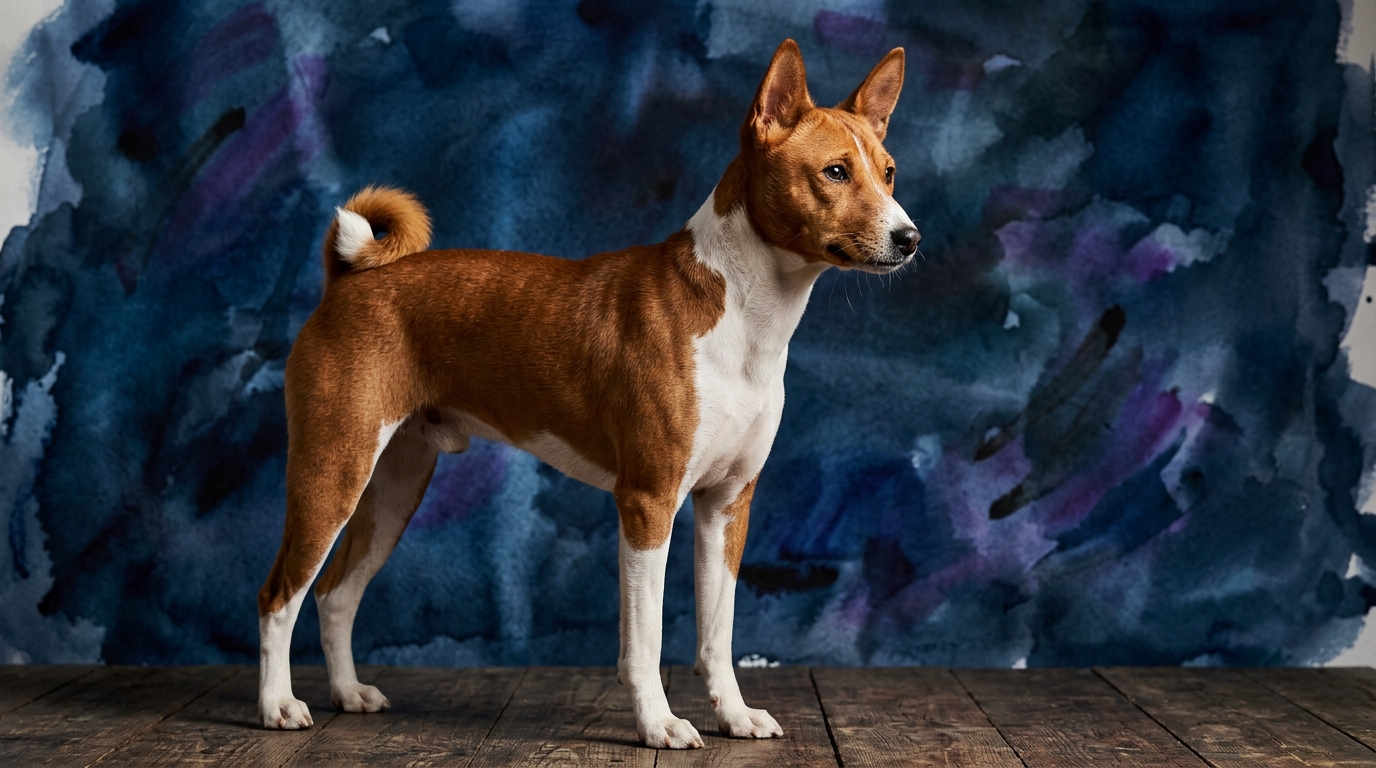
The Basenji, classified as a Hound and ranked #78 by Coren for working and obedience intelligence, presents a compelling cognitive profile: Problem Solving 5/5, Training Speed 1/5, Social Intelligence 3/5, Instinctive Drive 5/5, and Memory 4/5. This suggests an exceptionally clever and independent thinker, often driven by their own motivations.
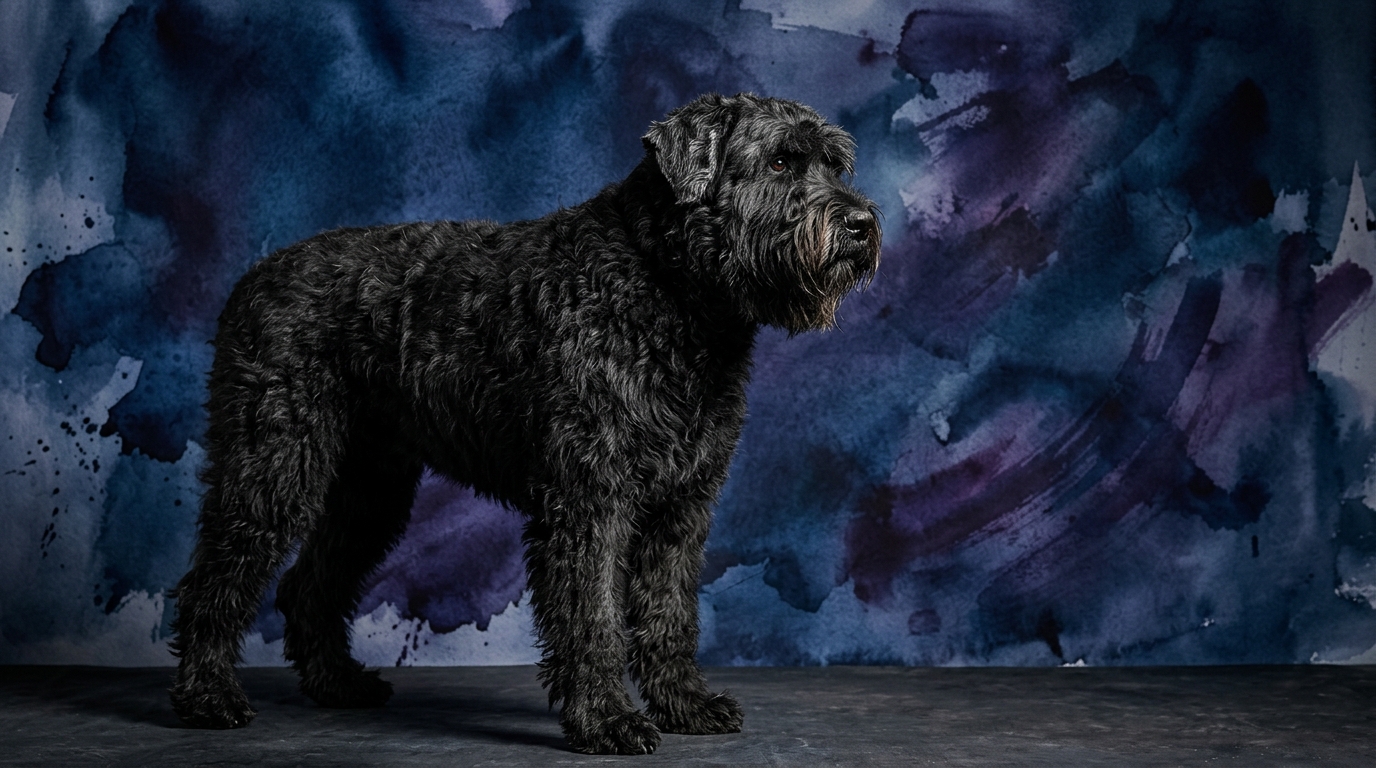
Conversely, the Bouvier des Flandres, a Herding breed not Coren-ranked, shows a more balanced and cooperative intelligence: Problem Solving 3/5, Training Speed 3/5, Social Intelligence 3/5, Instinctive Drive 3/5, and Memory 3/5. This indicates a practical, trainable dog with moderate drives, well-suited for directed work.
For the Basenji, a 5/5 in Problem Solving signifies an exceptional capacity for independent thought and figuring out complex situations without human intervention, excelling at navigating environments and overcoming obstacles through clever, often self-serving, means. Their 1/5 Training Speed, however, points to a significant challenge in traditional obedience training, as their independent streak means they are not inherently motivated to please and require immense patience and creative methods. A 3/5 Social Intelligence implies they can understand social cues but apply this understanding through a filter of self-interest, while their 5/5 Instinctive Drive denotes powerful, innate behaviors like tracking and chasing that fundamentally influence their cognitive output. Lastly, their 4/5 Memory allows them to retain information about their environment and experiences over long periods, remembering training but also how to outsmart their human.
The Bouvier des Flandres' 3/5 Problem Solving score suggests practical skills, capable of learning tasks and adapting to new situations, particularly those related to their herding and guarding roles, solving problems efficiently but without the independent cunning of a Basenji. Their 3/5 Training Speed indicates a reasonable aptitude for learning new commands, generally willing to work with handlers, making them trainable with consistent effort. A 3/5 Social Intelligence means they can interpret social signals, often translating into a watchful, observant nature crucial for their protective instincts. Their balanced 3/5 Instinctive Drive points to innate herding and guarding instincts that are typically more manageable and directable than the Basenji's. Finally, their 3/5 Memory is practical and functional, allowing them to remember routines, commands, and people adequately for their working roles and daily life, but perhaps without the Basenji's depth for intricate environmental recall.
Where the Basenji Wins Cognitively
The Basenji's cognitive strengths are undeniably rooted in their independent spirit and ancestral hunting roles. Their remarkable 5/5 Problem Solving score means they are masters of figuring things out on their own, whether it's opening a complex latch, scaling a fence, or devising a new way to access a forbidden treat. This isn't about following instructions; it's about pure, unadulterated ingenuity.
Coupled with a 5/5 Instinctive Drive, their minds are constantly engaged in assessing their environment for opportunities to hunt, explore, or simply follow their nose, often leading to creative, albeit sometimes mischievous, solutions. Their 4/5 Memory further enhances this, allowing them to recall successful strategies for acquiring resources or bypassing obstacles, meaning once they learn how to do something, they rarely forget it. This combination fosters a deep understanding of their surroundings and a profound ability to manipulate them to their advantage, making them incredibly self-sufficient thinkers who excel at independent navigation and resource acquisition.
Where the Bouvier des Flandres Wins Cognitively
The Bouvier des Flandres, while not exhibiting the Basenji's independent cunning, shines in areas crucial for a cooperative working companion. Their 3/5 Training Speed, a notable improvement over the Basenji's 1/5, highlights a greater willingness and capacity to learn from human instruction. This means they are more amenable to structured training and less likely to resist guidance, making them more predictable partners in various activities.
Their balanced 3/5 Instinctive Drive allows their natural working tendencies—herding, guarding—to be channeled and refined through training, rather than overriding it. A 3/5 in Problem Solving, while not top-tier, reflects a practical intelligence well-suited for understanding and executing complex multi-step tasks within a directed framework, rather than inventing their own. Their consistent 3/5 across Social Intelligence and Memory also suggests a reliable and steady cognitive profile, where they are observant of their environment and retain learned behaviors without the extreme independent interpretations seen in the Basenji, making them dependable and consistent in their responses.
Which is Easier to Train and Why
Without question, the Bouvier des Flandres presents a significantly easier training experience compared to the Basenji. The data clearly illustrates this, with the Bouvier scoring a 3/5 in Training Speed against the Basenji's challenging 1/5. The Basenji's low score is a direct reflection of their profound independence and innate self-sufficiency; they simply aren't wired to be highly biddable or to inherently seek human approval.
Their high instinctive drive often means they are more compelled by the scent of a squirrel or the thrill of the chase than by a 'sit' command, requiring handlers to compete constantly with their environment and internal motivations. Training a Basenji demands immense patience, creativity, and a deep understanding of positive reinforcement, often feeling like you are negotiating with a clever, self-interested toddler rather than guiding a willing student.
In contrast, the Bouvier des Flandres, with its balanced drives and moderate training speed, possesses a more cooperative spirit. They were bred to work alongside humans, making them generally more attentive, eager to learn, and responsive to commands. While they are not 'easy' dogs in the sense of requiring no effort, their inherent desire to please and their practical intelligence make the training process a more rewarding and less frustrating endeavor for most owners, leading to more predictable and reliable responses in various situations.
Which Suits Active Owners vs. Relaxed Owners
The choice between a Basenji and a Bouvier des Flandres depends heavily on an owner's lifestyle and their definition of 'active' and 'relaxed.' A Basenji, with its 5/5 Instinctive Drive and 5/5 Problem Solving, demands an owner who is not just physically active but also mentally engaged and prepared for consistent, creative management. Their activity isn't just about walks; it's about providing outlets for their profound curiosity, hunting instincts, and need to solve puzzles, otherwise, they will invent their own, often destructive, entertainment.
They thrive with owners who enjoy exploring, engaging in scent work, or participating in activities that challenge their sharp minds, and who are comfortable with a dog that retains a strong sense of self-direction. A 'relaxed' owner, in the traditional sense, would likely find a Basenji overwhelming due to their relentless drive and independent nature, which often translates into a dog that needs constant monitoring and creative outlets rather than simply lounging.
The Bouvier des Flandres, conversely, suits a different kind of active owner. Their 3/5 Instinctive Drive suggests they need regular exercise and mental stimulation, but it's typically more directed and less frenetic than a Basenji's. They excel in activities like obedience, agility, or even herding trials, where their practical problem-solving and training speed can be put to good use within a structured framework. They are excellent companions for active families who enjoy hiking, long walks, or purposeful engagement.
While they appreciate activity, their moderate social intelligence and balanced drives mean they are also generally content to relax with their family after a good workout, making them more adaptable to a home environment that balances activity with periods of calm. A 'relaxed' owner who still provides consistent exercise and mental engagement but perhaps isn't seeking a constant intellectual sparring partner might find a Bouvier more suitable than a Basenji, as their cognitive needs are more predictable and less demanding of constant, independent problem-solving outlets.
The Verdict
Choose the Basenji if you are an experienced, highly dedicated owner who appreciates an independent, clever, and profoundly self-reliant canine companion, prepared for a lifetime of creative problem-solving and managing a powerful instinctive drive.
Choose the Bouvier des Flandres if you seek a loyal, trainable, and protective working breed that thrives on purposeful activity and partnership, offering a more cooperative and less independently driven cognitive experience.
🧠 Find Your Pet's IQ Score
Our Pet IQ Lab assessment covers 25+ tests across 5 cognitive dimensions — personalized to your breed.
Take the Full IQ Test →Frequently Asked Questions
Is the Basenji truly untrainable given its 1/5 training speed?
No, the Basenji is not untrainable, but their 1/5 training speed indicates they require a highly dedicated, patient, and creative approach to training. They respond best to positive reinforcement, short sessions, and understanding their independent, self-motivated nature rather than expecting immediate obedience.
How does the Bouvier des Flandres' herding background influence its problem-solving abilities?
The Bouvier des Flandres' herding background contributes to their practical problem-solving (3/5) by fostering an ability to assess situations, manage livestock, and respond to environmental cues in a functional, directed manner. This intelligence is geared towards understanding and executing tasks within a working context, rather than independent invention.
Which breed is better for a first-time dog owner looking for a mentally stimulating companion?
For a first-time dog owner seeking a mentally stimulating companion, the Bouvier des Flandres is generally a more manageable choice. Their 3/5 training speed and more balanced drives make them more amenable to learning and less likely to present the intense, independent cognitive challenges of the Basenji.