
Side-by-Side Cognitive Profiles
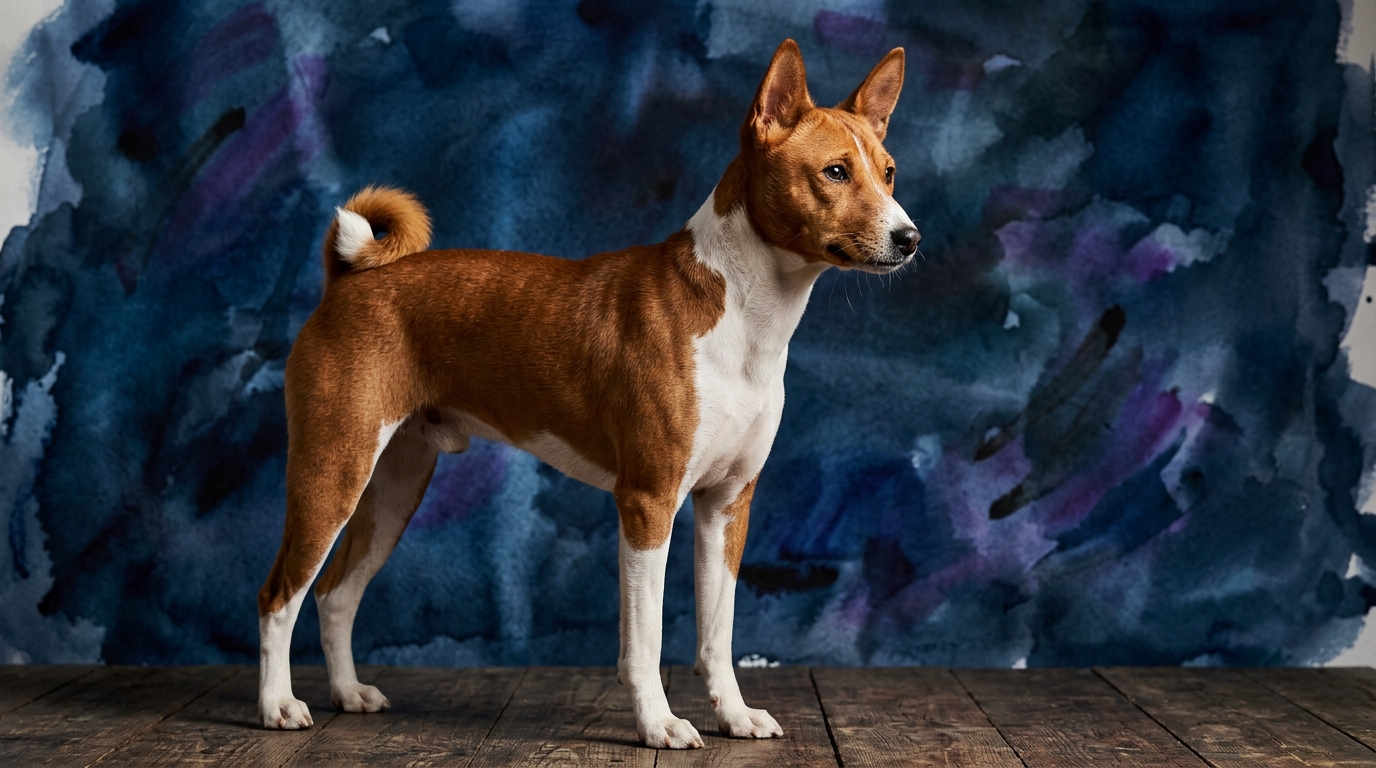
The Cosmic Pet Pet IQ Lab assesses canine intelligence across five key dimensions, providing a granular view of each breed's cognitive strengths. For the Basenji, ranked #78 by Coren for obedience, we observe a distinctive cognitive blueprint that prioritizes self-sufficiency and ingenuity.
Basenji's Problem Solving is rated an exceptional 5/5, indicating an extraordinary capacity for independent thought and devising novel strategies to navigate their environment or achieve personal goals. Their Training Speed, however, stands at a challenging 1/5, reflecting a strong preference for self-directed activity over repetitive instruction. Social Intelligence is a moderate 3/5, as they form deep bonds but often maintain an independent streak, not always seeking constant human interaction. Instinctive Drive is a profound 5/5, showcasing a powerful, self-reliant urge for hunting, tracking, and exploration. Finally, their Memory is solid at 4/5, enabling them to recall past experiences, routines, and successful tactics for future use.
In contrast, the Chesapeake Bay Retriever, a Sporting breed with a Coren rank of #27, presents a more cooperative and task-oriented cognitive profile. Their Problem Solving is a strong 4/5, demonstrating practical intelligence in goal-oriented scenarios, often learning from experience to refine their approach.
Chesapeake Bay Retrievers boast a Training Speed of 4/5, signifying a quick grasp of new commands and a willingness to perform tasks consistently with appropriate motivation. Their Social Intelligence is also 3/5, characterized by deep loyalty to their family while often being reserved or cautious with strangers. Instinctive Drive is a balanced 3/5, primarily focused on retrieving and working alongside a handler, rather than broad, self-directed hunting. Their Memory matches the Basenji at 4/5, allowing them to retain complex command sequences and recall specific training scenarios effectively.
Where the Basenji Wins Cognitively
The Basenji's unparalleled Problem Solving ability (5/5) truly sets it apart. This isn't about solving human-assigned tasks efficiently, but rather about their intrinsic capacity to independently assess situations and formulate creative, often surprising, solutions. For instance, a Basenji might figure out how to open a seemingly secure cabinet or escape a complex enclosure through sheer ingenuity, rather than brute force or learned obedience.
This exceptional problem-solving, coupled with their maximum Instinctive Drive (5/5), means Basenjis are masters of self-reliance in complex, dynamic environments. They possess an innate ability to navigate and succeed based on their own perceptions and drives, making them formidable independent hunters and explorers. Their cognitive strength lies in their autonomy and capacity for original thought, often leading to behaviors that can be perceived as mischievous but are, in fact, demonstrations of their acute intellect.
Where the Chesapeake Bay Retriever Wins Cognitively
The Chesapeake Bay Retriever's cognitive strengths lie in its practical application of intelligence, particularly its impressive Training Speed (4/5). This breed rapidly acquires and retains new commands, making them highly receptive to structured learning and performing complex sequences. Their willingness to engage in cooperative tasks means they excel in environments where consistent, directed learning is paramount, such as obedience trials or working roles.
Their Problem Solving (4/5), while slightly lower than the Basenji's, is highly effective within a working context. Chessies are adept at understanding and overcoming obstacles related to their tasks, such as navigating difficult terrain to retrieve a fallen bird or learning intricate scent discrimination. This practical, goal-oriented problem-solving, combined with their strong Memory (4/5), enables them to build a vast repertoire of learned behaviors and apply them reliably.
Which Is Easier to Train and Why
Without question, the Chesapeake Bay Retriever is significantly easier to train than the Basenji, a difference directly reflected in their respective Training Speed scores (4/5 vs. 1/5) and Coren ranks. Chessies possess an inherent desire to work cooperatively with their handlers, often finding satisfaction in performing tasks and receiving praise. Their quick learning curve allows them to master commands with fewer repetitions, translating into a more straightforward and rewarding training experience for most owners.
The Basenji, conversely, presents a substantial training challenge due to its low Training Speed and high Instinctive Drive. This breed often views human commands as suggestions rather than mandates, preferring to follow their own instincts and problem-solve independently. While they are capable of learning, their motivation is often internal, meaning owners must be exceptionally creative, patient, and consistent to engage them in structured training, often relying on positive reinforcement and making training feel like a game rather than a chore.
Which Suits Active Owners vs. Relaxed Owners
The Chesapeake Bay Retriever is an ideal companion for active owners who enjoy structured outdoor activities and want a cooperative partner. Their robust build, endurance, and strong retrieving drive make them excellent for hiking, swimming, hunting, and canine sports. Owners who appreciate a dog that thrives on having a job to do and can engage in consistent training will find the Chessie to be an incredibly rewarding and capable companion.
The Basenji, while possessing high energy, suits a different type of active owner — one who appreciates independence and can provide mental stimulation through novel challenges rather than repetitive tasks. They are excellent for owners who enjoy exploring on leash, can manage a strong prey drive, and find joy in a dog that thinks for itself. For owners seeking a more relaxed, less hands-on companion, the Basenji's independence and lower demand for constant human interaction might appeal, provided their need for mental engagement and secure containment are met.
The Verdict
Choose a Basenji if you appreciate a profoundly independent thinker with exceptional problem-solving skills, valuing a companion that challenges conventional training methods and offers a unique, often surprising, cognitive partnership.
Opt for a Chesapeake Bay Retriever if you desire a highly trainable, cooperative companion for active pursuits, thriving on structured tasks and forming a strong working bond through consistent engagement and shared activities.
🧠 Find Your Pet's IQ Score
Our Pet IQ Lab assessment covers 25+ tests across 5 cognitive dimensions — personalized to your breed.
Take the Full IQ Test →Frequently Asked Questions
Do Basenjis learn tricks easily?
Basenjis can learn tricks, but their low Training Speed means they require significant patience and creative, highly motivating approaches. They often learn best when the trick feels like a puzzle or game they choose to solve, rather than a repetitive command.
Are Chesapeake Bay Retrievers good for first-time dog owners?
Chesapeake Bay Retrievers can be suitable for first-time owners who are committed to consistent training, socialization, and providing ample exercise. Their cooperative nature makes them responsive, but their strength and drive necessitate dedicated guidance.
Which breed is better at adapting to new environments?
Both breeds possess a strong Memory and can adapt, but the Basenji's high Problem Solving and Instinctive Drive enable them to independently assess and navigate novel environments with self-reliance. The Chessie adapts well with handler guidance and structure.