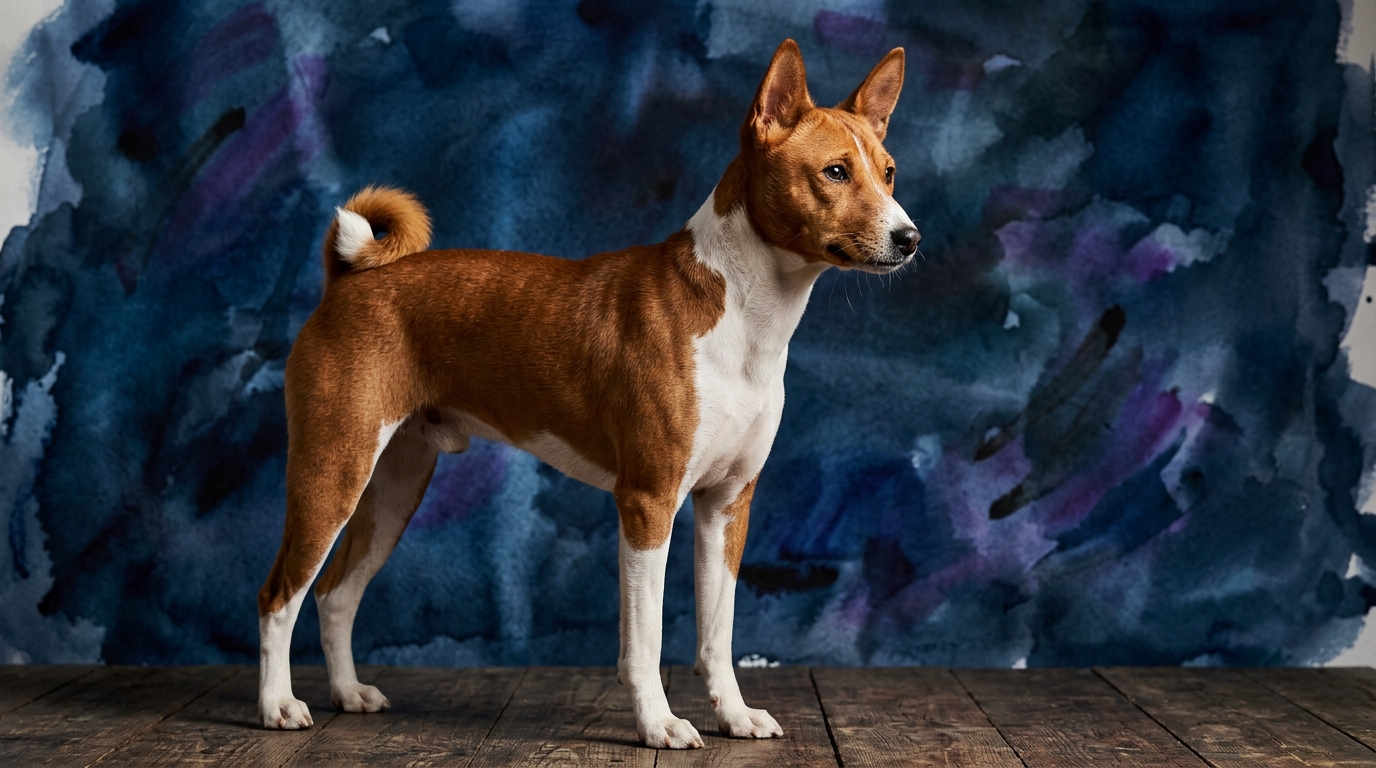
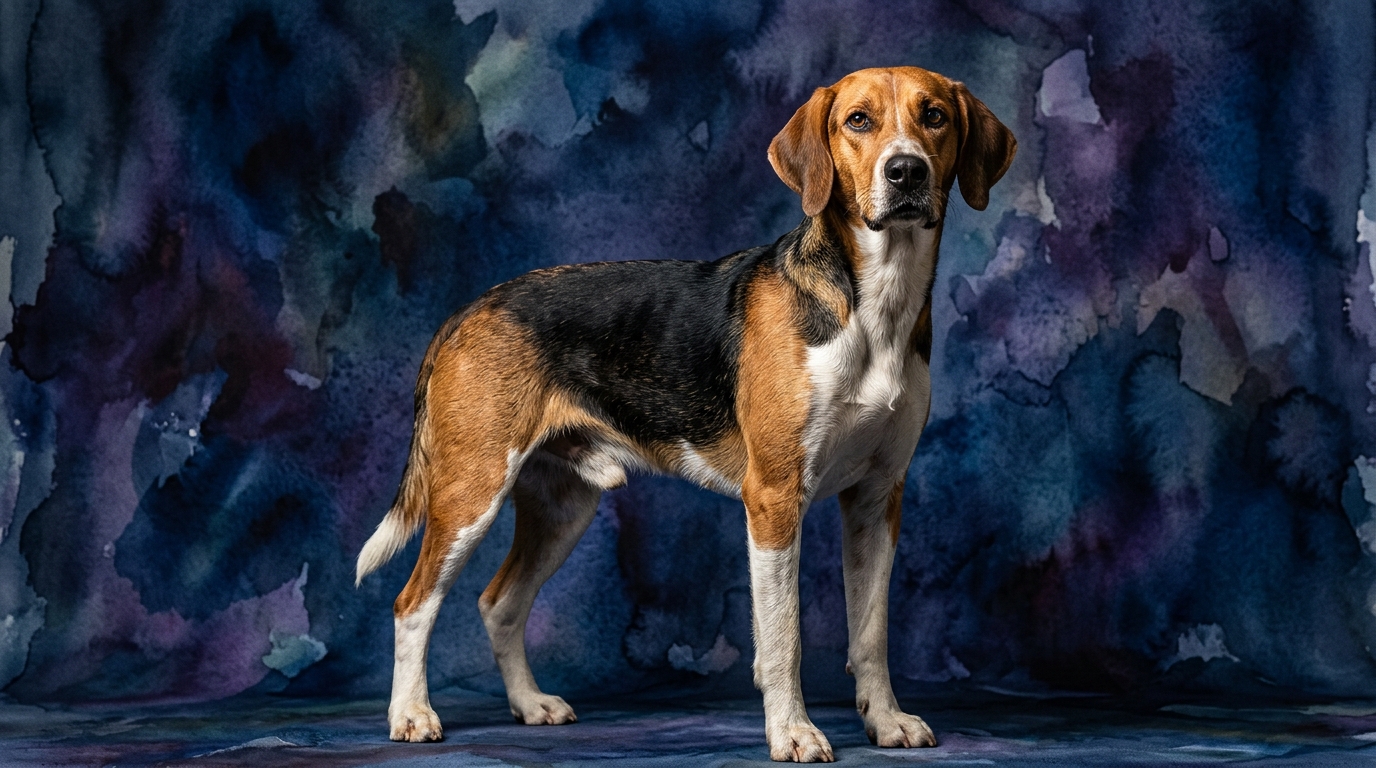
Side-by-Side Cognitive Profiles
The Cosmic Pet Pet IQ Lab employs a five-dimensional framework to assess canine intelligence, offering a nuanced understanding beyond simple obedience. For the Basenji and English Foxhound, both members of the Hound group, their scores paint a picture of specialized cognitive strengths.
**Basenji IQ Profile:** * **Problem Solving (5/5):** This breed exhibits exceptional capacity for independent thought and strategizing, often finding creative solutions to obstacles like opening latches or bypassing barriers. The Basenji doesn't wait for human direction to navigate complex situations, instead preferring to devise its own path, making it adept at outsmarting its environment. * **Training Speed (1/5):** Learning new commands is a significant challenge due to a strong independent streak and a tendency to prioritize self-interest over handler instruction. They grasp concepts slowly and require consistent, patient, and highly motivating approaches, often responding best to methods that make them believe the desired action was their own idea. Their ancient lineage as autonomous hunters means they are not inherently inclined to follow human orders without clear, immediate benefit to themselves. * **Social Intelligence (3/5):** Possesses a moderate understanding of social cues, both canine and human. While observant, their social interactions are often tempered by their independent nature, making them less outwardly effusive or overtly cooperative than some breeds, though they form strong bonds with their chosen family. * **Instinctive Drive (5/5):** Driven by powerful hunting instincts, including a keen sense of sight and smell, manifesting as a persistent urge to chase and explore. Their prey drive is intense and deeply ingrained from their African heritage, making them highly motivated by movement and scent. * **Memory (4/5):** Retains information well, particularly regarding routines, boundaries, and past experiences. This strong memory, combined with problem-solving skills, allows them to remember successful strategies for achieving their goals, even if those goals diverge from owner expectations.
**English Foxhound IQ Profile:** * **Problem Solving (3/5):** Demonstrates a solid, practical approach to problem-solving, primarily focused on tasks related to their working heritage, like tracking a scent trail. While capable, they are less inclined towards abstract or novel problem-solving compared to more independent breeds, preferring to stick to established methods. * **Training Speed (3/5):** Shows a moderate aptitude for learning new commands, benefitting from repetition and positive reinforcement, particularly when framed as a cooperative endeavor. They are generally cooperative and eager to please within a structured training environment, making them reasonably biddable and responsive to a handler's guidance. Their history as a pack animal means they are accustomed to working within a hierarchy and responding to cues from a leader. * **Social Intelligence (3/5):** Exhibits a good understanding of social dynamics, particularly within a pack or family unit. They are generally amiable and responsive to both human and canine interactions, fitting well into social structures and thriving on companionship. * **Instinctive Drive (3/5):** Possesses a strong, but manageable, scent-driven hunting instinct. While they enjoy tracking and exploring, their drive is often directed and channeled through group activity, making it less singularly focused on independent pursuit than the Basenji's. * **Memory (3/5):** Possesses a reliable memory for learned commands, routines, and familiar environments. This serves them well in consistent training and maintaining household structure, though perhaps without the strategic, self-serving recall seen in the Basenji.
Where the Basenji Shows Cognitive Edge
The Basenji clearly excels in raw problem-solving acumen, scoring a perfect 5/5. This breed doesn't simply follow; it analyzes, strategizes, and often devises its own solutions to perceived challenges, such as opening latches or bypassing barriers to reach a desired object. Their exceptional instinctive drive (5/5) means they are intensely focused on their inherent purpose, whether it's tracking a scent or exploring new territory, often with a singular, unyielding determination. Furthermore, their superior memory (4/5) allows them to recall past successful endeavors, reinforcing their self-directed problem-solving and making them adept at repeating actions that yielded desired outcomes, sometimes much to an owner's chagrin. This combination fosters a breed that navigates its world with a remarkable degree of self-sufficiency and cunning, often employing a trial-and-error approach to achieve desired outcomes, and then remembering the successful strategy for future use. Their cognitive strength lies in their ability to adapt and innovate without constant human intervention.
Where the English Foxhound Shows Cognitive Edge
The English Foxhound's cognitive strengths lie primarily in its moderate training speed (3/5) compared to the Basenji's 1/5. This higher biddability translates directly into an easier and more cooperative learning experience for owners. While not topping the charts in independent problem-solving, their ability to absorb and respond to commands with reasonable efficiency makes them more amenable to structured instruction and teamwork, proving particularly beneficial for owners interested in canine sports or organized scent work. Their balanced instinctive drive (3/5) is also a cognitive advantage in a domestic setting, as it is powerful enough for engaging activities but less prone to the overwhelming, self-directed pursuits that characterize the Basenji, allowing their cognitive efforts to be more readily channeled by human guidance towards cooperative goals. This makes them more predictable and manageable in a structured environment.
Training Aptitude: Basenji vs. English Foxhound
The English Foxhound is unequivocally easier to train than the Basenji, a difference rooted in their fundamental behavioral dispositions. The Basenji's 1/5 training speed score reflects its ancient, independent nature; these dogs were bred to hunt autonomously in challenging terrain, making human direction secondary to their own initiative. They often perceive commands as suggestions rather than mandates, requiring immense patience, creativity, and high-value rewards to elicit compliance. Their strong problem-solving skills are frequently applied to outsmarting their trainers rather than cooperating, such as figuring out how to open gates or avoid recall. Their cognitive structure prioritizes self-reliance, making consistent adherence to human commands a low priority for them.
In contrast, the English Foxhound, with its 3/5 training speed, developed as a cooperative pack hunter, accustomed to working in concert with other dogs and human handlers. They possess a greater intrinsic desire to please and respond to leadership, making them more receptive to traditional training methods and less likely to challenge authority. Their focus is more on collaboration and adherence to established rules, whereas the Basenji's is on self-determination and independent action. This inherent biddability means the English Foxhound generally learns commands more quickly and reliably, provided training is consistent and positive.
Activity Levels and Owner Suitability
Both breeds generally require active owners, but for different reasons stemming from their cognitive profiles. The Basenji, with its intense instinctive drive (5/5) and high problem-solving capacity, thrives with owners who can provide consistent mental and physical challenges that engage their cunning. They need outlets for their boundless curiosity and independent spirit, meaning structured activities like agility, lure coursing, or extensive, secure off-leash exploration in a safe area are vital. A relaxed owner might find a Basenji's self-directed energy overwhelming, leading to boredom-induced destructive behaviors like chewing or escaping, as their sharp minds constantly seek stimulation. Their cognitive makeup demands an owner who is as clever and persistent as they are.
The English Foxhound, while also active, suits owners who enjoy structured outdoor pursuits like long hikes, jogging, or scent work that leverage their natural tracking abilities. Their moderate instinctive drive (3/5) means they appreciate regular exercise and engagement, but are often more content with group activities and less prone to the incessant, independent exploration of a Basenji. They excel when given a 'job' to do alongside their human companions, enjoying the cooperative aspect of shared endeavors. Neither breed is ideal for a truly relaxed, sedentary lifestyle, but the Basenji demands a more proactive, creative, and often unconventional approach to engagement due to its unique cognitive makeup, while the Foxhound benefits from regular, purposeful activity with its human 'pack'.
The Verdict
Opt for a Basenji if you are an experienced, patient owner who appreciates a highly independent, cunning companion and is prepared for creative training and extensive mental stimulation.
Select an English Foxhound if you seek a cooperative, scent-driven companion for active outdoor pursuits and value a more biddable dog for traditional training.
🧠 Find Your Pet's IQ Score
Our Pet IQ Lab assessment covers 25+ tests across 5 cognitive dimensions — personalized to your breed.
Take the Full IQ Test →Frequently Asked Questions
Are Basenjis difficult to live with due to their independence?
Basenjis can be challenging due to their strong will and independent problem-solving, often leading to behaviors like counter-surfing or escaping. Consistent training, secure environments, and ample mental and physical engagement are crucial for a harmonious household, as their cognitive drive for self-direction is powerful.
Do English Foxhounds require a lot of exercise?
Yes, English Foxhounds are athletic working dogs that need significant daily exercise to stay content and prevent boredom. Long walks, runs, or opportunities for scent work are important for their well-being, as their moderate instinctive drive still requires a purposeful outlet.
How do their vocalizations differ?
Basenjis are famously 'barkless,' instead producing a unique yodel-like sound, chortle, or growl, reflecting their distinct communication style. English Foxhounds, true to their hound nature, are known for their deep, resonant baying, especially when on a scent or excited, a characteristic vocalization of a pack hunter.