Side-by-Side Cognitive Profiles
The Cosmic Pet Pet IQ Lab employs a five-dimensional framework to assess canine intelligence, offering a granular view beyond simple obedience scores. Let's examine how the Basenji and Giant Schnauzer measure up in each dimension.
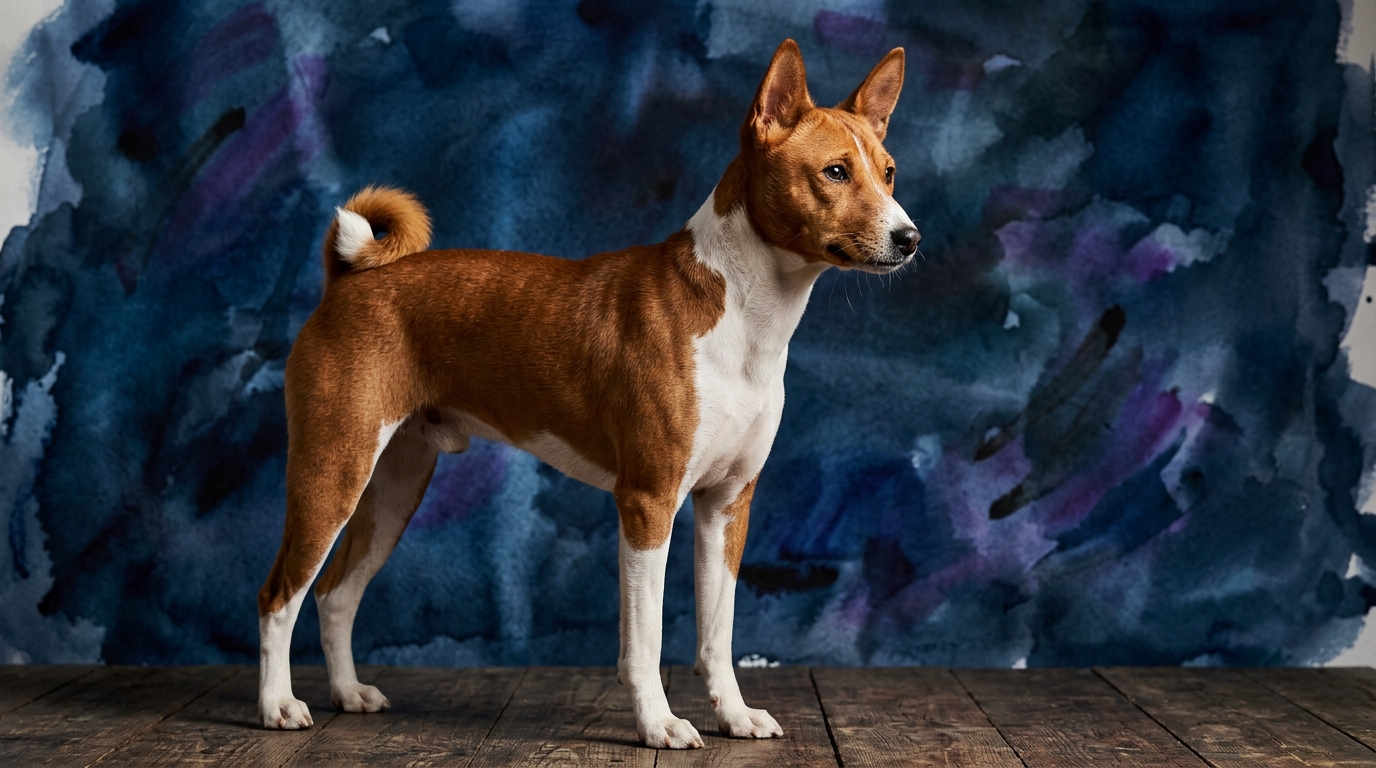
The Basenji, with a Coren rank of #78, exhibits a cognitive profile sculpted by its ancient heritage as a self-sufficient hunter. Its problem-solving ability is exceptional (5/5), indicating a profound capacity for independent thought and ingenuity when faced with obstacles or desired outcomes. However, this breed's training speed registers a very challenging 1/5, reflecting a strong independent streak and a disinterest in rote obedience. Social intelligence is moderate (3/5); while they understand social cues, they often prioritize their own agenda. Their instinctive drive is extremely high (5/5), encompassing powerful prey drive and tracking instincts. Memory is robust (4/5), allowing them to retain complex information and experiences.
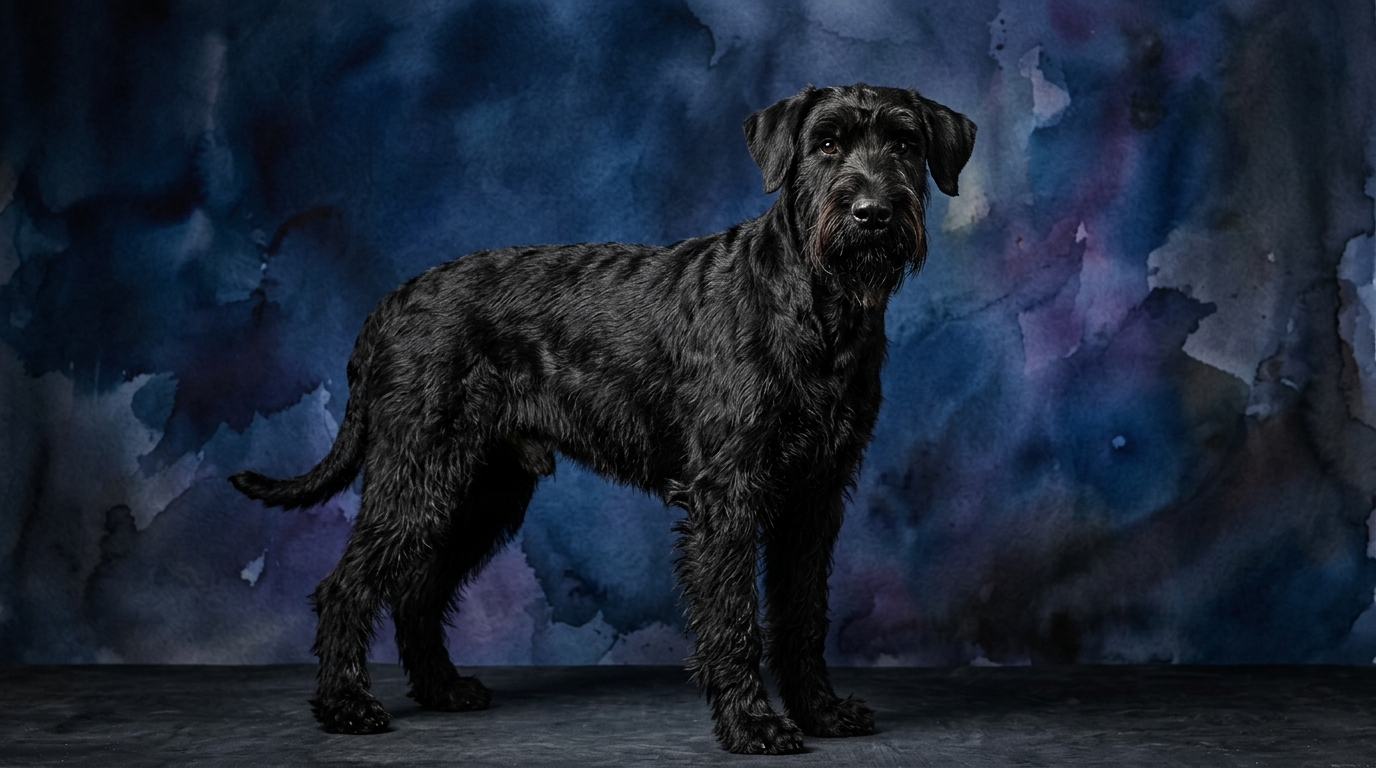
In contrast, the Giant Schnauzer, holding a Coren rank of #28, presents a cognitive makeup suited to its role as a working and protection dog. Its problem-solving ability is strong (4/5), demonstrating competence in navigating challenges, often within a learned framework. Training speed is good (4/5), indicating a readiness and capability to learn and execute commands efficiently. Social intelligence is moderate (3/5); they are deeply loyal to their family but can be reserved or wary with strangers, requiring careful socialization. Their instinctive drive is moderate (3/5), geared more towards guarding and partnership work than independent hunting. Memory is robust (4/5), ensuring consistent recall of learned behaviors and interactions.
Where the Basenji Excels Cognitively
The Basenji's standout cognitive strength lies in its extraordinary problem-solving ability, scoring a perfect 5/5. This breed frequently demonstrates an uncanny knack for figuring out complex situations, whether it's unlatching a gate, opening a cupboard, or devising an escape route from a seemingly secure enclosure. Their solutions are often self-initiated and highly creative, driven by an intense curiosity and a powerful independent streak that resists conventional boundaries. This isn't about following instructions; it's about independent thought and action to achieve a goal, often to the surprise and occasional frustration of their human companions.
Fueling this ingenuity is their exceptionally high instinctive drive (5/5). This drive manifests as relentless persistence in their self-appointed tasks, whether it involves tracking an intriguing scent, pursuing a perceived quarry, or simply exploring their environment with boundless energy. Their strong memory (4/5) further supports this by enabling them to recall past successes and failures, allowing them to refine their approach to new challenges and learn from their experiences. Owners often observe Basenjis employing learned tactics from previous encounters to overcome novel obstacles, showcasing their adaptive intelligence.
Where the Giant Schnauzer Excels Cognitively
The Giant Schnauzer truly shines in areas involving collaboration and structured learning, primarily due to its strong training speed (4/5). This breed absorbs new commands, complex routines, and intricate tasks with relative ease, displaying a readiness for obedience and a purpose-driven approach to learning. While their problem-solving score (4/5) is also good, it is often applied within the framework of learned procedures and human guidance, rather than purely novel, self-initiated solutions. They are adept at understanding and executing multi-step commands, making them suitable for roles requiring precision and consistency.
Their moderate instinctive drive (3/5) is particularly well-suited for working alongside humans, providing a solid foundation for consistent performance in various working roles, from protection to advanced obedience. This drive translates into a desire for purpose and an eagerness to engage in tasks that provide mental stimulation. The combination of their receptive training speed and a reliable memory (4/5) ensures that once a task or command is learned, it is retained for long periods, contributing significantly to their reliability and proficiency in complex activities. They thrive on having a job to do and excel when given clear direction.
Which Is Easier to Train and Why
Based on our IQ Lab data, the Giant Schnauzer is significantly easier to train. Their training speed (4/5) reflects a natural inclination to engage with human instruction and a clear desire for purpose. They are generally responsive to positive reinforcement, appreciate the structure of training sessions, and derive satisfaction from mastering new skills. Their working breed heritage means they often thrive on having a job to do, and learning commands and tasks fulfills this intrinsic need, making them eager participants in the training process. They are often described as willing and eager to please, which simplifies the learning curve for both dog and owner.
The Basenji, with a training speed of 1/5, presents a substantial challenge to even experienced trainers. This isn't indicative of a lack of cognitive capacity to understand, but rather a profound independent spirit and a tendency to question the necessity or benefit of human commands. They operate on their own terms, often described as 'cat-like' in their autonomy; they learn what benefits them directly and may disregard what doesn't align with their immediate interests. Their strong instinctive drive (5/5) means they are far more likely to follow a compelling scent or pursue a perceived prey item than to heed a 'recall' command. Training a Basenji demands immense patience, creativity, and finding ways to make training intrinsically rewarding and engaging for the dog, often leveraging their problem-solving skills to turn training into a complex game rather than rote obedience.
Which Suits Active Owners vs. Relaxed Owners
Both the Basenji and the Giant Schnauzer demand considerable mental and physical engagement, though for distinct reasons, making neither truly suitable for genuinely 'relaxed' owners seeking a low-maintenance companion. An owner seeking a dog for structured, high-level activities like competitive obedience, advanced agility, or protection sports would find the Giant Schnauzer a more willing and capable partner. Their moderate instinctive drive and good training speed make them excellent candidates for advanced training and consistent performance. They require regular, vigorous exercise and consistent mental tasks to prevent boredom and channel their inherent protective instincts constructively.
An owner who appreciates a dog with profound independent thought and boundless curiosity, and is prepared for unconventional challenges, might be drawn to the Basenji. While not suited for formal obedience in the same way as a Giant Schnauzer, they require significant physical activity to satisfy their strong instinctive drive and ample opportunities for independent exploration, always within a secure environment. Their activity is often self-directed and exploratory, requiring an owner who can provide outlets for this without imposing strict control. For owners who value a unique, self-reliant companion and can manage their independent nature, the Basenji offers a rewarding, albeit demanding, experience. Neither breed is content with minimal interaction or sedentary living; both require dedicated, engaged owners.
The Verdict
Choose a Basenji if you value an independent thinker with exceptional problem-solving skills and are prepared for a training journey that prioritizes ingenuity over strict obedience. They suit owners who appreciate a unique, self-directed companion and can provide ample safe exploration.
Opt for a Giant Schnauzer if you seek a reliable, trainable partner for structured activities and protection, valuing a dog that thrives on purpose and collaboration. They are best for owners committed to consistent training and providing a 'job' for their canine companion.
🧠 Find Your Pet's IQ Score
Our Pet IQ Lab assessment covers 25+ tests across 5 cognitive dimensions — personalized to your breed.
Take the Full IQ Test →Frequently Asked Questions
How does the Basenji's problem-solving compare to its training speed?
The Basenji exhibits a top-tier problem-solving ability (5/5), demonstrating a natural talent for figuring out complex situations independently. However, this contrasts sharply with their very low training speed (1/5), indicating they are more inclined to solve problems for their own benefit than to readily follow human commands or learn repetitive tasks.
What does the Coren rank signify for these breeds?
The Coren rank primarily reflects a breed's working and obedience intelligence, measuring how quickly a dog learns new commands and obeys them. The Giant Schnauzer's rank of #28 suggests a strong capacity for obedience and quick learning, while the Basenji's rank of #78 indicates a more challenging training experience due to its independent nature and selective responsiveness to commands.
Are these breeds good for first-time dog owners?
Neither breed is typically recommended for first-time dog owners due to their specific cognitive and behavioral needs. The Basenji's extreme independence and training challenges require experienced handling, while the Giant Schnauzer's protective instincts and strong drive for purpose demand consistent, knowledgeable guidance to thrive.