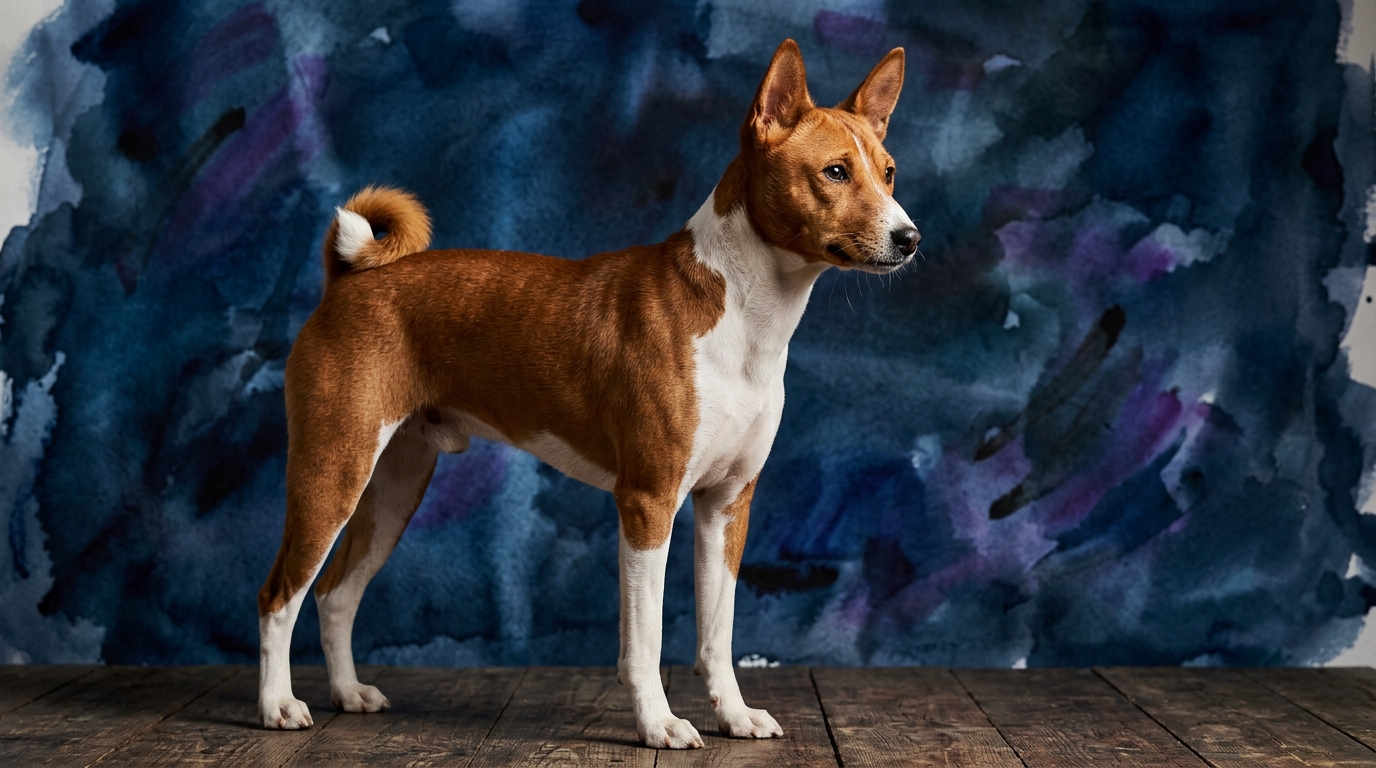
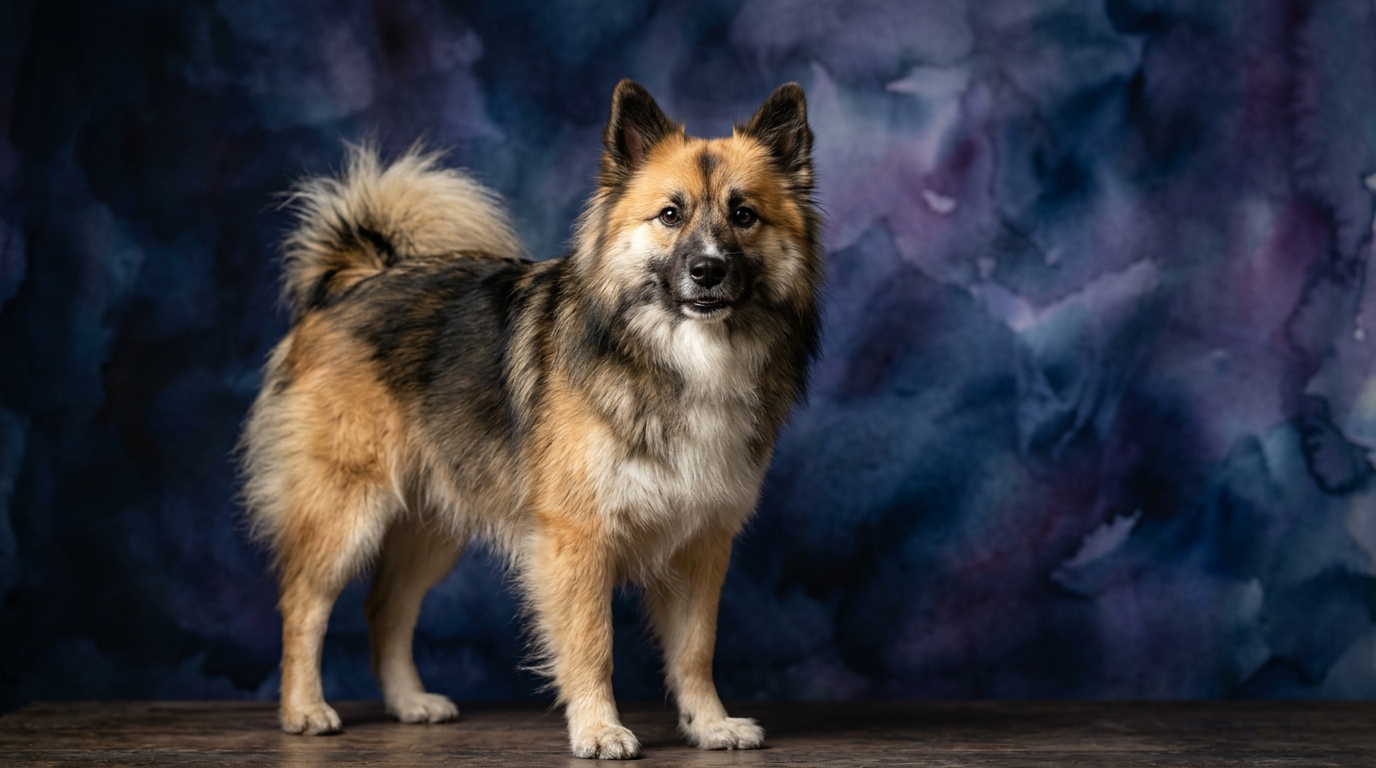
Side-by-Side IQ Profile: Basenji vs. Icelandic Sheepdog
The Cosmic Pet Pet IQ Lab employs a five-dimensional framework to assess canine cognition, providing a nuanced understanding beyond simple obedience. For the Basenji and Icelandic Sheepdog, these profiles highlight distinct mental architectures.
The **Basenji**, a Hound breed ranked #78 by Coren, presents a fascinating cognitive makeup. Their Problem Solving is rated an exceptional 5/5, indicating a profound capacity for independent thought and creative solutions. However, their Training Speed scores a challenging 1/5, reflecting a strong will and disinterest in repetitive commands. Social Intelligence is moderate at 3/5, suggesting selective engagement, while Instinctive Drive is a powerful 5/5, showcasing intense natural urges. Finally, their Memory is robust at 4/5, enabling them to retain experiences and strategies.
The **Icelandic Sheepdog**, a Herding breed not Coren-ranked, offers a more balanced cognitive profile. Their Problem Solving is a steady 3/5, indicating practical intelligence for everyday challenges. Training Speed also scores 3/5, suggesting a cooperative and teachable disposition. Social Intelligence aligns with the Basenji at 3/5, pointing to generally amiable interactions. Their Instinctive Drive is a moderate 3/5, reflecting manageable herding tendencies, and their Memory also stands at 3/5, providing reliable recall for routines and learned behaviors.
Where the Basenji Excels Cognitively
The Basenji’s cognitive strengths shine brightest in its exceptional problem-solving capabilities. With a top score of 5/5, these dogs are not just observers; they are active architects of their environment, constantly assessing situations for opportunities and devising ingenious methods to achieve their desires. This might manifest as opening latches, scaling fences, or meticulously planning how to reach a countertop delicacy. Their strategic thinking is truly remarkable, often surprising owners with the complexity of their schemes.
Furthermore, their powerful instinctive drive, also rated 5/5, gives them an intense focus and determination in pursuits related to their ancient heritage. This isn't just about chasing squirrels; it's a deep, intrinsic motivation that fuels their exploration and engagement with the world, making them incredibly self-directed and persistent. Finally, their robust memory (4/5) supports these traits, allowing them to recall successful strategies, remember details about their environment, and learn from past experiences, even if those lessons aren't always what their human companions intended.
Where the Icelandic Sheepdog Holds a Cognitive Edge
Where the Icelandic Sheepdog truly distinguishes itself cognitively is in its amenability to training, reflected in its 3/5 Training Speed score, a significant advantage over the Basenji's 1/5. This breed possesses a genuine desire to please and a cooperative spirit that makes them far more receptive to learning commands and routines from their human companions. While not instant learners, their steady pace and willingness to engage in structured lessons mean they absorb and retain information effectively through positive reinforcement.
Their moderate instinctive drive (3/5) is also a cognitive win in a domestic context. Unlike the Basenji's intense, often overwhelming drives, the Icelandic Sheepdog's herding instincts are present but more manageable, allowing them to be redirected and integrated into family life without constant battle against ingrained urges. This balance makes them more adaptable and less prone to self-directed 'projects' that conflict with owner expectations.
Training Dynamics: Which Breed is Easier and Why?
When it comes to ease of training, the Icelandic Sheepdog undeniably holds the advantage. Their 3/5 Training Speed score, coupled with a cooperative disposition, means they approach learning with an eagerness to participate. They are generally responsive to cues and motivated by praise and rewards, making the process of teaching basic obedience and even more complex tasks a rewarding experience for both dog and owner. For instance, an Icelandic Sheepdog is more likely to engage in repetitive drills for 'sit' or 'stay' with enthusiasm, seeking to understand and fulfill the request.
In stark contrast, the Basenji's 1/5 Training Speed score reflects a breed that views formal training as largely optional. Their high problem-solving abilities (5/5) are often directed towards outsmarting their trainers rather than complying. A Basenji might learn a command quickly but choose to execute it only if it aligns with their immediate interest, or if they perceive a compelling reason. This isn't a lack of understanding; it's a profound independence and a strong preference for self-direction, often leading to behaviors such as selective deafness or creative avoidance during training sessions.
Matching Cognitive Profiles to Owner Lifestyles
For owners with an active lifestyle who appreciate a dog that is engaged and participatory, the Icelandic Sheepdog is often a more natural fit. Their moderate instinctive drive (3/5) means they thrive on activities like hiking, agility, or even herding games, where they can utilize their physical energy and moderate problem-solving skills in a cooperative manner. They enjoy being involved in family activities and appreciate consistent mental and physical stimulation that aligns with a shared purpose. Their moderate social intelligence (3/5) means they generally integrate well into various social settings, enjoying interaction rather than seeking solitude.
Conversely, the Basenji, with its intense instinctive drive (5/5) and exceptional problem-solving (5/5), demands a specific kind of active ownership – one that can channel their profound independence and provide ample mental challenge without relying heavily on formal obedience. A 'relaxed' owner who expects an easily managed, consistently compliant companion will likely find the Basenji’s self-directed nature and low training speed frustrating. However, for an active owner who cherishes a dog’s autonomy, enjoys creative problem-solving, and is prepared for a companion that requires sophisticated engagement rather than simple commands, the Basenji offers a uniquely stimulating partnership. Their activity often involves exploring, scent tracking, and independent play rather than structured team sports.
The Verdict
Choose a Basenji if you are an experienced owner who values a profoundly independent, strategic thinker and are prepared for a stimulating partnership that prioritizes mental engagement over strict obedience.
Opt for an Icelandic Sheepdog if you seek a cooperative, trainable companion for an active family life, one that enjoys shared activities and responds well to consistent, positive reinforcement.
🧠 Find Your Pet's IQ Score
Our Pet IQ Lab assessment covers 25+ tests across 5 cognitive dimensions — personalized to your breed.
Take the Full IQ Test →Frequently Asked Questions
Are Basenjis truly difficult to train, or do they just learn differently?
Basenjis are not difficult to train due to a lack of understanding; rather, their profound independence and low training speed (1/5) mean they learn on their own terms. They excel at problem-solving (5/5) and often choose whether or not to comply based on their own assessment of the situation, making traditional obedience training a significant challenge.
How do the instinctive drives of these two breeds differ in daily life?
The Basenji's intense instinctive drive (5/5) manifests as a powerful prey drive and a strong urge to explore independently, often leading them to follow scents or chase small animals with unwavering focus. The Icelandic Sheepdog's moderate instinctive drive (3/5) is primarily a herding instinct, which can be managed and channeled into constructive activities like agility or family games, without the same level of self-directed, overriding urges.
Which breed is better for a first-time dog owner?
Given its cooperative nature and moderate training speed (3/5), the Icelandic Sheepdog is generally a more suitable choice for first-time dog owners who are committed to consistent positive reinforcement. The Basenji's extreme independence and challenging training speed (1/5) typically require an experienced owner prepared for a unique and often demanding cognitive partnership.