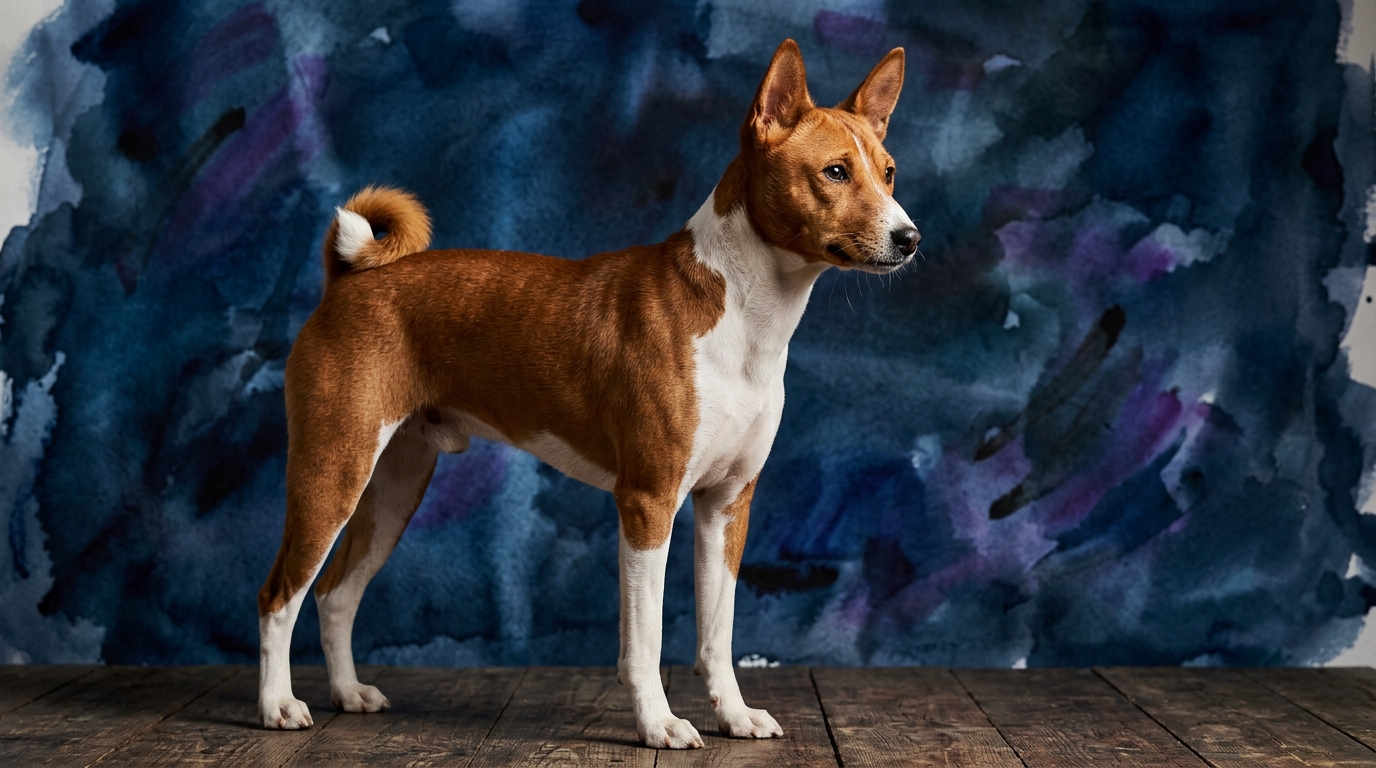
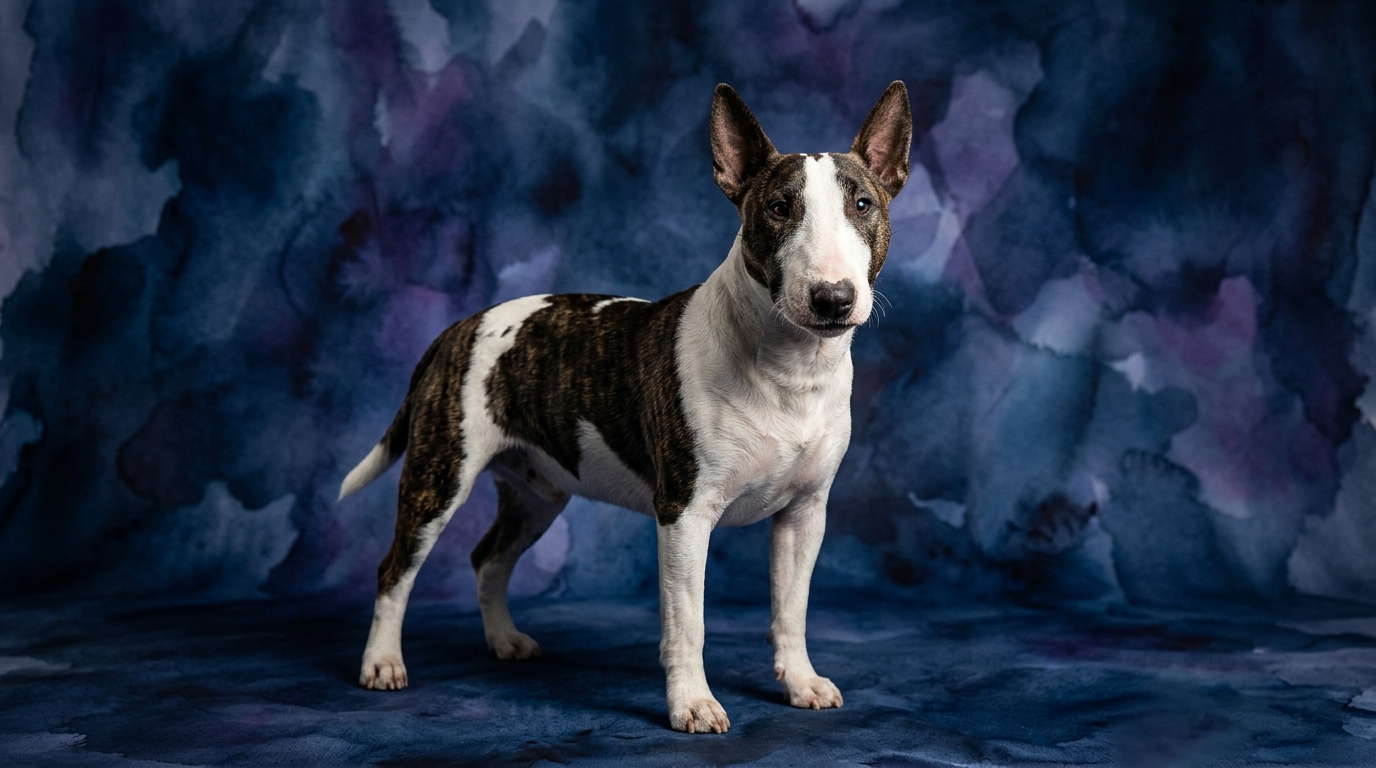
Side-by-Side IQ Profile: Basenji vs. Miniature Bull Terrier
At The Cosmic Pet Pet IQ Lab, we evaluate canine cognition across five crucial dimensions, offering a nuanced understanding beyond simple obedience. The Basenji, an ancient barkless hound, presents a unique cognitive blueprint, while the Miniature Bull Terrier, a compact and robust companion, showcases a different set of mental aptitudes.
The Basenji scores a perfect 5/5 in Problem Solving, indicating an exceptional capacity for independent thought and strategic thinking to achieve its goals. Its Training Speed, however, registers a low 1/5, reflecting a strong self-will and minimal inclination to comply with human directives if not immediately beneficial. Social Intelligence sits at 3/5, suggesting a selective engagement with both humans and other canines, often preferring observation over overt interaction. A dominant 5/5 in Instinctive Drive highlights a powerful urge to hunt, explore, and follow scents, typical of its ancestral role. Finally, its Memory is robust at 4/5, allowing it to recall complex spatial layouts and past experiences effectively.
In contrast, the Miniature Bull Terrier exhibits a more balanced cognitive profile, though no less distinctive. Its Problem Solving ability is rated at 3/5, demonstrating an average capacity to navigate challenges, often with a playful or determined approach. Training Speed is also 3/5, indicating an average pace of learning and responsiveness to consistent guidance. Social Intelligence, matching the Basenji at 3/5, suggests a friendly and engaging nature, though sometimes with a boisterous enthusiasm that requires management. Instinctive Drive is a moderate 3/5, present but typically directed towards play or interaction rather than intense independent hunting. Its Memory also stands at 3/5, sufficient for retaining routines and learned cues without the same depth as the Basenji.
Where the Basenji's Mind Shines Brighter
The Basenji's cognitive strengths are deeply rooted in its heritage as an independent hunter and survivor. Its perfect 5/5 in Problem Solving means this breed can meticulously plan and execute strategies to overcome obstacles, whether that's figuring out how to open a seemingly secure gate or devising methods to reach a coveted treat. This isn't about rote learning; it's about adaptive, creative thinking that often outsmarts conventional containment. Their superior memory (4/5) complements this, allowing them to recall past successes and apply learned solutions to new scenarios, making them incredibly resourceful and often frustratingly clever companions.
Coupled with an Instinctive Drive of 5/5, the Basenji possesses an unwavering focus on its primal urges. This means a strong prey drive, an insatiable curiosity for exploration, and a deep connection to its environment. This drive fuels their problem-solving, pushing them to navigate complex terrains, follow faint trails, and persistently pursue an objective. Owners often observe them meticulously scent-tracking or patiently observing their surroundings, processing information with a singular purpose. This cognitive combination makes them unparalleled at independent ventures, but also means their focus is often internally driven rather than externally directed by human command.
Miniature Bull Terrier: A Different Kind of Cognitive Edge
While the Basenji excels in independent cunning, the Miniature Bull Terrier's cognitive strengths lie in a more adaptable and interactive intelligence. Its moderate Problem Solving (3/5) is often applied with a characteristic terrier determination, allowing them to work through puzzles or learn new games with enthusiasm, even if not with the Basenji's complex strategizing. This breed typically approaches challenges with a spirited, sometimes headstrong, persistence that can be endearing.
The Miniature Bull Terrier's balanced Training Speed (3/5) and Social Intelligence (3/5) offer a distinct advantage in domestic settings. Unlike the Basenji's often aloof independence, the Mini Bull Terrier is generally more receptive to human interaction and guidance. Their cognitive profile suggests they enjoy engaging with their owners and are more inclined to participate in training activities, especially when framed as a fun, interactive game. While they possess a terrier's typical tenacity, their willingness to learn and please, even if sometimes overshadowed by a playful streak, makes them generally more amenable to structured lessons and social cues within a family unit. Their memory (3/5) is well-suited for retaining these consistent training patterns and daily routines.
Training Dynamics: A Tale of Two Temperaments
When it comes to training, the Basenji and Miniature Bull Terrier present vastly different experiences, directly correlating to their IQ profiles. The Basenji's Training Speed of 1/5 is a significant indicator of its approach to learning. This isn't a lack of capacity to understand, but rather a profound lack of motivation to perform actions that don't align with its own perceived benefit. They are master evaluators of cost-benefit, often choosing not to comply if the reward isn't compelling enough or if their instinctive drive (5/5) is pulling them elsewhere. Commands are suggestions, not imperatives, and their high problem-solving means they are adept at finding loopholes or simply ignoring directives. Training a Basenji demands immense patience, creativity, and a deep understanding of their independent nature, often requiring owners to make the desired behavior seem like the dog's own idea.
The Miniature Bull Terrier, with a Training Speed of 3/5, offers a more conventional training journey. While they possess the typical terrier exuberance and a streak of stubbornness, they are generally more responsive to positive reinforcement and consistent guidance. Their moderate social intelligence (3/5) means they value interaction and praise, which can be powerful motivators. They are often eager to please, especially if training is made fun and engaging. While they may test boundaries or get distracted, a patient and firm owner will find them capable of learning a wide range of commands and behaviors. Their problem-solving (3/5) is often channeled into learning new tricks or navigating playful challenges, making them more receptive to collaborative learning experiences than their Basenji counterparts.
Matching Cognitive Profiles to Lifestyles
Understanding these cognitive distinctions is key to choosing a companion that truly complements your lifestyle. The Basenji, with its high Problem Solving (5/5) and Instinctive Drive (5/5), thrives with active, experienced owners who appreciate an independent and often challenging canine mind. These dogs require significant mental stimulation to prevent boredom, which they will inevitably solve by creating their own 'projects' – often destructive ones. Owners must be prepared for a dog that needs secure containment, enjoys intricate puzzle toys, and benefits from activities like lure coursing or scent work that tap into their natural instincts. They are not for the relaxed owner seeking a biddable, always-obedient companion; they demand engagement, respect for their autonomy, and a good sense of humor for their clever antics. Their social intelligence (3/5) means they form strong bonds but may not be overly effusive with strangers.
The Miniature Bull Terrier, with its balanced cognitive scores, suits active owners who enjoy an engaged, spirited, and sometimes boisterous companion. While they also require regular physical exercise and mental engagement, their moderate training speed (3/5) and social intelligence (3/5) mean they are generally more eager to participate in family activities and structured training. They enjoy interactive play, consistent routines, and benefit from activities that channel their energy and determination, such as agility or obedience classes. This breed can adapt to a slightly less intense lifestyle than a Basenji, provided they receive sufficient attention and consistent direction. They are generally more outwardly affectionate and socially adaptable, making them a good fit for families who desire an active, playful, and responsive dog.
The Verdict: When to Choose Each Canine Companion
The Verdict
Choose a Basenji if you are an experienced, active owner ready for a highly independent, cunning, and resourceful companion who challenges conventional training methods and thrives on self-directed exploration. Be prepared for a dog that thinks for itself and requires consistent mental engagement to prevent ingenious mischief.
Opt for a Miniature Bull Terrier if you seek an active, spirited, and engaging companion who responds well to consistent, positive training and enjoys interactive play with their family. They offer a more traditional, albeit still determined, training experience and integrate readily into an active household that values their playful nature.
🧠 Find Your Pet's IQ Score
Our Pet IQ Lab assessment covers 25+ tests across 5 cognitive dimensions — personalized to your breed.
Take the Full IQ Test →Frequently Asked Questions
Is a Basenji a good choice for a first-time dog owner?
Generally, no. Their low Training Speed (1/5) and high Problem Solving (5/5) make them exceptionally challenging for novice owners who may not be prepared for their independent nature and tendency to outsmart traditional training methods. They require a deep understanding of canine behavior and a lot of patience.
Do Miniature Bull Terriers require a lot of exercise?
Yes, Miniature Bull Terriers are active dogs that require regular exercise to satisfy their moderate Instinctive Drive (3/5) and maintain their physical and mental well-being. Daily walks, playtime, and engaging activities are essential to prevent boredom and destructive behaviors associated with pent-up energy.
How do Basenjis and Miniature Bull Terriers interact with children?
Basenjis (Social Intelligence 3/5) can be tolerant but may prefer calm interactions and might not be as overtly playful or patient with boisterous children, often forming stronger bonds with one or two family members. Miniature Bull Terriers (Social Intelligence 3/5) are generally spirited and playful, often enjoying children's company, but their boisterous nature means supervision is crucial to prevent accidental rough play.