A Side-by-Side Look at Their IQ Profiles
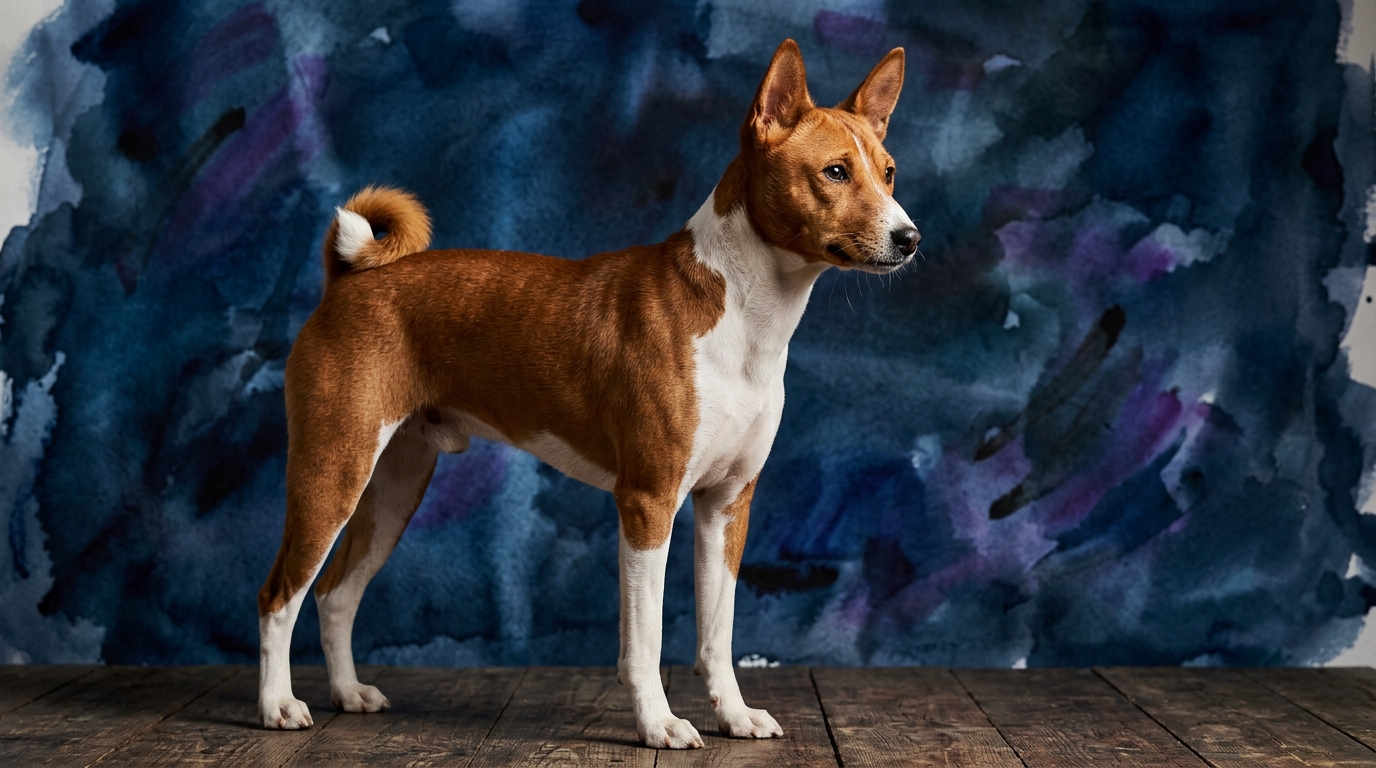
The Cosmic Pet Pet IQ Lab employs a multi-dimensional framework to assess canine cognition, moving beyond simplistic notions of 'smartness' to evaluate specific intellectual facets. For the Basenji, an ancestral breed originating from central Africa, this framework highlights a unique blend of self-reliance and acute perception. Their problem-solving ability scores a remarkable 5/5, indicating a high capacity for independent thought and figuring out complex situations without human guidance. However, their training speed is a low 1/5, reflecting a strong independent streak and often a disinterest in conventional obedience. Social intelligence for the Basenji sits at 3/5, suggesting they can navigate social cues but often prioritize their own agenda. Their instinctive drive is a powerful 5/5, showcasing a strong natural urge to hunt, explore, and follow scents, a remnant of their primitive heritage. Finally, their memory is rated 4/5, enabling them to recall complex sequences and locations effectively.
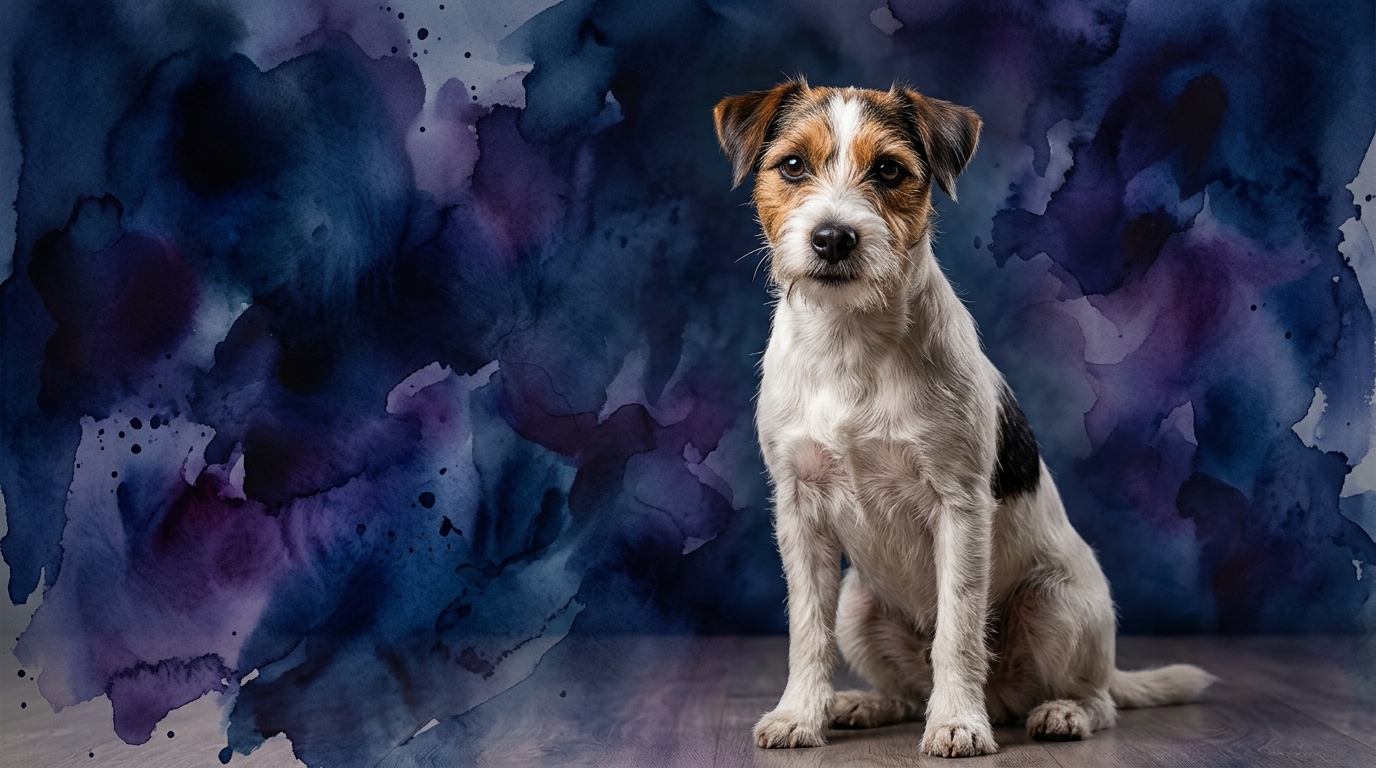
In contrast, the Parson Russell Terrier, a breed developed in England for fox hunting, presents a more balanced, albeit different, cognitive profile. While not Coren-ranked, our IQ metrics paint a clear picture of their working dog heritage. Their problem-solving ability is a solid 3/5, indicating they can tackle challenges but might rely more on trial and error or human direction than the Basenji. Training speed for the Parson Russell Terrier is a 3/5, suggesting a moderate willingness to learn and respond to commands, making them more receptive to training efforts. Their social intelligence also scores 3/5, similar to the Basenji, implying they can adapt to social situations but maintain a degree of terrier independence. Instictive drive is 3/5, present and active, but perhaps more channeled towards specific tasks than the Basenji's broader environmental exploration. Their memory is also a 3/5, indicating a functional capacity to retain information relevant to their activities.
Where the Basenji's Mind Shines Brightest
The Basenji's cognitive strengths are most evident in their exceptional problem-solving capabilities, rated at a perfect 5/5. This isn't about solving puzzles for human amusement; it's about an innate capacity to navigate and manipulate their environment to achieve their own goals. A Basenji might figure out how to open childproof latches, scale fences, or devise complex escape routes from confined spaces with astonishing ingenuity. This skill is deeply rooted in their history as resourceful hunters and survivors in challenging landscapes, where independent thought was crucial for survival. They don't wait for instructions; they observe, analyze, and act.
Coupled with their superior problem-solving, the Basenji's memory, rated at 4/5, provides a powerful advantage. This means they can remember intricate pathways, the locations of hidden treasures (or mischief opportunities), and complex sequences of events. If a Basenji figures out how to open a specific cupboard once, they are very likely to remember the exact steps and repeat the process. This cognitive pairing of high problem-solving and strong memory makes them formidable independent agents, capable of learning from their experiences and applying that knowledge to future challenges without requiring constant human reinforcement. They are masters of self-directed learning and recall.
The Parson Russell Terrier's Cognitive Edge
While the Basenji excels in independent problem-solving, the Parson Russell Terrier finds its cognitive niche in a more balanced and cooperative intelligence, particularly in areas that facilitate working alongside humans. Their training speed, at 3/5, is significantly higher than the Basenji's 1/5. This indicates a greater willingness and capacity to absorb and respond to human-initiated commands and routines. A Parson Russell Terrier is generally more eager to engage in structured learning, making them more amenable to obedience training, agility, or other dog sports where responsiveness and cooperation are key. Their drive, while strong, is often more easily channeled into directed activities.
Furthermore, the Parson Russell Terrier's more moderate instinctive drive (3/5 compared to Basenji's 5/5) means that while they possess the terrier tenacity, it can be more readily managed and integrated into a domestic setting. They are less likely to be solely driven by primal urges that might conflict with human expectations. Their balanced problem-solving (3/5) and memory (3/5) scores, while not as extreme as the Basenji's peaks, contribute to a dog that is consistently capable and adaptable, able to learn and retain information for practical, collaborative purposes, making them a more predictable and engaging partner in everyday activities.
Training: Basenji's Challenge vs. Parson Russell Terrier's Engagement
When it comes to ease of training, the difference between these two breeds is stark and directly reflects their cognitive profiles. The Basenji's training speed of 1/5 is not an indicator of inability to learn, but rather a profound lack of motivation to learn what humans want them to learn. They are independent thinkers, and their high problem-solving ability often means they are figuring out how to get what *they* want, rather than how to please their owner. Their ancestral background as primitive hounds meant they largely fended for themselves, making decisions independently rather than waiting for human cues. This translates into a dog that often sees training as optional, requiring immense patience, creativity, and high-value rewards to achieve even basic obedience. They possess a 'what's in it for me?' attitude that can be frustrating for novice trainers.
The Parson Russell Terrier, with a training speed of 3/5, offers a considerably more engaging training experience. While they are terriers and possess their own strong wills, they generally show a greater eagerness to participate and a higher biddability. Their working heritage has instilled in them a desire to collaborate and perform tasks, albeit with their characteristic terrier zest. They respond well to consistent, positive reinforcement training and thrive on mental stimulation that involves working with their human. While they can be stubborn, their inherent drive to engage and their moderate social intelligence make them much more receptive to learning commands and routines, making the training process more rewarding for both dog and owner compared to the often-elusive Basenji.
Lifestyle Match: Active Engagement vs. Independent Companionship
Considering their cognitive makeup, the Basenji and Parson Russell Terrier appeal to very different types of owners and lifestyles. The Basenji, with its 5/5 instinctive drive and problem-solving, is best suited for active owners who understand and appreciate an independent, curious, and often mischievous mind. These dogs require significant mental stimulation to prevent boredom and destructive behaviors; simply providing physical exercise is often insufficient. Owners must be prepared for a dog that will constantly test boundaries, explore, and invent its own entertainment. They thrive with owners who enjoy out-thinking their pet, providing complex puzzle toys, secure environments, and engaging scent work, rather than expecting a highly obedient companion. A relaxed owner expecting a docile lap dog will quickly find themselves overwhelmed by a Basenji's self-directed ingenuity and boundless energy.
The Parson Russell Terrier, with its balanced drives and higher training speed, is also a match for active owners, but ones who seek a more interactive and collaborative partnership. Their 3/5 instinctive drive means they need outlets for their energy, such as vigorous play, long walks, or dog sports like agility or earthdog trials. Unlike the Basenji, however, the Parson Russell Terrier is generally more willing to channel that energy into human-directed activities. They excel with owners who enjoy consistent training, provide structured activities, and appreciate a dog that is eager to participate. While they are certainly not couch potatoes, their cognitive profile makes them more adaptable to a variety of active family settings. A relaxed owner might struggle with their energy levels, but an active owner who enjoys engagement and training will find a spirited and devoted partner.
The Verdict
Choose the Basenji if you are an experienced, patient owner who appreciates an independent, highly intelligent problem-solver and is prepared for a unique, often challenging, but deeply rewarding partnership with a primitive canine mind.
Opt for the Parson Russell Terrier if you seek an energetic, engaged, and more biddable companion for an active lifestyle, one who thrives on interaction, training, and collaborative adventures.
🧠 Find Your Pet's IQ Score
Our Pet IQ Lab assessment covers 25+ tests across 5 cognitive dimensions — personalized to your breed.
Take the Full IQ Test →Frequently Asked Questions
Are Basenjis truly untrainable?
No, Basenjis are not untrainable, but their training speed of 1/5 indicates a strong independent streak and a low motivation for conventional obedience. They learn quickly but often choose whether or not to apply that learning based on their own interests, requiring highly creative and consistent positive reinforcement.
Do Parson Russell Terriers require a lot of mental stimulation?
Yes, Parson Russell Terriers do require significant mental stimulation, stemming from their working terrier background. While their problem-solving is 3/5, they thrive on activities like puzzle toys, training sessions, and interactive games that challenge their minds and channel their instinctive drive.
Which breed is better for a first-time dog owner?
Given their cognitive profiles, the Parson Russell Terrier, with its higher training speed and more balanced drives, is generally a more manageable choice for an active first-time dog owner. The Basenji's extreme independence and problem-solving skills can be overwhelming for those new to dog ownership.