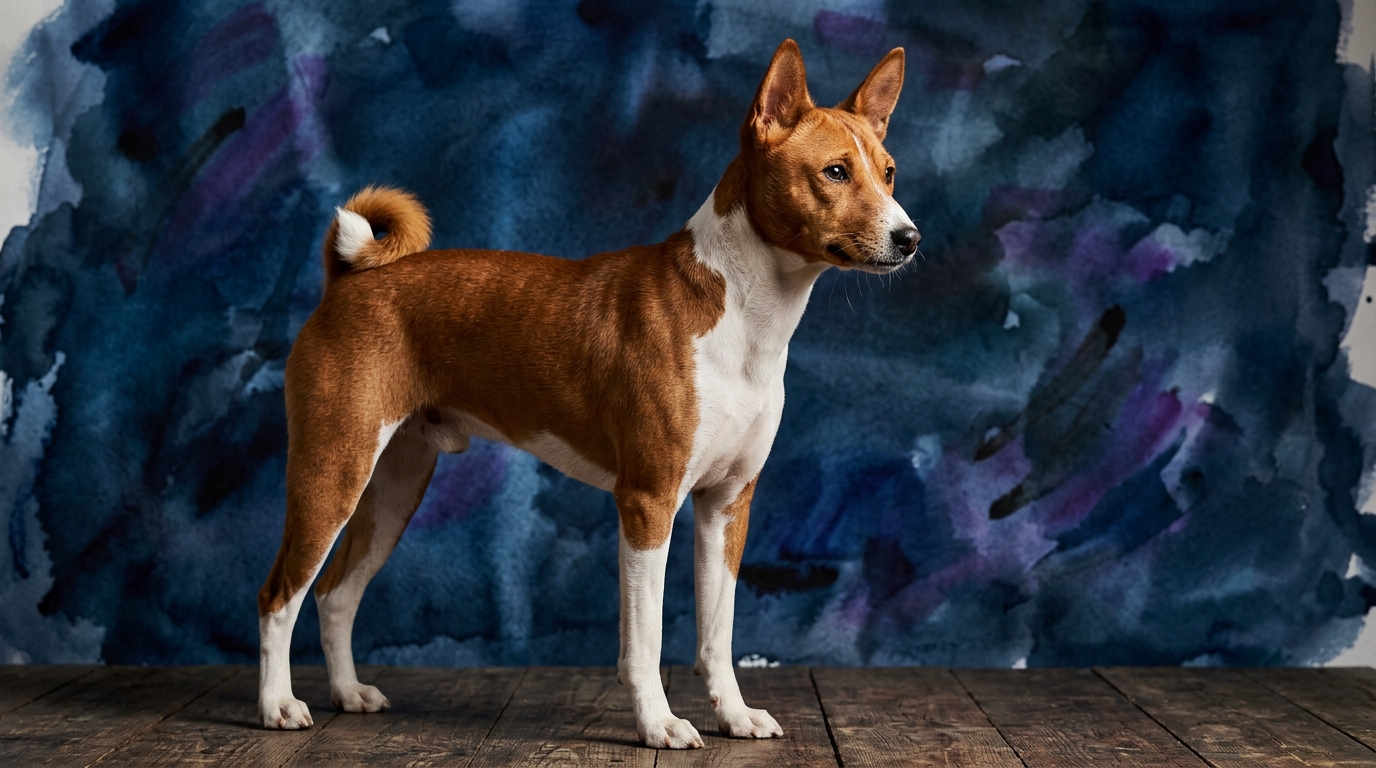

Side-by-Side IQ Profile: Basenji vs. Pekingese
At The Cosmic Pet Pet IQ Lab, we dissect canine cognition across five crucial dimensions, offering a nuanced understanding of each breed's mental landscape. While the Basenji (Coren rank #78) and Pekingese (Coren rank #77) appear close in traditional intelligence rankings, their individual IQ scores reveal fascinating differences.
For the **Basenji**, a dog from the Hound group, their cognitive breakdown is as follows:
**Problem Solving (5/5):** This score reflects an exceptional capacity for independent thought, allowing them to rapidly assess situations and devise innovative solutions to challenges, such as opening latches, navigating complex outdoor spaces, or even outsmarting perceived obstacles to their desires. Their cognitive approach leans towards self-reliance rather than seeking human guidance.
**Training Speed (1/5):** Indicating a profound independence, Basenjis exhibit significant resistance to repetitive instruction and a strong inclination to operate on their own terms. While capable of learning, their motivation often stems from their own interests, making traditional obedience training a test of patience and creative engagement for their human companions.
**Social Intelligence (3/5):** Basenjis possess a moderate understanding of social dynamics, forming deep, albeit often selective, bonds with their chosen family members. They are capable of reading cues but may not always be inclined to engage in overt displays of affection or constant interaction, preferring a more discerning approach to social engagements.
**Instinctive Drive (5/5):** This extremely high score underscores their powerful genetic heritage, manifesting as an intense drive to chase, explore, and react to environmental stimuli with remarkable focus and persistence. This deep-seated instinct often dictates their priorities, frequently overriding learned commands in the face of compelling sensory input.
**Memory (4/5):** Their recall ability is robust, enabling them to remember complex routes, the location of hidden items, and successful strategies for achieving their goals. This strong memory, combined with their problem-solving prowess, allows them to learn from experience and adapt their independent behaviors over time.
In contrast, the **Pekingese**, a member of the Toy group, presents a different cognitive blueprint:
**Problem Solving (3/5):** Pekingese demonstrate a solid, practical ability to navigate everyday dilemmas, often employing observation and straightforward trial-and-error to adapt to new situations or overcome minor household obstacles. Their approach to problems is generally less innovative than a Basenji's but reliably effective within their domestic sphere.
**Training Speed (3/5):** This moderate score indicates a reasonable willingness to learn and respond to consistent, positive reinforcement methods. While they may not grasp new commands instantly, they are generally receptive and can achieve a good level of obedience with patient and engaging training sessions.
**Social Intelligence (3/5):** Pekingese exhibit a moderate yet profound social understanding, forming deeply loyal and devoted attachments to their primary caregivers. They are adept at communicating their needs and preferences, often displaying a discerning nature regarding strangers but a clear capacity for affectionate and reciprocal relationships within their family circle.
**Instinctive Drive (3/5):** Their instinctive drives are moderate, reflecting their long history as cherished companions rather than working dogs. While they retain some natural curiosity and may exhibit mild territoriality, these urges are typically well-balanced and less intense, making them more manageable in a household setting.
**Memory (3/5):** Pekingese possess a reliable memory for routines, familiar faces, and previously learned commands. This consistent recall supports their ability to follow household rules, anticipate daily events, and maintain strong recognition of their human and animal companions.
Where the Basenji Wins Cognitively
The Basenji's cognitive strengths lie in its profound independence and sharp, investigative mind. Their **Unparalleled Resourcefulness and Independent Problem Solving** (5/5) isn't just a high number; it signifies a truly ingenious approach to navigating the world. They excel at figuring out complex mechanisms, like unlatching gates or opening cupboards, often through observation and persistent experimentation. This cognitive strength means they are not simply reacting but actively strategizing to achieve their objectives, whether it's accessing a treat or finding an escape route from a perceived confinement. Their solutions are often self-taught and reflect a deep capacity for creative, non-linear thinking, making them masters of their own environment.
Further bolstered by a 5/5 Instinctive Drive, Basenjis possess **Exceptional Instinctive Acuity and Environmental Engagement**. This translates into an extraordinary awareness of their surroundings, constantly processing scents, sounds, and movements with intense focus. This cognitive trait makes them adept at tasks requiring sustained attention to sensory input, such as scent tracking or vigilance against perceived threats. Their mind is perpetually engaged with the world around them, making them highly effective at their original purpose of flushing game and demonstrating an intrinsic motivation for exploration and investigation that few breeds can match. This isn't just a physical drive; it's a profound mental engagement with their surroundings.
Where the Pekingese Wins Cognitively
The Pekingese, while not exhibiting the Basenji's raw problem-solving prowess, shines in areas crucial for harmonious companionship. Their **Greater Receptiveness to Structured Learning and Training** is a clear advantage. With a 3/5 Training Speed, they demonstrate a significantly higher amenability to formal training and consistent guidance compared to the Basenji's 1/5. This cognitive trait means they are more likely to engage with and respond positively to repetitive commands and positive reinforcement techniques. Their willingness to cooperate and form routines, combined with a moderate desire to please, makes them a more straightforward candidate for learning basic obedience, house rules, and even simple tricks, fostering a more predictable and harmonious cohabitation.
The Pekingese's combination of a 3/5 Social Intelligence and 3/5 Memory also contributes to their **Balanced Social Integration and Domestic Adaptability**. They learn and remember household rhythms, recognize family members with unwavering devotion, and adapt their social interactions to fit the family dynamic without the independent challenges of a Basenji. Their cognitive strengths allow them to form deep, reciprocal bonds, providing comfort and companionship, and making them adept at communicating their needs and preferences within a stable home environment, reducing cognitive clashes between their desires and human expectations. They are cognitively wired for a settled, loving domestic life.
Which is Easier to Train and Why?
When it comes to ease of training, the **Pekingese** stands out as the more approachable choice. Their Training Speed of 3/5 indicates a reasonable receptiveness to learning. They respond well to positive reinforcement and consistent methods, often displaying a charming willingness to engage with their human companions in learning sessions. Their moderate instinctive drive means fewer internal distractions overriding commands, allowing for more focused and productive training.
Conversely, the **Basenji** presents a significantly greater training challenge. Their Training Speed score of 1/5 reflects a profound independence and a disinterest in repetitive drills. Coupled with their 5/5 Problem Solving, they frequently outthink or circumvent training methods, devising their own solutions rather than adhering to human directives. Their powerful 5/5 Instinctive Drive means they prioritize their urges—chasing, exploring, investigating—over learned commands, especially when compelling environmental stimuli are present. Training a Basenji demands exceptional patience, creativity, and a deep understanding of their unique motivations, often requiring methods that engage their intellect rather than relying on rote obedience.
Which Suits Active Owners vs. Relaxed Owners?
For **active owners** seeking a partner in adventure, the **Basenji** is generally a better fit. Their high instinctive drive (5/5) and exceptional problem-solving abilities (5/5) mean they thrive on mental and physical challenges. They require consistent engagement, extensive exploration, and opportunities to utilize their keen intellect and powerful senses. An owner who enjoys hiking, scent work, agility, or creative problem-solving games would find a Basenji a stimulating and capable companion, provided they are prepared for the commitment to meet these needs.
For **relaxed owners** seeking a devoted yet less intensely demanding companion, the **Pekingese** is typically more suitable. Their moderate instinctive drive (3/5) and practical problem-solving (3/5) make them content with a less strenuous routine. While they certainly enjoy gentle walks and interactive play, they are generally satisfied with indoor companionship and a predictable, comfortable environment. An owner seeking a loyal, affectionate presence that doesn't require constant, high-octane engagement would find the Pekingese a harmonious addition to their home.
The Verdict
For owners who appreciate a truly independent, clever, and highly driven canine companion capable of surprising ingenuity, and who are prepared for the significant commitment to managing their unique mental and physical needs, choose the Basenji.
For those seeking a devoted, charming, and relatively adaptable companion who responds well to consistent, positive training and thrives in a stable, loving home environment, the Pekingese is an excellent choice.
🧠 Find Your Pet's IQ Score
Our Pet IQ Lab assessment covers 25+ tests across 5 cognitive dimensions — personalized to your breed.
Take the Full IQ Test →Frequently Asked Questions
Do Basenjis understand their owners?
Basenjis, with a Social Intelligence of 3/5, certainly understand their owners and the dynamics of their household. They form bonds and grasp cues, though their inherent independence means they might choose to act on their own impulses rather than comply immediately, making them appear discerning rather than uncomprehending.
Are Pekingese stubborn about training?
Pekingese possess a Training Speed of 3/5, indicating they are moderately receptive to training, not overly stubborn. Consistency and positive reinforcement typically yield good results, though they may have their moments of charming defiance or simply prefer to do things at their own pace, requiring patience from their trainers.
Which breed is better for an apartment?
The Pekingese is generally better suited for apartment living due to their moderate activity needs and lower instinctive drive, making them content with indoor life and shorter outings. While Basenjis can adapt to apartments with sufficient mental and physical enrichment, their high drive and problem-solving skills mean they require much more dedicated management to prevent boredom and destructive behaviors.