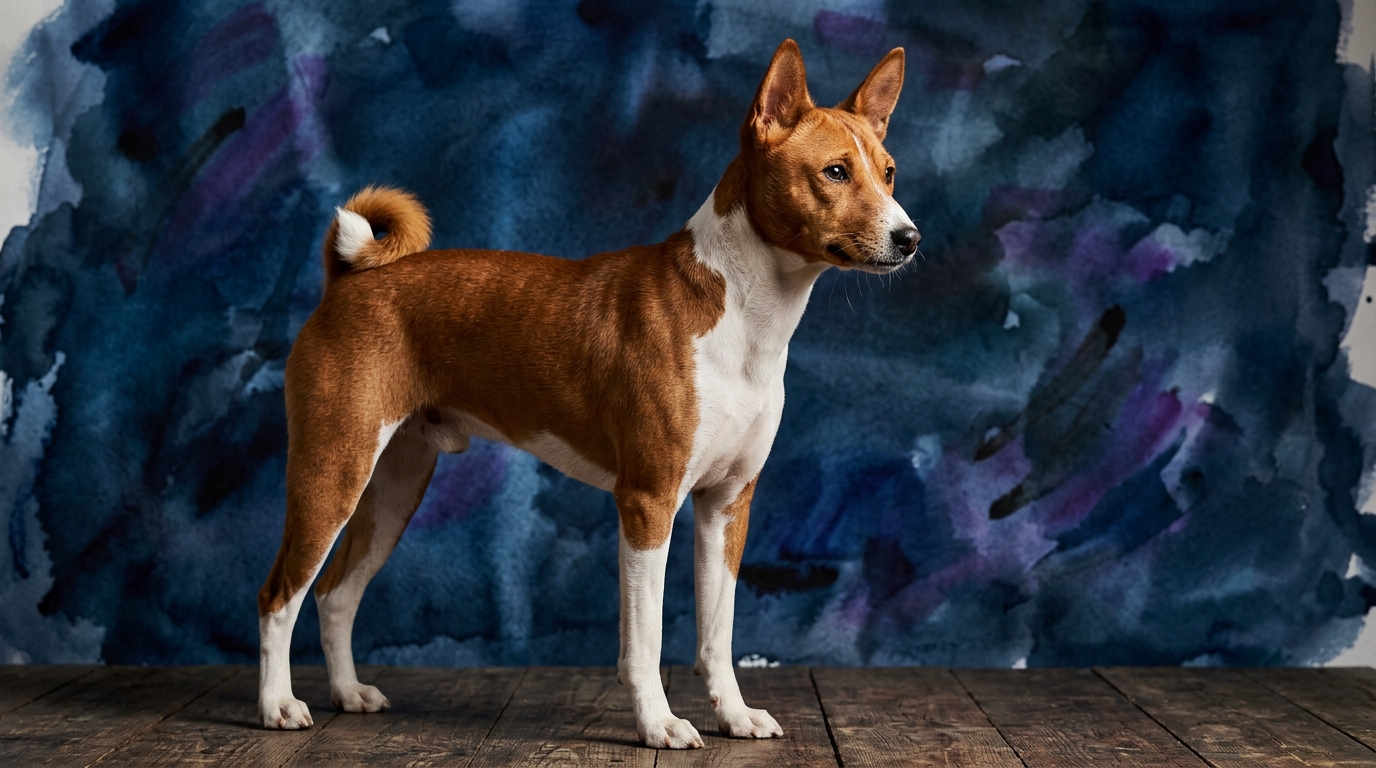
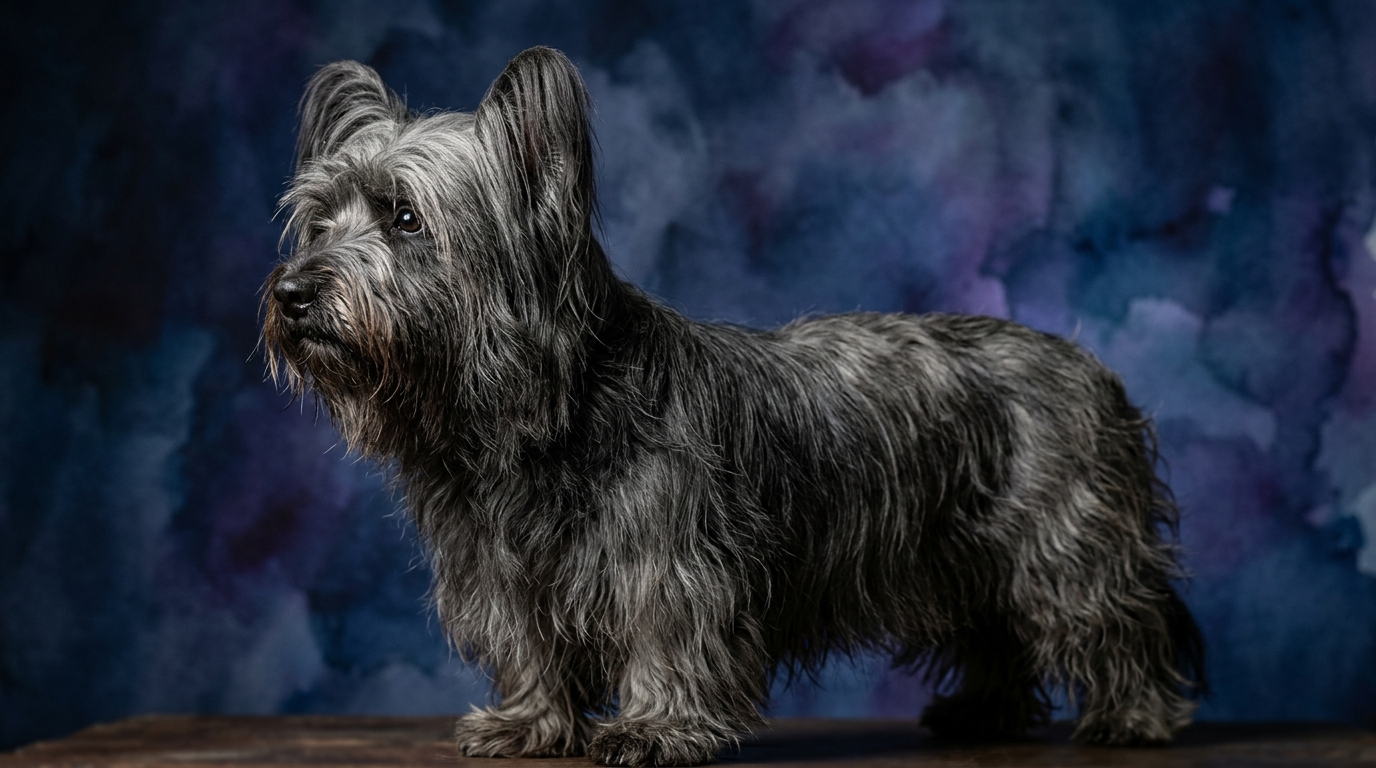
Side-by-Side IQ Profile: Basenji vs. Skye Terrier
At The Cosmic Pet Pet IQ Lab, we evaluate canine intelligence across five key dimensions to provide a nuanced understanding of each breed's cognitive strengths and challenges. For the Basenji, a Hound breed, its profile shows a remarkable Problem Solving score of 5/5, indicating an exceptional capacity for independent thought and creative strategizing. However, its Training Speed is a challenging 1/5, reflecting its strong self-will. Social Intelligence sits at 3/5, suggesting moderate understanding of human cues, while Instinctive Drive is a powerful 5/5, highlighting its deep-seated hunting instincts. Memory is rated at a strong 4/5, meaning they recall experiences and learning effectively.
The Skye Terrier, a Terrier breed without a Coren rank, presents a different cognitive landscape. Its Problem Solving is rated 3/5, indicating a solid, practical ability to figure things out, but less complex deduction than the Basenji. Training Speed is a moderate 3/5, suggesting a more amenable learning pace compared to the Basenji. Social Intelligence matches the Basenji at 3/5, denoting similar selective social engagement. Instinctive Drive is also 3/5, reflecting its terrier heritage for hunting vermin, but less all-encompassing than a sighthound's. Finally, its Memory is 3/5, indicating reliable recall for routines and learned behaviors.
Where the Basenji Excels Cognitively
The Basenji’s cognitive prowess shines brightest in its exceptional Problem Solving (5/5), its profound Instinctive Drive (5/5), and its robust Memory (4/5). Their capacity for independent thought means they don't just react to their environment; they actively analyze it, devising clever solutions to challenges. This might manifest as figuring out how to open complex latches, navigate intricate obstacle courses, or even outmaneuver a human trying to direct them. Their solutions are often innovative, demonstrating a deep tactical understanding rather than mere rote learning.
Furthermore, their powerful instinctive drive isn't just about physical action; it's a sophisticated cognitive system. It involves rapid assessment of situations, precise tracking, and strategic planning, whether they are pursuing a perceived 'prey' or simply exploring a new scent. This highly refined predatory intelligence shapes much of their interaction with the world. Coupled with a strong memory, the Basenji can recall past successes and failures, learning from experience to refine their problem-solving approaches, making them remarkably adaptable and resourceful in pursuit of their goals.
Where the Skye Terrier Shows Cognitive Strengths
While the Basenji excels in independent problem-solving, the Skye Terrier demonstrates a distinct cognitive advantage in its Training Speed (3/5) relative to the Basenji’s challenging 1/5. This higher score means a Skye Terrier is generally more amenable to learning and retaining commands within a traditional training framework. They absorb new information at an average pace, allowing for more predictable progress and a less frustrating experience for both dog and owner. Their 'terrier tenacity,' though sometimes perceived as stubbornness, can also be reframed as a cognitive persistence; once they understand a task and are motivated, they apply themselves with steadfast determination.
This breed's moderate instinctive drive (3/5) also presents a cognitive 'win' in terms of manageability. While present, it doesn't overwhelm their capacity for learned behaviors or make them as single-mindedly driven by primal urges as the Basenji. This allows for a more balanced cognitive landscape where social learning and cooperation can take a more prominent role without constant override by instinct. Their 3/5 in memory ensures they reliably retain what they've learned, contributing to their overall trainability and consistent behavior.
Training Dynamics: Which is Easier and Why?
When it comes to ease of training, the Skye Terrier generally presents a more straightforward path than the Basenji. The Basenji's Training Speed score of 1/5 is a clear indicator of the significant challenge involved. Their profound independence and high problem-solving abilities (5/5) mean they often prefer to figure out how to outsmart their handler rather than comply with commands. They require immense patience, creative positive reinforcement strategies, and a deep understanding of their unique motivations. Their powerful instinctive drive (5/5) can frequently override learned behaviors, making consistency a constant battle.
In contrast, the Skye Terrier’s Training Speed of 3/5 places them in the average range, making them considerably more amenable to learning. While they possess the characteristic terrier stubborn streak, they are generally more willing to engage in training sessions and respond to consistent, reward-based methods. Their moderate instinctive drive (3/5) is more manageable, allowing them to focus on tasks without being constantly distracted by primal urges. Progress with a Skye Terrier is typically more predictable and rewarding for dedicated owners.
Suitability for Active vs. Relaxed Owners
The cognitive profiles of these two breeds dictate different lifestyles for their ideal owners. The Basenji, with its high problem-solving (5/5) and intense instinctive drive (5/5), thrives with active, intellectually engaged owners. These dogs require significant mental stimulation and physical activity to prevent boredom and potential destructive behaviors. Owners need to be creative problem-solvers themselves, willing to engage in canine sports, advanced puzzle toys, and extensive walks or runs that satisfy their innate desire to track and explore. A Basenji demands an owner who is always a step ahead, ready to channel their dog's profound ingenuity productively.
Conversely, the Skye Terrier, with its balanced cognitive scores, is better suited for owners who appreciate a dignified companion that requires consistent, but not necessarily intense, engagement. While not a couch potato, the Skye Terrier's exercise needs are moderate, enjoying regular walks and playtime without demanding the constant, high-octane mental and physical challenges of a Basenji. They suit owners who value loyalty and a more predictable temperament, providing consistent training, socialization, and a secure home environment without needing to constantly outwit their dog.
The Verdict
Choose the Basenji if you relish a cognitive challenge, appreciate profound independence, and are prepared for a dog that will consistently test your ingenuity and patience, valuing a companion that thinks for itself.
Opt for the Skye Terrier if you prefer a devoted, slightly less demanding companion with a manageable training curve, valuing loyalty and a more predictable, though still spirited, temperament.
🧠 Find Your Pet's IQ Score
Our Pet IQ Lab assessment covers 25+ tests across 5 cognitive dimensions — personalized to your breed.
Take the Full IQ Test →Frequently Asked Questions
Are Basenjis truly 'barkless'?
Basenjis typically don't bark in the conventional sense. Instead, they produce a unique yodel-like sound, often called a 'barroo,' along with chortles and growls. This vocalization is part of their ancient heritage and distinct communication style.
How does a Skye Terrier's coat affect its care and activity?
The Skye Terrier's long, flowing double coat requires regular grooming to prevent mats and tangles, often daily brushing. While stunning, it can limit their comfort in extreme heat and needs attention after outdoor adventures to remove debris.
Can a Basenji live with other pets?
Due to their very high instinctive drive (5/5), Basenjis can be a challenge with smaller pets like cats or rodents, viewing them as prey. Early and thorough socialization is crucial, and even then, supervision is often necessary to ensure harmonious living.