
Side-by-Side Cognitive Profile
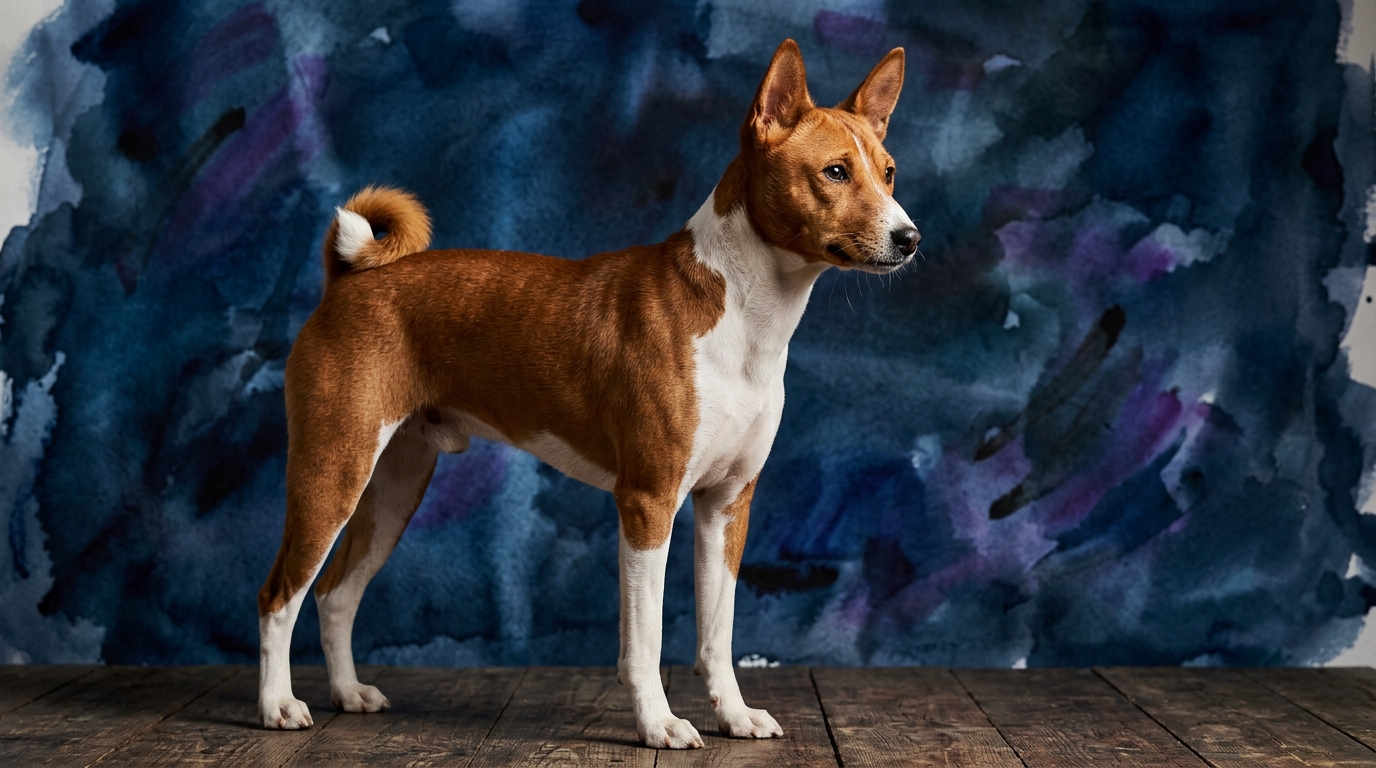
At The Cosmic Pet Pet IQ Lab, we assess canine cognition across five crucial dimensions, offering a nuanced view beyond simplistic labels. For the Basenji, a Hound breed, its profile is distinct: Problem Solving 5/5, Training Speed 1/5, Social Intelligence 3/5, Instinctive Drive 5/5, and Memory 4/5. This suggests a highly independent thinker with strong primal urges and excellent recall, but a disinclination towards rapid formal instruction.
In contrast, the Soft Coated Wheaten Terrier, a Terrier breed, presents a more balanced, moderate cognitive landscape: Problem Solving 3/5, Training Speed 3/5, Social Intelligence 3/5, Instinctive Drive 3/5, and Memory 3/5. This profile indicates a dog that is generally responsive, capable of learning at an average pace, and moderately engaged with its environment and social interactions, without the extremes seen in the Basenji's scores.
Where the Basenji Excels Cognitively
The Basenji's unparalleled Problem Solving score of 5/5 immediately sets it apart, indicating a profound capacity for independent thought and strategic planning. These dogs are adept at analytical thinking, often devising clever, multi-step solutions to achieve their goals, whether it's figuring out how to open a complex latch or navigating an intricate path to a desired object. This isn't about following commands; it's about autonomous cognitive effort to manipulate their environment.
Their superior Memory (4/5) further enhances this, allowing them to recall successful past strategies and apply them to new, similar challenges with precision. A Basenji might remember the precise sequence to bypass a baby gate months after encountering it, demonstrating a long-term retention of procedural knowledge. This combination of independent problem-solving and strong recall means a Basenji approaches the world as a series of solvable puzzles, often to the surprise of their human companions who might underestimate their capacity for strategic thought. Furthermore, their high Instinctive Drive (5/5) isn't just about chasing; it fuels a persistent, focused engagement with their environment, driving them to explore and interact in ways that require active cognitive effort, such as intricate scent tracking or navigating complex terrain during a walk, all contributing to their problem-solving acumen.
Where the Soft Coated Wheaten Terrier Excels Cognitively
While the Basenji shines in independent thought, the Soft Coated Wheaten Terrier demonstrates a more balanced and adaptable cognitive profile, particularly evident in their Training Speed (3/5) compared to the Basenji's 1/5. This higher responsiveness means Wheatens are generally more receptive to learning from human instruction and cues, processing information and adjusting their behavior more readily in response to guidance. They show a greater inclination to engage in cooperative learning, making them more amenable to structured training sessions and adapting their behavior based on feedback.
Their moderate Social Intelligence (3/5) also plays a crucial role here; while not exceptional, it ensures they are generally personable and eager to interact, which significantly facilitates the training process. A Wheaten is more likely to process human communication and adjust its actions accordingly, aiming to please or gain reward, whereas a Basenji might interpret the same instruction through the lens of its own agenda. This willingness to engage cooperatively and learn from social interaction gives the Wheaten an edge in environments where quick adaptation to human rules and expectations is paramount, making them a more straightforward partner in shared activities.
Training Dynamics: Basenji vs. Wheaten
Without question, the Soft Coated Wheaten Terrier is generally easier to train than the Basenji, and this difference stems from fundamental cognitive and behavioral traits. The Wheaten's Training Speed of 3/5, combined with its moderate Social Intelligence, means it approaches learning as a collaborative effort. They tend to be more motivated by pleasing their owners and by positive reinforcement, readily forming associations between commands and desired actions. Their balanced Instinctive Drive (3/5) allows them to focus on training tasks without being constantly sidetracked by overwhelming primal urges, making them more present and engaged during lessons.
In contrast, the Basenji's Training Speed of 1/5 is a direct reflection of its profound independence and strong Instinctive Drive (5/5). They are not inherently driven to please humans in the same way; instead, they often weigh commands against their own internal agenda or immediate environmental interests. Training a Basenji requires immense patience, creativity, and a deep understanding of their self-motivated nature. They might understand a command perfectly but choose not to execute it if they perceive a more pressing 'Basenji business' at hand, such as pursuing a compelling scent or exploring a perceived escape route. Their problem-solving prowess often extends to outsmarting training attempts, finding loopholes or alternative ways to avoid compliance. Therefore, while both breeds can learn, the Wheaten's cognitive makeup makes the journey significantly smoother and more predictable for the average owner seeking a responsive companion.
Lifestyle Match: Active vs. Relaxed Owners
For owners seeking an active companion who thrives on mental engagement and structured activities, both breeds offer unique appeals, though for different reasons. The Basenji, with its high Instinctive Drive (5/5) and exceptional Problem Solving (5/5), demands an owner who is prepared for consistent mental stimulation beyond simple physical exercise. They need outlets for their curiosity and independent thought, such as advanced scent work, agility courses that challenge their strategic thinking, or complex puzzle toys that truly engage their cognitive prowess. A Basenji is ideal for an owner who relishes the challenge of a self-directed dog and can provide a stimulating environment to prevent boredom-induced mischief, embracing their independent spirit.
Conversely, a Soft Coated Wheaten Terrier, with its balanced drives and moderate training speed, suits an active owner who enjoys cooperative activities like obedience, dog sports, or long walks where the dog is more inclined to follow direction and engage as a team. They are generally adaptable and happy to participate in family activities, valuing companionship during their adventures. For relaxed owners, neither breed is truly a 'couch potato,' as both require regular exercise. However, the Wheaten's generally more compliant nature and lower intensity of independent drives make it a more manageable choice for someone who prefers a companion that integrates more seamlessly into a less structured daily routine, provided their exercise needs are still consistently met. A relaxed owner might find the Basenji's relentless pursuit of independent projects and potential for mischief overwhelming without dedicated mental enrichment strategies tailored to their unique cognitive profile.
The Verdict
Choose a Basenji if you are an experienced owner who appreciates a dog's independent problem-solving skills, can provide consistent mental challenges, and finds joy in a deeply self-directed companion.
Opt for a Soft Coated Wheaten Terrier if you prefer a more cooperative and adaptable companion for training and activities, valuing a balanced temperament and a generally eager-to-please nature.
🧠 Find Your Pet's IQ Score
Our Pet IQ Lab assessment covers 25+ tests across 5 cognitive dimensions — personalized to your breed.
Take the Full IQ Test →Frequently Asked Questions
Are Basenjis truly 'untrainable' due to their low training speed?
No, Basenjis are not untrainable, but their independent nature and high instinctive drive mean they require a dedicated, creative, and patient approach to training. They learn, but often on their own terms, necessitating consistent, positive reinforcement and making training more of a partnership than a command-and-obey dynamic.
How does the Soft Coated Wheaten Terrier's social intelligence impact its family life?
The Wheaten's moderate social intelligence means they typically integrate well into family life, enjoying interaction and companionship without being overly demanding or aloof. They are generally friendly and adaptable, making them suitable for households seeking an engaging, personable canine family member who enjoys being part of group activities.
Does a Basenji's high problem-solving ability make them prone to destructive behavior?
A Basenji's high problem-solving ability, combined with strong instinctive drives, can lead to destructive behavior if their cognitive needs are not met with appropriate outlets. They will creatively find ways to entertain themselves, which might include opening cabinets, escaping enclosures, or dismantling household items if not adequately stimulated with puzzles, training, and exercise.