
Side-by-Side IQ Profile
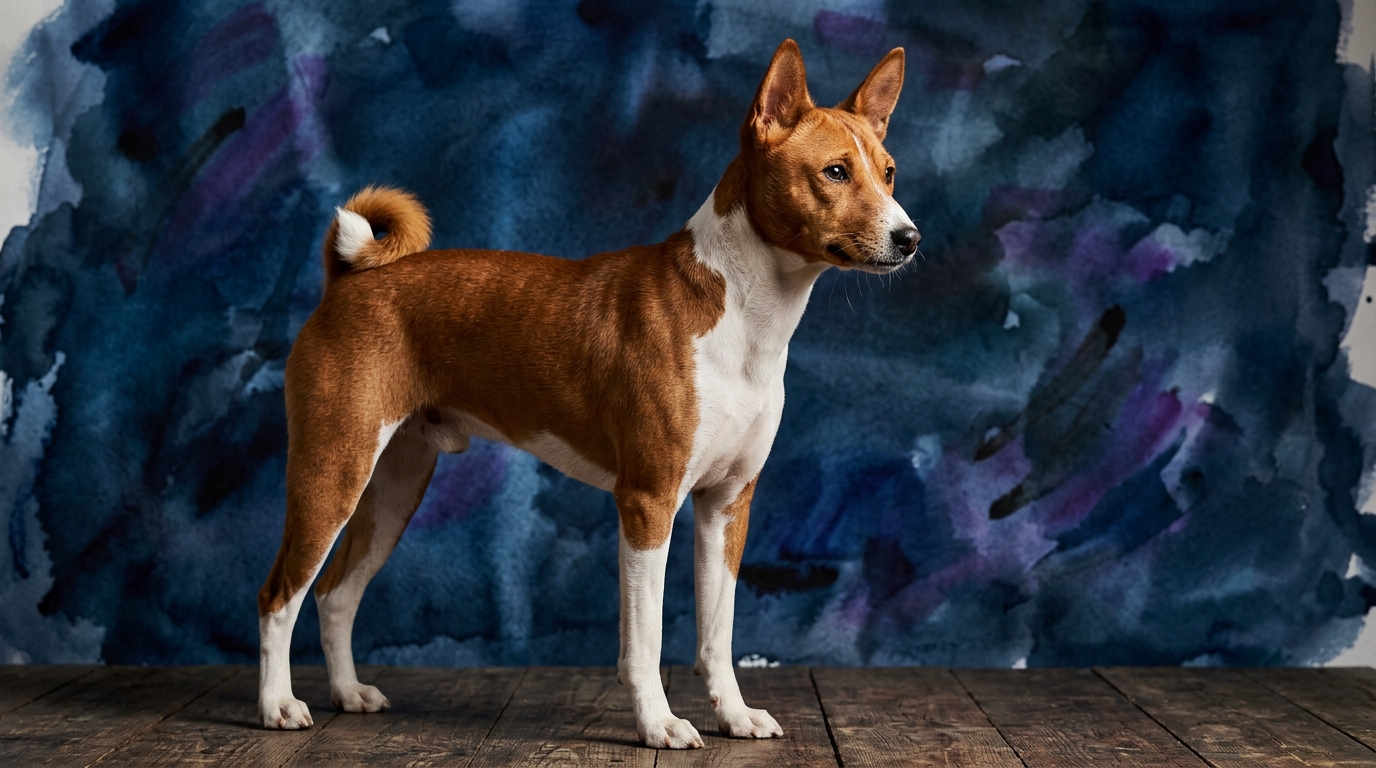
The Basenji (Coren Rank #78), an ancient hound, excels in Problem Solving (5/5), demonstrating remarkable ingenuity in navigating obstacles or acquiring desired items, often devising novel solutions rather than seeking human direction. Their Training Speed (1/5) reflects a strong independent streak; they process commands slowly, not due to lack of comprehension, but a preference for self-governance, requiring consistent, patient reinforcement. Social Intelligence (3/5) indicates selective bonding, forming deep connections with their chosen family but often remaining aloof with strangers. An exceptional Instinctive Drive (5/5) fuels their keen senses for tracking and hunting, making them highly responsive to environmental stimuli. Their Memory (4/5) is robust, allowing them to recall complex routes, past experiences, and learned strategies with considerable accuracy.
The Sussex Spaniel (Coren Rank #62) presents a more balanced cognitive profile. Their Problem Solving (3/5) is adequate for most domestic challenges, capable of learning routines and solving simple puzzles, though less inclined to innovate without guidance. Training Speed (3/5) is moderate; they learn at a reasonable pace, generally responsive to positive reinforcement and eager to please, making them agreeable students. Social Intelligence (3/5) shows a friendly, even-tempered nature, thriving on companionship and forming strong bonds within their family unit, typically welcoming to new acquaintances. A moderate Instinctive Drive (3/5) reflects their gundog heritage, with an interest in flushing game, yet it's generally manageable and less overwhelming than a hound’s drive. Their Memory (3/5) allows them to retain commands, routines, and social cues effectively, contributing to their reputation as dependable companions.
Where Basenji Wins Cognitively
The Basenji’s cognitive strengths shine brightest in scenarios demanding independent thought and self-reliance. Their Problem Solving (5/5) score is not merely theoretical; it manifests in their ability to methodically figure out how to open child-proof latches, escape seemingly secure enclosures, or retrieve a hidden treat using a sequence of actions. This breed demonstrates a profound capacity for spatial reasoning and strategizing, often observing and learning from their environment to achieve their goals. For instance, a Basenji might systematically test different methods to reach an elevated toy, rather than simply barking for assistance. Their superior Memory (4/5) complements this, allowing them to recall successful past strategies or the layout of an area with precision, making them formidable in navigating complex territories or remembering where a particular scent was last detected. This combination makes them exceptionally resourceful in self-directed tasks, often appearing to "think through" situations independently.
Where Sussex Spaniel Wins Cognitively
The Sussex Spaniel’s cognitive advantages lie in areas requiring cooperation, consistency, and a more amiable disposition. While their Problem Solving (3/5) may not reach the Basenji's inventive heights, it is perfectly suited for understanding and executing complex sequences of commands or navigating familiar environments with purpose. Their balanced Training Speed (3/5) and Social Intelligence (3/5) mean they are generally more receptive to human instruction and more inclined to work alongside their owner to achieve a goal. A Sussex Spaniel excels at tasks that benefit from a steady, focused approach, like scent discrimination games within a structured training session, where their goal is to please and comply. They demonstrate a strong capacity for learning and retaining routines, making them dependable for tasks requiring consistent performance. Their cognitive profile supports a dog that integrates smoothly into a family structure, understanding social cues and adapting to household dynamics with a calm, agreeable temperament.
Which is Easier to Train and Why
Without a doubt, the Sussex Spaniel is generally easier to train compared to the Basenji, and this difference stems directly from their distinct cognitive profiles and behavioral inclinations. The Basenji's Training Speed (1/5) is a significant indicator of the challenges involved. This isn't due to a lack of understanding, but rather a profound independence and a questioning nature. Basenjis often weigh whether a command aligns with their current self-interest, making them appear stubborn or defiant. Their powerful Instinctive Drive (5/5) for tracking and exploration means they are easily distracted by environmental stimuli, often prioritizing a compelling scent over a human request. Training a Basenji requires immense patience, creativity, and highly motivating rewards to convince them that compliance is worthwhile.
In contrast, the Sussex Spaniel’s moderate Training Speed (3/5) and agreeable Social Intelligence (3/5) make them much more amenable students. They possess a natural desire to please their owners and are generally less inclined to challenge authority. Their Instinctive Drive (3/5), while present, is more manageable and often channelled into cooperative activities like retrieving or scent work under direction. Sussex Spaniels respond well to consistent, positive reinforcement methods and thrive on routine. They are more likely to repeat learned behaviors reliably, making the training process a more predictable and rewarding experience for both dog and owner. Their steady temperament means fewer impulsive decisions driven by instinct, allowing for more focused learning sessions.
Which Suits Active Owners vs Relaxed Owners
Choosing between a Basenji and a Sussex Spaniel based on owner lifestyle requires an honest assessment of energy levels and preferred engagement styles. The Basenji, with its high Instinctive Drive (5/5) and exceptional Problem Solving (5/5), thrives with active, mentally stimulating owners. These dogs require consistent physical outlets like long walks, runs, or secure off-leash play, but more importantly, they need mental engagement to prevent boredom and destructive behaviors. Owners who enjoy puzzle toys, advanced obedience, scent work, or agility, and who appreciate a dog that thinks for itself, will find the Basenji a captivating companion. They suit individuals or families who are prepared for a dog that needs to be outsmarted and consistently engaged, and who can provide a stimulating environment that satisfies their innate curiosity and independence.
The Sussex Spaniel, while still a sporting dog, aligns more with owners seeking a companion with moderate activity needs and a generally more relaxed demeanor. Their Instinctive Drive (3/5) is satisfied with regular walks, yard play, and opportunities for scent exploration in a controlled environment. They are content to be part of family activities, enjoying quiet evenings as much as an outing. Owners who prefer a less demanding dog in terms of constant mental challenge, who appreciate a calm presence, and who desire a more straightforward training experience will find the Sussex Spaniel a wonderful fit. They are ideal for individuals or families who can provide consistent routines, gentle companionship, and a comfortable home environment without needing to constantly outwit their canine friend.
The Verdict
Choose a Basenji if you are an experienced owner seeking an independent, resourceful companion who thrives on mental puzzles and consistent, creative engagement, appreciating a dog that thinks for itself.
Opt for a Sussex Spaniel if you desire a steady, amiable dog with moderate energy, who is more cooperative in training and enjoys being a devoted, relaxed family member.
🧠 Find Your Pet's IQ Score
Our Pet IQ Lab assessment covers 25+ tests across 5 cognitive dimensions — personalized to your breed.
Take the Full IQ Test →Frequently Asked Questions
Do Basenjis bark much?
Basenjis are often called the 'barkless dog' because they produce a unique yodel-like sound rather than a typical bark. They are not silent, but their vocalizations are distinct and less frequent than many barking breeds.
Are Sussex Spaniels good with children?
Sussex Spaniels generally possess a calm and patient temperament, making them good companions for respectful children. Their sturdy build and agreeable nature can make them tolerant playmates within a supervised family setting.
How much exercise does a Sussex Spaniel need daily?
A Sussex Spaniel typically requires at least 45 to 60 minutes of moderate daily exercise, such as walks or supervised playtime in a securely fenced yard. They appreciate consistent activity to maintain their physical and mental well-being.