
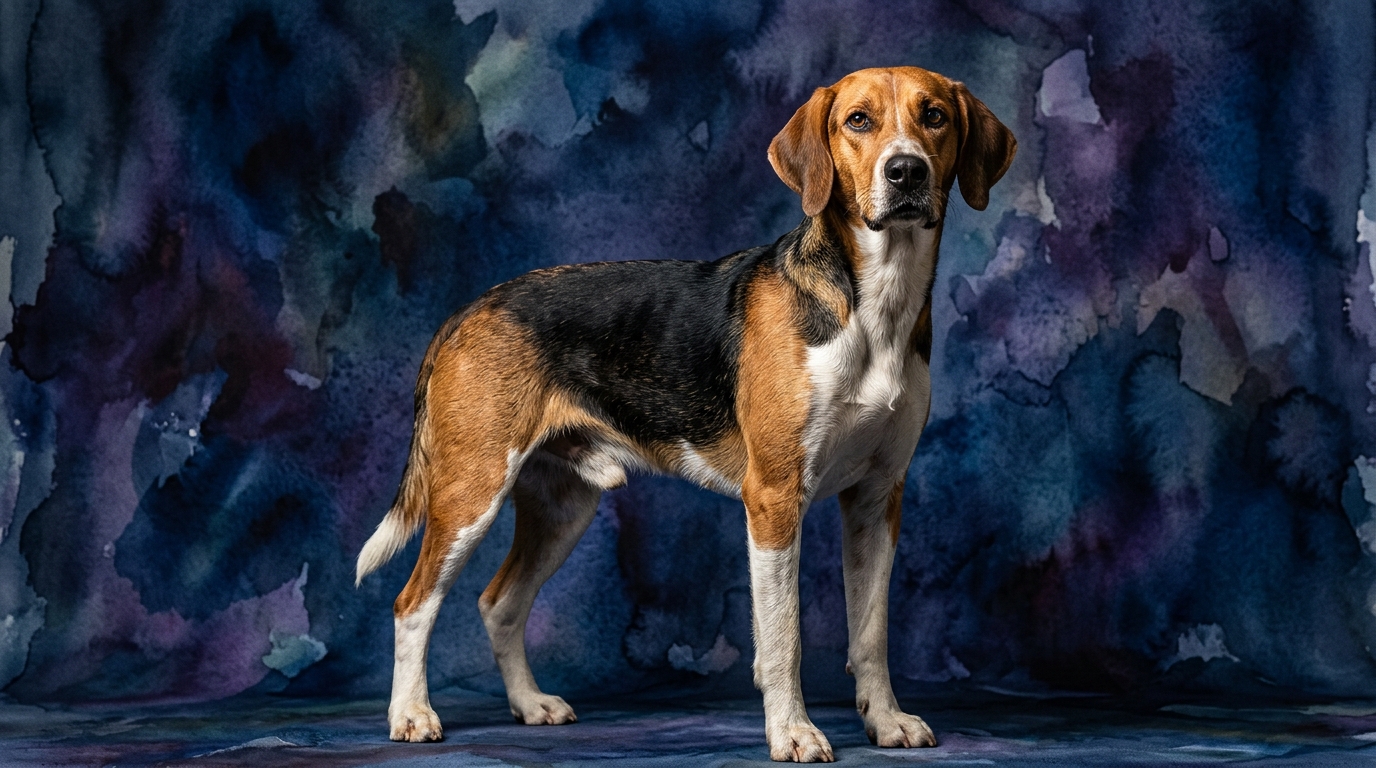
Side-by-Side IQ Profile: Basset Hound vs. English Foxhound
In The Cosmic Pet Pet IQ Lab, both the Basset Hound and the English Foxhound register a consistent 3 out of 5 across all five measured cognitive dimensions: Problem Solving, Training Speed, Social Intelligence, Instinctive Drive, and Memory. This numerical parity, however, belies distinct applications of these cognitive strengths, shaped by their evolutionary roles and breed purposes. For the Basset Hound, its 3/5 Problem Solving reflects a methodical, ground-level approach, often involving the intricate unraveling of complex scent trails with deliberate precision rather than rapid, dynamic environmental manipulation. Its 3/5 Training Speed indicates learning capability, but this is tempered by an independent nature and a singular focus on scent, making compliance a process that requires particular patience and motivation. Social Intelligence at 3/5 points to their ability to integrate within a family unit, though they don't typically exhibit an overwhelming desire to please, preferring a comfortable, amiable coexistence. Instinctive Drive, also 3/5, is overwhelmingly dominated by their unparalleled olfactory prowess and persistent, low-to-the-ground trailing, a characteristic that defines their very existence. Memory at 3/5 is robust, particularly for recalling specific routes, scent patterns, and the location of comfortable resting spots, crucial for their work.
The English Foxhound, while sharing the 3/5 scores, applies its cognitive faculties differently. Its 3/5 Problem Solving is oriented towards navigating vast, varied terrain during a high-speed chase, working out immediate strategies within a cohesive pack, and adapting quickly to the quarry's evasive actions. Training Speed at 3/5 signifies that they are capable of learning commands and routines, yet their powerful prey drive and inherent desire for continuous, vigorous movement can frequently challenge immediate obedience, especially when scent or movement takes precedence. Social Intelligence at 3/5 is profoundly geared towards intricate pack dynamics, an innate understanding of hierarchy, and cooperative efforts essential for a coordinated hunt. Instinctive Drive at 3/5 is characterized by an enduring, relentless pursuit of quarry, boundless stamina, and a powerful, almost insatiable urge to run and follow a trail over vast distances. Memory at 3/5 is particularly strong for recalling expansive hunting territories, efficient routes, and the roles and positions of their pack mates during a dynamic pursuit, vital for their sustained performance.
Where the Basset Hound Excels Cognitively
The Basset Hound's unique cognitive strength lies in its profound, persistent problem-solving abilities directly related to intricate scent discrimination and the meticulous tracking of complex trails. While its Problem Solving score is 3/5, the execution of this score is highly specialized: they are masters at following cold, faint trails, diligently dissecting interwoven odors, and maintaining unwavering focus on a single objective despite environmental distractions. This isn't about speed, but about an almost meditative, analytical approach to olfactory puzzles, demonstrating an exceptional depth of concentration. Their memory, also 3/5, is particularly refined for recalling intricate scent maps and specific odor profiles, allowing them to re-engage with a trail after an interruption with remarkable accuracy. This sustained, deep cognitive effort for scent work, coupled with their relatively lower physical energy needs compared to a Foxhound, allows them to maintain mental endurance for extended periods, making their specialized cognitive persistence a standout trait.
Where the English Foxhound Excels Cognitively
The English Foxhound's cognitive advantages manifest in dynamic, cooperative problem-solving within fast-paced, expansive environments, coupled with superior spatial memory for large territories. With a 3/5 in Problem Solving, their intelligence is geared towards real-time decision-making during a high-speed chase, rapidly adapting to changing terrain, weather conditions, and quarry movements. Their Social Intelligence (3/5) shines in their innate understanding of complex pack structure and communication, enabling them to coordinate efforts seamlessly with other dogs and human handlers to achieve a common hunting goal. This involves not merely following, but actively participating in a sophisticated, multi-dog strategy. Their Memory (3/5) is particularly adept at recalling vast geographic areas, identifying shortcuts, and remembering the most efficient routes during a pursuit, which is a crucial aspect of their powerful instinctive drive (3/5) for sustained, vigorous hunting. They process environmental cues rapidly and make swift, intelligent adjustments on the fly, showcasing a more agile, reactive form of problem-solving.
Training Adaptability: Basset Hound vs. English Foxhound
Both breeds hold a 3/5 for Training Speed, indicating they are capable of learning but present distinct challenges. The Basset Hound's training demands considerable patience and creative approaches, primarily due to its independent nature and singular focus on scent. Once a Basset locks onto a compelling odor, all other stimuli, including direct handler commands, often become secondary to its olfactory pursuit. Their problem-solving is intrinsically directed towards deciphering the scent puzzle, making them less inclined to seek immediate human guidance in that moment. Effective training hinges on establishing strong, consistent motivation *before* a distracting scent takes hold and employing positive reinforcement to ensure compliance becomes more intrinsically rewarding than the immediate lure of an odor. Their perceived stubbornness is not a lack of cognitive ability, but rather a profound prioritization of their deeply ingrained primary drive.
The English Foxhound, while also scoring 3/5 in Training Speed, presents different training hurdles, predominantly stemming from its immense energy levels and powerful prey drive. They are generally eager to work and respond well to consistent structure, particularly when training incorporates activities that simulate their natural hunting behaviors or allows them to work within a group. However, their boundless stamina and innate instinct to pursue can make off-leash reliability a significant challenge without extensive, consistent recall training and a strong bond with their handler. While their social intelligence is robust within a pack, this might translate to less individual focus on a single handler compared to breeds with a higher biddability score. Successful training must channel their formidable instinctive drive, providing ample outlets for their energy and ensuring they perceive the handler as an integral, rewarding part of their 'pack' and pursuit.
Owner Suitability: Active vs. Relaxed Lifestyles
For owners who prefer a more relaxed pace of life, the Basset Hound is generally the more suitable choice, provided those owners are prepared to understand and accommodate its unique needs. While not entirely sedentary, the Basset's energy levels are moderate, favoring long, leisurely sniffaris over high-intensity sprints. A relaxed owner must appreciate the Basset's deliberate pace, its independent streak, and its characteristic vocalizations (baying). This breed thrives with an owner who values companionship and a comfortable home environment, and who is willing to engage in scent games or extended, slow-paced walks that satisfy their profound olfactory cravings without demanding extreme physical exertion. They flourish under consistent, calm leadership and a secure home where they can indulge in well-deserved naps after a satisfying mental and physical exploration.
Active owners will discover the English Foxhound to be a far better match for their lifestyle. This breed requires significant daily exercise, often needing several hours of vigorous activity such as running, hiking, or structured participation in dog sports. Their instinctive drive and stamina are immense, making them ideal companions for individuals or families who lead an active outdoor lifestyle and can consistently provide structured, high-energy outlets for their physical and mental prowess. Owners must be prepared for a dog that needs a 'job,' whether it's competitive obedience, agility, or simply long, exploratory runs in safe, expansive areas. Their strong social intelligence and pack mentality mean they thrive on interaction and benefit immensely from consistent training and engagement, making them excellent, enduring partners for owners dedicated to an active, stimulating routine.
The Verdict
Choose a Basset Hound if you appreciate a methodical, scent-driven companion with moderate energy, valuing a calm home life punctuated by deliberate explorations and requiring patience for their independent nature.
Opt for an English Foxhound if you lead a highly active lifestyle, seeking an energetic, cooperative partner for outdoor adventures who thrives on sustained physical and mental engagement within a structured routine.
🧠 Find Your Pet's IQ Score
Our Pet IQ Lab assessment covers 25+ tests across 5 cognitive dimensions — personalized to your breed.
Take the Full IQ Test →Frequently Asked Questions
Do Basset Hounds and English Foxhounds have the same intelligence?
While both breeds score 3/5 across the five cognitive dimensions in The Cosmic Pet Pet IQ Lab, their intelligence manifests differently. Basset Hounds excel in methodical scent problem-solving and memory for intricate trails, whereas English Foxhounds demonstrate dynamic, cooperative problem-solving during fast-paced pursuits and spatial memory for vast territories.
Which breed is easier to house train?
Both breeds can be house trained effectively with consistency, but the English Foxhound's higher energy and desire for activity might lead to more accidents if not given ample outdoor opportunities. Basset Hounds, while sometimes stubborn, often respond well to a consistent routine and positive reinforcement for appropriate elimination, though their deliberate pace means they might be slower to signal.
Are these breeds good with children and other pets?
Basset Hounds are generally known for their gentle and tolerant nature, often making them suitable companions for children and other pets with proper introductions. English Foxhounds, due to their pack mentality and high prey drive, usually do well with children and other dogs when socialized early, but care should be taken with smaller, non-canine pets due to their strong hunting instincts.