
Side-by-Side Cognitive Profile
The Cosmic Pet Pet IQ Lab assesses canine intelligence across five key dimensions, providing a framework to understand how different breeds process information and interact with their world. For both the Basset Hound and the Xoloitzcuintli, each of these dimensions is rated at a solid 3 out of 5, suggesting a baseline of functional and adaptable cognitive abilities, yet manifested through very different breed lenses.
For the Basset Hound, its Problem Solving score of 3/5 typically manifests as a highly focused, persistent approach to scent-based puzzles. This isn't about manipulating complex latches, but rather methodically unraveling a scent trail, often to the exclusion of other stimuli. Its Training Speed, also 3/5, indicates it learns commands and routines at a moderate pace, but its independent hound nature means execution can be optional if a more enticing scent arises. Social Intelligence at 3/5 suggests it forms strong bonds with its family but can be somewhat oblivious to subtle human cues when its nose is engaged. Instinctive Drive, rated 3/5, is overwhelmingly dominated by its powerful olfactory system and the urge to follow a trail. Memory, also 3/5, is particularly robust for recalling scent patterns and the locations of interesting smells, rather than a vast repertoire of tricks.
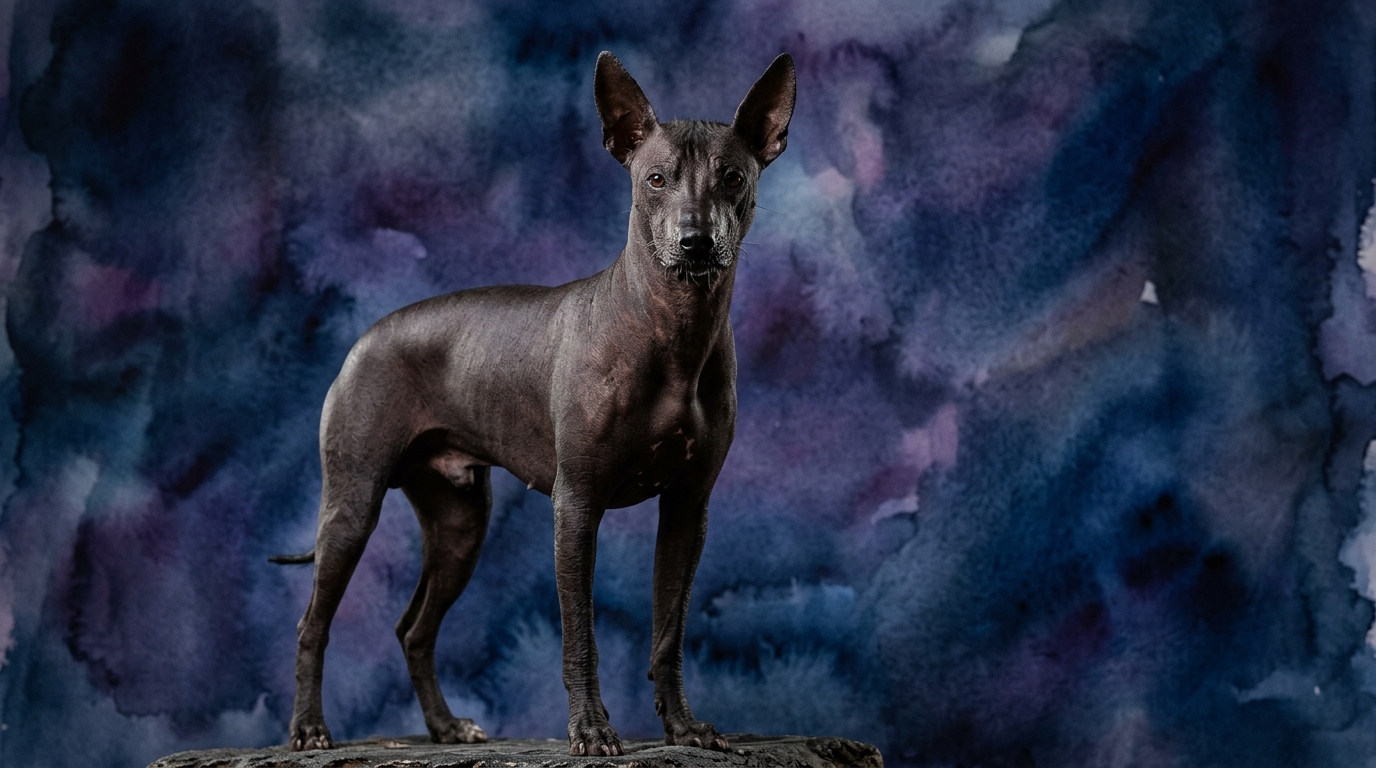
The Xoloitzcuintli, with identical 3/5 scores across the board, interprets these capacities through its ancient role as a companion and guardian. Its Problem Solving at 3/5 often involves observational learning within its domestic environment, figuring out household routines or how to gain access to comfortable spots. Training Speed, 3/5, means it can learn quickly, but its sensitive and sometimes reserved nature requires a patient, positive approach to build trust and willingness. Social Intelligence at 3/5 is characterized by deep loyalty to its core family, often accompanied by wariness or aloofness towards strangers, making it highly perceptive within its trusted circle. Its Instinctive Drive, 3/5, leans towards companionship and protective instincts, often expressed through vigilance and a desire to be close to its people. Memory, 3/5, is strong for recognizing familiar faces, places, and routines, contributing to its stable and predictable nature within its home.
Where the Basset Hound Excels Cognitively
Despite sharing the same numerical IQ scores, the Basset Hound's cognitive strengths are profoundly shaped by its specialized sensory world. Its exceptional olfactory capabilities mean its problem-solving acumen, while rated 3/5, is unparalleled when it comes to scent-driven challenges. A Basset can meticulously follow a faint, old trail that other breeds would entirely miss, demonstrating a sustained mental focus and discriminatory power within that specific domain. This isn't just about smell; it's about the cognitive processing required to interpret complex scent information, differentiate between layers of odors, and commit these maps to memory. This intense, specialized 'instinctive drive' (3/5) to hunt by scent translates into a distinct cognitive advantage for tasks requiring deep sensory immersion and methodical pursuit, making it a master of its olfactory universe. While a Xolo might solve a puzzle box by observation, a Basset solves the 'where is the treat hidden in the garden' problem with an entirely different, highly evolved mental toolkit.
Where the Xoloitzcuintli Excels Cognitively
The Xoloitzcuintli, with its history as a valued companion and guardian, exhibits distinct cognitive strengths centered around social attunement and environmental awareness within its trusted circle. Its 'social intelligence' (3/5) is expressed through a profound sensitivity to its family's moods and routines, often anticipating needs or reacting protectively to perceived threats. While the Basset might be oblivious to a raised voice if a scent is present, the Xolo is keenly observant of human emotional shifts. This breed's 'problem-solving' (3/5) often involves a more generalized understanding of its domestic environment and social dynamics, learning through observation and subtle cues rather than brute force. Its memory (3/5) is particularly strong for people and routines, creating a stable home life and reinforcing its role as a vigilant companion. This nuanced social perceptiveness and capacity for observational learning within a domestic context give the Xolo a unique cognitive edge in navigating the complexities of human-canine cohabitation, often appearing more 'tuned in' to its people than the scent-focused Basset.
Which Is Easier to Train and Why?
Comparing the training ease of a Basset Hound and a Xoloitzcuintli reveals differences rooted in their core temperaments and motivations, despite both having a 3/5 'training speed' score. Basset Hounds, with their strong independent 'instinctive drive' (3/5) for scent, can be notoriously difficult to motivate for tasks unrelated to their nose. They learn commands but may choose to ignore them if a compelling scent distraction is present. Their 'problem-solving' (3/5) is often applied to finding ways to follow their nose, not necessarily to please their handler. Training a Basset requires immense patience, consistency, and a sense of humor, often leveraging food rewards and making training feel like a game rather than a command. Their low energy outside of scent work means they might simply 'tune out' if not sufficiently motivated, leading to perceived stubbornness.
Xoloitzcuintli, while also independent, often exhibit a different dynamic. Their 'social intelligence' (3/5) means they are highly attuned to their family and generally eager to please, forming strong bonds that can be leveraged in training. However, their sensitivity means harsh methods are counterproductive and can lead to withdrawal or anxiety. They respond best to positive reinforcement, clear communication, and a calm environment. While they may not be as easily distracted by external scents as a Basset, their 'instinctive drive' (3/5) for guarding can make them wary of new people or situations, requiring early socialization. In essence, a Xolo is often more cooperative in training due to its desire for companionship and approval, provided the handler approaches them with understanding and respect for their sensitive nature, making them arguably 'easier' for an owner willing to build that deep connection.
Suitability for Active vs. Relaxed Owners
The Basset Hound and Xoloitzcuintli cater to different lifestyle preferences, largely due to how their cognitive profiles translate into daily behavior. A Basset Hound, despite its short legs, is not a sedentary dog; it is a working hound with a moderate demand for physical activity, primarily focused on sniffing and exploring. For 'relaxed owners' who enjoy leisurely walks, garden exploration, and a calm indoor presence, the Basset can be an excellent fit. However, 'relaxed' does not mean 'inactive' – Bassets require consistent, dedicated scent walks to satisfy their 'instinctive drive' (3/5) and prevent boredom, which can manifest as destructive behavior or incessant baying. Owners who appreciate a dog that is content to lounge but needs a specific outlet for its primary cognitive function will find a Basset rewarding.
The Xoloitzcuintli, on the other hand, often appeals to 'active owners' or those seeking a more engaged, vigilant companion. While they also enjoy relaxation, Xolos possess a leaner, more athletic build and a 'social intelligence' (3/5) that thrives on interaction and shared experiences. They can excel in dog sports like agility, obedience, or even hiking, benefiting from regular physical and mental stimulation. Their 'instinctive drive' (3/5) towards companionship and alertness means they often prefer to be involved in family activities. Owners who enjoy a dog that can keep pace on a jog, participate in training classes, or simply be a constant, observant presence throughout the day will find the Xolo's energy and cognitive engagement a better match. Their sensitivity also means they thrive in structured, predictable environments with consistent companionship.
The Verdict
Choose the Basset Hound if you appreciate a dog whose cognitive world is dominated by scent, offering a unique bond rooted in methodical exploration and a relaxed, yet persistent, demeanor at home.
Opt for the Xoloitzcuintli if you seek a vigilant, deeply loyal companion who thrives on close social interaction, shared activities, and offers a more generalized cognitive engagement with its human family.
🧠 Find Your Pet's IQ Score
Our Pet IQ Lab assessment covers 25+ tests across 5 cognitive dimensions — personalized to your breed.
Take the Full IQ Test →Frequently Asked Questions
Do Basset Hounds learn quickly?
Basset Hounds have a 'training speed' of 3/5, meaning they learn at a moderate pace. Their independent nature and strong scent drive often make them appear stubborn, but with consistent, positive reinforcement, they are capable of learning a wide range of commands.
Are Xoloitzcuintli good at problem-solving?
Xoloitzcuintli score 3/5 in 'problem-solving', often demonstrating their acumen through observational learning within their home environment. They are adept at understanding routines and navigating social dynamics, rather than complex manipulation tasks.
Which breed is more social with strangers?
The Basset Hound typically has a more generally friendly disposition towards strangers, though their 'social intelligence' (3/5) is more about being agreeable than deeply engaged. Xoloitzcuintli, while forming deep bonds with their family, are often reserved or wary of strangers due to their protective 'instinctive drive' (3/5).