Side-by-Side IQ Profile: Beagle vs. Australian Terrier
The Cosmic Pet Pet IQ Lab provides a structured framework for understanding canine intelligence across five key dimensions. Examining these scores for the Beagle and Australian Terrier offers a precise look into their cognitive strengths and tendencies.
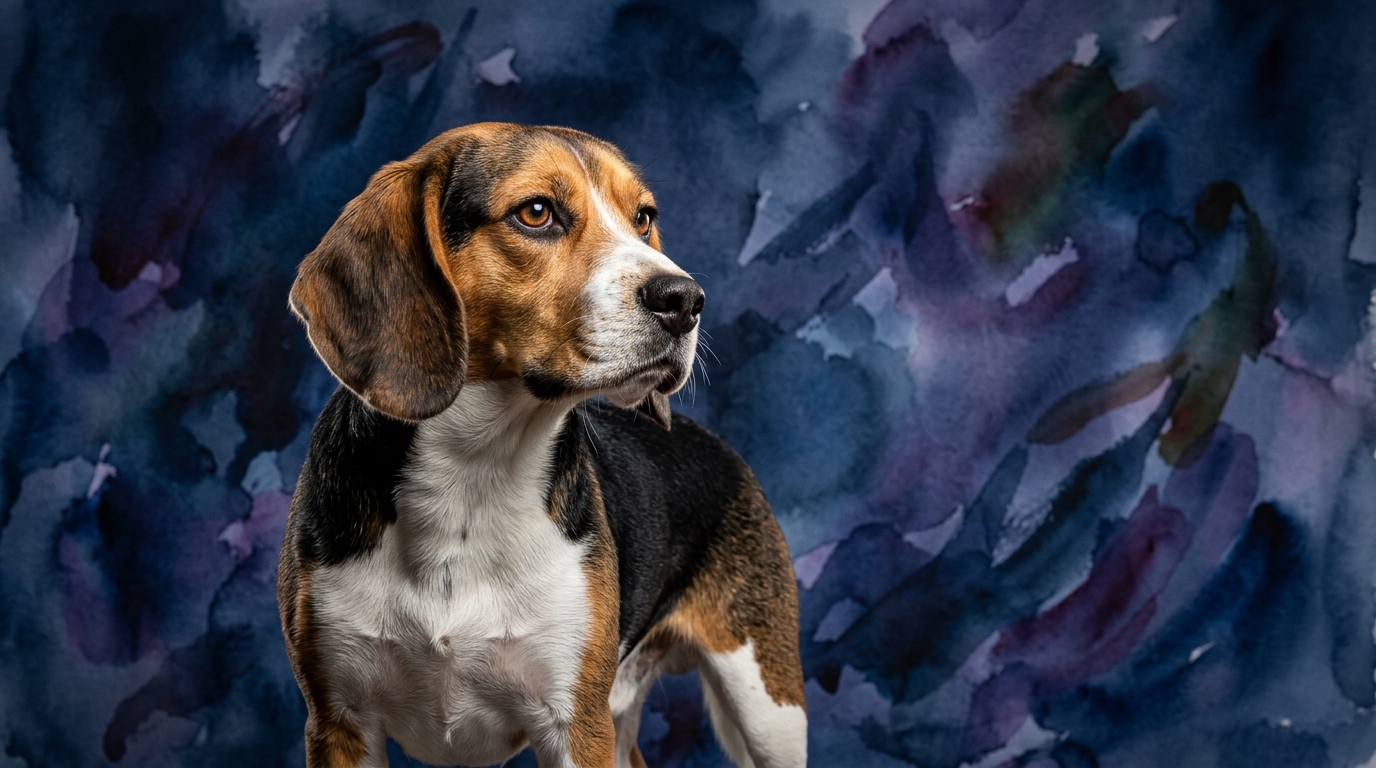
For the **Beagle**, ranked #72 by Coren, its Problem Solving ability scores a notable 4/5. This indicates a breed adept at navigating complex scenarios, particularly those involving scent or environmental puzzles, often demonstrating persistent focus until a solution is found. Its Training Speed is rated 2/5, suggesting a slower acquisition of new commands, often influenced by its powerful internal drives. Social Intelligence stands at 3/5, reflecting a generally amiable nature but with an independent streak that can prioritize personal pursuits over social cues. The Beagle's Instinctive Drive is a commanding 5/5, signifying an overwhelming compulsion to follow scent trails and engage in tracking behaviors. Finally, its Memory is strong at 4/5, allowing it to recall intricate scent paths, routines, and the locations of various resources with considerable accuracy.
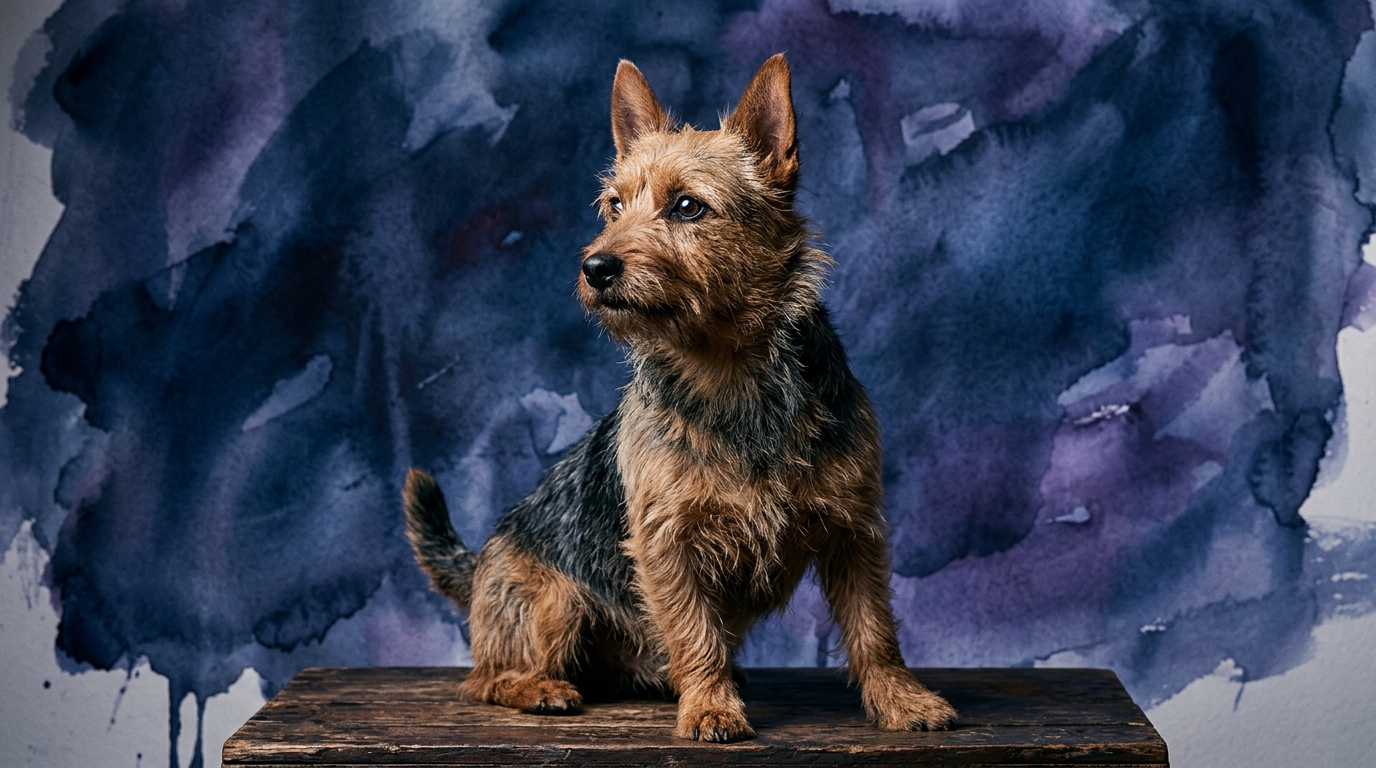
The **Australian Terrier**, while not Coren-ranked, presents a distinct profile. Its Problem Solving ability is 3/5, indicating competence in solving moderate challenges, though perhaps with less intricate strategizing than a Beagle. Training Speed is rated 3/5, suggesting an average pace for learning new commands, making them generally responsive to consistent instruction. Social Intelligence also scores 3/5; they typically form strong bonds and are sociable, but retain a characteristic terrier assertiveness. The Australian Terrier's Instinctive Drive is 3/5, a moderate level that includes an enjoyment of digging and chasing but lacks the overwhelming, singular focus of a Beagle's scent drive. Its Memory is 3/5, meaning it adequately remembers commands and routines, though perhaps with less granular detail or long-term retention of complex environmental data compared to the Beagle.
Where the Beagle Wins Cognitively
The Beagle’s cognitive profile showcases several areas where it demonstrates a distinct advantage, primarily rooted in its highly specialized sensory processing and persistence. Its Problem Solving score of 4/5, compared to the Australian Terrier’s 3/5, highlights a superior capacity for navigating intricate situations and figuring out solutions, especially when those solutions are tied to a sensory goal. For instance, a Beagle might more readily devise a method to access a hidden treat by following a faint scent, demonstrating a cognitive tenacity that is less pronounced in the Australian Terrier.
The most striking cognitive 'win' for the Beagle lies in its Instinctive Drive, rated a perfect 5/5 versus the Australian Terrier’s 3/5. This isn't just about raw energy; it signifies a profoundly specialized cognitive focus. Beagles possess an unparalleled ability to fixate on and meticulously follow a scent trail, demonstrating remarkable cognitive endurance and single-mindedness in the pursuit of their primary drive. This highly developed sensory-cognitive system allows them to process and interpret olfactory information with a sophistication unmatched by many breeds, making them exceptional at tasks requiring sustained, independent investigation. Their Memory, at 4/5 compared to 3/5, further supports this, enabling them to recall complex scent maps and the spatial relationships of their environment with impressive detail, which is crucial for their tracking prowess and adaptability to established routines.
Where the Australian Terrier Wins Cognitively
While the Australian Terrier may not outscore the Beagle in every specific cognitive dimension, its balanced profile presents unique advantages, particularly in adaptability and ease of integration into varied lifestyles. One notable area where the Australian Terrier's cognitive blend shines is in its Training Speed, rated 3/5, which is comparatively higher than the Beagle's 2/5. This suggests that Australian Terriers generally pick up new commands and learn behavioral expectations at a more consistent and accessible pace for the average owner.
Furthermore, the Australian Terrier’s moderate Instinctive Drive (3/5) can be considered a cognitive 'win' for many households. Unlike the Beagle's intense 5/5 drive, which often translates into an overwhelming compulsion to track, the Australian Terrier’s more balanced drive means owners face fewer challenges managing a singular, powerful instinct that can override other cognitive functions. This moderation allows the Australian Terrier to engage with a broader range of activities and human-directed tasks without being constantly pulled by an internal, all-consuming drive. Their overall cognitive balance across Problem Solving (3/5), Social Intelligence (3/5), and Memory (3/5) results in a dog that is generally adaptable, less prone to specific cognitive 'overloads,' and capable of thriving in a variety of environments without requiring highly specialized cognitive outlets.
Which is Easier to Train and Why?
When considering ease of training, the Australian Terrier generally presents a more straightforward experience due to its balanced cognitive profile. With a Training Speed of 3/5, they are typically receptive learners, capable of grasping new commands at an average pace. Coupled with a moderate Instinctive Drive (3/5) and Problem Solving (3/5), Australian Terriers are less likely to be overwhelmed or distracted by internal compulsions during training sessions. Their cognitive capacity allows them to focus on human instructions and motivations, making them responsive to positive reinforcement and varied training approaches. They enjoy engaging with their human partners in learning, which fosters a more collaborative training environment.
The Beagle, by contrast, often poses a greater challenge in traditional obedience training. Its Training Speed is a lower 2/5, indicating a slower rate of command acquisition. This is profoundly influenced by its intense Instinctive Drive (5/5). A Beagle's powerful nose and inherent drive to track mean that an enticing scent can easily override any command or learned behavior. Their high Problem Solving (4/5) can also work against a trainer, as Beagles are adept at 'problem-solving' ways to pursue their instincts, often finding loopholes or alternative routes to their desired olfactory goals, rather than adhering strictly to human directives. Training a Beagle often feels less like teaching a compliant student and more like negotiating with a highly focused, independent tracker, requiring immense patience, consistency, and often specialized training methods that incorporate their scenting abilities to maintain engagement.
Which Suits Active Owners vs. Relaxed Owners?
The cognitive profiles of these two breeds offer clear indicators for their suitability with different owner lifestyles. For highly active owners, particularly those who enjoy structured activities that tap into a dog's natural instincts, the Beagle is an excellent match. Its 5/5 Instinctive Drive suggests a profound need for engaging activities that utilize its scenting abilities, such as scent work, tracking games, or long, exploratory walks where it can follow its nose. These activities are not just physical outlets but essential cognitive stimulation for a Beagle. An owner prepared to dedicate significant time to managing and channeling this powerful, specialized drive will find the Beagle a rewarding companion, but a relaxed owner might quickly find its relentless drive overwhelming and potentially destructive if not adequately addressed.
The Australian Terrier, with its moderate Instinctive Drive (3/5) and balanced Problem Solving (3/5), is well-suited for owners who are active but perhaps less specialized in their activities. They enjoy regular walks, playtime, and mental enrichment like puzzle toys, but do not possess the same singular, intense cognitive demand as a Beagle. Their adaptability allows them to thrive in a wider range of activity levels, from daily walks and backyard play to more relaxed evenings at home, as long as their basic needs for exercise and companionship are met. This makes them a more versatile companion for owners seeking a dog that can integrate smoothly into a varied family life without requiring a constant, specialized outlet for an overpowering instinct.
The Verdict: When to Choose Each Breed
The decision between a Beagle and an Australian Terrier hinges on an owner's lifestyle, training philosophy, and willingness to engage with specific cognitive demands. Their Cosmic Pet Pet IQ Lab profiles paint a clear picture of their distinct approaches to the world.
The Beagle, with its high Problem Solving and unmatched Instinctive Drive, is a superb choice for owners who are deeply committed to harnessing and engaging a dog's profound scenting and tracking abilities. This breed thrives with individuals prepared for the dedication and patience required to manage a powerful, independent cognitive focus, often finding immense satisfaction in activities like scent work, where the Beagle's unique talents truly shine. They are for those who appreciate a dog driven by an ancient, compelling instinct and are ready to integrate that into their daily lives, understanding that their memory and problem-solving are often in service of this primary drive.
Conversely, the Australian Terrier, characterized by its balanced scores across all cognitive dimensions, is an ideal companion for individuals seeking an adaptable and generally more amenable canine partner. Its moderate Instinctive Drive and average Training Speed make it a more flexible fit for a variety of households, including those with less specialized activity requirements or more relaxed training approaches. This breed excels with owners who appreciate a practical, companion-oriented intelligence that is responsive to human interaction and capable of integrating smoothly into a diverse range of social and physical environments without overwhelming, singular cognitive demands.
The Verdict
Choose a Beagle if you are dedicated to engaging a dog's profound scenting and problem-solving abilities, prepared for the commitment of managing a powerful instinctive drive.
Choose an Australian Terrier if you seek a balanced, adaptable companion who learns readily and integrates smoothly into a variety of lifestyles without a singular, intense cognitive demand.
🧠 Find Your Pet's IQ Score
Our Pet IQ Lab assessment covers 25+ tests across 5 cognitive dimensions — personalized to your breed.
Take the Full IQ Test →Frequently Asked Questions
Is a Beagle harder to train than an Australian Terrier?
Generally, yes. The Beagle's intense instinctive drive and singular focus on scent often make them less attentive to human commands, requiring more patience and consistent, highly motivating training methods than the more moderately driven Australian Terrier.
Which breed is better for apartment living based on their IQ?
The Australian Terrier's more moderate instinctive drive (3/5) and problem-solving scores (3/5) make it potentially better suited for apartment living, as its cognitive needs can be met with less extensive outdoor tracking opportunities than a Beagle. Beagles, with their 5/5 instinctive drive, thrive with ample opportunities to use their nose, which can be challenging to provide sufficiently in a small living space without dedicated effort.
Do Australian Terriers still enjoy mental games despite lower problem-solving scores?
Absolutely. While their problem-solving score is 3/5 compared to the Beagle's 4/5, Australian Terriers still benefit greatly from mental enrichment like puzzle toys and training games. Their moderate drive means they can enjoy these activities without the intense, single-minded focus that might lead to frustration or over-arousal in a dog with a higher instinctive drive.