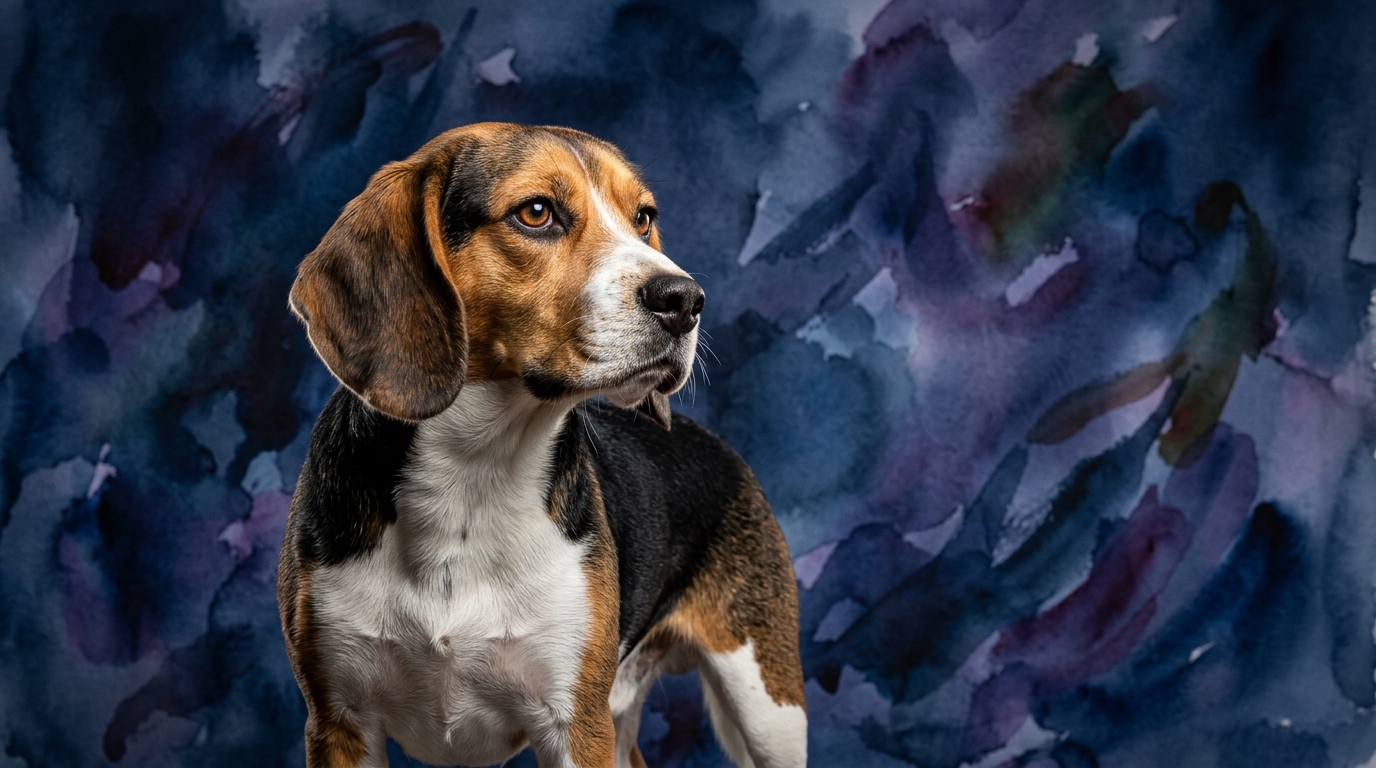

Side-by-Side IQ Profile
The Beagle, ranking 72nd in Coren's intelligence scale, presents a cognitive profile shaped by its heritage as a scent hound. Their Problem Solving is rated 4/5, reflecting an exceptional ability to navigate and interpret complex odor landscapes, demonstrating deductive reasoning when following a trail rather than abstract puzzles. Training Speed is 2/5; while capable of learning, their profound Instinctive Drive (5/5) often makes them appear selectively deaf when a compelling scent takes precedence over human directives. Social Intelligence stands at 3/5, indicating a generally amiable nature and understanding of immediate pack dynamics, though not necessarily complex social nuances. Their Memory, at 4/5, is particularly strong for scent trails and locations associated with rewarding sensory experiences, though recall for arbitrary commands requires consistent reinforcement.
In stark contrast, the Belgian Sheepdog (Groenendael), at a Coren rank of 15, exhibits a cognitive architecture built for cooperative work and complex task execution. Their Problem Solving is a perfect 5/5, showcasing an impressive capacity for quickly analyzing situations and developing strategies to achieve goals, whether it's herding livestock or mastering intricate agility sequences. Training Speed also scores 5/5; these dogs absorb and retain new commands and routines with remarkable efficiency, driven by a strong desire to work alongside their human companions. Social Intelligence is 3/5; while deeply devoted to their families, Groenendaels can be reserved with strangers, relying more on established relationships than broad social engagement. Their Memory is 5/5, reflecting an outstanding ability to retain a vast repertoire of learned behaviors, commands, and environmental information over long periods.
Where the Beagle Wins Cognitively
The Beagle's cognitive strengths are undeniably rooted in their olfactory prowess and the tenacious application of their instincts. With an Instinctive Drive of 5/5 and Problem Solving at 4/5, no other breed can quite match their dedication and skill in scent work. A Beagle doesn't just sniff; they engage in a sophisticated form of environmental problem-solving, meticulously piecing together faint odor molecules to reconstruct a path, often over varied terrain and through challenging conditions. This requires sustained focus, internal mapping, and a form of deductive reasoning unique to their sensory world. Their persistence, which can be interpreted as stubbornness in other contexts, is a cognitive triumph when applied to tracking, allowing them to overcome obstacles and distractions that would deter many other breeds. This specialized intelligence allows them to excel in activities like detection work or intricate scent games, where their natural inclinations are fully engaged and rewarded, demonstrating a profound understanding of their olfactory environment.
Where the Belgian Sheepdog (Groenendael) Wins Cognitively
The Belgian Sheepdog (Groenendael) secures its cognitive victories in domains demanding rapid acquisition of complex skills and unwavering focus on human-directed tasks. With perfect scores in Problem Solving (5/5), Training Speed (5/5), and Memory (5/5), Groenendaels possess an exceptional ability to learn, retain, and execute intricate sequences of commands. They not only understand *what* is being asked but often anticipate the next step, demonstrating a proactive engagement in cooperative work. This breed excels at breaking down multi-stage problems, whether in advanced obedience, agility, or protection sports, into manageable components and applying learned solutions efficiently. Their capacity for long-term memory ensures that once a behavior is learned, it is deeply ingrained, allowing for consistent, precise performance. This comprehensive mental architecture makes them highly adaptable to diverse working roles, where quick thinking, precise execution, and a strong partnership with their handler are paramount.
Which is Easier to Train and Why
When evaluating ease of training, the Belgian Sheepdog (Groenendael) holds a clear advantage. Their 5/5 Training Speed and 5/5 Memory mean they grasp new commands and complex routines with remarkable efficiency, often requiring fewer repetitions than many other breeds. Groenendaels possess a strong desire to please and a natural inclination towards cooperative work, making them highly responsive to their handler's cues. Their Instinctive Drive of 3/5, while present, is typically well-managed and can be channeled into constructive activities, rather than overriding their focus on training. Conversely, the Beagle, with its 2/5 Training Speed and dominant 5/5 Instinctive Drive, presents a more significant training challenge. A Beagle's world is primarily governed by their powerful nose; a compelling scent can instantly render them oblivious to commands, making consistent recall and focus particularly demanding. While they are capable of learning, their independent nature and profound dedication to following a trail mean that training requires immense patience, creativity, and a consistent reinforcement schedule to compete with their innate drive. Owners often find themselves in a constant battle with the Beagle's nose, whereas the Groenendael actively seeks to engage in cooperative learning and task completion.
Which Suits Active Owners vs. Relaxed Owners
The Belgian Sheepdog (Groenendael) is an ideal match for active owners who are prepared to provide substantial mental and physical engagement. Their high problem-solving capacity and rapid training speed mean they thrive on structured activities like dog sports, advanced obedience, or protection work. These dogs require consistent stimulation to prevent boredom and channel their energy constructively. Owners must be committed to daily exercise, ongoing training, and establishing clear leadership, as an under-stimulated Groenendael can develop undesirable behaviors. They are not content to be couch potatoes and need a 'job' to feel fulfilled. In contrast, the Beagle can suit a somewhat more relaxed owner, provided their fundamental needs for scent work and moderate exercise are met. While not sedentary, their activity often revolves around exploring with their nose rather than highly structured, high-intensity tasks. They require secure environments to prevent them from following a captivating scent trail too far, and owners should be prepared for their independent nature during walks. Beagles are less demanding in terms of complex, high-level training but still need engagement to satisfy their investigative instincts and prevent them from becoming bored and potentially destructive.
The Verdict
Choose a Beagle if you appreciate a dog driven by scent, enjoy independent explorers, and are prepared for a charming but often stubborn companion whose greatest joy is following a fascinating trail.
Choose a Belgian Sheepdog (Groenendael) if you seek a highly trainable, versatile working partner for dog sports, advanced obedience, or a protective family member, and are committed to providing substantial mental and physical engagement.
🧠 Find Your Pet's IQ Score
Our Pet IQ Lab assessment covers 25+ tests across 5 cognitive dimensions — personalized to your breed.
Take the Full IQ Test →Frequently Asked Questions
Can Beagles excel at dog sports like agility?
While Beagles can participate in agility, their natural inclination towards scenting over precise instruction often makes it a challenge. Their 2/5 training speed means they can learn the obstacles, but their strong instinctive drive (5/5) means they might veer off course if a compelling smell captures their attention, requiring immense patience and motivational techniques from their handler.
Do Belgian Sheepdogs (Groenendaels) make good pets for families with children?
Groenendaels can be excellent family dogs, forming strong bonds and often being protective of their human pack. Their 3/5 social intelligence means they are loyal to their family, but early socialization is crucial to ensure they are comfortable and well-adjusted around children and new people, given their potential reservation with strangers.
What are the key differences in mental stimulation requirements for these breeds?
Beagles require mental stimulation primarily through scent games and opportunities to explore with their nose, satisfying their 5/5 instinctive drive. Groenendaels, with their 5/5 problem-solving and training speed, need consistent, varied training, puzzle toys, and structured activities like obedience or dog sports to keep their sharp minds engaged and prevent boredom.