Side-by-Side IQ Profile: Hound vs. Herder Minds
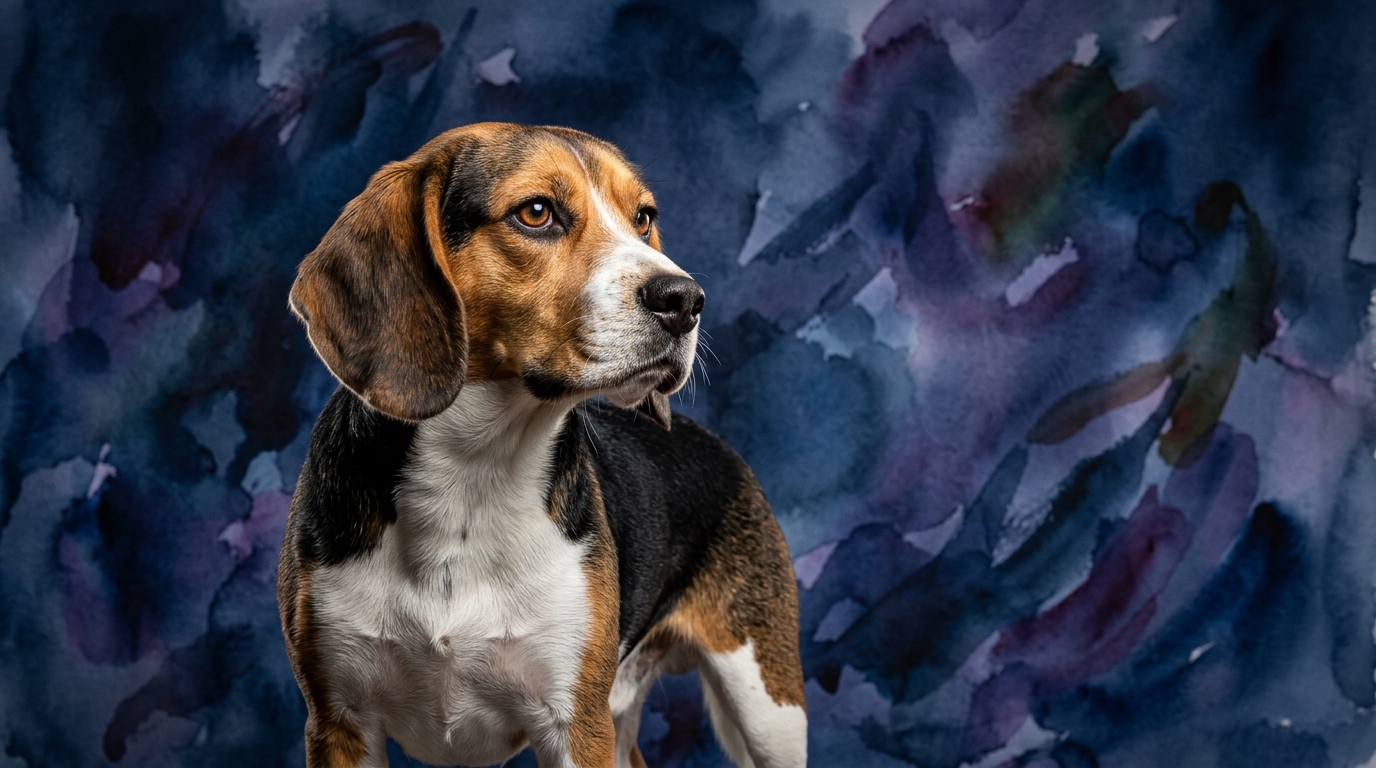
At first glance, the Beagle and Bouvier des Flandres appear to inhabit different cognitive universes, a reflection of their divergent historical roles. The Beagle, a compact scent hound with a Coren rank of #72, boasts a Problem Solving score of 4/5, demonstrating an impressive capacity to navigate complex environments and overcome obstacles when driven by its primary motivator: scent. However, its Training Speed is a modest 2/5, indicating that its independent nature and singular focus often make formal obedience a protracted affair, requiring immense patience. Social Intelligence sits at 3/5, reflecting its pack-oriented sociability, while its Instinctive Drive is an overwhelming 5/5, almost exclusively dedicated to its olfactory world. Complementing this is a Memory score of 4/5, allowing it to recall intricate scent patterns and locations with remarkable accuracy.
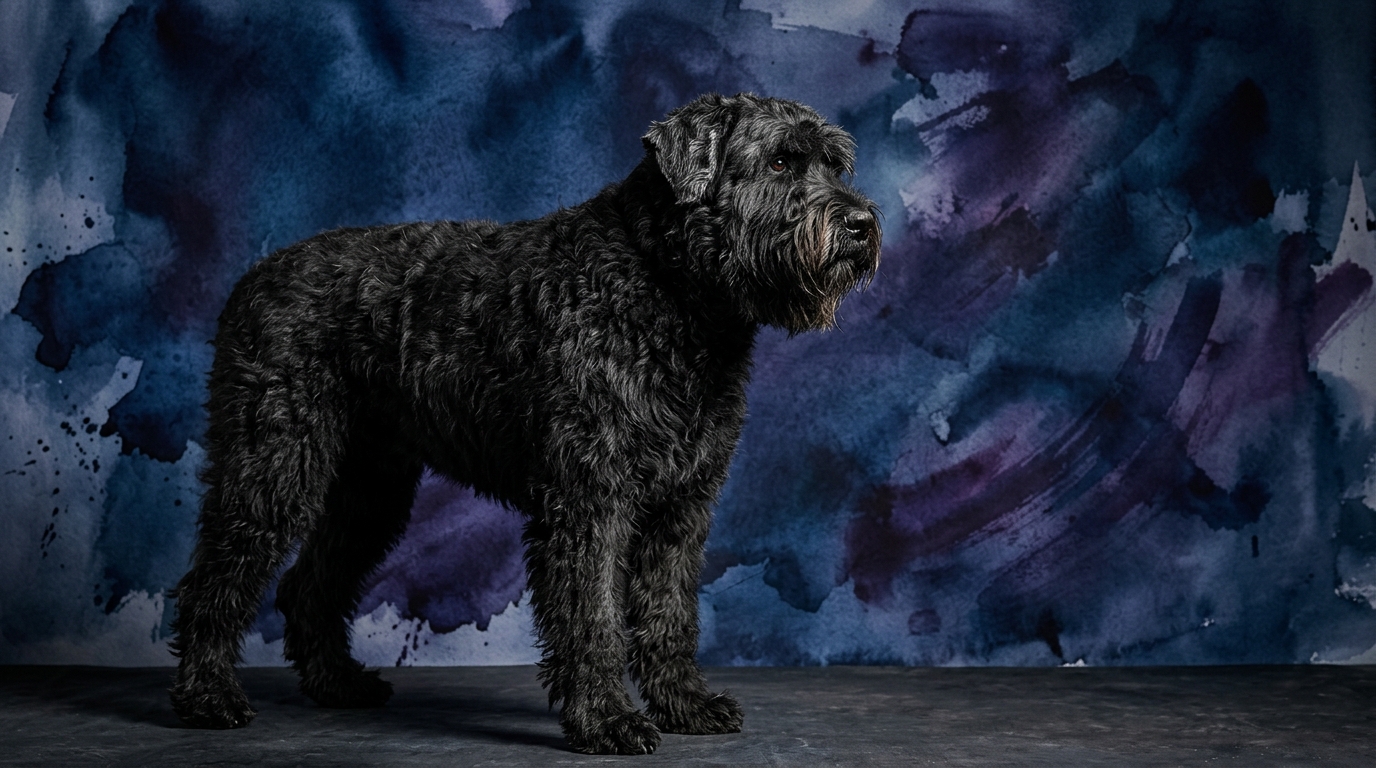
In stark contrast, the Bouvier des Flandres, a robust herding dog not listed on the Coren ranking, presents a more balanced, albeit slightly lower, cognitive profile across the board. Its Problem Solving is 3/5, reflecting a practical, methodical approach to tasks rather than the Beagle's scent-driven ingenuity. Training Speed is 3/5, suggesting a more cooperative learner than the Beagle, though not without its own independent streak. Social Intelligence also registers 3/5, indicative of a watchful, protective nature rather than pure pack dynamics. Its Instinctive Drive is a moderate 3/5, focused on guarding and herding, which is present but not all-consuming like the Beagle's scent drive. Finally, its Memory is 3/5, solidifying its capacity for retaining learned behaviors and routines.
Where the Beagle's Mind Shines Brightest
The Beagle’s cognitive advantages are deeply intertwined with its extraordinary olfactory system. Its 4/5 Problem Solving ability shines brightest when a challenge involves scent. For instance, a Beagle is adept at figuring out how to bypass a barrier to reach a hidden treat, not through abstract reasoning, but by expertly following invisible scent trails, displaying immense persistence. Their 5/5 Instinctive Drive isn't just about sniffing; it's a profound cognitive commitment, allowing them to filter out distractions and focus relentlessly on a target odor, a skill that translates into highly effective search and rescue or detection work.
This intense focus is supported by a 4/5 Memory, enabling them to recall complex scent maps and routes traversed hours or even days prior. They can remember exactly where a particular scent was strongest or the sequence of turns taken during a long track, making them formidable navigators in their sensory world. The Beagle’s cognitive wins are specific to its evolutionary purpose: mastering the intricate world of scent and doggedly pursuing what its nose tells it.
Where the Bouvier des Flandres Excels Cognitively
While the Beagle excels in the realm of scent, the Bouvier des Flandres demonstrates its cognitive strengths in areas requiring thoughtful application and collaboration, traits essential for a working herding dog. Its 3/5 Training Speed, though not top-tier, places it above the Beagle, indicating a greater willingness and capacity for learning and retaining human-directed commands. This breed's Problem Solving (3/5) manifests as a more deliberate, analytical approach to tasks, such as understanding the boundaries of a flock or the nuances of a complex obedience sequence.
They aren't as easily swayed by singular, overwhelming instincts, allowing for a more consistent engagement with their human partners. The Bouvier’s balanced profile means it can integrate multiple pieces of information—visual cues, verbal commands, and environmental factors—to make decisions, rather than being solely driven by one powerful sense. This holistic processing makes them proficient in tasks requiring nuanced judgment and a steady temperament, such as protection work or guiding livestock, where a single-minded pursuit could be detrimental.
Training Dynamics: Which is the More Amenable Student?
Assessing which breed is 'easier' to train requires understanding their inherent motivations and cognitive biases. The Bouvier des Flandres, with its 3/5 Training Speed, generally presents a more straightforward training journey than the Beagle, which scores a 2/5. The Bouvier's herding heritage means it's predisposed to working in partnership with humans; it understands and often seeks direction, albeit sometimes with a thoughtful pause. They respond well to clear, consistent commands and positive reinforcement, showing a capacity for focused attention that allows for more rapid acquisition of complex behaviors. Their moderate Instinctive Drive (3/5) means they are less likely to be completely consumed by environmental distractions, enabling them to maintain focus during training sessions.
In contrast, the Beagle's training challenges stem directly from its extraordinary 5/5 Instinctive Drive. A Beagle's nose is its world, and once it locks onto an interesting scent, the human voice often becomes secondary, if not entirely imperceptible. Their independent hound nature means they are often less interested in pleasing their human if it conflicts with their olfactory pursuits. Training a Beagle demands immense patience, creativity, and often relies on high-value, novel rewards to compete with the allure of a scent trail. Owners must learn to work with, rather than against, their powerful instincts, often channeling their drive into scent games or tracking rather than expecting precision obedience in a distracting environment. Thus, while both breeds require dedicated effort, the Bouvier’s inherent biddability and focus generally make it a more amenable student in traditional obedience contexts.
Matching Canine Cognition to Owner Lifestyles
Both the Beagle and the Bouvier des Flandres are dogs bred for work, meaning neither is truly suited for a 'relaxed' owner who prefers minimal engagement. However, the *type* of activity they require differs significantly. Active owners who relish outdoor adventures and are eager to channel a dog’s natural talents will find joy with either, but in different ways. A Beagle thrives with owners who embrace its scent-driven world. This means long, sniff-intensive walks where the dog is allowed to explore its olfactory environment, participation in nose work classes, tracking, or even field trials. Their physical energy is considerable, but their mental stimulation is primarily scent-based. They are not content to simply walk; they need to investigate. An owner who understands this and provides consistent outlets for their 5/5 Instinctive Drive will find a happy, albeit sometimes noisy, companion.
For the Bouvier des Flandres, active owners are those prepared for consistent physical exercise coupled with mental challenges. This breed excels in activities like obedience, agility, carting, or even herding trials, where their Problem Solving (3/5) and Social Intelligence (3/5) are engaged. They need a job to do, a purpose that goes beyond mere physical exertion. A long hike is good, but a hike with a 'mission' (like carrying a pack or practicing commands) is better. For truly 'relaxed' owners seeking a low-maintenance companion, neither breed is a good fit. A bored Beagle can become destructive or vocal, while an under-stimulated Bouvier might develop undesirable guarding behaviors or become withdrawn. Both require owners who are committed to providing structured activity and mental enrichment, rather than just occasional walks.
The Verdict
If you are an owner who delights in a dog's independent spirit, is fascinated by the world of scent, and is prepared to dedicate significant, creative effort to channel a powerful instinctive drive, the Beagle is your ideal companion.
Conversely, if you seek a steadfast, thoughtful working partner, value a dog that processes information more holistically, and are ready to provide consistent leadership and varied mental challenges, the Bouvier des Flandres will thrive by your side.
🧠 Find Your Pet's IQ Score
Our Pet IQ Lab assessment covers 25+ tests across 5 cognitive dimensions — personalized to your breed.
Take the Full IQ Test →Frequently Asked Questions
Are Beagles difficult to train?
Beagles present unique training challenges primarily due to their intense 5/5 Instinctive Drive for scent, which often overrides their attention to human commands. While capable of learning, their 2/5 Training Speed means owners must be exceptionally patient, consistent, and creative, often using high-value rewards to compete with environmental distractions.
Do Bouvier des Flandres make good family dogs?
Bouvier des Flandres can be excellent family dogs, exhibiting a moderate 3/5 Social Intelligence and a protective nature, making them devoted companions. However, their working dog instincts mean they thrive with clear leadership, early socialization, and consistent mental and physical stimulation to ensure they are well-adjusted and gentle with children.
Which breed is more independent?
While both breeds possess independence, the Beagle is generally more independent in its pursuits, driven by its overwhelming 5/5 Instinctive Drive for scent, often leading it to follow its nose regardless of human directives. The Bouvier des Flandres, while thoughtful and sometimes stubborn, tends to be more collaborative and biddable, with its independence manifesting as a watchful, self-assured nature rather than a complete disregard for commands.