Side-by-Side IQ Profile: Beagle vs. Chesapeake Bay Retriever
The Cosmic Pet Pet IQ Lab employs a five-dimensional cognitive framework to provide a nuanced understanding of canine intelligence. Examining the Beagle and Chesapeake Bay Retriever through this lens uncovers unique strengths and challenges for each breed, offering insights into their natural aptitudes.
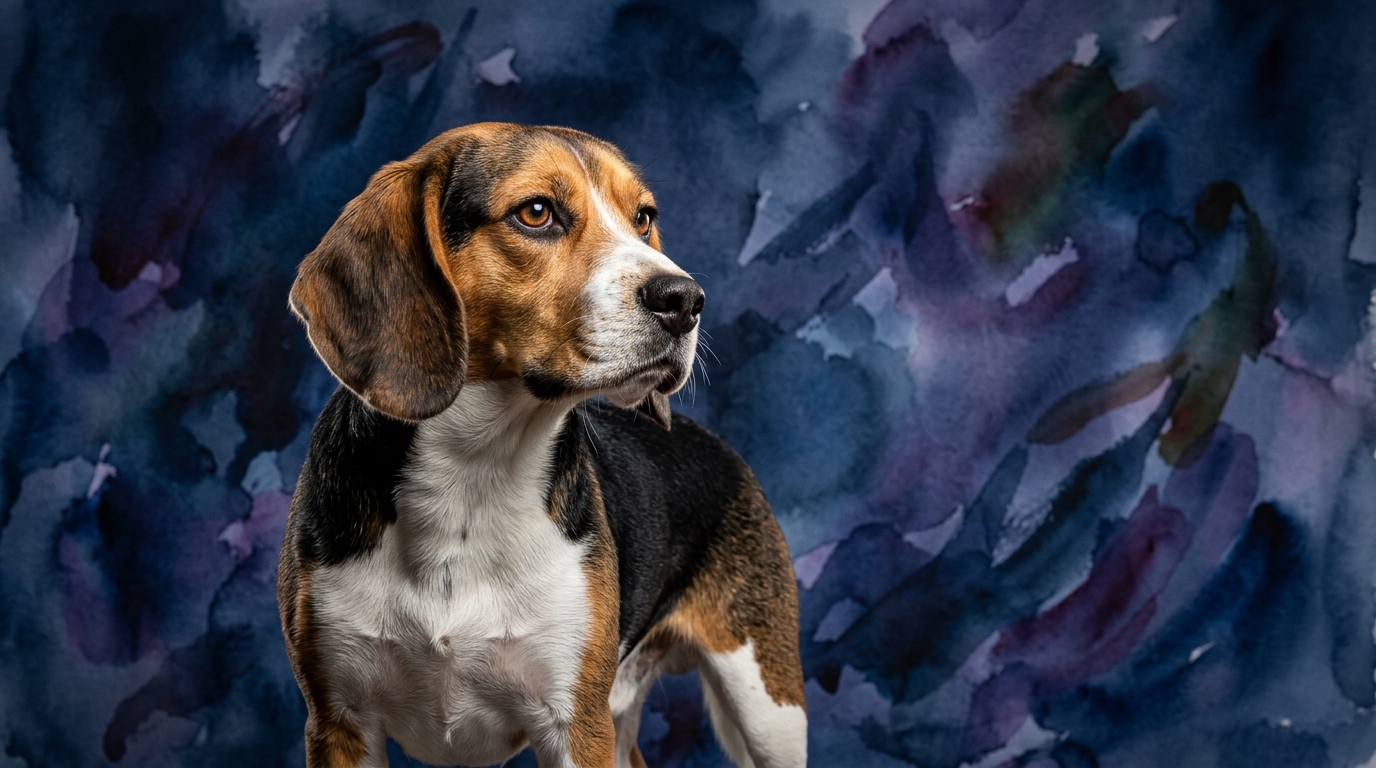
**Beagle (Hound, Coren rank #72)**
**Problem Solving (4/5):** Beagles demonstrate a robust capacity to navigate complex environments, primarily driven by their powerful olfactory senses. They excel at figuring out how to reach a hidden scent source or overcome obstacles in a tracking scenario, often using trial and error with persistent determination. This isn't about obeying a command to solve a puzzle, but rather independently working out how to achieve a self-motivated goal.
**Training Speed (2/5):** Their independent nature and focus on scent often translate to a slower uptake of traditional obedience commands. While capable of learning, Beagles require significant patience, consistency, and highly motivating rewards to integrate new behaviors into their repertoire. Their minds are often preoccupied with the world of smells, making it challenging to redirect their attention to human-centric tasks.
**Social Intelligence (3/5):** Beagles are generally sociable with both humans and other dogs, often displaying a friendly and amiable disposition. They understand social cues within their pack, whether canine or human, but their primary drive isn't necessarily to please or conform to human expectations; rather, they seek companionship and a comfortable social order.
**Instinctive Drive (5/5):** This is where the Beagle truly shines. Their prey drive and scenting instincts are exceptionally strong, leading to an almost unparalleled ability to follow a trail for extended periods, often to the exclusion of all else. This drive is a powerful cognitive force, directing their attention, memory, and problem-solving skills towards their primary purpose as a scent hound.
**Memory (4/5):** Beagles possess a strong memory, particularly for locations, routines, and especially for scents. Once they've learned a particular scent or recognized a place where interesting smells are found, they retain that information effectively. This memory aids their tracking abilities, allowing them to recall previous paths or where a scent trail might have led.
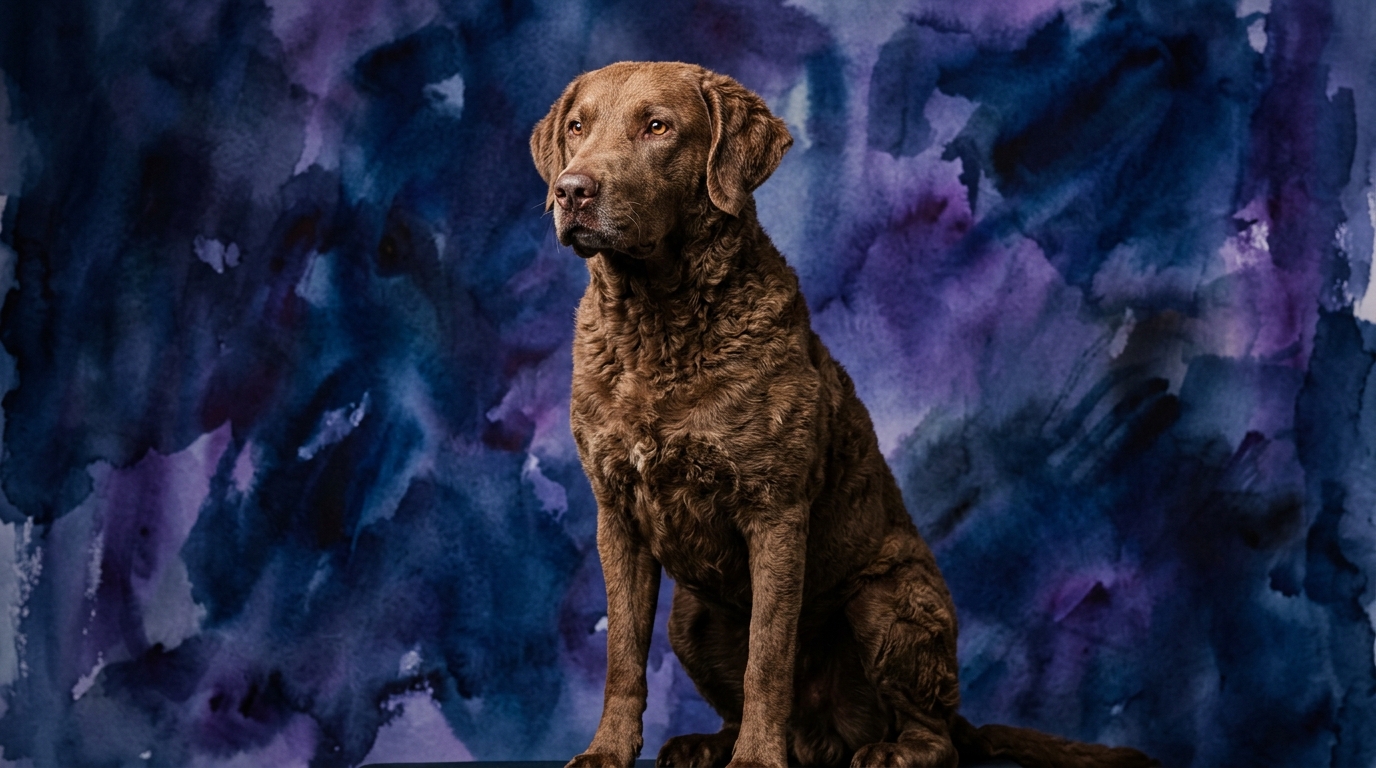
**Chesapeake Bay Retriever (Sporting, Coren rank #27)**
**Problem Solving (4/5):** Chesapeake Bay Retrievers exhibit a practical and efficient approach to problem-solving, particularly when it relates to their working roles. They can quickly assess a situation, such as how to retrieve an item from a challenging environment or navigate obstacles during a hunt, demonstrating resourceful thinking. Their solutions are often driven by a desire to complete a task and please their handler.
**Training Speed (4/5):** Chessies are quick learners, absorbing new commands and complex tasks with impressive speed and retention. Their natural eagerness to work alongside their human companions makes them highly receptive to training, often requiring fewer repetitions than many other breeds to master a skill. This efficiency makes them a favored choice for demanding roles.
**Social Intelligence (3/5):** While devoted to their families, Chesapeake Bay Retrievers can be reserved with strangers, taking time to assess new individuals. Within their social circle, they are perceptive to human emotions and intentions, forming deep bonds. Their social intelligence is more about loyalty and discerning trustworthiness than universal amiability.
**Instinctive Drive (3/5):** Their instinctive drive centers around their retrieving heritage, showing a strong desire to fetch and carry, especially from water. While present, this drive is more controllable and directed than a hound's, making it easier to integrate into structured training. It serves their working purpose without necessarily overriding all other commands.
**Memory (4/5):** Chesapeake Bay Retrievers demonstrate a robust memory, crucial for remembering complex multi-step commands, marking fall locations during retrieves, and recalling past training experiences. This strong recall supports their high training speed and allows them to perform consistently even after breaks from specific tasks.
Where the Beagle Wins Cognitively
The Beagle's singular cognitive strength lies in its unparalleled instinctive drive and the intricate problem-solving it applies to scent work. With a 5/5 rating in instinctive drive, their noses are not merely tools but powerful cognitive engines. A Beagle excels at independently analyzing and interpreting a complex tapestry of odors, following a trail with unwavering focus even when distractions abound. This involves a sophisticated form of problem-solving where they must discriminate between scents, re-establish lost trails, and mentally map out the path of a target, all without direct human instruction. Their 4/5 memory for scents and locations further reinforces this, allowing them to recall where a trail was last strong or where a particular scent profile was encountered. This deep immersion in their olfactory world means they are constantly processing environmental information in a way few other breeds can match, making them masters of independent sensory pursuit.
Where the Chesapeake Bay Retriever Wins Cognitively
The Chesapeake Bay Retriever's cognitive edge is most apparent in its superior training speed and its ability to apply problem-solving skills efficiently in collaborative tasks. With a 4/5 rating in training speed, Chessies absorb and execute new commands with remarkable alacrity, demonstrating a keen desire to understand and fulfill their handler's expectations. This quick learning, combined with their 4/5 problem-solving, means they can not only master complex sequences but also adapt those learned behaviors to novel situations during tasks like retrieving. For instance, they might quickly figure out the most efficient path through dense cover to retrieve a dummy, or learn to differentiate between multiple retrieve targets based on subtle cues. Their instinctive drive, while not as overwhelming as a Beagle's, is channeled effectively into cooperative work, making them exceptionally responsive and adaptable partners in structured environments.
Which Is Easier to Train and Why
When considering ease of training, the Chesapeake Bay Retriever holds a distinct advantage due to its higher training speed and more manageable instinctive drive. A Chessie’s 4/5 training speed means they typically require fewer repetitions to grasp new commands and are generally more attuned to their handler’s directions. Their instinctive drive, rated at 3/5, is geared towards cooperative retrieving, which can be readily integrated into formal training without constantly battling an overriding urge. For example, a Chessie learns recall commands quickly because their natural inclination is to return with a retrieve, and they are motivated by handler praise and the completion of a task. This contrasts with the Beagle’s cognitive profile.
The Beagle’s 2/5 training speed and formidable 5/5 instinctive drive for scent present a greater challenge. Their minds are often consumed by olfactory information, making it difficult to capture and sustain their attention for human-directed tasks. A Beagle might 'zone out' during a training session if a compelling scent wafts by, requiring exceptional patience and high-value rewards to redirect their focus. Training a Beagle often feels like negotiating with a highly motivated independent contractor, whereas training a Chessie is more akin to guiding an eager apprentice. This difference in cognitive priorities fundamentally impacts the training experience for their human companions.
Suitability for Active vs. Relaxed Owners
For active owners seeking a dynamic and highly trainable partner for structured activities, the Chesapeake Bay Retriever is often the more suitable choice. Their robust problem-solving, rapid training uptake, and strong working drive make them excellent candidates for advanced obedience, dock diving, hunting, and other demanding canine sports. They thrive with consistent mental engagement and physical exertion that has a clear purpose, aligning well with owners who enjoy goal-oriented activities. Their devotion and willingness to engage deeply with their handler in such pursuits make them incredibly rewarding companions for an active lifestyle.
Conversely, the Beagle, while possessing a high energy level, may appeal more to owners who appreciate a dog with an independent spirit and a passion for exploration rather than strict adherence to commands. A Beagle's formidable instinctive drive and moderate training speed mean they require owners who are prepared to channel their energy into scent-based games, long walks where they can explore, or secure environments where they can safely follow their noses. They are a good fit for relaxed owners who enjoy accompanying their dog on adventures but don't necessarily prioritize precision obedience, instead valuing a charming, if sometimes stubborn, companion.
The Verdict
Choose a Beagle if you value an independent, scent-driven companion who excels at olfactory exploration and requires an owner patient enough to work with their strong natural instincts. They are ideal for those who appreciate a dog's inherent drive to investigate the world through scent, even if it means a slower pace in traditional obedience.
Opt for a Chesapeake Bay Retriever if you desire a highly trainable, task-oriented partner eager to learn and excel in structured activities, making them a superb choice for active individuals seeking a dedicated working companion. They thrive on collaborative work and clear direction, rewarding consistent effort with impressive performance.
🧠 Find Your Pet's IQ Score
Our Pet IQ Lab assessment covers 25+ tests across 5 cognitive dimensions — personalized to your breed.
Take the Full IQ Test →Frequently Asked Questions
Is a Beagle difficult to train?
Beagles are not inherently difficult to train, but their strong instinctive drive for scent work and independent nature mean they require more patience and creative motivation than many other breeds. Their training speed is rated 2/5, indicating that owners need to be consistent and use high-value rewards to keep their attention focused on human-directed tasks.
Are Chesapeake Bay Retrievers good family dogs?
Chesapeake Bay Retrievers can be excellent family dogs, forming deep, loyal bonds with their immediate family members. However, they can be reserved with strangers and require proper socialization from a young age to ensure they are comfortable in various social situations. Their social intelligence is rated 3/5, suggesting a discerning rather than universally outgoing nature.
Which breed is better for a first-time dog owner?
For a first-time dog owner, the Chesapeake Bay Retriever might be a more manageable choice due to their higher training speed (4/5) and eagerness to please, making the learning curve for training potentially smoother. Beagles, with their lower training speed (2/5) and powerful independent scent drive, could prove more challenging for someone new to dog ownership.