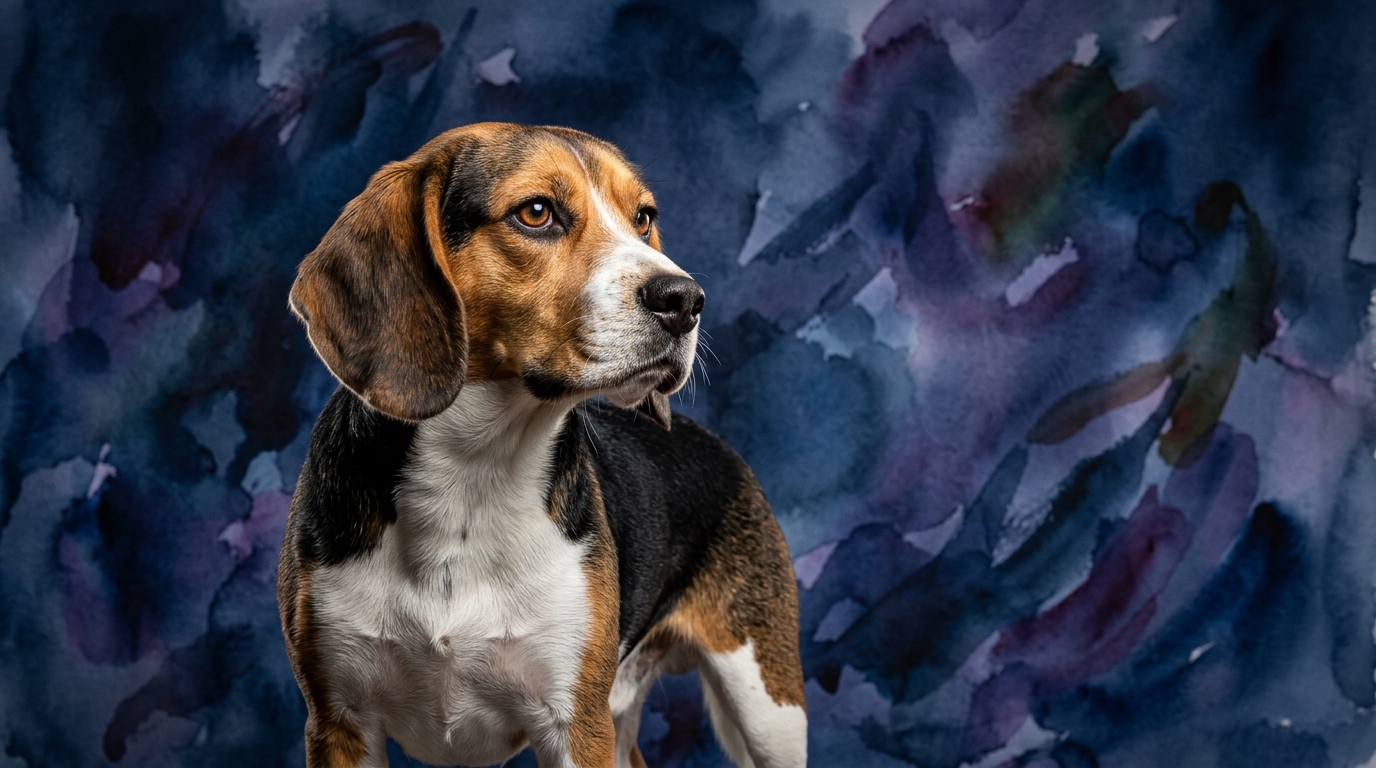
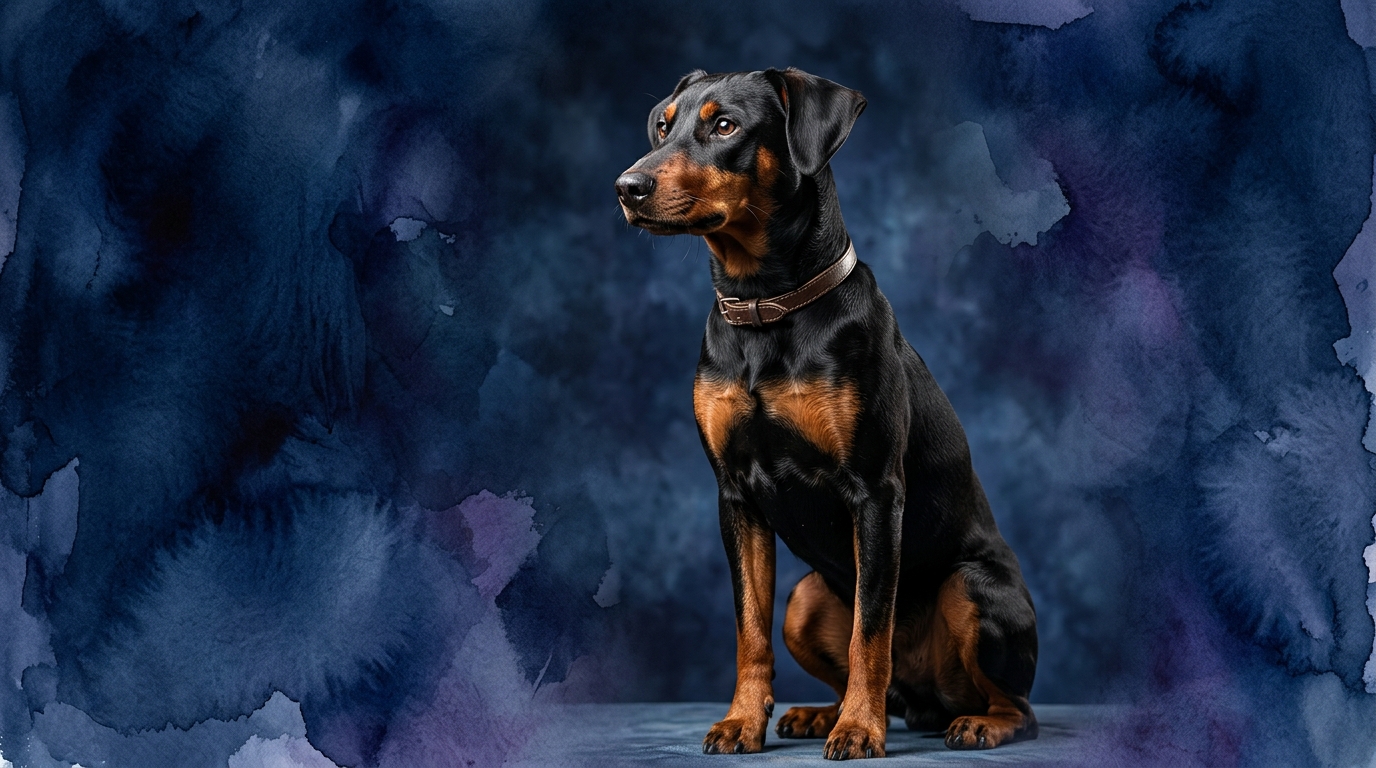
Side-by-Side Cognitive Profile: Beagle vs. German Pinscher
The Beagle, a member of the Hound group and Coren-ranked at #72, presents a cognitive profile heavily influenced by its olfactory prowess. Its Problem Solving is rated 4/5, primarily channeled through its nose, demonstrating exceptional ability in deciphering complex scent trails and navigating environments based on aroma. Training Speed is 2/5, indicating that while capable, their powerful independent drive often makes them slower to respond to traditional command training. Social Intelligence stands at 3/5, signifying a generally amiable nature but perhaps less nuanced in reading complex human cues. Their Instinctive Drive is a profound 5/5, almost exclusively focused on scent tracking, making it their dominant behavioral motivator. Memory is rated 4/5, particularly robust for recalling successful scent paths, routines, and locations associated with rewards.
In contrast, the German Pinscher, from the Working group and not Coren-ranked, exhibits a more balanced and versatile cognitive makeup. Its Problem Solving capacity is 3/5, showing competence in practical, observable tasks and environmental manipulation, though less specialized than the Beagle's. Training Speed is 3/5, suggesting a moderate willingness and ability to learn commands, making them generally cooperative students. Social Intelligence is 3/5, indicating they are capable of forming strong bonds and interacting appropriately in various social contexts with proper socialization. Their Instinctive Drive is 3/5, encompassing a balanced blend of prey drive, guarding instincts, and a desire for engagement, without a single overwhelming focus. Memory also scores 3/5, demonstrating reliable retention of learned behaviors, routines, and past experiences, contributing to their consistency.
Where the Beagle's Cognition Excels
The Beagle's cognitive strengths shine brightest in areas tied directly to their ancestral purpose: scent detection and unwavering, persistent investigation. Their 4/5 problem-solving score is primarily channeled through their nose, allowing them to decipher complex scent puzzles that would baffle many other breeds. This isn't just about locating a hidden treat; it's about following a faint, intricate trail over varied terrains for extended durations, a testament to their focused analytical ability within their sensory world. Furthermore, their 4/5 memory is exceptional for recalling the precise location of a scent source or a successful hunting route, enabling them to retrace steps or revisit productive areas with uncanny accuracy, making them formidable in any scent-based challenge.
Where the German Pinscher's Cognition Takes the Lead
While the Beagle excels in olfactory intelligence, the German Pinscher demonstrates a more balanced, all-around cognitive profile that makes them more adaptable to varied human-centric tasks. Their 3/5 training speed, though not exceptional, surpasses the Beagle's 2/5, indicating a greater receptiveness to human-directed learning and a quicker grasp of obedience commands. This suggests a cognitive framework that is more attuned to understanding and executing instructions from a handler, rather than being solely driven by independent sensory input. Their problem-solving at 3/5, while lower than the Beagle's, is often applied to more general, practical tasks within a human environment, such as figuring out how to access a specific toy or navigating household challenges without relying on scent alone, highlighting a versatile application of their intelligence.
Training Dynamics: Beagle vs. German Pinscher
When it comes to ease of training, the German Pinscher generally presents a more straightforward path. Their 3/5 training speed reflects a willingness to engage with their handler and a moderate desire to please, making them more responsive to traditional positive reinforcement methods. They are less likely to become singularly fixated on an external stimulus like a captivating scent, allowing for more consistent attention during training sessions. This breed thrives on clear direction and collaborative learning, making them a more predictable training partner for many owners.
In contrast, the Beagle's 2/5 training speed is a direct consequence of their overwhelming 5/5 instinctive drive for scent. While they are certainly capable of learning, their nose often dictates their priorities, meaning a fascinating smell can instantly override a 'sit' command or a recall. Training a Beagle requires immense patience, creative motivation (often involving high-value food rewards), and a deep understanding of how to work with, rather than against, their powerful olfactory instincts to achieve reliable command execution. Their independence, while a cognitive strength in tracking, can be a training hurdle in a domestic setting.
Matching Breeds to Owner Lifestyles
For owners seeking a highly engaged partner for structured activities and general obedience, the German Pinscher aligns well with an active lifestyle. Their balanced 3/5 instinctive drive and moderate energy levels mean they thrive with consistent exercise, mental stimulation, and participation in dog sports like agility or obedience. They appreciate a clear routine and respond to owners who provide direction and opportunities for them to use their cognitive faculties in a collaborative way. Their versatility makes them suitable for an owner who enjoys varied activities and consistent training engagement.
Conversely, Beagles, with their 5/5 instinctive drive and boundless energy for tracking, demand a different kind of active owner. These are not dogs for relaxed, passive companionship if their strong drives are ignored. They require owners who are prepared for extensive, engaging walks where their nose can lead the way, secure environments where their scent drive won't lead them astray, and ideally, engagement in scent work, tracking activities, or long hikes to satisfy their profound cognitive and physical needs. A relaxed owner who cannot meet these specific demands may find a Beagle's independent spirit and vocalizations challenging, as unmet drives often lead to undesirable behaviors.
The Verdict
Choose a Beagle if you are fascinated by the power of scent, are prepared to channel their intense tracking drive into appropriate activities, and appreciate a dog with independent, persistent problem-solving skills focused on their primary instinct.
Opt for a German Pinscher if you desire a versatile, trainable companion who learns at a moderate pace, is responsive to direction, and offers a balanced set of working dog instincts for a variety of activities.
🧠 Find Your Pet's IQ Score
Our Pet IQ Lab assessment covers 25+ tests across 5 cognitive dimensions — personalized to your breed.
Take the Full IQ Test →Frequently Asked Questions
Can Beagles be trained for things other than scent work?
Absolutely, Beagles can learn a wide range of commands and tricks, but training requires significant consistency, patience, and high-value rewards to overcome their powerful scent distractions. Integrating scent-based games into their routine can also enhance their engagement in general training, making learning more enjoyable for them.
Are German Pinschers good family dogs considering their working background?
German Pinschers are indeed excellent family dogs, forming strong bonds and often being protective of their loved ones. Their balanced social intelligence means they adapt well to family life, especially with early socialization and consistent training to manage their moderate guarding instincts, ensuring they are well-adjusted companions.
How do their energy levels compare for daily exercise needs?
Both breeds are active, but their energy expression differs significantly. Beagles require extensive exercise focused on exploring with their nose, often leading them on long, meandering walks where they can follow intriguing scents. German Pinschers need vigorous physical activity combined with mental challenges, thriving on structured play, runs, and engaging training sessions that utilize their versatile working drive.