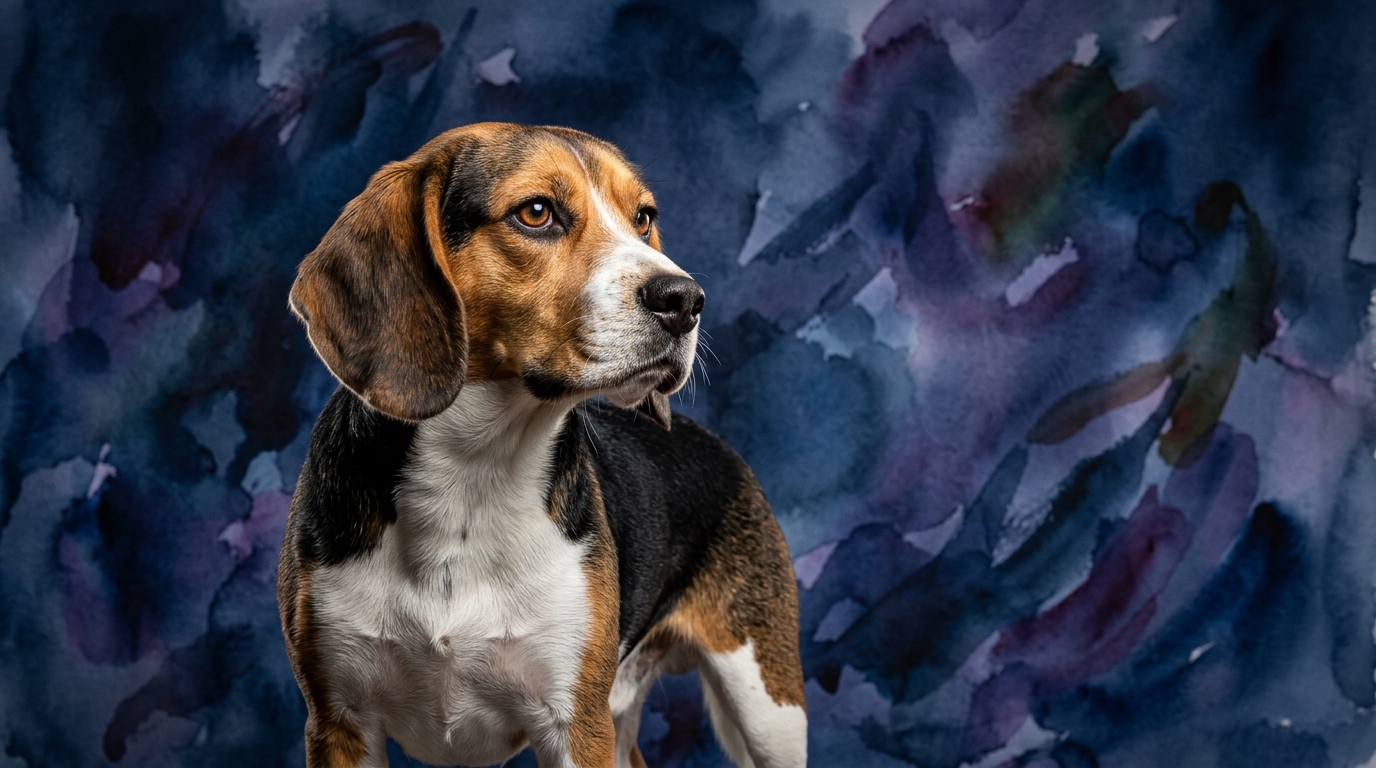
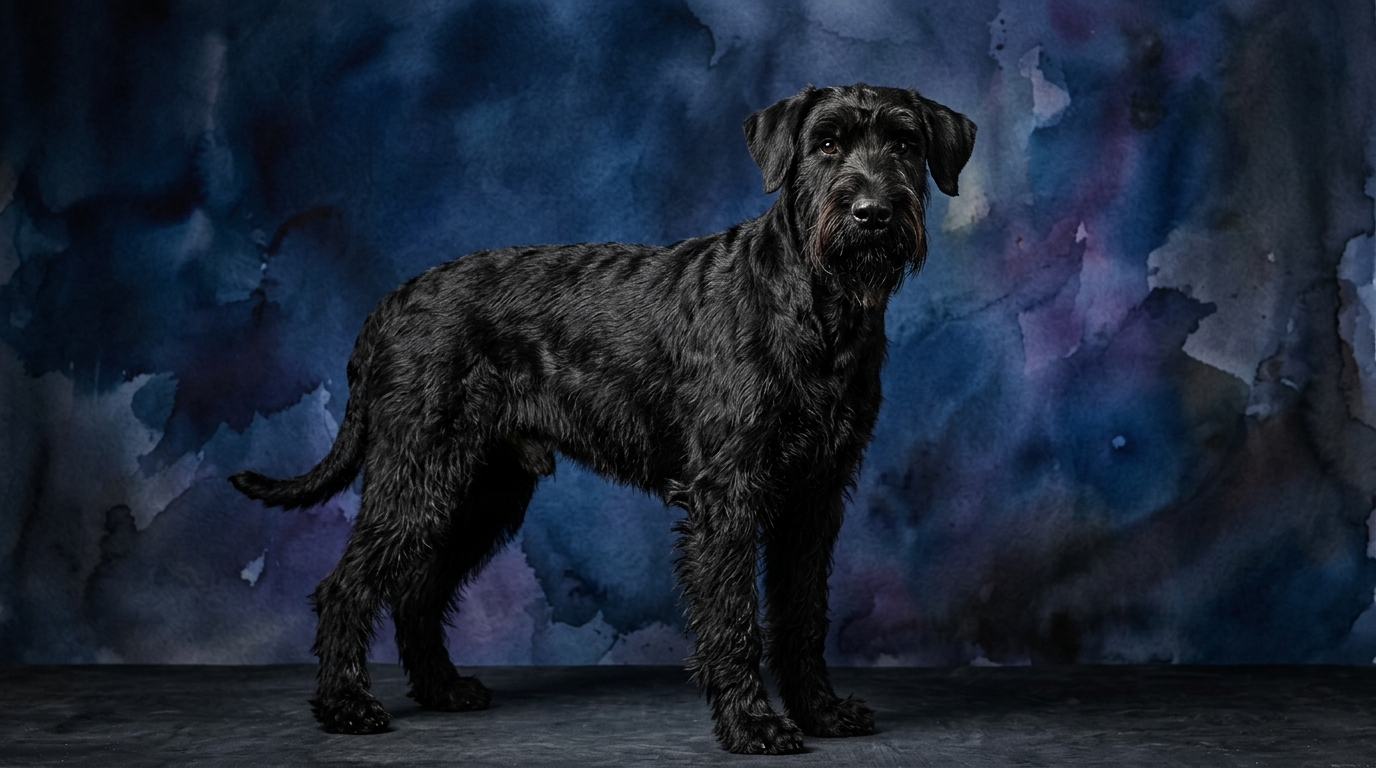
Side-by-Side IQ Profile: Beagle vs. Giant Schnauzer
The Beagle's cognitive blueprint is dominated by its extraordinary olfactory capabilities, reflected in its Instinctive Drive (5/5) and Memory (4/5) for scent. Its problem-solving (4/5) is almost exclusively applied to navigating and deciphering a world of smells, demonstrating a relentless persistence when tracking. However, this intense focus often translates to a lower Training Speed (2/5), as environmental scents can easily override human commands.
Social Intelligence (3/5) for a Beagle centers around its pack heritage, making it generally amiable with family members and other dogs. While affectionate, this doesn't necessarily mean it's attuned to complex human emotional cues in the same way some other breeds are; its primary drive remains the pursuit of interesting odors, sometimes leading to a more independent social engagement. With a Coren ranking of #72, the Beagle's intelligence is deeply specialized.
Giant Schnauzer Profile (Coren rank #28)
The Giant Schnauzer, with a Coren ranking of #28, presents a different cognitive landscape, characterized by a balanced blend of practical intelligence and strong working ethics. Its Problem Solving (4/5) involves strategic thinking for tasks, while its Training Speed (4/5) is notably higher than the Beagle's, indicating a strong desire to learn and cooperate with its handler. This breed excels at retaining commands and routines, reflected in its Memory (4/5).
Its Instinctive Drive (3/5) leans towards protection and guarding, a purposeful drive that, unlike the Beagle's, is highly amenable to direction and training. Social Intelligence (3/5) in the Giant Schnauzer manifests as deep loyalty to its family, coupled with a discerning and often reserved demeanor towards strangers, necessitating early and consistent socialization to foster balanced interactions.
Where the Beagle Cognitively Excels
The Beagle's true cognitive brilliance lies in its unparalleled ability to process and retain olfactory information. Its Instinctive Drive, rated a perfect 5/5, isn't merely a strong urge; it represents a complex neural network dedicated to scent discrimination and tracking. This allows them to follow intricate scent trails with incredible precision and endurance, a feat of sustained cognitive focus that few other breeds can match.
Furthermore, the Beagle's Problem Solving (4/5) is a masterclass in navigating a scent-rich environment. They don't just follow; they interpret, analyze, and persist through obstacles to reach the source of an odor, demonstrating a specialized form of intelligence that is highly effective for their original purpose. Their Memory (4/5) reinforces this, enabling them to recall specific scents and their associated locations over time, a crucial asset for a tracking hound.
Where the Giant Schnauzer Cognitively Shines
The Giant Schnauzer's cognitive strengths are rooted in its versatility and adaptability, allowing it to excel in a wide array of practical tasks. Its Training Speed (4/5) is a testament to its eagerness to learn and its capacity to quickly grasp and execute complex commands, making it a favorite in competitive obedience and working dog sports. This quick learning is supported by a robust Memory (4/5), ensuring lessons are retained efficiently over the long term.
Its Problem Solving (4/5) is broad and strategic, enabling it to understand and execute multi-step routines, assess situations, and make independent decisions within its protective or working roles. Unlike the Beagle's specialized sensory problem-solving, the Giant Schnauzer's cognitive approach is more generalized, allowing it to adapt to diverse challenges and function effectively as a capable partner in various human endeavors requiring both physical and mental dexterity.
Ease of Training: A Behavioral Deep Dive
When it comes to ease of training, the Giant Schnauzer generally holds a significant advantage. Its Training Speed (4/5) is high, propelled by a desire to work alongside its handler and a more manageable Instinctive Drive (3/5). This combination means they are typically more responsive to commands, eager to please, and less likely to be sidetracked by environmental distractions, making them quicker to master new skills and reliable in obedience.
Conversely, the Beagle presents a greater training challenge, primarily due to its potent Instinctive Drive (5/5) for scent and its lower Training Speed (2/5). A Beagle's nose is its world; once it latches onto an interesting smell, its focus becomes almost singular, leading to what owners often describe as 'selective hearing.' This deep-seated drive requires immense patience, consistent positive reinforcement, and often specialized training techniques to teach recall and impulse control, as their natural inclination is to follow their nose wherever it leads.
Lifestyle Match: Active vs. Relaxed Owners
For active owners seeking a highly engaged and trainable partner for structured activities, the Giant Schnauzer is an ideal match. This breed thrives on having a 'job' and requires consistent mental stimulation alongside vigorous physical exercise, making them excellent companions for advanced obedience, agility, protection work, or long, challenging hikes. Their demanding nature aligns well with owners who enjoy an active, goal-oriented lifestyle.
The Beagle, while also requiring substantial physical activity to manage its energy, caters to a different kind of 'active' owner. Its strong scent drive means it excels in activities like scent work, tracking, or long, meandering walks where it can explore its olfactory world. Owners who appreciate a dog's independent, curious nature during these explorations, and are prepared for its vocalizations and tendency to follow its nose, will find a joyful companion, though perhaps not one for highly precise, competitive obedience without significant effort.
The Verdict
Choose a Beagle if you appreciate a dog whose world revolves around scent, offering endless fascination in their olfactory explorations, and you're prepared for a companion whose independent drive requires patient, creative training methods.
Opt for a Giant Schnauzer if you seek a highly trainable, versatile working companion eager to learn and participate in structured activities, and you can provide consistent mental and physical challenges.
🧠 Find Your Pet's IQ Score
Our Pet IQ Lab assessment covers 25+ tests across 5 cognitive dimensions — personalized to your breed.
Take the Full IQ Test →Frequently Asked Questions
Which breed is better for first-time dog owners?
The Giant Schnauzer, with its eagerness to please and higher trainability, is generally a more straightforward choice for a first-time owner willing to commit to consistent training and socialization. Beagles, while charming, can be challenging due to their strong independent scent drive and selective hearing, requiring more dedicated effort in managing their instincts.
Do Beagles or Giant Schnauzers require more exercise?
Both breeds require significant exercise, but of different types. Beagles need ample opportunities for scent work and long walks to satisfy their hunting instincts and manage their energy. Giant Schnauzers require vigorous physical activity combined with consistent mental stimulation, such as advanced obedience or dog sports, to prevent boredom and destructive behaviors.
How do their social intelligences compare in a family setting?
Both breeds score 3/5 in social intelligence, but manifest it differently. Beagles are generally amiable and good with children, fitting well into an active family pack, though their primary focus often remains on scents. Giant Schnauzers are deeply loyal to their family unit and protective, often discerning with strangers, requiring early and consistent socialization to ensure balanced interactions within a diverse social environment.