Side-by-Side Cognitive Profiles
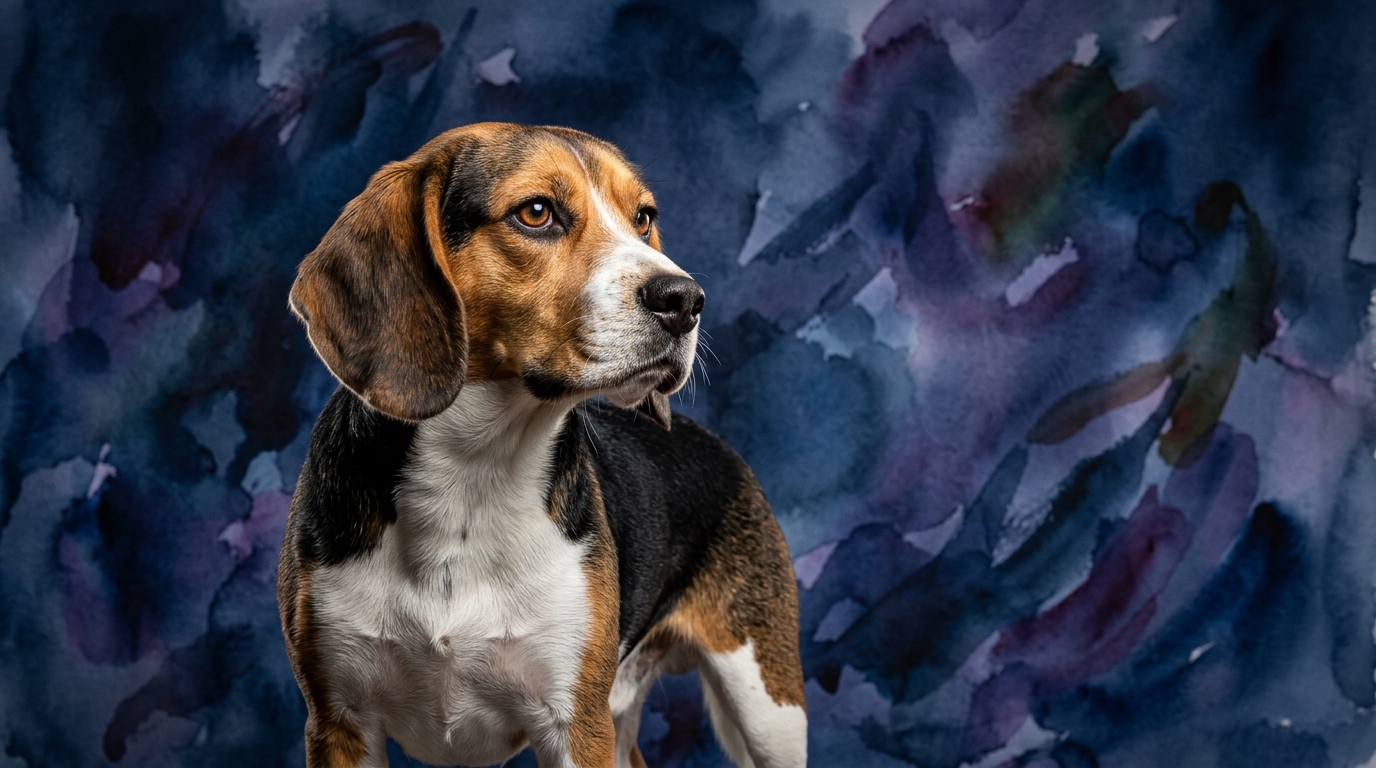
The Beagle, a member of the Hound group, registers a Coren rank of #72, reflecting a solid working and obedience intelligence. Its IQ breakdown highlights Problem Solving at 4/5, indicating a high capacity for figuring out complex scenarios, often seen in their persistent pursuit of scent trails or manipulating objects to achieve a goal. Training Speed is rated 2/5, suggesting they learn new commands at a moderate pace but often require significant patience and consistent positive reinforcement due to their strong, often singular, focus on scent. Social Intelligence stands at 3/5, reflecting a moderate understanding of human and canine social cues, making them generally adaptable companions, albeit sometimes independently minded. Instinctive Drive is exceptionally high at 5/5, dominated by their unparalleled olfactory senses and the compelling drive to follow a scent to its conclusion, frequently overriding other directives. Memory is robust at 4/5, allowing them to recall locations, routines, and specific scent profiles with impressive accuracy over time.
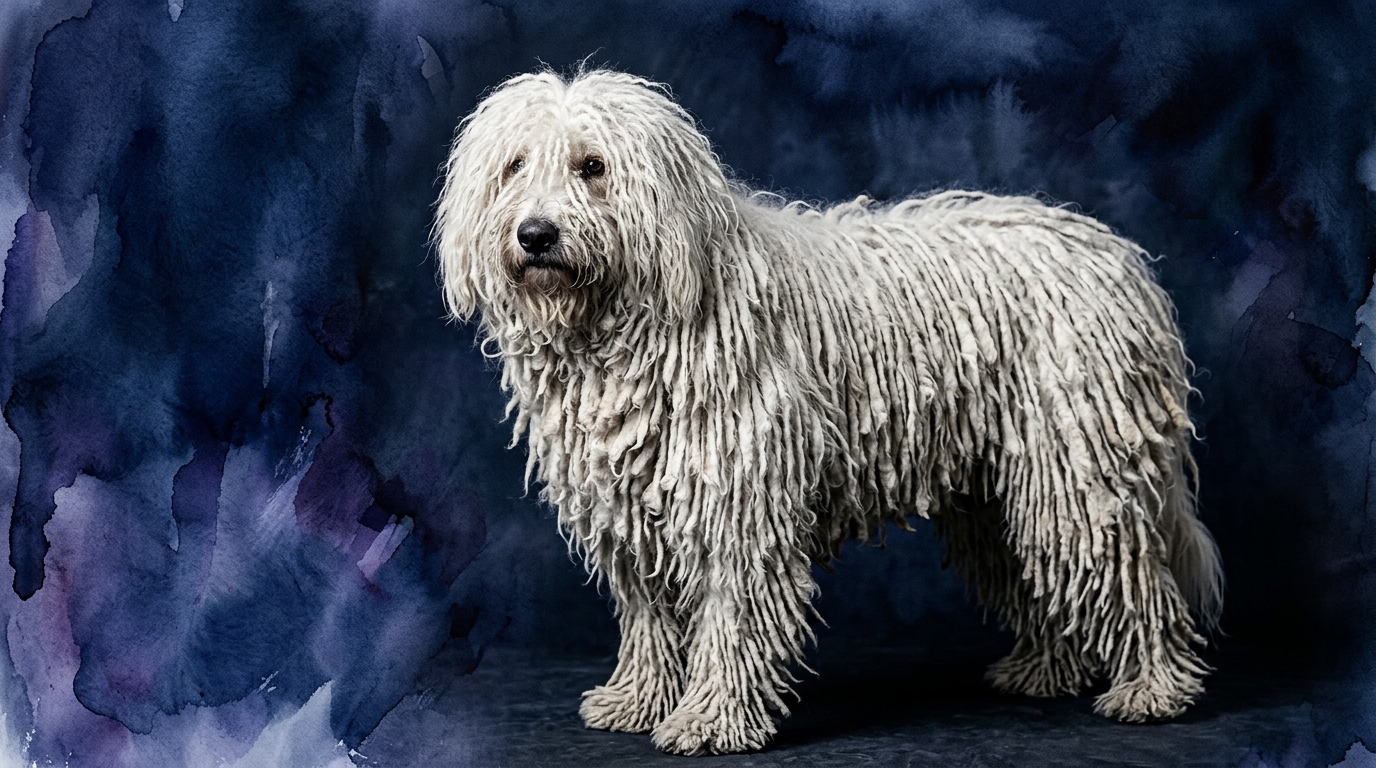
In contrast, the Komondor, a Working group dog, holds a Coren rank of #67, placing it slightly higher in overall working and obedience intelligence than the Beagle. Its IQ profile shows Problem Solving at 3/5, indicating a solid but not exceptional ability to navigate new challenges, often relying on observation and learned experience rather than rapid, novel solutions. Training Speed is rated 3/5, suggesting they learn at an average rate, benefiting from clear, consistent instruction, though their inherent independence can sometimes be perceived as stubbornness. Social Intelligence matches the Beagle at 3/5, demonstrating a moderate ability to interpret social signals within their trusted family unit, though they are typically reserved and wary with strangers. Instinctive Drive is moderate at 3/5, primarily focused on their inherent guarding behaviors, which manifest as vigilance, territorial defense, and protection of their charges rather than a strong prey drive. Memory is solid at 3/5, enabling them to remember their charges, territories, and established routines effectively.
Where the Beagle's Cognition Shines Brightest
The Beagle's cognitive strengths are deeply rooted in its ancestral role as a scent hound, making its Problem Solving (4/5) and Instinctive Drive (5/5) truly exceptional. Their ability to dissect and follow complex scent trails, often for hours, demonstrates a sophisticated cognitive mapping and information processing capability unique to their purpose. This isn't just about smell; it's about interpreting a vast array of olfactory data, filtering distractions, and maintaining focus on a singular objective, a form of problem-solving that few breeds can match.
Furthermore, their robust Memory (4/5) complements their instinctive drive by allowing them to recall specific scents, the locations where they last encountered an interesting odor, or the routes they've previously taken during a hunt. A Beagle can remember where that tantalizing squirrel scent usually originates or the precise spot a rabbit disappeared into a thicket days ago. This cognitive persistence, coupled with their problem-solving skills, means a Beagle will often find creative ways to overcome obstacles – like digging under a fence or figuring out a gate latch – if it means accessing a compelling scent.
While their training speed might be lower, the Beagle's cognitive strength lies in its specialized intelligence. Their persistence and drive are not easily deterred, making them unparalleled in tasks requiring sustained focus on olfactory cues, whether for hunting, scent work, or even search and rescue operations where a specific scent profile is paramount. Their social intelligence, while moderate, allows them to bond closely with their human companions, leveraging their memory to recall positive interactions and routines.
Komondor's Distinct Cognitive Advantages
The Komondor's cognitive profile, while different from the Beagle's, presents its own set of advantages, particularly in areas demanding independent judgment and protective instincts. Its Training Speed, rated at 3/5, is notably higher than the Beagle's 2/5, indicating a more straightforward learning curve for obedience commands when approached with consistent, clear methods. This means a Komondor is generally quicker to grasp and execute new verbal cues or actions, provided the motivation is present and the training respects their inherent independence.
While its Problem Solving is 3/5, the Komondor excels in a specific type of problem-solving: assessing threats and making autonomous decisions to protect its charges or territory. Unlike breeds that might wait for human command, a Komondor's cognitive strength allows it to evaluate a situation, determine potential danger, and act decisively, a critical trait for a livestock guardian. This independent thought process, a hallmark of guardian breeds, means they don't necessarily need human intervention for every perceived threat, a distinct cognitive 'win' in their specialized role.
The Komondor's Instinctive Drive, while 3/5, is precisely tuned for vigilance and protection. This isn't about chasing scents; it's about an acute awareness of their environment, an ability to distinguish between familiar and unfamiliar, and a deep-seated commitment to their charges. Their Social Intelligence (3/5) supports this by enabling them to form strong, loyal bonds with their family, while remaining reserved or aloof with outsiders, a desirable trait for a guardian. Their memory (3/5) is sufficient for remembering routines, boundaries, and who belongs within their protected sphere, contributing to their reliable guardianship.
Ease of Training: Beagle vs. Komondor
When considering ease of training, the Komondor generally presents a more amenable experience compared to the Beagle, primarily due to their respective Training Speed scores and fundamental drives. The Komondor's Training Speed of 3/5 indicates an average learning rate for new commands, meaning they are capable of grasping concepts efficiently with consistent, fair methods. Their independent nature, while sometimes misconstrued as stubbornness, means they respond best to clear expectations and respect, rather than forceful tactics, thriving on a partnership approach to learning.
Conversely, the Beagle’s Training Speed of 2/5 highlights a more challenging journey for formal obedience. Their overwhelming Instinctive Drive (5/5) to follow scents often overrides their desire to comply with commands, especially in stimulating environments. A Beagle’s nose is their world, and once engaged on a scent, recalling them or diverting their attention can be incredibly difficult, requiring immense patience and highly rewarding motivators. While they are capable of learning, their primary cognitive focus is not on human-directed tasks but on their olfactory universe, making consistent, reliable obedience a long-term project.
Matching Canine Cognition to Owner Lifestyle
For owners seeking an active, engagement-focused companion, the Beagle's cognitive profile aligns well with a lifestyle that embraces exploration and sensory enrichment. Their high problem-solving skills, coupled with an unmatched instinctive drive, make them ideal for activities like scent work, tracking, or long, meandering walks where they can indulge their powerful noses. Owners who enjoy outdoor adventures, are patient with training challenges, and can provide ample opportunities for their Beagle to 'think' with its nose will find this breed's cognitive strengths a perfect fit, turning their environment into a stimulating puzzle.
On the other hand, the Komondor's cognitive traits are better suited for more relaxed owners who appreciate an independent, watchful presence and have a clear understanding of guardian breed psychology. Their moderate instinctive drive, focused on protection, and their steady problem-solving (3/5) means they are less about frantic activity and more about observant steadfastness. Owners who value a calm, self-assured dog, can provide a secure environment, and are prepared for a dog that makes its own judgments will find the Komondor's cognitive independence a valuable asset, particularly for those seeking a dedicated protector rather than a highly biddable companion.
The Verdict: When to Choose Each Breed
The Verdict
Choose a Beagle if you are an active individual or family eager to engage with a dog's incredible olfactory world, offering consistent training and ample opportunities for scent-driven exploration.
Opt for a Komondor if you seek a steadfast, independent guardian with a calm demeanor, valuing a dog that makes autonomous protective decisions and thrives with clear, respectful guidance.
🧠 Find Your Pet's IQ Score
Our Pet IQ Lab assessment covers 25+ tests across 5 cognitive dimensions — personalized to your breed.
Take the Full IQ Test →Frequently Asked Questions
Is a Beagle truly harder to train than a Komondor?
Based on their Training Speed scores, yes, a Beagle is generally considered more challenging for formal obedience due to its overpowering scent drive. Komondors, while independent, tend to grasp commands more readily with consistent, respectful methods.
Which breed is better at problem-solving?
The Beagle (4/5) generally demonstrates higher problem-solving abilities than the Komondor (3/5), particularly in tasks requiring strategic thinking to achieve a desired outcome or follow a complex trail. Komondors excel in a different kind of problem-solving related to independent threat assessment.
Do these breeds require different types of mental stimulation?
Absolutely; Beagles thrive on scent-based games and activities that engage their powerful noses and memory, whereas Komondors benefit from tasks that allow them to utilize their natural guarding instincts, observation skills, and independent judgment, often involving oversight of property or family.