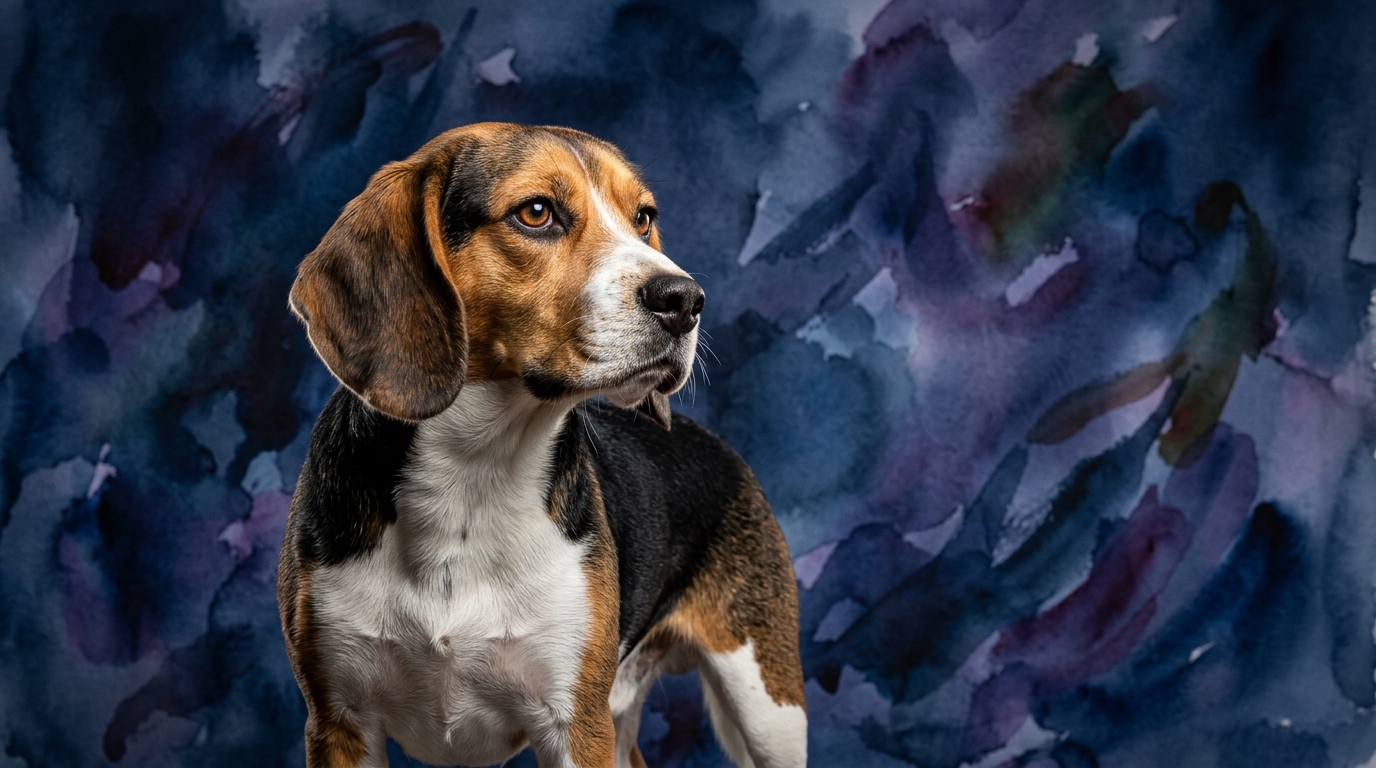
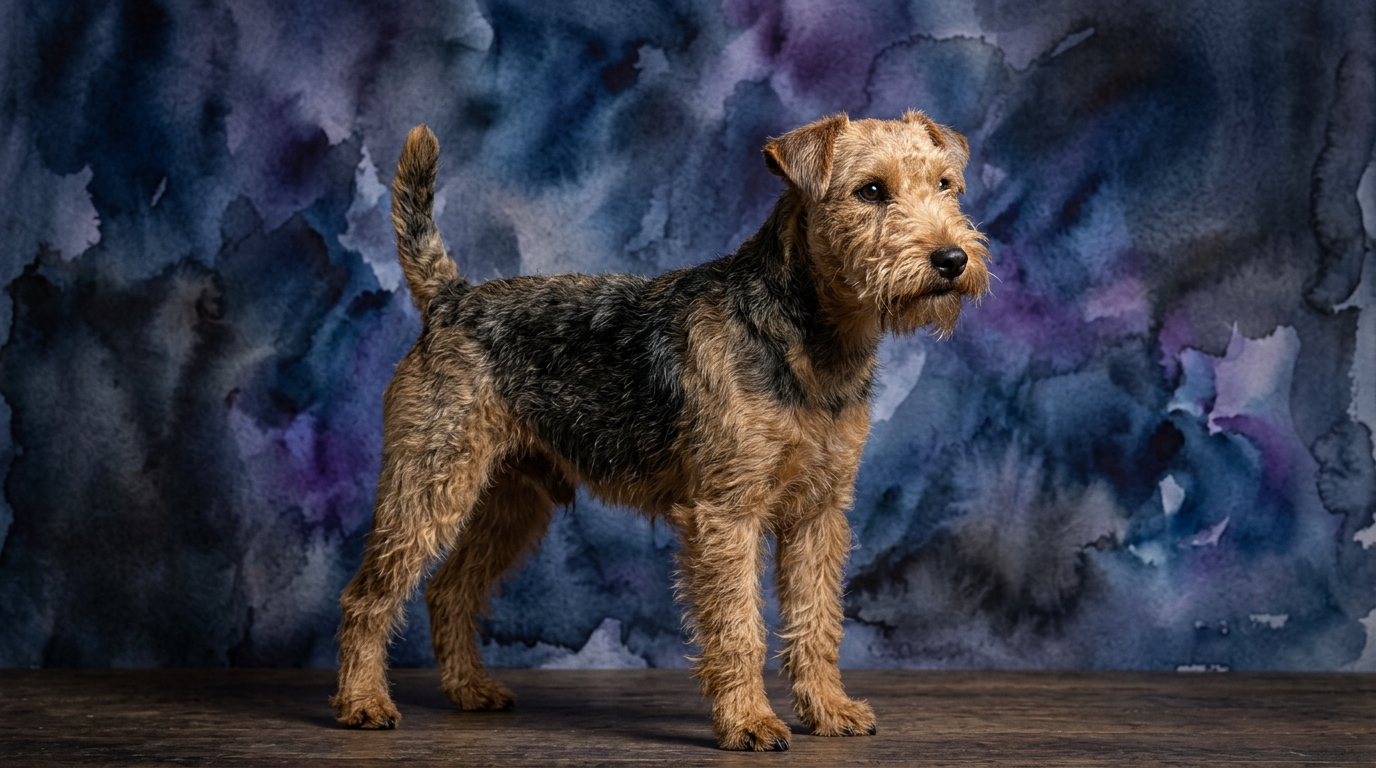
Side-by-Side IQ Profile: Beagle vs. Lakeland Terrier
At The Cosmic Pet Pet IQ Lab, we evaluate canine intelligence across five key dimensions, offering a nuanced view beyond simple obedience scores. Understanding these profiles helps us appreciate the unique cognitive strengths each breed brings.
The Beagle, a quintessential scent hound, registers a Coren rank of #72, placing it in the average working intelligence category for obedience and working IQ. Its intelligence profile is heavily influenced by its ancestral role: problem Solving 4/5, training Speed 2/5, social Intelligence 3/5, instinctive Drive 5/5, and memory 4/5. This breed's mind is a landscape dominated by scent, guiding its decisions and actions with remarkable precision and focus.
The Lakeland Terrier, a tenacious member of the terrier group, is not currently ranked by Coren, reflecting a different set of cognitive priorities shaped by its independent, vermin-hunting heritage. Its IQ profile includes: problem Solving 3/5, training Speed 3/5, social Intelligence 3/5, instinctive Drive 3/5, and memory 3/5. This profile suggests a resourceful, self-reliant intellect, less about following complex instructions and more about independent action and persistence.
A closer look at these dimensions reveals their operational intelligence. The Beagle's high problem-solving score is largely rooted in navigating complex scent trails, while its lower training speed reflects a strong, often overriding, internal motivation. The Lakeland's balanced scores suggest a more adaptable, though often stubborn, learner who processes information differently, prioritizing immediate environmental responses over sustained, human-directed tasks.
Where the Beagle's Cognition Shines
The Beagle's cognitive edge is undeniably its unparalleled olfactory acuity and the sustained focus it can apply to a scent trail. Their problem-solving (4/5) is a masterclass in scent-based navigation and discrimination. A Beagle's brain is wired to process complex scent information, allowing them to follow intricate paths, differentiate subtle nuances in odor, and piece together environmental cues that would be imperceptible to most other breeds. This makes them exceptional at scent-based puzzles, tracking games, and any task requiring persistent, self-directed exploration driven by their nose.
Their instinctive drive (5/5) is not merely a physical urge but a profound cognitive commitment. Once a compelling scent is engaged, their memory (4/5) for its specific characteristics and the path it describes is formidable. This isn't just about remembering a command; it's about recalling a complex sensory map. This specialized intelligence allows them to excel in activities like competitive tracking or search and rescue where a single-minded pursuit of a target odor is paramount, often overriding other stimuli or human directives.
Where the Lakeland Terrier's Cognition Excels
The Lakeland Terrier's cognitive strength lies in its independent decision-making and robust tenacity, reflected in its balanced problem-solving (3/5) and instinctive drive (3/5). Bred to work alone in challenging, often underground terrain, they excel at assessing immediate threats or opportunities and executing solutions with unwavering determination. This translates to a resourceful intelligence, particularly in tasks requiring quick, decisive action and a willingness to persist despite obstacles, often without direct human guidance.
Their problem-solving might not involve intricate scent trails, but it centers on spatial reasoning, strategic pursuit of small prey, and navigating confined spaces. Their memory (3/5) supports this by retaining effective tactics and environmental layouts pertinent to their 'work.' This breed's cognition is about adaptability and self-reliance, making them adept at figuring out how to get to something they want or overcome a physical barrier through sheer will and cleverness.
Training Dynamics: Beagle vs. Lakeland Terrier
When it comes to training speed, the Beagle (2/5) presents a unique challenge. Their profound instinctive drive (5/5) means that when a compelling scent takes hold, their focus on human commands can diminish significantly. Training a Beagle demands immense patience, high-value rewards, and a deep understanding of their primary motivator – their nose. Basic obedience can be a slow process, as their independent nature and scent distractions frequently pull their attention away, making 'selective hearing' a common Beagle trait. Success often comes from incorporating scent work into training, leveraging their natural inclination rather than fighting against it.
The Lakeland Terrier, with a training speed of 3/5, offers a moderately different experience. While not as singularly driven by scent, their independent spirit and innate stubbornness can make them equally challenging. They respond well to varied training methods, positive reinforcement, and clear, consistent boundaries. Their cognitive process allows for more direct engagement with human instruction compared to a Beagle, but their strong will means they need to be convinced that following a command is their idea or offers a worthy reward. They are less prone to scent-induced 'zoning out' but can be equally determined in pursuing their own agenda, whether it's digging or chasing a squirrel.
Matching Breeds to Lifestyles: Active vs. Relaxed Owners
Neither the Beagle nor the Lakeland Terrier is suited for a truly 'relaxed' or sedentary owner, as both breeds possess significant energy and cognitive needs. However, the *type* of activity they require differs substantially.
Beagles, with their overwhelming instinctive drive (5/5) and problem-solving (4/5) geared towards scent, demand owners who can provide consistent, engaging mental stimulation through scent work. An owner who doesn't channel this powerful olfactory intellect will likely find a bored, potentially destructive Beagle. They thrive with owners who enjoy long, investigative walks, hiking, engaging in scent games like 'find it,' or even participating in dog sports such as tracking or nose work. Their physical exercise needs are high, but their mental needs for scent-based puzzles are paramount.
Lakeland Terriers, with their balanced instinctive drive (3/5) and problem-solving (3/5), also require regular physical exercise and mental engagement, but their needs are somewhat more adaptable. They are active and enjoy adventures, but also appreciate settling down with their family. Their activity needs are less singularly focused than a Beagle's scent drive; they enjoy varied walks, structured playtime, agility, or earthdog trials. They suit owners who can provide consistent activity and structured play, appreciate a tenacious companion, and are prepared to engage their independent, problem-solving mind through varied challenges, rather than exclusively scent-focused ones.
The Verdict
If you are captivated by the world of scent and prepared to channel a powerful, single-minded drive into tracking or scent work, the Beagle will be an endlessly rewarding companion. They thrive with owners who understand their need to follow their nose and can provide consistent, engaging challenges.
Opt for a Lakeland Terrier if you appreciate a resilient, independent spirit that enjoys varied activities and offers a more direct, albeit stubborn, training experience. They suit owners who value a tenacious companion capable of independent thought and thrive on consistent engagement and clear boundaries.
🧠 Find Your Pet's IQ Score
Our Pet IQ Lab assessment covers 25+ tests across 5 cognitive dimensions — personalized to your breed.
Take the Full IQ Test →Frequently Asked Questions
Are Beagles difficult to live with due to their scent drive?
While their scent drive is profound, it's not inherently 'difficult' if properly managed. It means they require a secure yard and leashed walks to prevent them from following a compelling scent. Channeling this drive into activities like tracking games can make them incredibly fulfilled and well-behaved companions.
Do Lakeland Terriers get along with other pets?
Lakeland Terriers can coexist with other pets, especially if socialized from a young age. However, their inherent prey drive might make living with smaller, non-canine pets challenging. Introductions should always be supervised, and individual temperaments vary significantly.
How much mental stimulation do these breeds need?
Both breeds require substantial mental stimulation to prevent boredom and potential destructive behaviors. Beagles thrive on scent-based puzzles and tracking, while Lakeland Terriers benefit from varied training, puzzle toys, and activities that challenge their independent problem-solving skills. Mental exercise is as crucial as physical activity for both.