Side-by-Side IQ Profile: Unpacking Cognitive Strengths
The Cosmic Pet Pet IQ Lab employs five distinct dimensions to evaluate canine intelligence, offering a nuanced view beyond simplistic labels. These categories help us understand how breeds process information, learn, and interact with their world, reflecting their historical roles and inherent behavioral patterns.
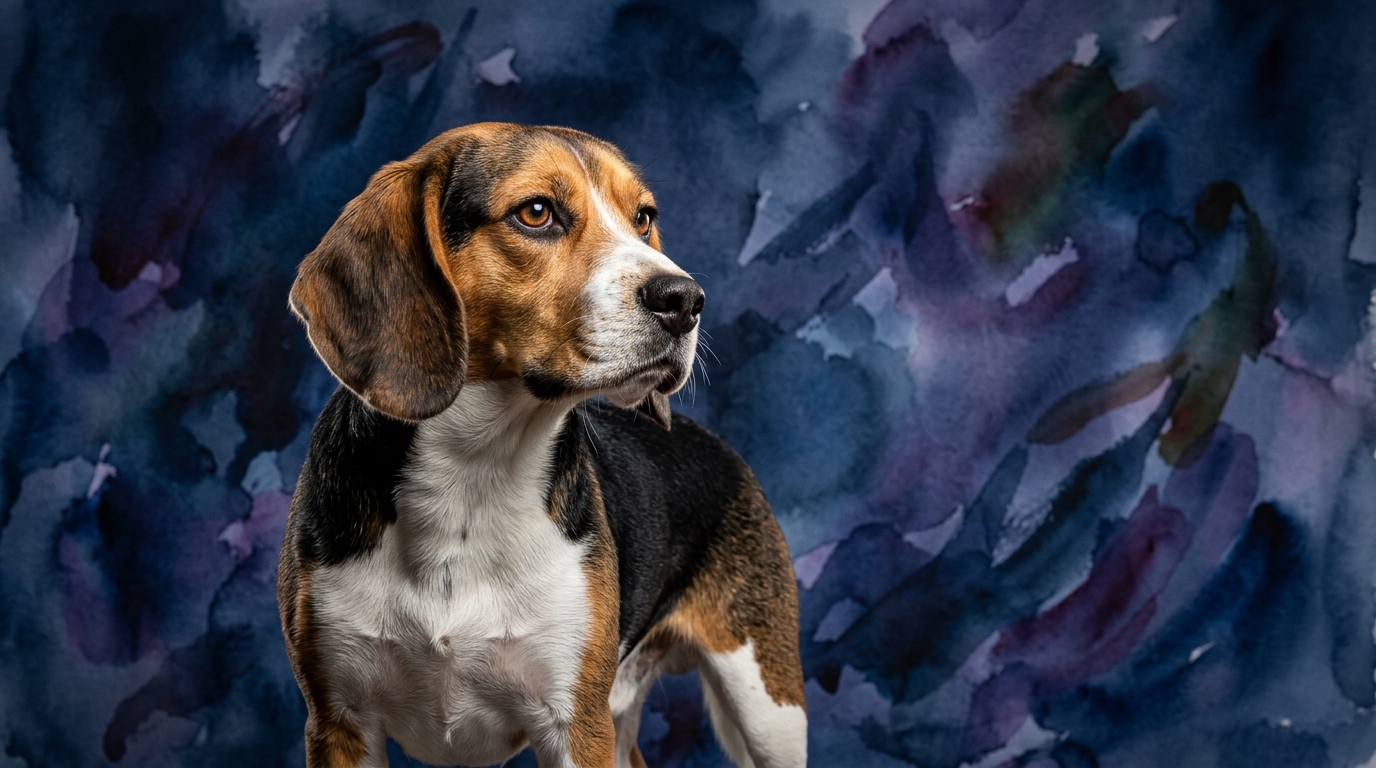
The Beagle, a member of the Hound group, registers a Coren rank of #72. Its cognitive profile shows Problem Solving at 4/5, indicating a strong ability to navigate complex situations, particularly scent-related ones. Training Speed is 2/5, suggesting a moderate challenge in obedience. Social Intelligence stands at 3/5, reflecting a balance of independence and pack awareness. Instinctive Drive is a high 5/5, dominated by their powerful olfactory capabilities. Finally, Memory is 4/5, allowing them to recall intricate scent trails and learned associations.
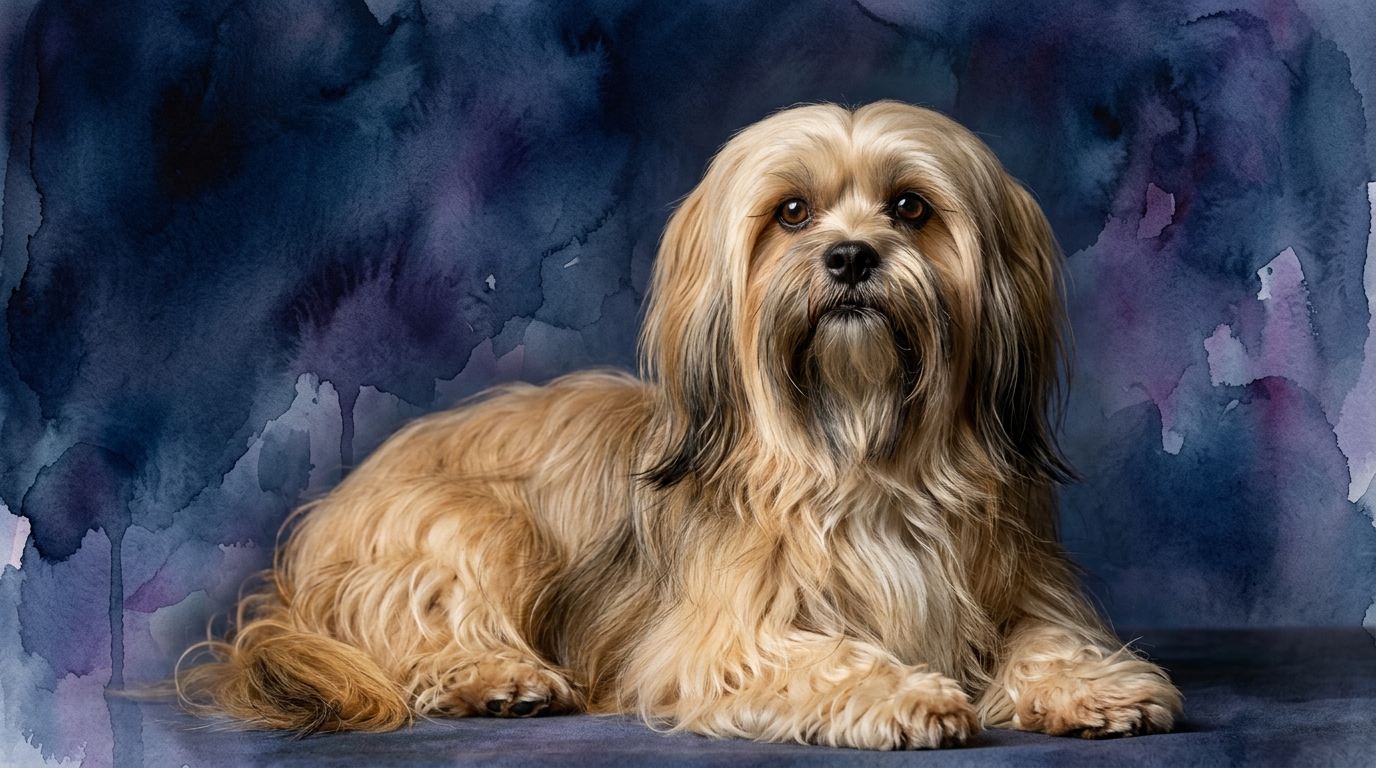
In contrast, the Lhasa Apso, from the Non-Sporting group, holds a slightly higher Coren rank of #68. Its IQ profile presents a balanced Problem Solving at 3/5, indicating practical intelligence within their environment. Training Speed is 3/5, suggesting they can learn effectively with consistent effort. Social Intelligence is 3/5, showing a preference for family and wariness towards strangers. Instinctive Drive is 3/5, geared towards their sentinel duties. Memory is also 3/5, reflecting a capacity to recall routines and specific interactions.
Where the Beagle's Mind Shines Brightest
The Beagle's cognitive prowess is most evident in its Problem Solving (4/5) and unparalleled Instinctive Drive (5/5). These dogs are not just following scents; they are actively solving intricate environmental puzzles using their nose as the primary tool. A Beagle's mind excels at deciphering complex scent maps, navigating varied terrains to locate a source, and filtering out irrelevant stimuli to focus on a particular trail. This isn't about traditional logic games, but rather a highly specialized form of cognitive processing that allows them to reconstruct events and pathways solely through olfaction.
Furthermore, their Memory (4/5) is intrinsically linked to their scent-driven problem-solving. Beagles possess a remarkable ability to recall specific scent patterns and the locations associated with them, even after significant time has passed. This allows them to retrace old trails, remember where a particular scent was last strong, or even anticipate where a scent might lead based on prior experience. This specialized memory is a formidable cognitive asset, enabling persistent and effective tracking, making them exceptional in roles requiring sustained sensory focus.
The Lhasa Apso's Unique Cognitive Edge
The Lhasa Apso's cognitive strengths lie in their practical Problem Solving (3/5) and well-developed Social Intelligence (3/5) within their domestic sphere. While not driven by scent, they are adept at observing and understanding household dynamics, quickly learning routines, and figuring out how to manipulate situations to their advantage, often through charming persistence. Their problem-solving manifests in their ability to anticipate their family's movements, identify potential threats from outside, and effectively communicate their needs or warnings, demonstrating a keen awareness of their immediate environment and social structure.
Their moderate Training Speed (3/5) is often underestimated due to their independent and sometimes stubborn nature, which can be mistaken for a lack of cognitive ability. However, the Lhasa Apso is quite capable of learning, especially when training methods are consistent, positive, and appeal to their desire for companionship and routine. Their cognitive edge here is their ability to adapt to a specific domestic role, establishing clear boundaries and expectations within their family unit, making them excellent, albeit opinionated, companions who understand their place and how to assert it.
Training Dynamics: A Tale of Two Temperaments
When it comes to trainability, the Beagle's Training Speed (2/5) presents a different challenge compared to the Lhasa Apso's (3/5). The Beagle's lower score isn't due to a lack of understanding, but rather the overwhelming power of its Instinctive Drive (5/5). A Beagle's nose is its world; if a compelling scent is present, it will often completely override any command, making recall particularly difficult. Training a Beagle requires immense patience, highly rewarding methods, and a deep understanding of their scent-driven focus, as they are often more interested in their olfactory discoveries than human directives.
The Lhasa Apso, with its 3/5 Training Speed, is generally receptive to learning but requires a different approach. Their historical role as vigilant sentinels instilled an independent streak, meaning they aren't inherently eager-to-please in the same way some breeds are. They learn best through positive reinforcement, clear and consistent boundaries, and trainers who respect their sometimes-stubborn yet affectionate personality. Success with a Lhasa Apso often hinges on making training a collaborative, engaging experience that reinforces their bond with their family, rather than a strict obedience regimen.
Lifestyle Match: Cognitive Needs for Owners
For active owners, the Beagle is an ideal match. Their high Instinctive Drive (5/5) and Problem Solving (4/5) through scent mean they require significant outlets for exploration and tracking. Owners must be prepared for long, engaging walks, structured scent games, and ensuring secure environments to prevent their natural wandering instinct. A Beagle's cognitive engagement is fulfilled by the mental stimulation of their nose, the thrill of the chase (even if it's just a scent), and the satisfaction of solving an olfactory puzzle, making them perfect for those who enjoy outdoor activities and can provide consistent mental challenges.
Conversely, the Lhasa Apso often suits more relaxed owners, though they still enjoy daily walks. Their cognitive needs are primarily met within a secure home environment where they can fulfill their sentinel role, observing their surroundings and interacting with their family. They thrive on companionship, predictable routines, and the mental engagement of understanding and influencing their domestic world. Their satisfaction comes from being a watchful, integral part of the family unit, rather than extensive physical exertion driven by an overwhelming primal instinct, making them well-suited for those seeking a devoted indoor companion with a strong personality.
The Verdict
Choose a Beagle if you're an active individual or family eager to engage with a dog whose cognitive world revolves around scent, exploration, and persistent tracking. Be prepared for a dog whose profound instinctive drive requires consistent management and creative outlets.
Opt for a Lhasa Apso if you value a watchful, independent companion who thrives on routine and family interaction within a secure home environment. They offer a different kind of cognitive engagement, rooted in observation and a deep bond with their inner circle.
🧠 Find Your Pet's IQ Score
Our Pet IQ Lab assessment covers 25+ tests across 5 cognitive dimensions — personalized to your breed.
Take the Full IQ Test →Frequently Asked Questions
Is a Beagle easy to house train?
Beagles can be moderate to challenging to house train due to their focus on scent and occasional stubbornness. Consistent routines, frequent potty breaks, and positive reinforcement are crucial for success.
Do Lhasa Apsos bark a lot?
Lhasa Apsos were historically bred as watchdogs, so they do tend to bark at perceived threats or strangers. Early socialization and training can help manage excessive barking, but their alert nature remains.
Which breed is better with children?
Both breeds can be good with children, but require proper socialization and supervision. Beagles are often playful and tolerant, while Lhasa Apsos can be affectionate with family but prefer respectful interactions and may be less tolerant of rough play.