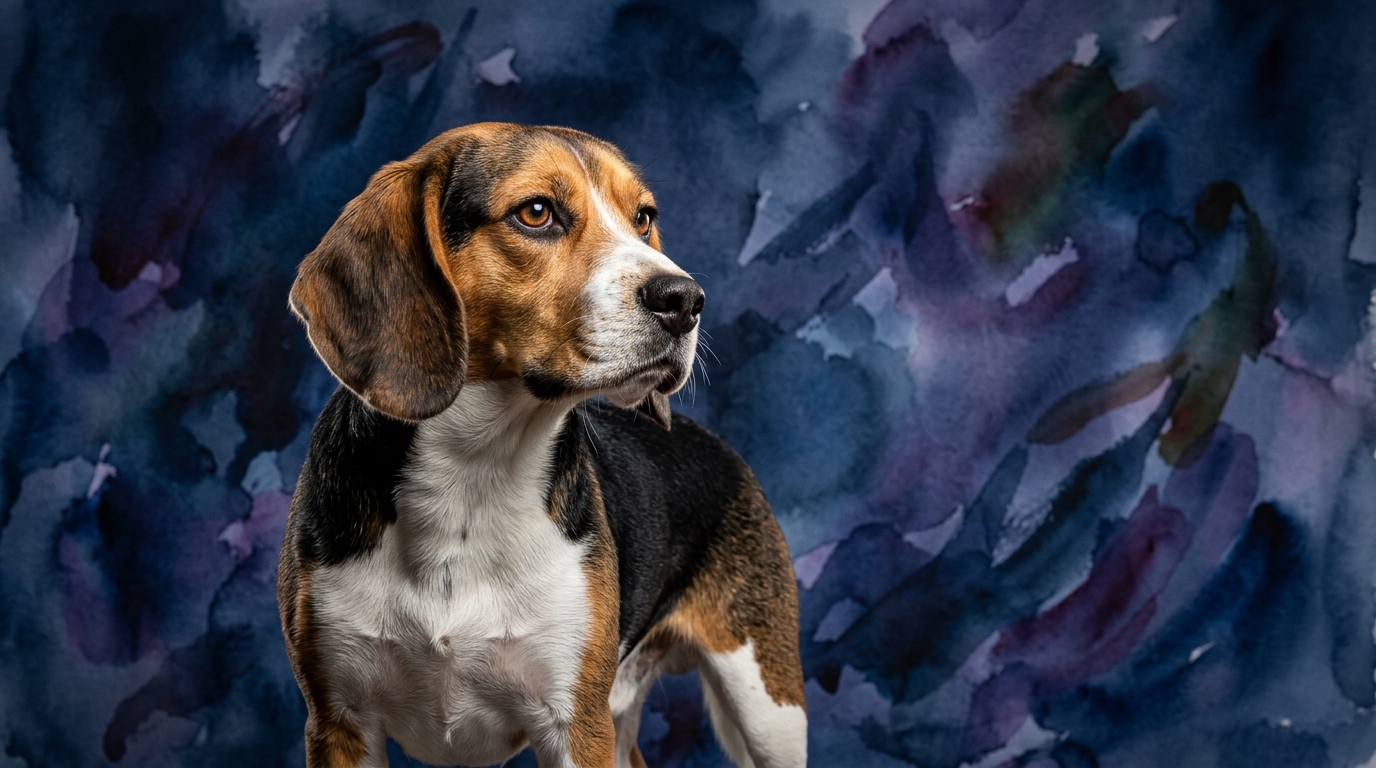
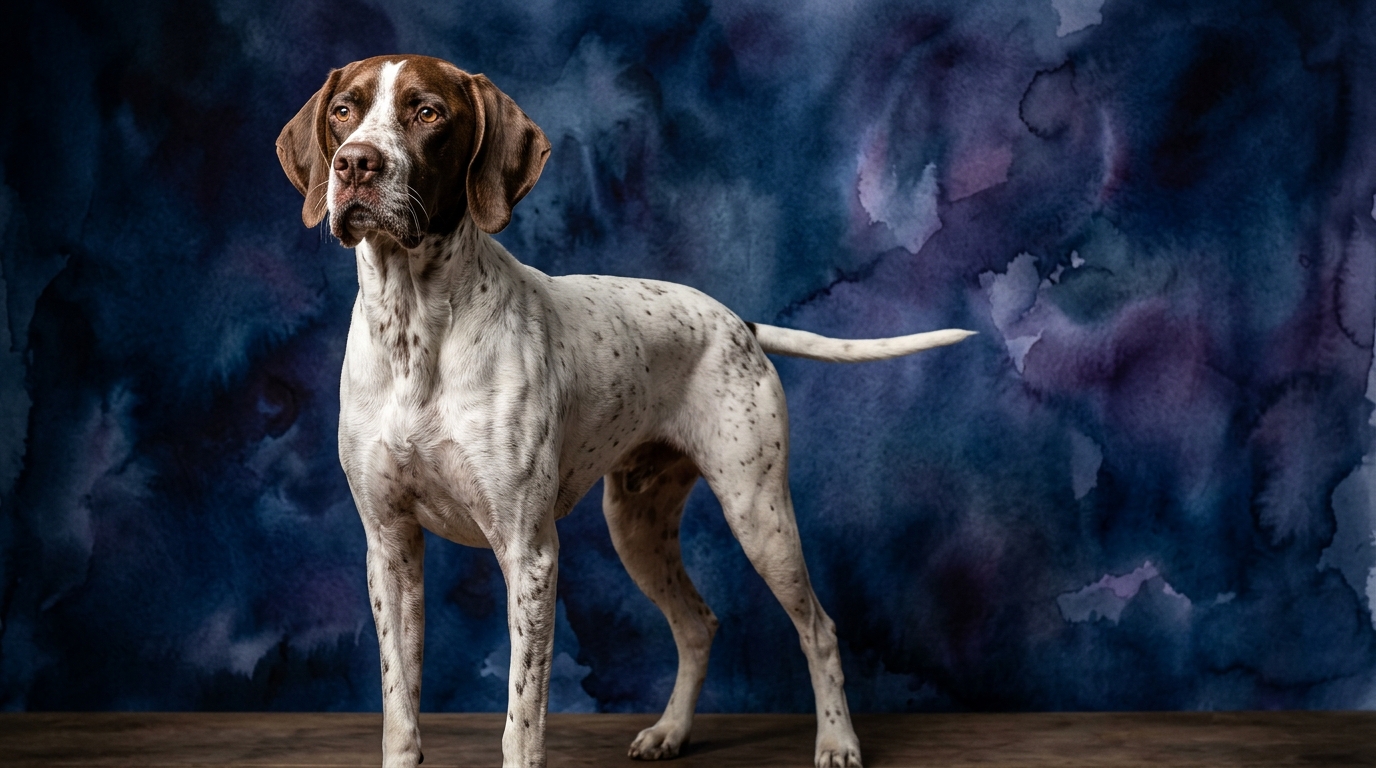
Side-by-Side Cognitive Profiles: Beagle vs. Pointer
The Beagle, a member of the Hound group and ranked #72 on Coren's intelligence scale, exhibits a distinct cognitive makeup. Their Problem Solving ability rates at 4/5, indicative of their tenacity in unraveling scent trails and navigating complex environments to achieve a goal. Training Speed, however, is a more modest 2/5, reflecting a potential for independent thought when a compelling scent presents itself. Social Intelligence is scored at 3/5, suggesting they can work cooperatively but might prioritize their primary task. A powerful Instinctive Drive of 5/5 highlights their unwavering dedication to scent work, while their Memory at 4/5 supports their ability to recall complex scent paths and learned associations over time.
In contrast, the Pointer, a Sporting breed not appearing on the Coren ranking scale, presents a more balanced cognitive profile. Their Problem Solving ability is 3/5, indicating competence in practical tasks without the same independent, persistent drive as a Beagle. Training Speed registers at 3/5, suggesting a moderate pace of learning and responsiveness to instruction. Matching the Beagle, their Social Intelligence is 3/5, implying an ability to form bonds and work alongside humans. An Instinctive Drive of 3/5 reflects their focused hunting instincts, primarily for locating game, rather than the Beagle's intense pursuit. Finally, their Memory score of 3/5 indicates a reliable recall of commands and routines.
Where the Beagle's Cognition Excels
The Beagle's cognitive strengths distinctly emerge in areas demanding persistence, independent problem-solving, and a profound connection to scent. With a Problem Solving score of 4/5, Beagles excel at figuring out how to overcome obstacles to reach a desired outcome, particularly when that outcome involves following a compelling odor. This isn't about solving abstract puzzles, but rather navigating a physical environment, interpreting complex scent information, and devising routes to their target, a skill honed over generations of tracking game. Their Instinctive Drive, an unparalleled 5/5, is the engine behind this relentless pursuit; once a Beagle locks onto a scent, their focus is singular and unwavering, often overriding other stimuli. This intense drive, coupled with a Memory score of 4/5, allows them to recall intricate scent patterns and the locations of past discoveries, making them incredibly effective at their specialized task. For instance, a Beagle might remember a rabbit's usual crossing point from weeks prior, patiently working the area until a fresh trail emerges, demonstrating a complex interplay of memory, drive, and problem-solving specific to their olfactory world.
Where the Pointer's Cognition Shines
While the Beagle shines in scent-driven persistence, the Pointer demonstrates a different, arguably more handler-centric, cognitive advantage, primarily in Training Speed. Clocking in at 3/5 compared to the Beagle's 2/5, Pointers generally exhibit a quicker uptake of new commands and a greater willingness to perform learned behaviors on cue. This isn't to say they are inherently superior in all aspects, but their cognitive architecture seems better suited for directed, repetitive instruction. Their Social Intelligence, also 3/5, combined with this moderate Training Speed, means they are often more inclined to work with their handler, taking direction rather than independently pursuing a scent trail for extended periods. The Pointer's Instinctive Drive, at 3/5, while still strong, is less overpowering than the Beagle's. This more balanced drive allows for a better integration of learned commands, as their focus isn't as easily hijacked by an overwhelming primal urge. For example, a Pointer is typically easier to teach a “stay” or “come” command in a distracting field environment because their natural inclination is to check in with their handler and respond to cues, rather than solely following their nose into the horizon.
Ease of Training: Behavioral Differences
Based on their cognitive profiles, the Pointer generally presents an easier training experience for most owners, primarily due to its higher Training Speed (3/5 vs. Beagle's 2/5) and a more moderate Instinctive Drive (3/5 vs. Beagle's 5/5). The Beagle's formidable Instinctive Drive, while a marvel in its original hunting context, often translates into a significant challenge for obedience training. When a Beagle catches a scent, their world narrows to that singular olfactory pursuit, making it incredibly difficult to redirect their attention with commands. Their Problem Solving ability (4/5) also plays a role here; they are adept at figuring out how to achieve their scent-driven goals, sometimes in defiance of human instruction. This means a Beagle might “problem-solve” its way around a fence or ignore a recall command if a compelling scent is present, prioritizing its internal drive over external cues.
In contrast, the Pointer's more balanced Instinctive Drive means they are less likely to become completely engrossed in a single sensory input, allowing for greater handler influence. Their better Training Speed signifies a quicker understanding of what's expected and a readier willingness to comply, making them more responsive to traditional command-based training methods. While both breeds require consistency, the Pointer's natural inclination is often to work cooperatively with its handler, whereas the Beagle's is to follow its nose, demanding more creative and patient training approaches to harness its profound sensory world.
Matching Breeds to Owner Lifestyles
Neither the Beagle nor the Pointer is truly suited for a “relaxed owner” in the sense of minimal activity, as both are working breeds with inherent needs for physical and mental engagement. However, the type of activity they thrive on differs significantly. The Beagle, with its 5/5 Instinctive Drive and 4/5 Problem Solving, demands an owner who embraces long, exploratory sniffing walks and scent-based enrichment. Their activity isn't just about covering distance; it's about mental engagement through olfactory exploration, requiring secure environments to prevent them from following a trail indefinitely. An owner who enjoys hide-and-seek games with treats, scent work, or earthdog trials would find a Beagle a fulfilling companion, providing outlets for their profound natural abilities.
For the Pointer, with its 3/5 Instinctive Drive and 3/5 Problem Solving, the ideal owner is one who can provide vigorous physical exercise in open spaces, such as running, biking, or extensive games of fetch. Pointers excel in activities that combine speed, stamina, and a cooperative working relationship with their handler, like field trials or agility. While they appreciate mental stimulation, their primary physical output often involves covering ground efficiently. Therefore, an active owner who enjoys structured outdoor activities and has ample space for a dog to run would find the Pointer a more suitable match, whereas an owner who values independent exploration and scent-driven adventures might lean towards the Beagle.
The Verdict
Choose a Beagle if you are an owner who appreciates a dog with an unparalleled drive for scent work, relishes the challenge of training a highly independent thinker, and enjoys engaging in activities that harness their profound olfactory intelligence and persistent problem-solving.
Choose a Pointer if you seek a cooperative, athletic partner for structured outdoor activities, value a quicker training response, and prefer a dog whose working drive is more readily integrated with handler direction and traditional obedience.
🧠 Find Your Pet's IQ Score
Our Pet IQ Lab assessment covers 25+ tests across 5 cognitive dimensions — personalized to your breed.
Take the Full IQ Test →Frequently Asked Questions
How does the Beagle's high instinctive drive impact its daily life compared to the Pointer's?
The Beagle's 5/5 instinctive drive means they are constantly processing and responding to scents, leading to a profound focus on their nose that can make them prone to wandering or ignoring commands when a compelling trail is present. In contrast, the Pointer's 3/5 instinctive drive is more focused on locating game and working with a handler, making them generally less likely to become completely absorbed in independent scent pursuits in everyday situations.
Are Beagles or Pointers better suited for living with children or other pets, considering their social intelligence scores?
Both breeds have a social intelligence score of 3/5, suggesting they can adapt well to family life with proper socialization. Beagles, being pack animals, often enjoy the company of others, while Pointers are generally amiable and eager to please. The main difference might be the Beagle's independent scent drive occasionally leading them to ignore family members in favor of a trail, whereas Pointers are usually more attentive to their human companions.
What specific training challenges might an owner face with a Beagle's 2/5 training speed compared to a Pointer's 3/5?
An owner training a Beagle might find that while the dog understands commands, its overwhelming instinctive drive (5/5) and independent problem-solving (4/5) frequently override its willingness to comply, especially outdoors. With a Pointer, the slightly higher training speed and more balanced drive mean they are generally more receptive to learning and executing commands, though consistency and positive reinforcement remain crucial for both breeds.