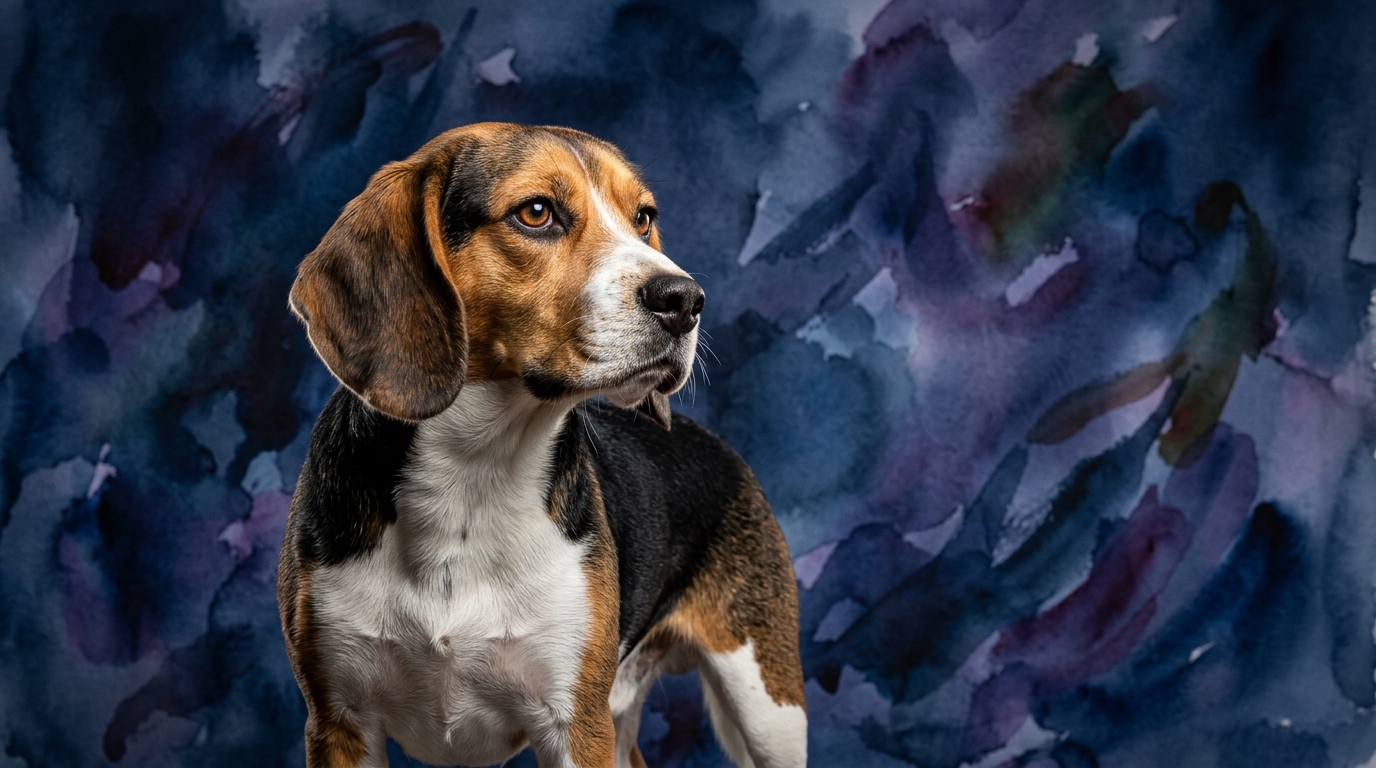

Side-by-Side IQ Profile: Beagle vs. Rat Terrier
Delving into the specific cognitive dimensions measured by The Cosmic Pet Pet IQ Lab, we uncover the unique intellectual blueprints of these two distinct breeds.
**Beagle (Hound, Coren Rank #72):** This breed’s cognitive makeup is heavily influenced by its ancestral purpose. Their Problem Solving is rated 4/5, indicating a strong capacity for independent thought, particularly when a scent trail is involved. Training Speed is 2/5, suggesting they can be moderately challenging to train due to their independent nature and strong drives. Social Intelligence sits at 3/5, reflecting a generally amiable disposition with a balanced understanding of social cues. Their Instinctive Drive is a remarkable 5/5, highlighting an unparalleled compulsion to track and explore olfactory information. Memory is 4/5, especially robust for scent profiles and established routines.
**Rat Terrier (Terrier, Not Coren-ranked):** While not included in Coren's traditional ranking, our Lab’s assessment reveals a balanced and adaptable intelligence. Their Problem Solving is 3/5, demonstrating practical adaptability to environmental challenges. Training Speed is 3/5, indicating a reasonable pace for learning new commands with consistent reinforcement. Social Intelligence matches the Beagle at 3/5, signifying a capable understanding of social interactions and a desire for companionship. Their Instinctive Drive is 3/5, a moderate prey drive manifesting in activities like digging and chasing, but less singular than the Beagle’s. Memory is also 3/5, reliable for commands, routines, and familiar experiences.
Where the Beagle Wins Cognitively
The Beagle’s cognitive strengths are profoundly linked to its olfactory prowess. With an Instinctive Drive score of 5/5, they exhibit an unmatched ability to process and remember scent information (Memory 4/5). This means a Beagle can construct intricate mental maps based on smells, track a specific scent over varied terrain, and recall that scent profile weeks later. Their Problem Solving at 4/5 often manifests as relentless pursuit of a scent puzzle, where they demonstrate remarkable focus and ingenuity in deciphering a trail, even if it leads them through complex environments. For instance, a Beagle might spend hours meticulously working out how a rabbit scent traveled through a dense thicket, exhibiting a form of deductive reasoning driven by their nose that other breeds might not engage in. This specialized cognitive function allows them to operate with a degree of independence in scent-based tasks that is truly remarkable.
Where the Rat Terrier Wins Cognitively
While not possessing the Beagle's singular olfactory genius, the Rat Terrier showcases a more balanced and adaptable cognitive profile. Their Training Speed of 3/5, combined with their 3/5 in Problem Solving, suggests a quicker adaptability to varied tasks and human-led instruction. Unlike the Beagle, whose problem-solving is often tied to scent, the Rat Terrier applies its intelligence to more general environmental challenges, such as figuring out how to retrieve a toy from under furniture or navigating complex agility courses. Their instinctive drive, while present, is more diffuse (3/5), allowing them to pivot attention more readily between tasks and human interaction. This generalist approach means they can excel in a wider array of domestic and playful scenarios that require quick thinking and responsiveness, rather than deep, singular focus.
Training Dynamics: Which is Easier and Why?
Comparing their Training Speed scores, the Rat Terrier (3/5) generally presents a somewhat more straightforward training experience than the Beagle (2/5). The Beagle's intense Instinctive Drive (5/5) means their world is often dominated by scents, making it challenging to capture and hold their attention during structured training sessions. A fleeting scent can easily distract a Beagle from a 'sit' command, requiring immense patience and high-value rewards to maintain focus. Their independent nature, a byproduct of needing to follow a scent trail alone, means they are not always looking to their handler for direction.
Conversely, the Rat Terrier's more moderate Instinctive Drive (3/5) allows for greater mental availability for training. They are typically eager to engage with their human companions and, while possessing terrier tenacity, are often more responsive to cues and less prone to being "nose-blind" to their handler. Their Problem Solving (3/5) skills are more readily applied to understanding and executing commands, rather than solely deciphering scent puzzles. This often translates into quicker grasp of basic obedience and a more consistent performance in diverse training environments, making them a slightly more cooperative student for the average pet owner.
Matching Breeds to Lifestyles: Active vs. Relaxed Owners
For the truly active owner who embraces outdoor adventures and mental stimulation through scent work, the Beagle is an ideal match. Their profound Instinctive Drive (5/5) and superior Memory (4/5) for scent information mean they thrive on activities like scent games, tracking, and long walks where they can engage their powerful nose. A relaxed owner might find the Beagle's relentless pursuit of scent and independent nature challenging, as it often translates into a dog that needs significant outdoor exploration to feel fulfilled and can be prone to wandering if not securely contained. Without sufficient outlets for their cognitive needs, a Beagle might find their own "entertainment," which can include persistent baying or exploring beyond boundaries.
The Rat Terrier, with its balanced Instinctive Drive (3/5) and adaptable Problem Solving (3/5), suits an owner who enjoys consistent engagement and varied activities but might not be exclusively focused on highly specialized tasks. They appreciate regular walks, interactive play, and puzzle toys, and can adapt well to both energetic outings and calmer indoor companionship. Their moderate social intelligence (3/5) and quicker training speed (3/5) make them amenable to learning new tricks and participating in family activities without the same singular focus on scent. An owner seeking a versatile companion for a range of activities, from backyard fetch to companionable evenings, would find the Rat Terrier's cognitive profile a good fit.
The Verdict
Choose a Beagle if you are captivated by a dog with an unparalleled sense of smell, are prepared for consistent, patient training, and can provide ample opportunities for scent-driven exploration and mental engagement outdoors.
Opt for a Rat Terrier if you desire a versatile, adaptable companion that enjoys varied activities, responds well to consistent training, and offers a balanced blend of activity and affectionate companionship.
🧠 Find Your Pet's IQ Score
Our Pet IQ Lab assessment covers 25+ tests across 5 cognitive dimensions — personalized to your breed.
Take the Full IQ Test →Frequently Asked Questions
Are Beagles difficult to train due to their intelligence?
Beagles possess a specific type of intelligence, excelling in problem-solving related to scent. Their independent nature and strong instinctive drive can make traditional obedience training challenging, requiring patience, high-value rewards, and creative engagement to counteract their focus on olfactory stimuli.
How does the Rat Terrier's lack of a Coren ranking impact understanding its intelligence?
The absence of a Coren ranking for Rat Terriers doesn't mean a lack of intelligence, but rather reflects their less common inclusion in the specific studies Coren used. Our Cosmic Pet Pet IQ Lab data shows them as adaptable, with balanced cognitive skills, indicating a functional and responsive intelligence for various tasks.
Which breed is better for a family with children?
Both breeds can be wonderful family companions, but their suitability depends on lifestyle. Beagles are generally amiable and sturdy, but their scent drive may lead them to wander or be less attentive to young children during outdoor play. Rat Terriers are often playful and adaptable, typically enjoying interaction with children, provided appropriate socialization and management of their terrier energy.