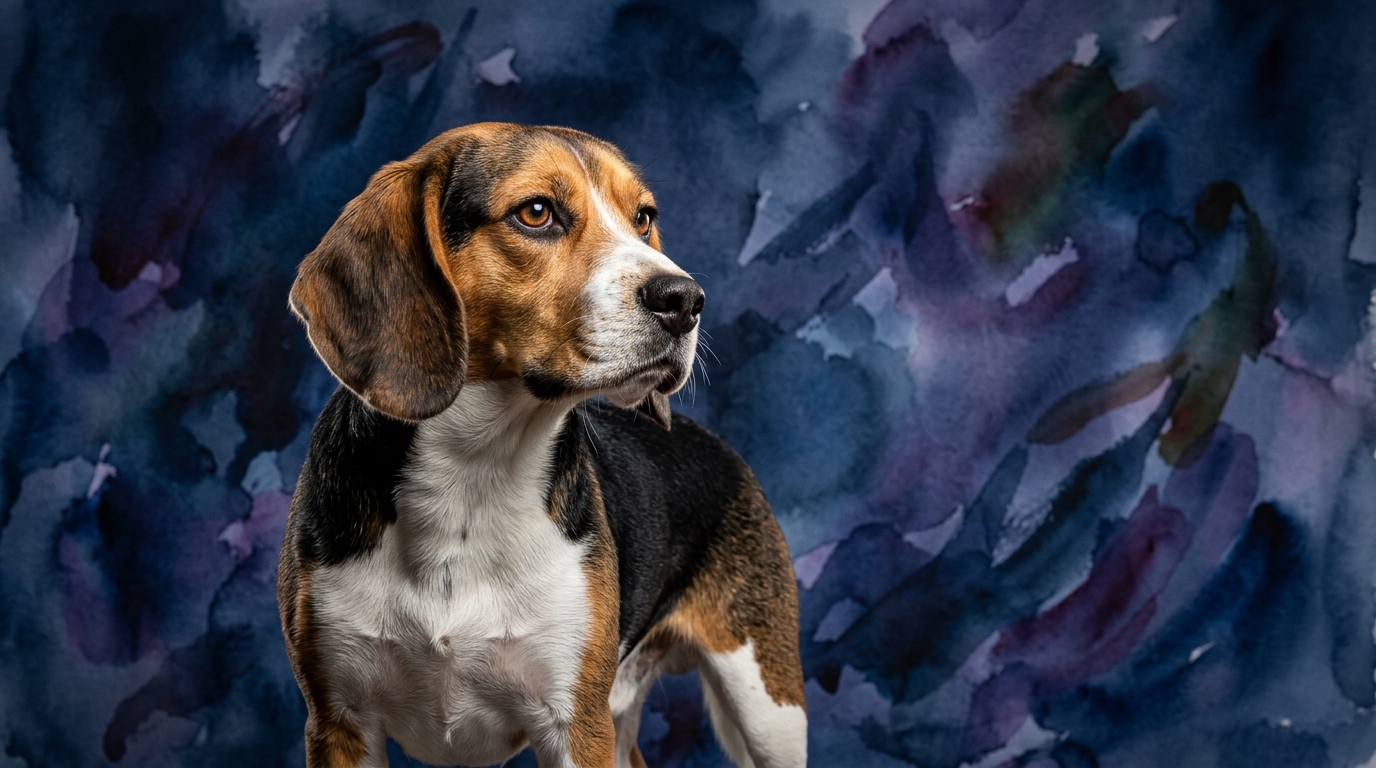
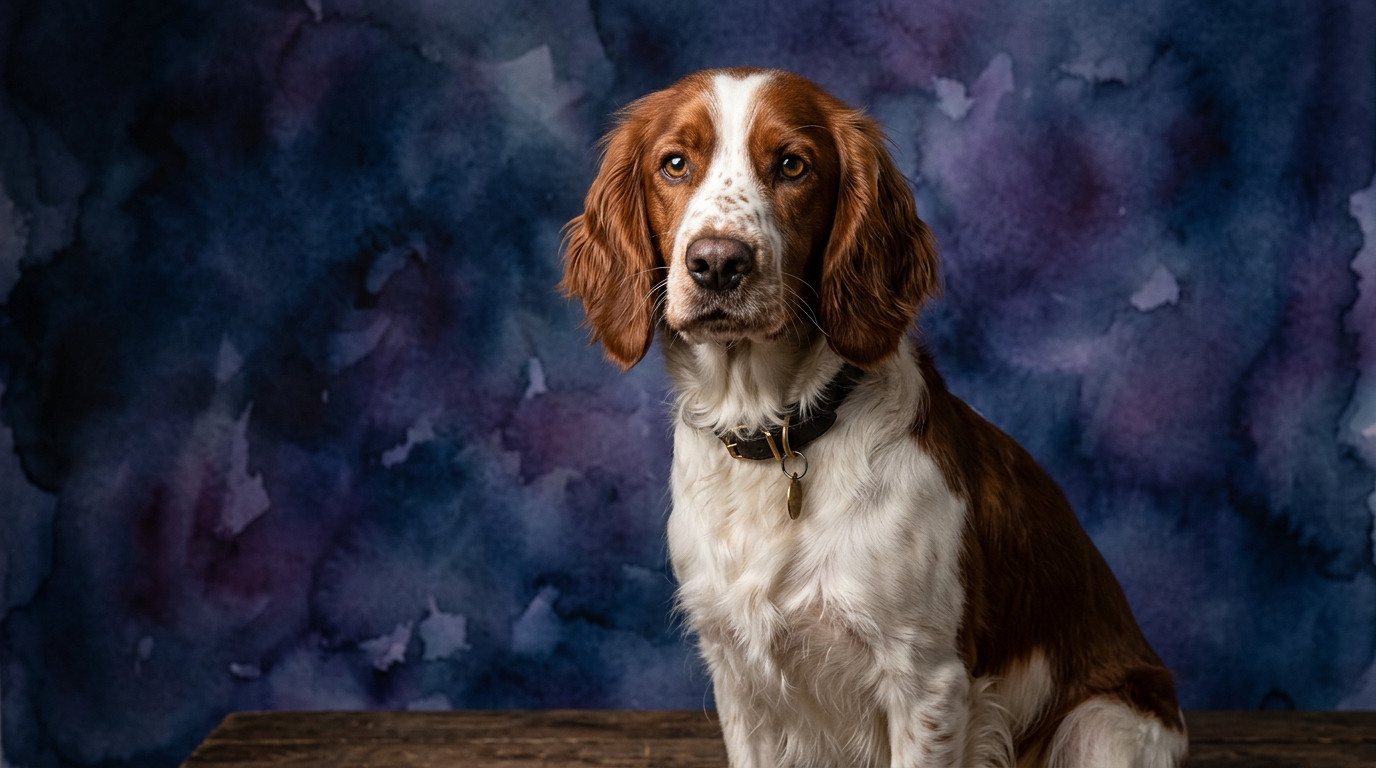
Side-by-Side Cognitive Profiles: Beagle vs. Welsh Springer Spaniel
At The Cosmic Pet's Pet IQ Lab, we analyze canine intelligence across five key dimensions, offering a nuanced look beyond generalized perceptions. The Beagle, a merry hound, holds a Coren rank of #72, reflecting a cognitive makeup geared towards independent scent work. Their Problem Solving score of 4/5 signifies a deep aptitude for navigating complex environments and unraveling scent puzzles, often with single-minded determination. However, their Training Speed is rated 2/5, indicating they can be more challenging to motivate for conventional obedience, preferring to follow their nose. Social Intelligence stands at 3/5, as Beagles are generally amiable but their primary focus is often on olfactory exploration rather than intricate human communication. An Instinctive Drive of 5/5 underscores their powerful, unyielding prey and scent drive, while Memory at 4/5 highlights their excellent recall for paths, smells, and routines.
In contrast, the Welsh Springer Spaniel, a vibrant sporting dog, boasts a Coren rank of #31, suggesting a more cooperative and responsive cognitive architecture. Their Problem Solving score of 4/5 indicates an ability to tackle challenges, often seeking collaboration with their human companions. A higher Training Speed of 4/5 reflects their eagerness to learn and retain commands, making them generally more amenable to formal instruction. Social Intelligence is also 3/5, showing a strong capacity to bond and interpret human intentions, though perhaps less independently observant than some breeds. Their Instinctive Drive is 3/5, channeling their energy into retrieving and working with a handler rather than independent pursuit. Like the Beagle, their Memory is strong at 4/5, enabling them to recall training, spatial layouts, and past experiences with efficiency.
Where the Beagle's Cognition Shines Brightest
The Beagle's cognitive prowess truly excels in domains directly tied to their heritage as scent hounds. Their 4/5 Problem Solving isn't about figuring out complex human-designed puzzles in a lab, but rather about the intricate, multi-layered task of following a scent trail over varied terrain. This involves sophisticated decision-making, filtering out irrelevant odors, and maintaining focus despite distractions – a cognitive feat often underestimated. Their unparalleled Instinctive Drive of 5/5 is the engine behind this, providing relentless motivation to pursue a target once a scent is locked. This isn't mere stubbornness; it's an evolutionary imperative, a deep-seated desire to complete the hunt. A Beagle's memory, rated 4/5, beautifully complements this, allowing them to remember specific scent patterns, the layouts of previous hunts, and the location of scent rewards, making them incredibly effective at their specialized task. For any task requiring intense, independent olfactory investigation and sustained, self-directed effort, the Beagle's cognitive profile is supremely optimized.
Where the Welsh Springer Spaniel's Cognition Takes the Lead
The Welsh Springer Spaniel's cognitive strengths lie in their balanced approach to problem-solving and their inherent cooperativeness, reflected in their higher Training Speed. With a 4/5 in Problem Solving, they demonstrate an ability to adapt and learn from their environment, often seeking input from their handler. This isn't just about raw intellect, but about applying cognitive resources in a way that facilitates working partnerships. Their 4/5 Training Speed is a direct manifestation of their desire to engage with humans and understand expectations, making them quick studies in obedience, agility, or field work. This stems from their history as flushing and retrieving dogs, where responsiveness to commands was paramount for success. While their Instinctive Drive is a moderate 3/5, it's a drive that is channelled towards collaborative efforts, eager to please and to participate in shared activities. This makes them adept at tasks requiring precise execution, rapid learning, and a strong partnership with their human guide, excelling in scenarios where communication and mutual understanding are key.
Trainability: The Impact of Behavioral Differences
When considering trainability, the fundamental differences in the Beagle's 2/5 Training Speed and the Welsh Springer Spaniel's 4/5 become strikingly clear, rooted in their distinct behavioral predispositions. The Beagle's intense 5/5 Instinctive Drive for scent work means that once a compelling odor captures their attention, external commands often fade into the background. Their primary directive is to follow the scent, and diverting them requires immense patience and consistent, high-value rewards. This isn't a lack of intelligence, but rather a profound prioritization of their natural instincts over human directives, making conventional obedience a persistent challenge. Real-world scenarios often see Beagles 'go deaf' to calls when on a trail, a direct consequence of their cognitive focus.
Conversely, the Welsh Springer Spaniel's moderate 3/5 Instinctive Drive and strong desire to please contribute significantly to their higher Training Speed. Their drive is often focused on retrieving or working in close proximity to their handler, meaning they are inherently more inclined to pay attention and respond to cues. They find satisfaction in successful collaboration and positive reinforcement from their human companions. This behavioral difference translates to a dog that generally learns new commands faster, maintains focus more readily during training sessions, and is less likely to become independently engrossed in environmental stimuli. While both breeds are capable of learning, the Welsh Springer Spaniel's intrinsic motivation aligns more readily with structured training methodologies, leading to a smoother, often quicker, learning curve.
Matching Canine Cognition to Lifestyle: Active vs. Relaxed Owners
The cognitive profiles of the Beagle and Welsh Springer Spaniel suggest they are suited to different owner lifestyles, extending beyond just physical exercise. For owners who identify as 'active' and seek a canine companion for specific, independent outdoor pursuits, the Beagle presents a compelling choice. Their 5/5 Instinctive Drive and 4/5 Problem Solving in scent-related tasks mean they thrive when given opportunities for extensive sniffing, tracking games, or even participation in scent work competitions. A relaxed owner, however, might find the Beagle's independent nature and persistent vocalizations (baying) to be challenging, especially if their cognitive need for scent exploration is not adequately met. Their intelligence isn't about sitting quietly; it's about engaging the world through their nose, a demanding activity.
The Welsh Springer Spaniel, with its balanced 4/5 Training Speed and cooperative drive, is better suited for active owners who enjoy engaging their dog in varied activities that foster a partnership. This includes hiking, jogging, agility, or retrieving games, where the dog's focus is on working *with* the owner. Their cognitive makeup allows them to adapt to different training scenarios and enjoy shared experiences. While they require significant physical exercise to prevent boredom, their desire to please makes them more amenable to structured family life. A 'relaxed' owner might still find the Welsh Springer Spaniel's energy and need for mental engagement a significant commitment, but their biddable nature makes them a more flexible companion for a variety of active, family-oriented pursuits compared to the Beagle's singular drive.
The Verdict
Choose a Beagle if you are an owner fascinated by the world of scent, prepared to channel a powerful, independent drive into engaging olfactory activities, and appreciate a dog that thinks with its nose. They thrive with patient, consistent training that respects their specialized cognitive focus.
Opt for a Welsh Springer Spaniel if you seek a highly trainable, cooperative companion eager to learn and participate in diverse activities alongside you. They are ideal for active individuals who value a strong partnership and a dog that readily responds to guidance.
🧠 Find Your Pet's IQ Score
Our Pet IQ Lab assessment covers 25+ tests across 5 cognitive dimensions — personalized to your breed.
Take the Full IQ Test →Frequently Asked Questions
Why is the Welsh Springer Spaniel's Coren rank so much higher than the Beagle's?
The Coren rank primarily reflects a breed's ability to learn and obey commands quickly, often termed 'working and obedience intelligence.' The Welsh Springer Spaniel's higher score (31) compared to the Beagle's (72) indicates their greater responsiveness to human direction and faster acquisition of new tasks, aligning with their cooperative heritage.
Do both breeds have the same problem-solving ability?
While both breeds score 4/5 in Problem Solving, the nature of their problem-solving differs significantly. The Beagle excels at independent, scent-based problem-solving, navigating complex olfactory puzzles. The Welsh Springer Spaniel, conversely, typically applies its problem-solving skills in cooperation with a handler, focusing on tasks that require responsiveness and adaptability within a partnership.
How does social intelligence vary between these two breeds?
Both breeds share a 3/5 Social Intelligence rating, indicating a good capacity for understanding human cues. However, a Beagle's social interactions can often be secondary to their powerful scent drive, making them appear more independent. The Welsh Springer Spaniel, while also possessing drive, is often more attuned to human companionship and social engagement, channeling their energy into cooperative activities.