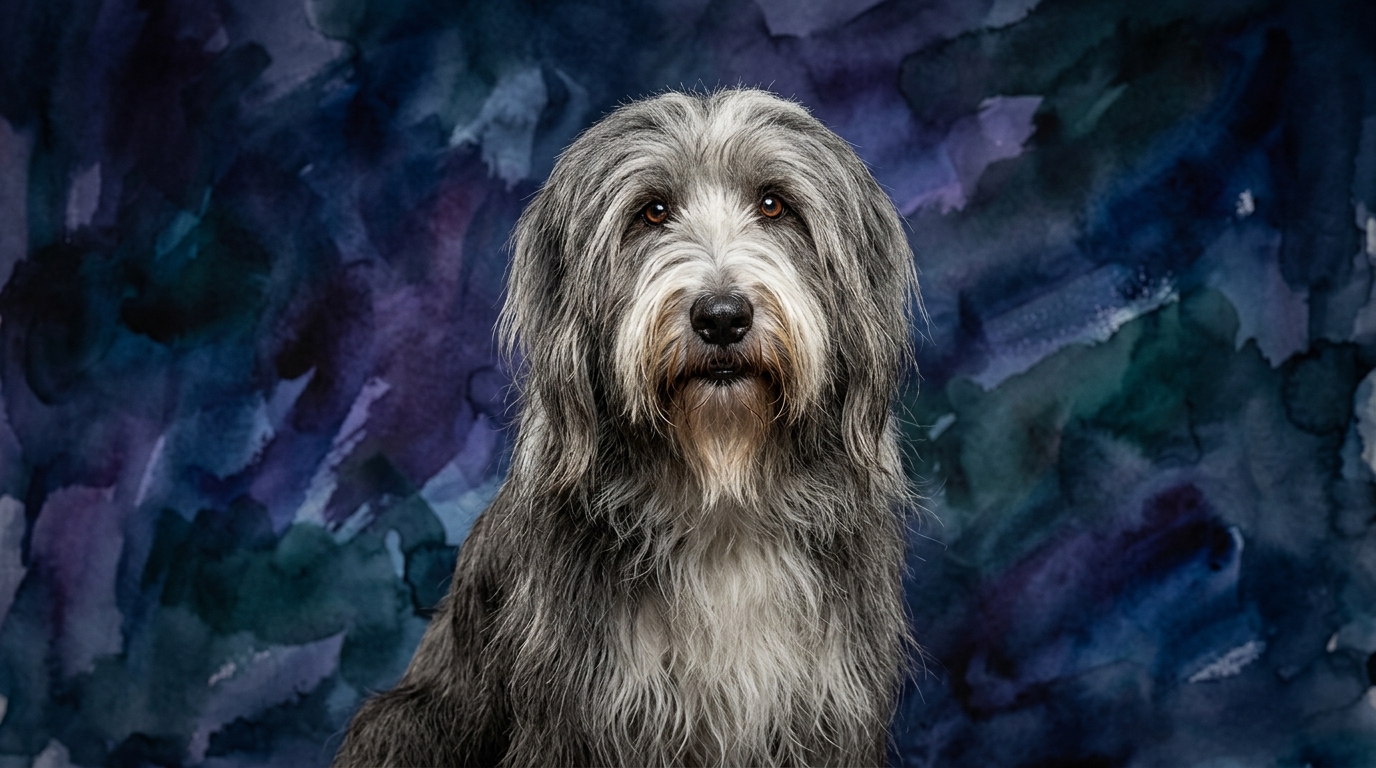
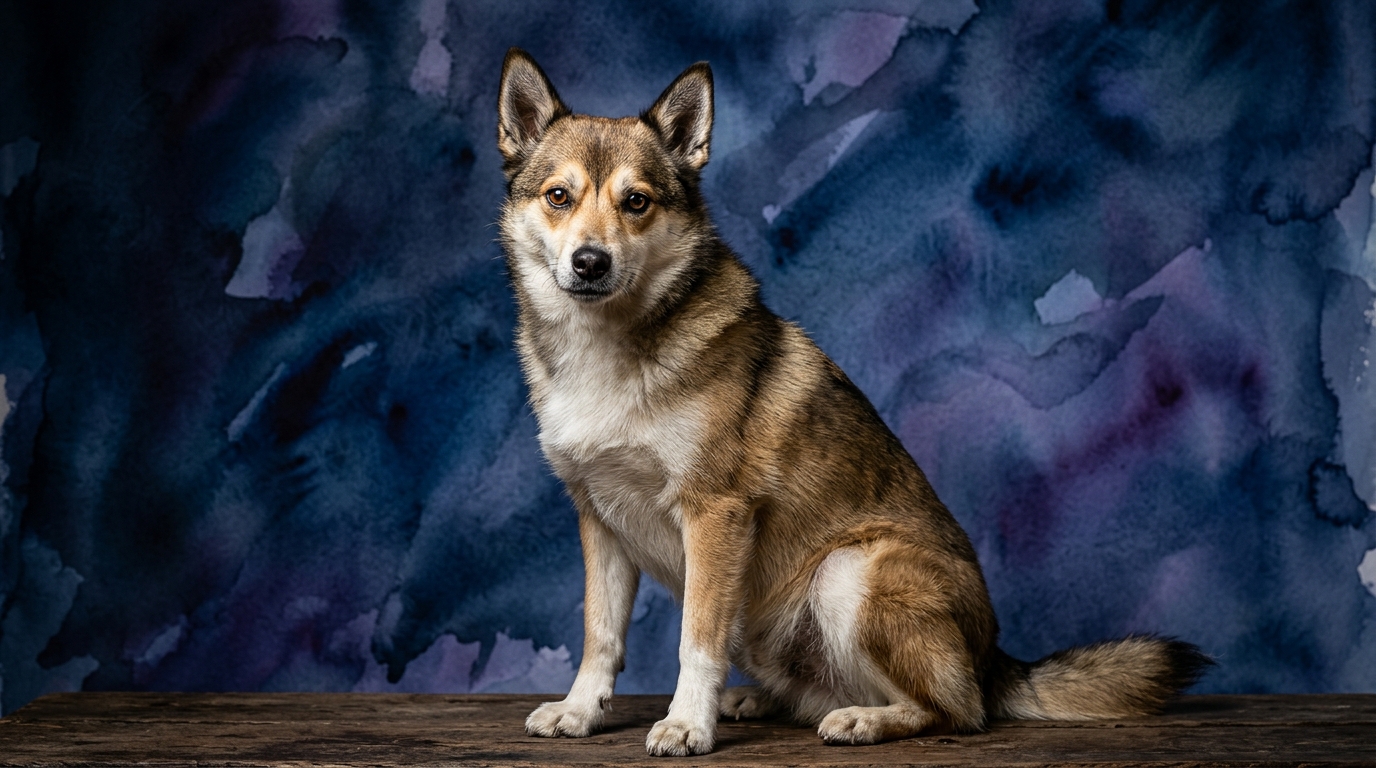
Side-by-side IQ profile
The Cosmic Pet Pet IQ Lab employs a five-dimensional framework to assess canine intelligence, offering a granular view beyond general classifications. For the Bearded Collie, a Herding breed ranked #34 by Coren, we observe a robust cognitive profile. Their Problem Solving is rated 4/5, indicating an aptitude for navigating complex situations and making independent decisions, a hallmark of effective herding. Training Speed also stands at 4/5, reflecting their quick grasp of new commands and routines. Social Intelligence is 3/5, suggesting a good understanding of human cues, while Instinctive Drive is 3/5, primarily focused on their herding heritage. Their Memory is strong at 4/5, aiding in long-term skill retention.
In contrast, the Norwegian Lundehund, a unique Non-Sporting breed not listed on the Coren ranking, presents a different cognitive signature. Their Problem Solving is 3/5, tailored to their specialized historical role. Training Speed is 3/5, indicating a steady, rather than rapid, learning pace. Social Intelligence is 3/5, showing a moderate engagement with their environment and companions. Instinctive Drive is 3/5, largely centered on their historical hunting behaviors, and their Memory is also 3/5, functional for retaining necessary information.
Where Bearded Collie wins cognitively
The Bearded Collie demonstrably excels in several key cognitive domains, particularly when measured against broader canine intellectual benchmarks. Their superior Problem Solving score of 4/5, compared to the Lundehund's 3/5, reflects a greater capacity for independent strategic thinking and adaptability in diverse scenarios. This cognitive flexibility is crucial for a herding dog required to interpret and respond to the unpredictable movements of livestock and terrain. Furthermore, their Training Speed of 4/5 outpaces the Lundehund's 3/5, meaning Bearded Collies typically assimilate new commands, complex sequences, and varied tasks with greater alacrity. This rapid learning curve makes them highly receptive to advanced obedience, agility, and other canine sports. Finally, a Memory score of 4/5 gives the Bearded Collie an edge in retaining vast amounts of information and learned behaviors over extended periods. This robust recall supports their ability to perform intricate routines and remember past experiences, contributing to their reputation as capable and cooperative working partners. These combined strengths allow the Bearded Collie to thrive in environments demanding continuous learning, quick decision-making, and reliable task execution under human direction.
Where Norwegian Lundehund wins cognitively
While the Norwegian Lundehund's general cognitive scores might appear numerically lower than the Bearded Collie's, their intellectual strengths are profoundly specialized and context-dependent, reflecting millennia of adaptation to a unique ecological niche. Their Problem Solving ability, rated 3/5, is not about open-field strategy but about intricate spatial navigation and contortion, essential for squeezing into tight rock crevices and negotiating vertical cliffs during puffin hunting. This involves a highly specialized form of proprioception, body awareness, and environmental assessment, representing a distinct cognitive skill set tailored to extreme physical challenges. Their Instinctive Drive (3/5) is geared towards independent exploration and persistent pursuit in challenging physical environments, fostering a self-reliance that prioritizes individual initiative over constant human direction. This specific cognitive architecture allows them to excel in tasks that would confound many other breeds, demonstrating a highly effective, albeit niche, application of canine intellect. Their independence, a byproduct of their solitary hunting heritage, means they possess an inherent curiosity and resourcefulness when faced with novel environmental puzzles, often finding unique solutions through trial and error that leverage their exceptional physical adaptability.
Which is easier to train and why
When considering ease of training, the Bearded Collie holds a distinct advantage, primarily due to its higher Training Speed (4/5) and Problem Solving (4/5) scores. Bearded Collies possess an inherent eagerness to engage with their human partners and a keen ability to grasp new concepts quickly. Their herding background has ingrained a desire for cooperative work and responsiveness to direction, making them generally more pliable and enthusiastic learners. They thrive on structured training sessions, often enjoying the mental challenge and positive reinforcement. Their robust memory further reinforces learned behaviors, reducing the need for constant repetition.
In contrast, the Norwegian Lundehund, with its 3/5 Training Speed, requires a more patient, consistent, and often creative approach to training. Their history as independent puffin hunters means they are not inherently predisposed to taking constant direction or performing repetitive tasks on command. While they are capable of learning, their problem-solving is often geared towards environmental manipulation rather than human-directed tasks, and their instinctive drive leans towards exploration rather than strict obedience. Owners may find that Lundehunds get bored with conventional drills more quickly and might display a charming stubbornness or independent streak. Successful training with a Lundehund often involves making it a game, leveraging their curiosity, and understanding that their definition of 'cooperation' might involve more negotiation than with a typical herding breed.
Which suits active owners vs relaxed owners
The choice between these two breeds depends significantly on an owner's lifestyle and their approach to canine companionship and activity. The Bearded Collie, with its Herding group classification and higher cognitive scores in training and problem-solving, is an ideal match for active owners. They require substantial mental and physical stimulation to thrive, excelling in activities like agility, competitive obedience, herding trials, and long, engaging hikes. Their desire for cooperative work means they genuinely enjoy being involved in their owner's active pursuits and excel when given a 'job' to do. Owners who enjoy structured training, outdoor adventures, and a highly engaged canine partner will find the Bearded Collie a perfect fit.
Conversely, the Norwegian Lundehund, while not a sedentary breed, generally suits owners who might be described as 'moderately active' or those seeking a unique companion with specific, less conventional activity needs. Their energy levels are typically moderate, and while they enjoy exploration and sniffing out new environments, they may not demand the same intensity of structured activity as a Bearded Collie. They appreciate opportunities to investigate their surroundings, clamber over obstacles, and engage their specialized physical abilities. Owners who are patient, appreciate an independent spirit, and enjoy unique breed quirks will find the Lundehund rewarding. They are not suited for entirely relaxed, sedentary lifestyles but rather for those who value quality over constant high-intensity activity, preferring exploration and mental engagement tailored to the breed's unique instincts.
The Verdict
Choose the Bearded Collie if: You seek a highly trainable, cooperative, and engaged partner for active sports, complex obedience, and a strong, communicative bond. They thrive with consistent mental and physical challenges and excel in structured environments where their intelligence can be channeled into productive tasks.
Choose the Norwegian Lundehund if: You appreciate a unique, independent breed with specialized historical instincts, are patient with training, and enjoy a companion with a moderate activity level focused on exploration and unique physical challenges rather than intense, structured cooperative work. You value their self-reliance and fascinating quirks.
🧠 Find Your Pet's IQ Score
Our Pet IQ Lab assessment covers 25+ tests across 5 cognitive dimensions — personalized to your breed.
Take the Full IQ Test →Frequently Asked Questions
Are Bearded Collies good family dogs?
Bearded Collies, with their 3/5 social intelligence, are generally affectionate and good-natured, making them suitable for families. They form strong bonds and are typically patient with children, especially when properly socialized from a young age. Their energy levels mean they thrive in active households where they receive sufficient engagement.
Do Norwegian Lundehunds have any unique physical traits that affect their behavior?
Absolutely. Norwegian Lundehunds possess several unique physical traits, including six toes on each paw, highly flexible joints, and the ability to close their ear canals. These adaptations, developed for puffin hunting, directly influence their behavior by enabling them to navigate incredibly rugged and confined terrains, fostering a unique problem-solving approach centered on agility and spatial awareness.
What kind of mental stimulation do these breeds need?
Bearded Collies require consistent mental challenges, thriving on puzzle toys, obedience training, agility, and learning new tricks to satisfy their 4/5 problem-solving and memory. Norwegian Lundehunds benefit from activities that engage their specialized problem-solving and instinctive drive, such as scent work, exploring varied terrains, and puzzle toys that allow them to 'hunt' for treats, stimulating their unique cognitive adaptations.