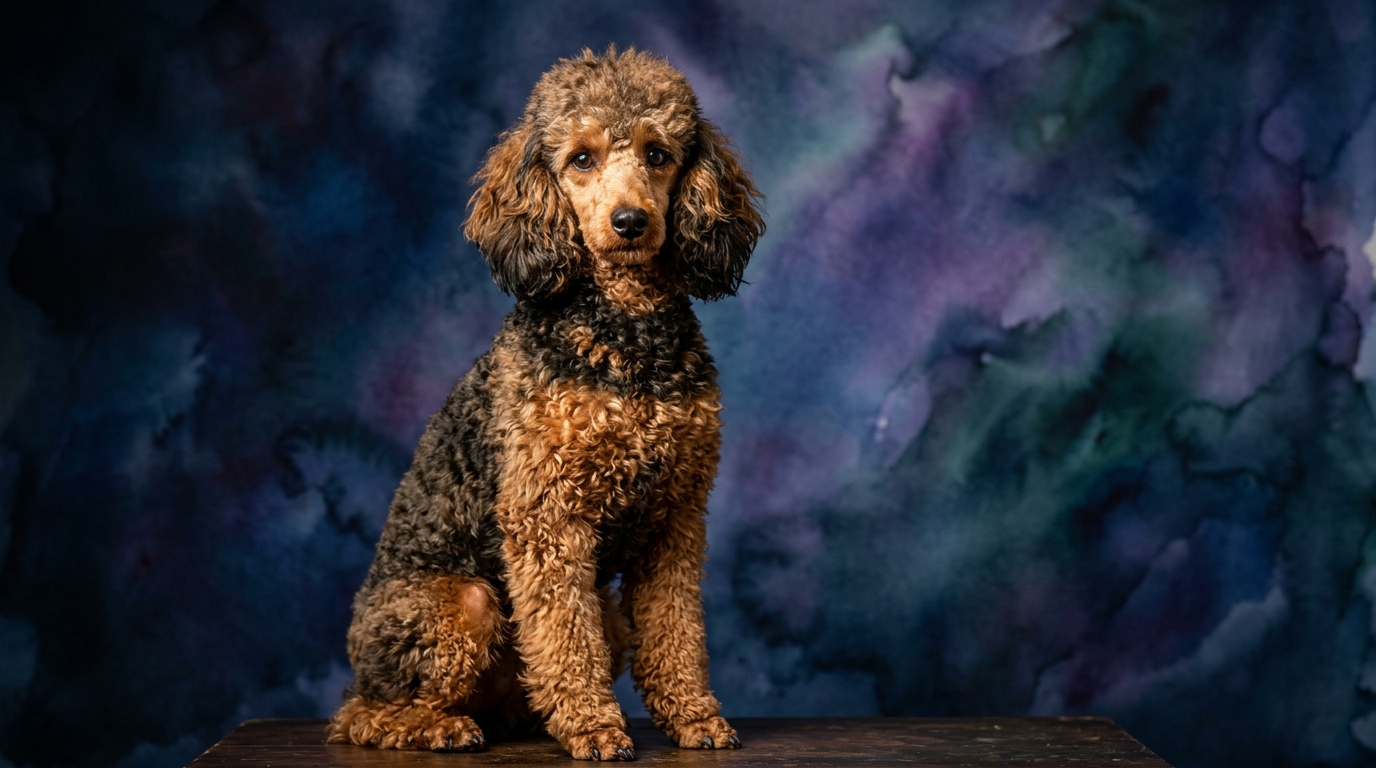
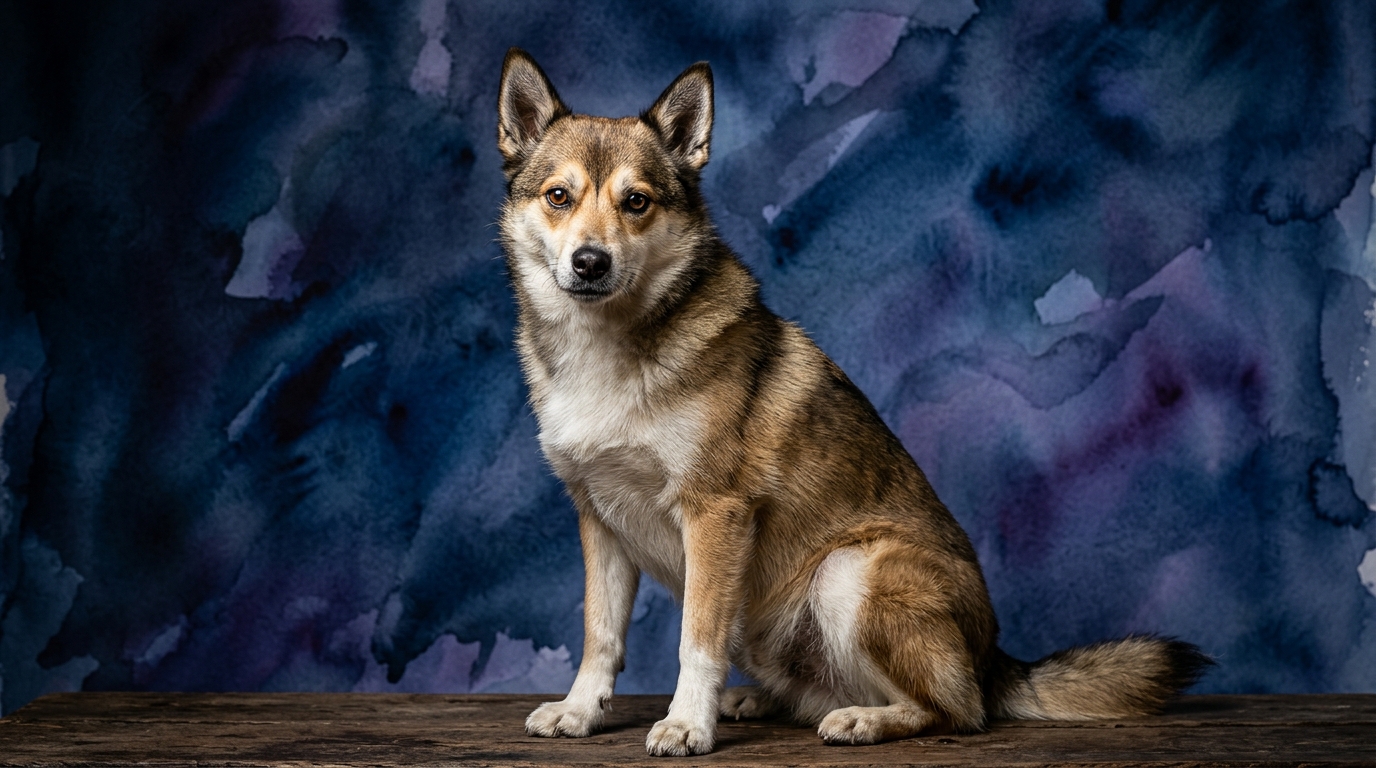
Side-by-Side IQ Profile: Standard Poodle vs. Norwegian Lundehund
At The Cosmic Pet Pet IQ Lab, we analyze canine cognition across five crucial dimensions to offer a nuanced understanding of each breed's mental landscape. The Standard Poodle, holding a Coren rank of #2, consistently demonstrates exceptional cognitive prowess, while the Norwegian Lundehund, not Coren-ranked, presents a unique set of abilities shaped by its specialized heritage.
For the Standard Poodle, Problem Solving receives a top score of 5/5, indicating an exceptional capacity to navigate complex situations, understand new concepts quickly, and devise solutions to challenges. Training Speed also earns a perfect 5/5, reflecting their rapid acquisition of new commands and behaviors with minimal repetition. Their Social Intelligence is rated 5/5, showcasing an acute awareness of human emotions and cues, fostering deep bonds and cooperative interactions. An Instinctive Drive of 4/5 points to their historical role as water retrievers, manifesting as an energetic enthusiasm for engaging in activities, though not an overwhelming prey drive. Finally, Memory, at 5/5, highlights their impressive ability to retain information, commands, and experiences over extended periods.
The Norwegian Lundehund, in contrast, exhibits a more moderate cognitive profile, reflecting its highly specialized original purpose. Its Problem Solving ability is rated 3/5, suggesting a moderate capacity for tackling novel challenges, often preferring to stick to established routines or methods unless strongly motivated. Training Speed also stands at 3/5, meaning they learn at an average pace, requiring consistent reinforcement and patience from their human companions. Social Intelligence is 3/5, indicating they can be reserved and may not always be as attuned to human social cues as more people-oriented breeds, often displaying a degree of independence. An Instinctive Drive of 3/5 reflects their unique historical role in hunting puffins in challenging terrain, which translates into a specialized drive for exploration and agility rather than a general eagerness to please. Memory, also 3/5, means they retain information, but consistent practice is essential to solidify learned behaviors and ensure reliable recall.
Where the Standard Poodle Excels Cognitively
The Standard Poodle's cognitive strengths are evident across nearly all measured dimensions. Its perfect 5/5 scores in Problem Solving, Training Speed, Social Intelligence, and Memory coalesce into a highly adaptable and responsive intellect. This breed excels in deciphering complex tasks, whether it's mastering intricate agility courses, performing multi-step tricks, or understanding subtle changes in household routines. Their superior problem-solving enables them to generalize learned behaviors to new situations, making them remarkably versatile companions.
Their exceptional Social Intelligence means they are often highly empathetic, keenly picking up on human moods and intentions, which strengthens the human-animal bond and facilitates cooperative learning. This cognitive empathy, combined with their rapid Training Speed and robust Memory, allows Poodles to become proficient in a vast array of activities, from therapy work to competitive obedience. Owners often observe their Standard Poodles anticipating requests or adapting their behavior based on perceived human needs, a testament to their advanced social and memory functions.
Where the Norwegian Lundehund Shows Unique Cognitive Strengths
While the Norwegian Lundehund’s scores are more moderate in human-centric IQ metrics, its cognitive profile is uniquely adapted to its ancestral role. Its Problem Solving (3/5) and Instinctive Drive (3/5) are not designed for abstract obedience but for navigating treacherous, rocky terrain in pursuit of puffins. This suggests a form of specialized spatial and physical problem-solving that might not translate directly to learning complex tricks but makes them incredibly adept at navigating challenging environments. Their cognitive strengths lie in their resilience, independence, and an intrinsic motivation for exploration and physical agility.
The Lundehund’s moderate Social Intelligence (3/5) means they are not overly reliant on human direction, fostering a self-sufficient mindset. This independence can be a cognitive asset for owners who appreciate a dog that can entertain itself and doesn't constantly demand interaction, offering a different kind of companionship. Their memory (3/5) is sufficient for retaining crucial survival skills and routines, though it requires more diligent reinforcement for human-imposed commands. Their entire cognitive makeup is geared towards a highly specific, physically demanding task, leading to a unique mental resilience and focused determination that sets them apart.
Training Dynamics: Poodle vs. Lundehund
When it comes to training, the cognitive differences between these two breeds become particularly apparent. The Standard Poodle is unequivocally easier to train, a direct result of its 5/5 scores in Training Speed, Problem Solving, Social Intelligence, and Memory. They grasp new commands with remarkable speed, often requiring only a few repetitions to understand and execute a behavior. Their high social intelligence means they are often eager to please and highly responsive to human cues, making them natural partners in cooperative tasks. They remember what they've learned, allowing for advanced training and reliable recall, even after breaks.
The Norwegian Lundehund, with its 3/5 scores across these same dimensions, presents a more significant training challenge. They learn at an average pace, meaning owners must be prepared for more repetitions, consistent practice, and a greater investment of time and patience. Their moderate social intelligence can translate into an independent streak; they may not always see the inherent value in performing a command if it doesn't align with their own motivations. This requires trainers to be creative, using positive reinforcement methods that appeal to the Lundehund's intrinsic drives, such as exploration or food rewards, rather than relying solely on a desire to please. Their moderate memory necessitates regular reinforcement to keep learned behaviors sharp, preventing them from fading over time. Training a Lundehund is a marathon, not a sprint, demanding consistency and an understanding of their unique, independent mindset.
Lifestyle Match: Active vs. Relaxed Owners
The cognitive profiles of the Standard Poodle and Norwegian Lundehund lend themselves to different owner lifestyles. For active owners seeking a canine partner for sports, complex training, and constant engagement, the Standard Poodle is an ideal match. Their Instinctive Drive of 4/5, combined with their exceptional Problem Solving, Training Speed, and Memory, means they thrive on mental and physical challenges. They excel in activities like agility, obedience, rally, and retrieving, requiring consistent outlets for their intelligent minds and energetic bodies. An under-stimulated Standard Poodle can easily become bored, potentially manifesting in undesirable behaviors, underscoring the need for an owner who can commit to their cognitive engagement.
Conversely, for owners who appreciate a more independent companion and lead a somewhat more relaxed, albeit still active, lifestyle, the Norwegian Lundehund can be a suitable choice. Their Instinctive Drive of 3/5 suggests they require regular exercise and mental stimulation, but perhaps not the same intensity of human-directed cognitive work as a Poodle. Their moderate Social Intelligence means they might be content with periods of self-entertainment, exploring their environment or engaging with puzzles on their own terms. While they still benefit immensely from consistent training and socialization, they may not demand the same level of constant, intense interaction. An owner who values a dog's unique quirks and is prepared to work with a more independent spirit will find a rewarding companion in the Lundehund, understanding that their activity needs are more about exploration and physical dexterity than competitive sports.
The Verdict
Choose a Standard Poodle if you seek a highly engaged, responsive, and trainable companion who thrives on complex learning, close partnership, and consistent mental stimulation.
Choose a Norwegian Lundehund if you appreciate an independent, unique, and often reserved companion, willing to invest patience in training and celebrate a dog with distinct, specialized cognitive strengths and a drive for exploration.
🧠 Find Your Pet's IQ Score
Our Pet IQ Lab assessment covers 25+ tests across 5 cognitive dimensions — personalized to your breed.
Take the Full IQ Test →Frequently Asked Questions
Can Norwegian Lundehunds participate in dog sports despite their moderate IQ scores?
Yes, with dedicated, patient training and an understanding of their specific motivations, Lundehunds can excel in sports that leverage their unique physical agility and problem-solving, such as agility or scent work, though they may require more creative engagement than a Poodle.
How important is early socialization for both breeds?
Early socialization is crucial for both breeds but particularly vital for the Lundehund to help develop its social intelligence and prevent excessive reservation towards new people or environments. Poodles benefit from extensive socialization to channel their high social eagerness and prevent over-excitability.
Are Standard Poodles prone to boredom if not adequately stimulated?
Absolutely. Their high cognitive scores across Problem Solving, Training Speed, and Memory mean they require consistent mental engagement and physical activity to prevent boredom-induced behaviors like excessive barking or destructive chewing.