Side-by-Side Cognitive Profiles
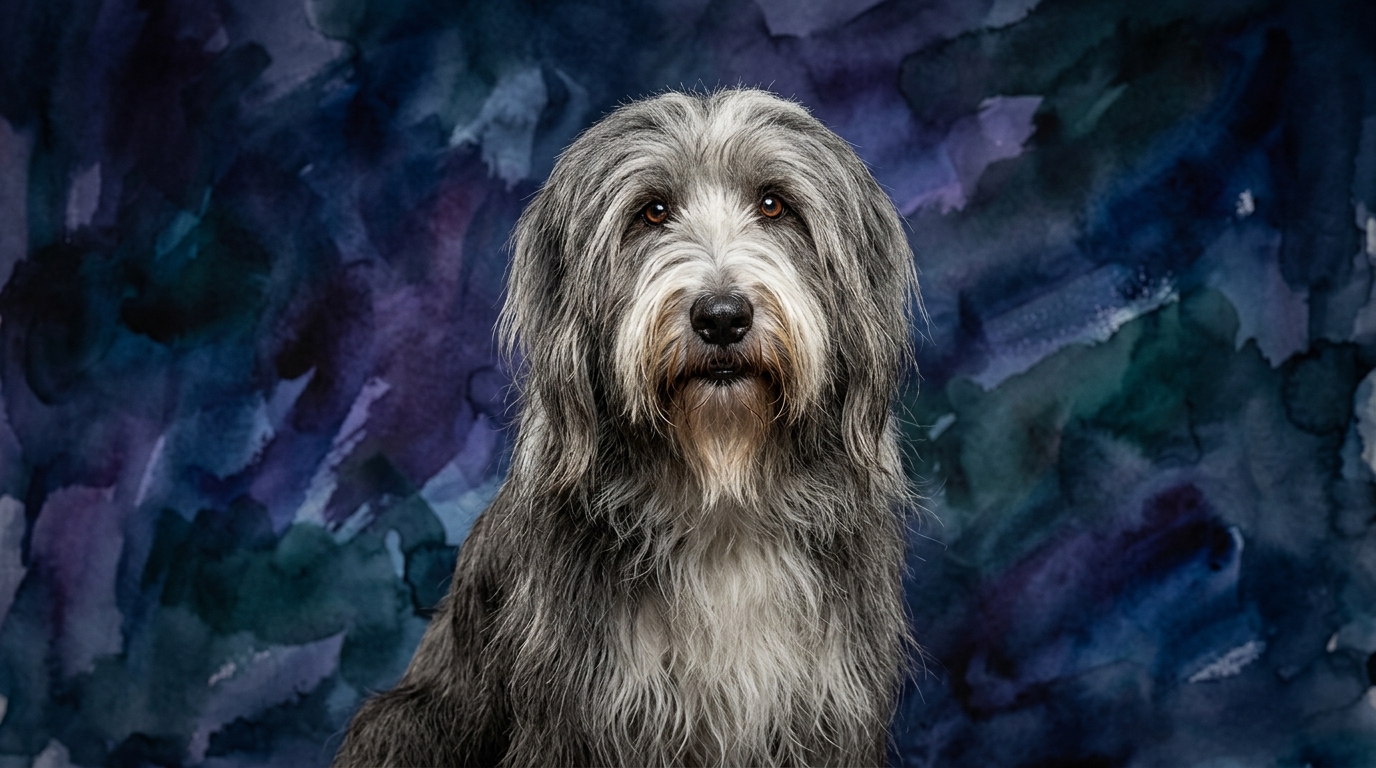
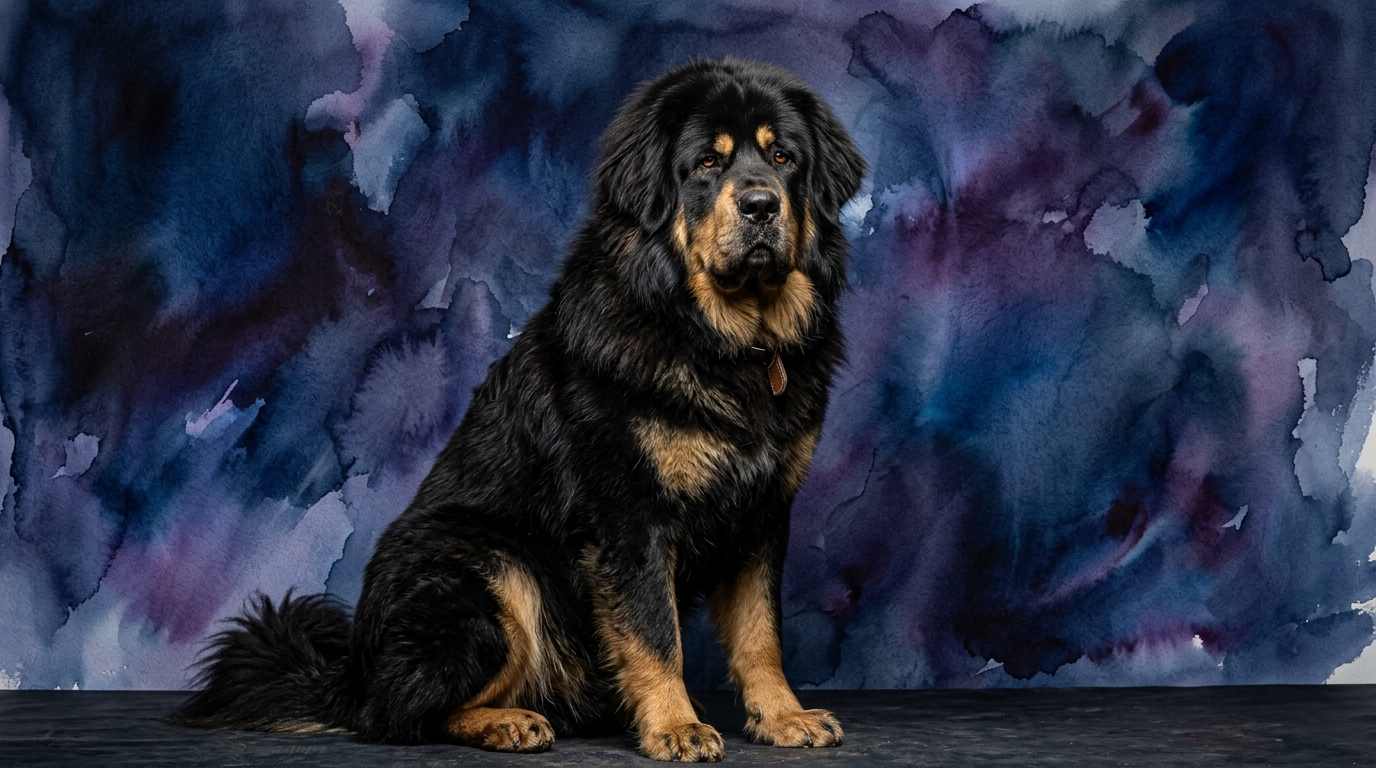
At The Cosmic Pet Pet IQ Lab, we evaluate canine intelligence across five key dimensions, providing a granular view of each breed's mental strengths. The Bearded Collie, a Herding group member, and the Tibetan Mastiff, from the Working group, present an intriguing contrast in their cognitive makeup.
The Bearded Collie demonstrates a Problem Solving score of 4/5, reflecting their capacity for agile thinking and adapting to dynamic situations, a trait honed by their herding duties. Their Training Speed is also high at 4/5, indicating a quick grasp of new commands and routines, often eager to engage in learning. Social Intelligence for the Bearded Collie stands at 3/5, suggesting a good understanding of human cues and pack dynamics, though they can be reserved with unfamiliar individuals. Their Instinctive Drive is 3/5, primarily manifesting as a herding impulse to gather and manage. Finally, their Memory is rated 4/5, allowing them to recall complex sequences, established routes, and prior experiences with notable accuracy.
In contrast, the Tibetan Mastiff presents a distinct cognitive profile across the board. Their Problem Solving ability is rated 3/5, indicative of an independent decision-making process, particularly in their guardian role, where they assess situations autonomously. Training Speed for the Tibetan Mastiff is 3/5; they learn steadily but often require more patience and motivation due to their self-reliant nature. Social Intelligence is 3/5, characterized by deep loyalty to their immediate family and a discerning, watchful demeanor towards strangers. Their Instinctive Drive is 3/5, powerfully expressed through their territorial and protective behaviors, an inherent motivation to guard their home and people. The Tibetan Mastiff's Memory score is 3/5, proving robust for retaining information pertinent to their territory, routines, and the identities of those within their protective sphere, even if recall for arbitrary commands isn't instantaneous.
Where the Bearded Collie Shines Cognitively
The Bearded Collie's cognitive strengths distinctly outpace the Tibetan Mastiff in areas demanding rapid processing and collaborative learning. Their superior Problem Solving score of 4/5, compared to the Mastiff's 3/5, means they are often quicker to grasp novel concepts and find creative solutions to new challenges, a direct reflection of their heritage managing unpredictable livestock. This agility in thought makes them adept at navigating complex environments or understanding multi-step tasks.
Furthermore, the Bearded Collie's Training Speed of 4/5 far exceeds the Tibetan Mastiff's 3/5, highlighting their biddable nature and enthusiasm for human-directed tasks. They absorb new commands, tricks, and routines with remarkable alacrity, often showing a keen desire to engage and please their handler. This translates into a more straightforward and often faster training process for sports like agility or advanced obedience, where quick responses and understanding of intricate patterns are paramount.
Their Memory, also at 4/5 versus the Mastiff's 3/5, provides the Bearded Collie with an advantage in retaining a vast repertoire of learned behaviors and experiences. They can recall long sequences of commands or remember specific locations and objects with greater consistency, making them exceptionally reliable in performance settings or in navigating familiar, yet complex, daily routines. This robust memory underpins their capacity for sustained, intricate work.
Where the Tibetan Mastiff's Cognition Excels
While the Tibetan Mastiff's numerical scores might appear lower in some categories, their cognitive profile is uniquely optimized for their ancient role as independent guardians, offering a different kind of mental prowess. Their Problem Solving score of 3/5, though lower than the Collie's, reflects a deep-seated capacity for autonomous decision-making, particularly in assessing potential threats or managing their territory without constant human oversight. They are not bred to be told what to do at every turn but to evaluate and act independently, a crucial cognitive strength in their historical context.
Their Social Intelligence, also rated 3/5, is profoundly tuned for discernment. Unlike the Collie's more generalized amiability, the Mastiff possesses a nuanced understanding of their immediate family versus outsiders. This allows them to accurately identify and respond to perceived threats, demonstrating a sophisticated social awareness geared towards protection. Their memory, likewise 3/5, is exceptionally strong for remembering faces, scents, and territorial boundaries, critical for effective guardianship over vast areas.
The Tibetan Mastiff's Instinctive Drive, at 3/5, is a powerful cognitive force that shapes their worldview. This drive is not about herding but about unwavering protection and territoriality, influencing their perception and response to their environment. Their deliberate approach to problems and slower Training Speed (3/5) are not deficits but rather hallmarks of a breed that prioritizes careful observation and independent judgment over instant obedience, making them formidable and thoughtful protectors.
Training Dynamics: Bearded Collie vs. Tibetan Mastiff
When considering ease of training, the Bearded Collie generally presents a more straightforward and rewarding experience for most owners. With a Training Speed of 4/5 and a Problem Solving score of 4/5, they are quick to understand and respond to new commands, often displaying an eagerness to engage in training sessions. Their herding background has ingrained a natural attentiveness to their handler's cues and a desire for collaborative work, making them highly receptive to positive reinforcement methods.
Bearded Collies thrive on mental stimulation provided by training and quickly associate actions with rewards, making the learning process efficient and enjoyable. Their strong memory (4/5) ensures that once a command is learned, it is retained effectively, reducing the need for constant re-teaching and allowing for progression to more complex tasks.
The Tibetan Mastiff, conversely, requires a different approach to training, often proving more challenging for those accustomed to highly biddable breeds. Their Training Speed of 3/5 reflects a more deliberate learning pace, coupled with an independent streak that stems from their history of making autonomous decisions. They are not inherently driven by a desire to please in the same way a herding dog might be; instead, they learn best when they perceive the value in the command or when it aligns with their inherent motivations, such as food or maintaining their personal space.
Training a Tibetan Mastiff demands immense patience, consistency, and a deep understanding of their unique temperament. They learn, but often on their own terms and at their own pace, and may choose to comply only when they deem it necessary. Their strong instinctive drive (3/5) for guarding means that while they might not excel at rapid obedience drills, they are highly capable of understanding and fulfilling their protective duties with minimal human direction once they've grasped the expectation.
Matching Breeds to Lifestyles: Active vs. Deliberate Owners
The Bearded Collie is an ideal companion for active owners who relish consistent engagement and mental stimulation for their canine partners. Their herding lineage means they possess considerable energy and a need for purpose, thriving on regular physical exercise such as long walks, runs, or participation in dog sports like agility, obedience, or flyball. These activities not only burn off physical energy but also provide the essential mental challenges their 4/5 Problem Solving and 4/5 Training Speed crave.
Owners who enjoy teaching new tricks, engaging in interactive play, and integrating their dog into a dynamic family life will find the Bearded Collie a rewarding and responsive partner. They are not content to be mere spectators; they want to be involved, making them well-suited for households that appreciate an enthusiastic, collaborative canine presence.
The Tibetan Mastiff, on the other hand, suits a more deliberate type of owner, one who understands and respects their independent nature and guardian instincts. While they don't demand the constant, high-intensity physical activity of a herding breed, they require ample space and a secure environment to fulfill their instinctive drive (3/5) to patrol and protect their territory. Their cognitive strengths lie in observation and autonomous decision-making, which means they need mental engagement focused on managing their domain rather than performing complex routines.
Owners who appreciate a watchful, loyal presence and can provide consistent, patient guidance will find a compatible partner in the Tibetan Mastiff. They are not a dog for casual ownership; their 3/5 scores in Problem Solving and Training Speed mean they require an owner who values their thoughtful independence and can establish clear boundaries without resorting to harsh methods. They are best suited for homes that can accommodate their size and provide a calm, structured environment where their protective instincts can be managed responsibly.
The Verdict
Opt for a Bearded Collie if you seek a highly engaged companion for dog sports, intricate obedience, or a family dog that thrives on collaborative problem-solving and learns new tasks quickly. Their biddable nature and mental agility make them rewarding for owners who enjoy consistent training and activity.
Select a Tibetan Mastiff if you appreciate an independent, watchful guardian with a deep loyalty to its family, understanding that their deliberate problem-solving and training speed require patience and respect for their autonomous spirit. They are best for owners who value a protective presence and can manage their territorial instincts with consistent, gentle guidance.
🧠 Find Your Pet's IQ Score
Our Pet IQ Lab assessment covers 25+ tests across 5 cognitive dimensions — personalized to your breed.
Take the Full IQ Test →Frequently Asked Questions
Are Bearded Collies good family dogs?
Bearded Collies generally integrate well into families, particularly those that offer consistent interaction and engagement. Their social intelligence (3/5) means they bond strongly with their primary family but might be reserved with strangers, requiring early socialization to ensure they are comfortable in varied social settings.
How much exercise does a Tibetan Mastiff need?
While not requiring the intense, continuous exercise of some working breeds, Tibetan Mastiffs still need regular, moderate activity to maintain their physical and mental well-being. Daily walks and access to a secure yard for patrolling are essential, as their instinctive drive (3/5) for guarding means they benefit from surveying their territory.
Can a first-time owner handle a Tibetan Mastiff?
A Tibetan Mastiff is generally not recommended for first-time dog owners due to their independent nature, strong guardian instincts, and deliberate training speed (3/5). They require an owner with experience in large, strong-willed breeds who can provide consistent leadership, early socialization, and understand their unique cognitive approach to the world.