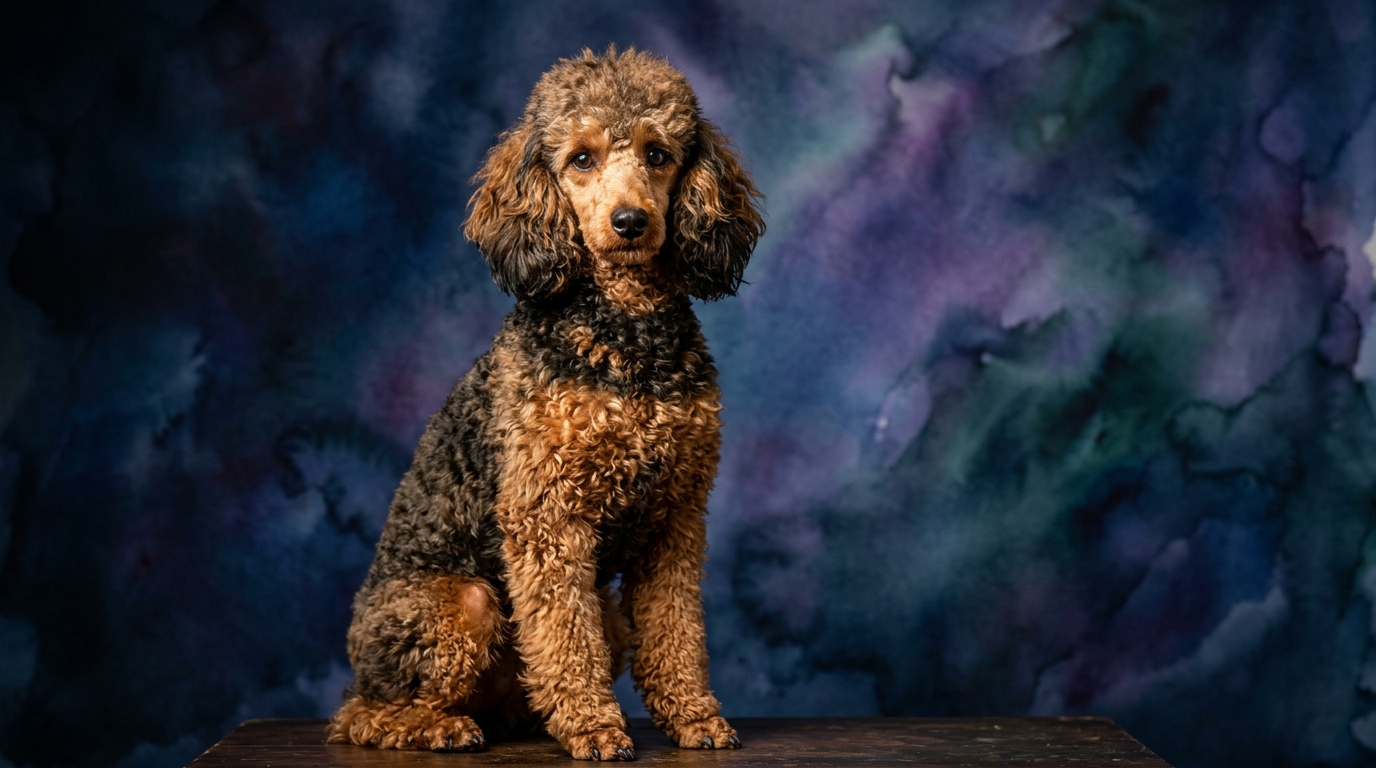
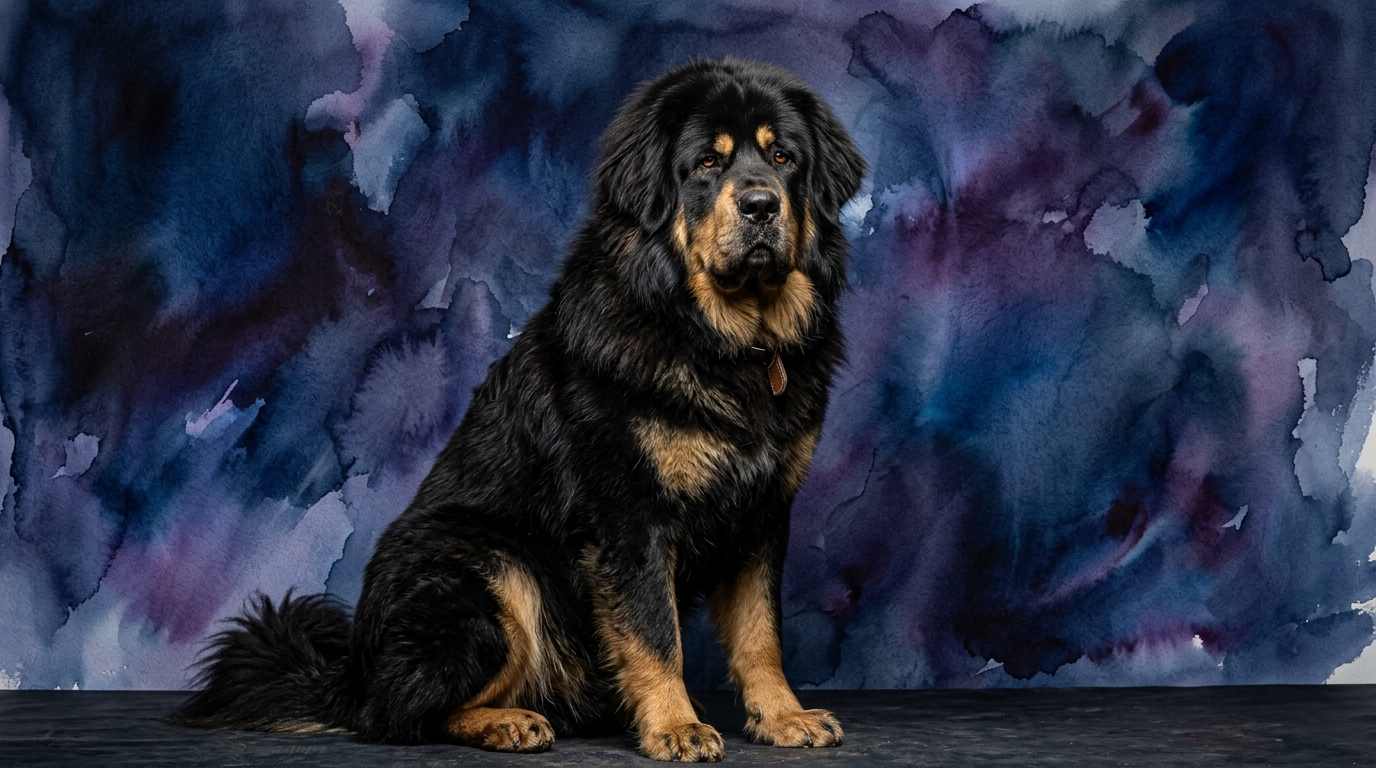
Side-by-Side IQ Profile: Poodle (Standard) vs. Tibetan Mastiff
The Cosmic Pet Pet IQ Lab employs five key dimensions to evaluate canine intelligence, offering a nuanced view of how breeds learn and interact. For the Standard Poodle, we observe a highly engaged and adaptable mind across the board. Their Problem Solving is rated 5/5, reflecting an exceptional capacity to navigate complex environments, understand multi-step tasks, and adapt to novel situations with minimal guidance. Training Speed also stands at 5/5, indicating an eagerness and ability to grasp new commands and routines with very few repetitions, often appearing to anticipate handler cues. Social Intelligence scores a perfect 5/5, showcasing their profound understanding of human emotions, subtle body language, and social dynamics within a family unit. Instinctive Drive, while not their primary function, is still a robust 4/5, manifesting in a strong desire for retrieving, agility, and interactive play. Finally, Memory is a solid 5/5, allowing them to retain vast repertoires of commands, learned behaviors, and past experiences over extended periods.
In contrast, the Tibetan Mastiff presents a distinct cognitive architecture, rooted in its ancient role as a territorial guardian. Their Problem Solving capability is rated 3/5, indicating a deliberate, often independent approach to challenges, particularly those related to their perceived territory or family’s safety, rather than a quick, human-directed task completion. Training Speed also sits at 3/5; they are capable of learning but require consistent, patient, and motivational methods, often taking more repetitions to internalize commands due to their independent nature. Social Intelligence is assessed at 3/5, characterized by deep loyalty and protective instincts towards their immediate family, coupled with a reserved and discerning demeanor towards strangers. Their Instinctive Drive, at 3/5, is primarily focused on guarding and protecting, showing less inclination for generalized task work or sport compared to breeds bred for active collaboration. Memory is rated 3/5, meaning they retain important experiences and routines relevant to their guarding duties and family interactions, though perhaps not the breadth of complex, human-directed sequences a Poodle might.
Where the Poodle (Standard) Excels Cognitively
The Standard Poodle's cognitive strengths are evident in its exceptional capacity for intricate learning and social engagement. Their 5/5 Problem Solving allows them to master advanced obedience routines, complex agility courses, and even perform service dog tasks that require sequential decision-making. This capability extends to understanding abstract concepts, such as identifying specific objects by name or differentiating between commands with similar sounds, showcasing a profound cognitive flexibility.
Their perfect 5/5 in Training Speed means they are incredibly efficient learners, often needing only a handful of repetitions to solidify a new behavior. This makes them prime candidates for competitive dog sports where precision and rapid acquisition of new skills are paramount. Furthermore, the Poodle's 5/5 Social Intelligence gives them an unparalleled ability to read and respond to human emotional states, making them deeply empathetic companions who can offer comfort or adjust their behavior based on subtle shifts in their owner's mood. Their 5/5 Memory ensures these learned behaviors and social understandings are not fleeting, contributing to a consistent, reliable partnership over many years.
Where the Tibetan Mastiff Shines Cognitively
While the Tibetan Mastiff's IQ scores may appear moderate compared to the Poodle, their cognitive profile represents a unique set of strengths perfectly adapted to their specialized purpose. Their 3/5 Problem Solving, for instance, reflects a deliberate, self-reliant approach to safeguarding their territory. Rather than seeking human direction for every perceived threat, a Tibetan Mastiff will independently assess and respond to anomalies, demonstrating a robust, innate judgment for protection that doesn't rely on constant handler input. This translates to an animal capable of making critical decisions autonomously when guarding.
Their 3/5 Social Intelligence, while selective, is a profound strength within their family unit. They form deep, unwavering bonds with their inner circle, exhibiting a discerning loyalty that prioritizes the safety of their loved ones above all else. This isn't a lack of social acumen, but rather a highly specialized social intelligence geared towards vigilance and protection, making them exceptionally reliable guardians. Their 3/5 Instinctive Drive, centered on territorial defense, means their cognitive faculties are constantly engaged in monitoring their surroundings for potential threats, a continuous, low-level problem-solving exercise crucial for their role. Their 3/5 Memory, though not focused on a vast command vocabulary, is exceptionally strong for remembering boundaries, perceived threats, and the individuals within their trusted circle, ensuring consistent vigilance.
Training Ease: Poodle (Standard) vs. Tibetan Mastiff
When considering ease of training, the Standard Poodle (Training Speed 5/5) offers a distinctly different experience than the Tibetan Mastiff (Training Speed 3/5). The Poodle's natural eagerness to please, coupled with their rapid comprehension, makes them exceptionally responsive to positive reinforcement. They thrive on interaction and mental challenges, often finding the training process itself rewarding. Their strong Memory (5/5) means that once a command is learned, it is retained with remarkable consistency, reducing the need for constant refreshers and allowing for the quick progression to more complex tasks. They are often seen as partners in the training process, actively engaging and seeking to understand expectations.
The Tibetan Mastiff, conversely, presents a more independent and discerning training challenge. Their 3/5 Training Speed means they require significant patience, consistency, and a deep understanding of their guardian instincts. They may question commands if they perceive them as illogical or unnecessary to their primary function, rather than simply complying out of a desire to please. Training success often hinges on establishing a clear, respectful relationship built on trust, where the Mastiff sees the handler as a worthy leader. Their independence means they are less likely to perform rote tricks and more likely to respond to commands that align with their protective nature or provide a clear benefit. Owners must be prepared for a slower learning curve and a dog that makes its own decisions, even if it understands the command.
Matching Breeds to Owner Lifestyles: Active vs. Relaxed Owners
For active owners seeking a dynamic, engaged partner, the Standard Poodle is an exceptional match. Their high scores in Problem Solving, Training Speed, and Social Intelligence mean they thrive on mental stimulation and physical activity. They excel in dog sports like agility, obedience, and dock diving, eagerly participating in any activity that involves working alongside their human. Owners who enjoy teaching new tricks, engaging in interactive games, or simply having a dog that is always ready for an adventure will find the Poodle's zest for life and cognitive readiness incredibly rewarding. They are not content to be mere couch potatoes; their minds and bodies require consistent outlets for their boundless energy and intelligence.
The Tibetan Mastiff, while not 'relaxed' in terms of requiring minimal management, is better suited to owners who appreciate a more independent, thoughtful companion and are prepared for the specific demands of a guardian breed. They are not dogs that seek constant, high-intensity interaction or perform tirelessly in sports. Their 'activity' is often more about patrolling their territory, observing their surroundings, and being a watchful presence. Owners who prefer a less overtly demonstrative but deeply loyal companion, and who have the space, secure fencing, and experience to manage a powerful, discerning guardian, will appreciate the Mastiff's unique temperament. They require an owner who understands and respects their self-sufficient nature, providing calm, consistent leadership without expecting constant performance or effusive displays of affection.
The Verdict: When to Choose Each Breed
The Verdict
Choose a Standard Poodle if you desire an engaged, highly trainable companion eager for mental challenges, dog sports, and deep social interaction within an active household.
Opt for a Tibetan Mastiff if you seek a self-reliant, discerning guardian, valuing independent decision-making and a profound, protective loyalty, provided you have the experience and environment to manage their unique needs.
🧠 Find Your Pet's IQ Score
Our Pet IQ Lab assessment covers 25+ tests across 5 cognitive dimensions — personalized to your breed.
Take the Full IQ Test →Frequently Asked Questions
Do Standard Poodles need a lot of exercise?
Yes, Standard Poodles require significant daily exercise and mental stimulation to prevent boredom and maintain their physical and cognitive well-being. Their high problem-solving and training speed scores mean they thrive on activities like agility, obedience, and interactive play that engage both their bodies and minds.
Are Tibetan Mastiffs good family dogs?
Tibetan Mastiffs can be excellent family dogs, forming deep, protective bonds with their immediate family members. However, their reserved nature with strangers and strong guarding instincts necessitate early socialization and experienced ownership to ensure they are well-adjusted and safe around various people.
How do their grooming needs compare?
Grooming differs significantly; Standard Poodles require regular professional grooming or diligent at-home care to prevent matting of their dense, curly coats. Tibetan Mastiffs, with their thick double coats, require consistent brushing, especially during shedding seasons, but generally less frequent professional grooming than Poodles.