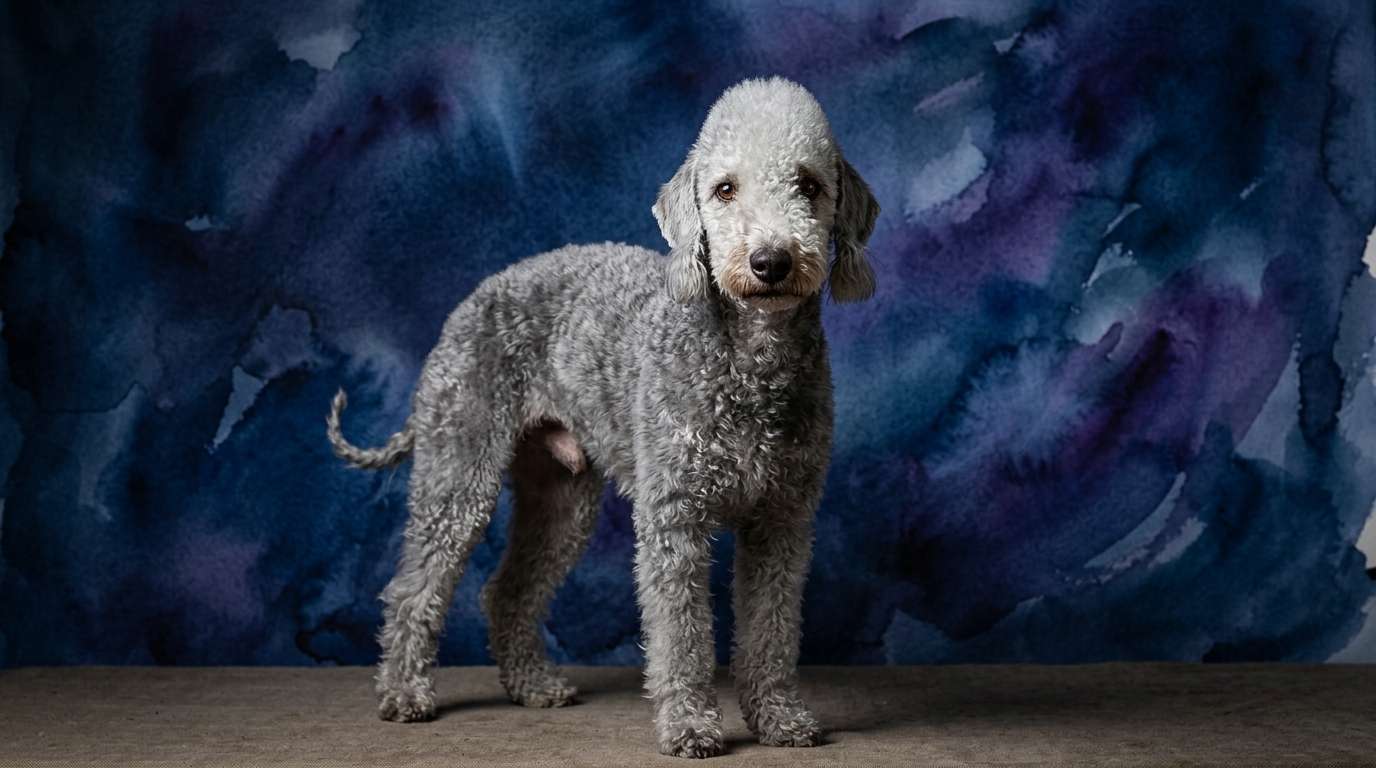
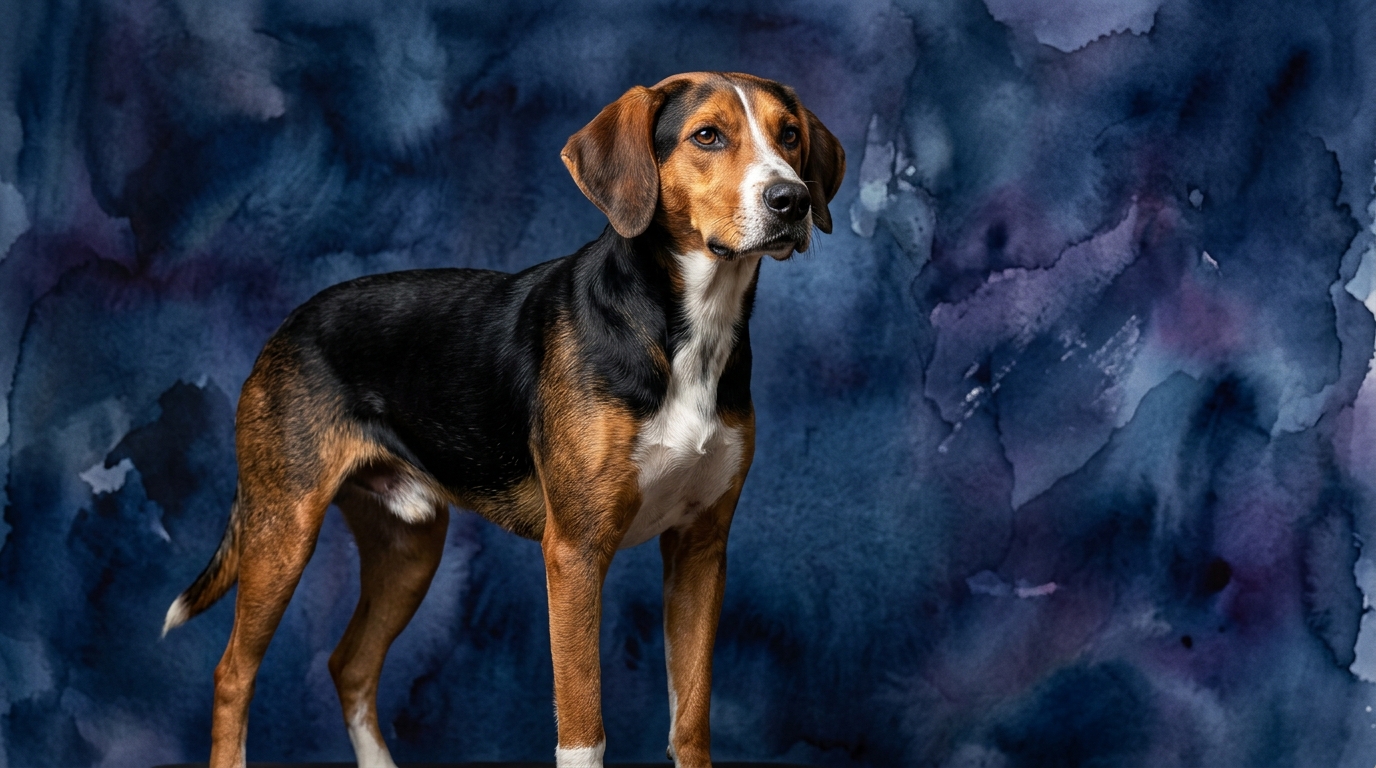
Side-by-Side Cognitive Profiles
In The Cosmic Pet Pet IQ Lab, both the Bedlington Terrier and the American Foxhound are assessed with a consistent 3/5 across all cognitive dimensions, suggesting a moderate yet capable level of intelligence. However, understanding these scores requires delving into the unique evolutionary paths and primary functions of each breed, as a 3/5 for a Terrier manifests differently than for a Hound.
The **Bedlington Terrier**, belonging to the Terrier group, exhibits its Problem Solving 3/5 through a practical, independent approach to challenges, often rooted in its historical role as a vermin hunter. They excel at figuring out how to get to a desired object or location, sometimes through mischievous means. Their Training Speed 3/5 indicates they learn new commands at a moderate pace, but their independent streak means compliance isn't always immediate or guaranteed, requiring consistent, engaging reinforcement. Social Intelligence 3/5 means they are capable of forming strong bonds with their human family and can read household dynamics well, though their social prowess outside their immediate circle might be more reserved. Their Instinctive Drive 3/5 is characterized by a pronounced prey drive, particularly for small, scurrying creatures, coupled with a natural inclination to dig and investigate. Finally, their Memory 3/5 ensures they retain learned behaviors and routines effectively, but also remember past experiences, both positive and negative, influencing future interactions.
The **American Foxhound**, a quintessential Hound, showcases its Problem Solving 3/5 in ways geared towards navigating complex environments and tracking scents over long distances, requiring sustained focus rather than quick, independent maneuvers. Their Training Speed 3/5 means they can learn commands at a moderate pace, yet their primary focus often remains on scent, making distraction a significant factor in training sessions. Social Intelligence 3/5 makes them highly attuned to pack dynamics, thriving in social structures whether with other dogs or their human family, demonstrating cooperation and communication cues. Their Instinctive Drive 3/5 is dominated by an exceptionally powerful scent drive and an innate desire to pursue a trail, coupled with remarkable stamina for endurance. Their Memory 3/5 is excellent at remembering scent trails and geographical layouts, and they can recall training cues, though their recall might be overridden by a compelling scent.
Where the Bedlington Terrier Excels Cognitively
Despite identical 3/5 scores across the board, the Bedlington Terrier's cognitive strengths shine in areas demanding independent thought and agile adaptation within a domestic setting. Their Problem Solving score of 3/5, for instance, manifests as a keen ability to manipulate their environment to achieve a personal goal, whether it's opening a cupboard or finding a way onto a forbidden couch. This isn't about orchestrating complex logical sequences, but rather a practical, sometimes cheeky, ingenuity in their immediate surroundings. Their Social Intelligence at 3/5 often translates into a nuanced understanding of their immediate human family's moods and routines, allowing them to adapt their behavior to fit the household rhythm, sometimes offering comfort or seeking attention at opportune moments. Furthermore, their Memory 3/5, combined with their Terrier tenacity, means they quickly learn which actions yield rewards (or consequences), fostering a pattern-recognition ability that makes them adept at navigating the intricacies of family life. This breed's specific manifestation of intelligence leans towards self-directed exploration and a certain resourceful cunning, making them adept at navigating domestic challenges on their own terms, often with a charming persistence.
Where the American Foxhound Excels Cognitively
The American Foxhound, with its identical 3/5 scores, demonstrates cognitive prowess in vastly different domains, primarily those linked to its ancestral role as a scent hunter. Their Problem Solving 3/5 is not about opening doors, but about unraveling complex scent puzzles in vast outdoor spaces. This involves intricate spatial reasoning and an ability to hold multiple scent threads in their mind, prioritizing and following the most promising one over varying terrains and distractions. Their Instinctive Drive 3/5 is the engine of this cognitive strength, driving an unwavering focus and endurance that allows them to maintain a "mental map" of a trail for extended periods. The Foxhound's Social Intelligence 3/5 is particularly strong in group dynamics; they are masters of non-verbal communication within a pack, understanding hierarchy, cooperation, and roles during a hunt. This translates into an ability to thrive in multi-dog households or communal activities, reading other canine cues with remarkable clarity. Their Memory 3/5 is deeply tied to their olfactory world, allowing them to recall specific scents and their associated locations or past events, which is invaluable for successful tracking and navigation. In essence, the Foxhound's intelligence is a masterclass in specialized, sustained sensory processing and collaborative effort.
Which Is Easier to Train and Why
Defining "easier to train" between these two breeds is complex, as their 3/5 Training Speed scores indicate moderate learnability but significant breed-specific challenges. The Bedlington Terrier's independent spirit and high prey drive often make training a battle of wills. While they grasp commands quickly, their inclination to prioritize personal objectives, like chasing a perceived "vermin," can lead to selective hearing. Owners report needing consistent, positive reinforcement methods and creative engagement to keep a Bedlington focused, as repetition without novelty can quickly bore them. Their 3/5 Problem Solving means they're adept at finding loopholes, which can manifest as figuring out how to avoid an unwanted command.
Conversely, the American Foxhound's training difficulties stem primarily from their overwhelming Instinctive Drive 3/5 – specifically, their powerful scenting ability. Once a Foxhound locks onto a compelling scent, all other stimuli, including owner commands, often fade into the background. While they possess the Memory 3/5 to recall commands, their single-minded pursuit of a trail can make off-leash reliability a significant challenge. Training a Foxhound requires immense patience, often starting in low-distraction environments and gradually building up. Their Social Intelligence 3/5 means they respond well to pack-like structures and clear leadership, but their attention must first be captured and held against the allure of the olfactory world. Therefore, while both require dedication, the Bedlington's challenge is often rooted in its independent will, whereas the Foxhound's is its profound sensory world.
Suited for Active vs. Relaxed Owners
Neither the Bedlington Terrier nor the American Foxhound are truly suited for purely "relaxed" owners, but their activity requirements differ significantly in nature. The Bedlington Terrier, despite its moderate size, requires consistent physical and mental stimulation. Its 3/5 Instinctive Drive for hunting and digging means it thrives on structured play, puzzle toys, and opportunities to expend energy, such as agility or earthdog trials. An owner who enjoys varied activities, can provide consistent training, and is prepared for a dog with an independent streak would find a Bedlington a rewarding companion. They need daily walks and mental engagement to prevent boredom-driven behaviors.
The American Foxhound, however, demands an exceptionally active lifestyle. Their 3/5 Instinctive Drive for scent work and endurance means they are built for sustained, long-distance exercise. A relaxed owner would quickly find themselves overwhelmed by a Foxhound's need to run, track, and explore. These dogs thrive with owners who enjoy activities like long hikes, jogging, or even participating in scent work or field trials. Their 3/5 Social Intelligence also means they appreciate companionship, often doing well in multi-dog households or with owners who can dedicate significant time to their social needs. They are not apartment dogs and require substantial outdoor space and opportunities for vigorous, scent-driven exercise to truly flourish.
The Verdict
Select the Bedlington Terrier if you appreciate a charmingly independent companion with a moderate activity level, a clever problem-solving approach to domestic life, and are prepared for consistent, engaging training to manage their terrier tenacity.
Opt for the American Foxhound if you lead an extremely active outdoor lifestyle, value a dog driven by an unparalleled instinct for scent work, and are ready to provide extensive exercise and patient, consistent training to harness their focused drive.
🧠 Find Your Pet's IQ Score
Our Pet IQ Lab assessment covers 25+ tests across 5 cognitive dimensions — personalized to your breed.
Take the Full IQ Test →Frequently Asked Questions
Do Bedlington Terriers and American Foxhounds have the same intelligence?
According to The Cosmic Pet Pet IQ Lab, both breeds score 3/5 across all five cognitive dimensions. While their raw scores are identical, the *manifestation* of their intelligence differs greatly due to their distinct breed histories and inherent drives.
What are the main differences in their problem-solving abilities?
The Bedlington Terrier's problem-solving (3/5) is often about independent, practical manipulation of its immediate environment to achieve personal goals. The American Foxhound's problem-solving (3/5) is geared towards intricate navigation and sustained tracking of scent trails over vast distances.
Which breed is more social, the Bedlington Terrier or the American Foxhound?
Both score 3/5 in social intelligence, but their social leanings differ. The Bedlington often excels at forming deep bonds within its human family. The American Foxhound's social intelligence is highly attuned to pack dynamics, thriving in groups and cooperative activities.