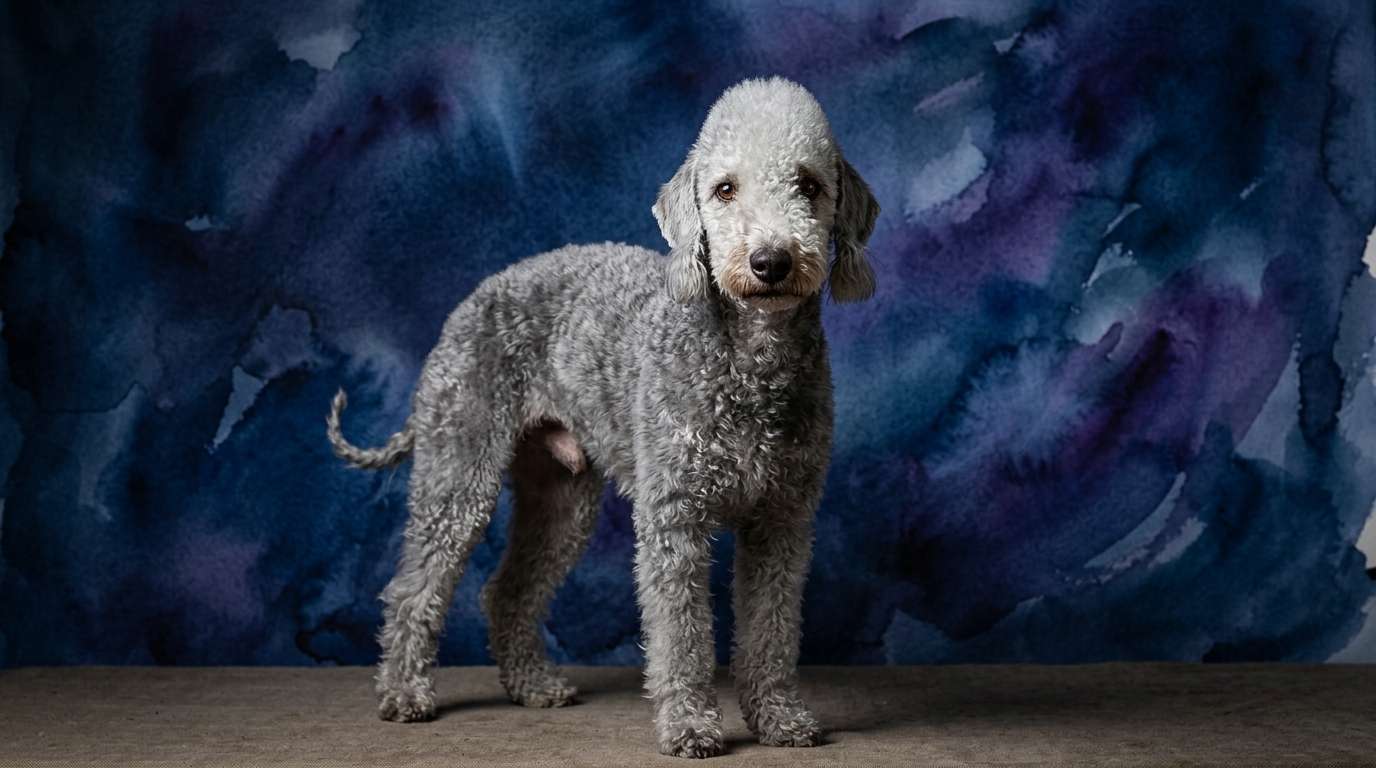

Side-by-Side IQ Profile
The Cosmic Pet Pet IQ Lab assesses five key dimensions of canine intelligence, providing a comprehensive, though not exhaustive, view of a breed's mental aptitude. Both the Bedlington Terrier and the Chinese Crested score a consistent 3 out of 5 across all categories, indicating a moderate, capable level of cognitive function that is neither exceptionally high nor particularly low. This parity across the board makes for a fascinating comparative study, urging us to look beyond the raw scores.
In Problem Solving (3/5), both breeds demonstrate an ability to learn and apply solutions to novel challenges, though they may not independently devise highly complex strategies. Their capacity suggests they can navigate everyday puzzles and learn task sequences with guidance. For Training Speed (3/5), they are generally receptive to learning new commands and behaviors, but consistent, patient instruction is key, as neither breed is expected to master new tasks with exceptional rapidity. Social Intelligence (3/5) indicates that both breeds are capable of understanding and responding to human cues and social dynamics within their environment, forming bonds and interpreting emotional states to a reasonable degree.
Their Instinctive Drive (3/5) suggests a moderate level of innate, hardwired behaviors, which can manifest differently based on their breed's historical purpose. This drive is present enough to inform certain behaviors but not overwhelmingly dominant. Finally, Memory (3/5) reflects their capacity to retain learned information, commands, and experiences over time. While they won't forget their training overnight, regular reinforcement helps solidify their recall. These identical scores underscore that while their fundamental cognitive capabilities are similar, their breed-specific traits will influence how these capabilities are expressed and utilized in daily life.
Where the Bedlington Terrier Wins Cognitively
Despite sharing identical IQ scores, the Bedlington Terrier's cognitive strengths often manifest through its Terrier heritage. Their 3/5 Instinctive Drive, while moderate, is channeled towards a persistent, independent approach to problem-solving, particularly when it involves exploring or investigating. This means a Bedlington might excel in scenarios requiring a sustained effort to reach a goal, such as figuring out how to access a hidden toy or navigating an obstacle course. Their problem-solving (3/5) often benefits from their inherent tenacity, allowing them to work through challenges with a focused determination that a less driven breed might abandon sooner.
Furthermore, their moderate social intelligence (3/5) often pairs with a confident, self-assured demeanor. While they bond deeply with their families, they might display a more independent cognitive processing of social situations, less prone to anxiety or over-reliance on human guidance than some companion breeds. This can make them particularly adept at making their own decisions in certain contexts, such as navigating new environments or interacting with unfamiliar dogs, where they rely on their own assessment rather than seeking constant reassurance. Their memory (3/5) also benefits from this independent streak, often retaining lessons related to boundaries or territory with a strong sense of self-preservation.
Where the Chinese Crested Wins Cognitively
The Chinese Crested, with its Toy breed background, expresses its identical 3/5 IQ scores with a distinct cognitive flair centered around companionship and sensitivity. Their 3/5 Social Intelligence is often expressed as a nuanced understanding of human emotions and routines, making them particularly perceptive to subtle shifts in their owner's mood or daily schedule. This allows them to anticipate needs or comfort their humans effectively, demonstrating a refined emotional responsiveness.
Their problem-solving (3/5) tends to be geared towards achieving comfort or securing attention and affection. A Chinese Crested might cleverly manipulate objects to create a cozy nest or use specific vocalizations to communicate their desire for interaction, showcasing a practical intelligence focused on their immediate environment and social connections. Their training speed (3/5), while moderate, can be positively influenced by their strong desire to please and their close bond with their primary caregiver. They often respond well to consistent, gentle methods, finding motivation in positive reinforcement and the opportunity for close interaction, which solidifies their memory (3/5) for commands associated with pleasant experiences.
Which Is Easier to Train and Why
When considering ease of training, despite both breeds holding a 3/5 in Training Speed, their temperaments dictate different approaches and can influence perceived 'easiness.' The Chinese Crested often presents as easier to train for companion behaviors due to their strong desire to bond and their sensitivity. They are typically eager to please their human companions and respond well to positive reinforcement, praise, and gentle guidance. Their motivation often stems from receiving affection and maintaining close proximity, making them focused on their handler during training sessions. However, their sensitivity means harsh corrections can be counterproductive, potentially causing them to shut down or become anxious.
The Bedlington Terrier, conversely, while capable of learning at a moderate pace, brings a characteristic terrier independence to the training ring. Their 3/5 Instinctive Drive means they can be more easily distracted by environmental stimuli, such as interesting scents or movement, requiring more engaging and varied training sessions to hold their attention. They thrive on clear, consistent boundaries and a firm but fair approach, as their self-assured nature means they might test limits if training isn't consistent. While they are certainly trainable, their process often requires more patience and creativity from the trainer to harness their spirited energy and focus it on the task at hand, rather than relying solely on a desire to please.
Which Suits Active Owners vs. Relaxed Owners
For owners with an active lifestyle, the Bedlington Terrier often proves to be a more suitable companion. Their terrier energy, while not boundless, requires consistent outlets for physical and mental stimulation. They enjoy vigorous walks, playtime, and can excel in dog sports like agility or earthdog trials, which tap into their moderate instinctive drive and problem-solving abilities. Owners who appreciate a dog with a spirited demeanor and the capacity for sustained activity will find the Bedlington a rewarding partner, capable of keeping pace on adventures and enjoying structured play that challenges their mind.
The Chinese Crested, on the other hand, typically aligns better with more relaxed owners. While they certainly enjoy walks and playtime, their exercise needs are generally moderate. They thrive on indoor companionship, enjoying comfortable lounging and close interaction with their family. Their preference for warmth and proximity makes them ideal for individuals or families who spend a significant amount of time at home and seek a devoted, affectionate lapdog. They are content with shorter, regular strolls and engaging in indoor games that foster their social bond, making them a good fit for apartment living or less physically demanding routines.
The Verdict
Choose the Bedlington Terrier if you seek a spirited, independent companion who can keep pace with an active lifestyle and whose problem-solving is fueled by tenacity and curiosity.
Opt for the Chinese Crested if you desire a sensitive, devoted companion who thrives on close human interaction and whose intelligence shines in their perceptiveness and desire for comfort.
🧠 Find Your Pet's IQ Score
Our Pet IQ Lab assessment covers 25+ tests across 5 cognitive dimensions — personalized to your breed.
Take the Full IQ Test →Frequently Asked Questions
Do Bedlington Terriers and Chinese Crested dogs have identical intelligence levels?
According to the Cosmic Pet Pet IQ Lab, both breeds share identical scores across five cognitive dimensions, indicating a similar baseline capability. However, their breed-specific traits influence how these cognitive abilities manifest and are applied in real-world scenarios, leading to nuanced differences in expression.
Which breed is better for first-time dog owners?
The Chinese Crested might be marginally easier for first-time owners due to their strong desire to please and generally lower exercise demands. The Bedlington Terrier's independent streak and higher energy can require a more experienced hand in training and management.
Are Bedlington Terriers and Chinese Crested dogs good with children?
Both breeds can be good with children, though supervision is always essential. Bedlington Terriers, with their playful energy, can enjoy active play, while Chinese Crested dogs, being more delicate, prefer gentle interactions and thrive in calmer environments with respectful children.