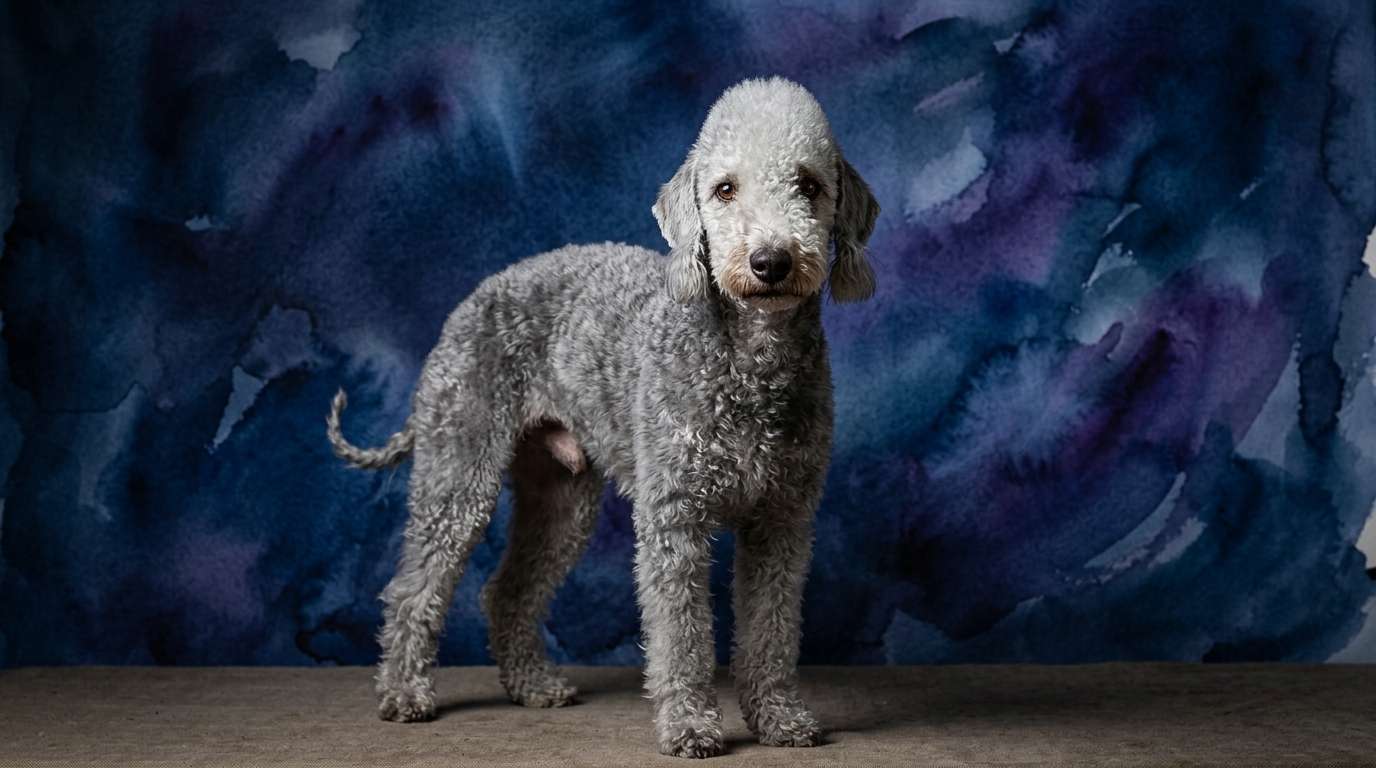

Side-by-Side IQ Profile: Unpacking Cognitive Dimensions
To understand these breeds, we first define the five cognitive dimensions measured by The Cosmic Pet Pet IQ Lab. Problem Solving gauges a dog's ability to figure out novel situations and overcome obstacles. Training Speed assesses how quickly a dog grasps and retains new commands and behaviors. Social Intelligence reflects understanding human cues and interacting appropriately. Instinctive Drive measures the inherent motivation for breed-specific tasks, such as chasing or herding. Lastly, Memory quantifies the capacity to recall learned information and experiences over time.
The Bedlington Terrier presents a remarkably consistent cognitive profile, scoring a balanced 3 out of 5 across all five dimensions: Problem Solving, Training Speed, Social Intelligence, Instinctive Drive, and Memory. This indicates a capable, moderate learner and adapter. Their 3/5 in Problem Solving suggests they can navigate new challenges, though perhaps with a straightforward approach. A Training Speed of 3/5 means they are trainable, but owners should expect a moderate pace, occasionally encountering their independent streak. Social Intelligence at 3/5 points to a companion forming genuine connections without constant validation, while their 3/5 Instinctive Drive reflects a moderate inclination for typical terrier activities. Finally, a 3/5 Memory means they retain information adequately, possibly benefiting from consistent reinforcement.
The Miniature Poodle, conversely, displays a distinct and highly specialized cognitive profile, further emphasized by its Coren rank of #2 among breeds for obedience and working intelligence. This breed achieves a perfect 5 out of 5 in Problem Solving, Training Speed, and Memory, signifying exceptional mental agility. Their 5/5 Problem Solving denotes an outstanding capacity to analyze situations, devise solutions, and navigate complex environments, often anticipating outcomes. This high cognitive flexibility fuels their 5/5 Training Speed, allowing them to grasp new commands with remarkable swiftness, frequently after just a few repetitions. Their 5/5 Memory ensures these learned behaviors are retained reliably over extended periods. Interestingly, their Social Intelligence and Instinctive Drive both register at 3 out of 5, mirroring the Bedlington Terrier. This indicates they are capable of strong bonds and possess a moderate drive for certain activities, yet their primary cognitive strengths lie in their profound capacity for rapid learning and mental application.
Where the Bedlington Terrier Shines Cognitively
While the Miniature Poodle excels in rapid skill acquisition, the Bedlington Terrier's consistent 3/5 scores offer distinct advantages in certain contexts. Their balanced intellect means they are less prone to the overthinking or anxiety that can sometimes accompany highly analytical breeds when faced with ambiguity. A Bedlington's moderate problem-solving might translate to a more direct, less convoluted approach to new situations, which can be less taxing for both dog and owner in everyday life. Furthermore, their 3/5 social intelligence, combined with a moderate instinctive drive, often results in a dog that is self-contained and less prone to demanding constant, elaborate mental engagement to prevent boredom. Their inherent independence, a hallmark of their terrier lineage, means they are often content to observe and participate on their own terms, making them less prone to separation anxiety driven by cognitive over-reliance on their owners. This consistency across all dimensions provides a predictable cognitive partner, free from extreme specialization.
Where the Miniature Poodle Excels Cognitively
The Miniature Poodle's cognitive strengths are pronounced and multifaceted, positioning them as an exceptional companion for those seeking a highly engaged and capable partner. Their 5/5 scores in Problem Solving, Training Speed, and Memory signify a breed that not only learns with astonishing speed but also retains complex information reliably and applies it creatively to novel situations. This superior cognitive flexibility allows them to excel in advanced obedience, intricate dog sports like agility or rally, and even tasks requiring nuanced decision-making, such as service work. Their ability to quickly understand and execute multi-step commands, coupled with their excellent recall, makes them remarkably adaptable to new routines and environments. The Miniature Poodle often grasps intentions and patterns with remarkable insight, making training a highly rewarding and efficient process. This profound capacity for learning means they thrive on mental challenges, eagerly engaging in puzzle toys, scent work, and learning new tricks, constantly seeking opportunities to utilize their considerable mental faculties.
Training Dynamics: Bedlington Terrier vs. Miniature Poodle
When it comes to ease of training, the Miniature Poodle holds a distinct advantage, primarily due to its 5/5 scores in both Training Speed and Memory, complemented by its 5/5 in Problem Solving. These attributes translate directly into a dog that not only learns new commands rapidly but also remembers them consistently and understands the underlying concepts. A Miniature Poodle often requires fewer repetitions to master a new behavior, and once learned, that behavior is firmly ingrained, making proofing and generalization much simpler. Their eagerness to engage with their human companions in a learning context, coupled with their ability to interpret cues, makes the training process smooth and often joyful. In contrast, the Bedlington Terrier, with its 3/5 Training Speed and Memory, requires a more patient and consistent approach. While certainly trainable, their terrier independence means they might not always be as intrinsically motivated by pleasing their owner and may require more creative, high-value reinforcement strategies. They can grasp commands, but their retention might necessitate more frequent refreshers, and their problem-solving might lead them to find 'terrier solutions' rather than strictly adhering to the taught method. This means an owner must be prepared for a more deliberate pace and a dog that sometimes prefers to think for itself.
Matching Lifestyle: Active vs. Relaxed Owners
The choice between these breeds also hinges significantly on an owner's lifestyle and capacity for providing mental and physical engagement. For active owners who relish deeply interactive relationships and thrive on challenging their canine companions, the Miniature Poodle is an exceptional match. Their 5/5 problem-solving and rapid training speed mean they require substantial mental stimulation to prevent boredom and channel their considerable cognitive energy constructively. Owners who enjoy dog sports, advanced obedience, or teaching a vast repertoire of tricks will find the Poodle an enthusiastic and capable partner, always eager for the next mental puzzle. Their physical activity needs are also moderate to high, complementing their mental drive. Conversely, for owners who might describe themselves as more 'relaxed' in terms of daily cognitive demands, the Bedlington Terrier presents a compelling option. While they still require regular exercise and mental engagement to prevent mischief, their balanced 3/5 scores across all cognitive dimensions suggest a dog that is less prone to becoming destructive or anxious if not constantly challenged with complex tasks. Their independent streak means they can be content with a good walk, some interactive play, and a comfortable spot to observe the household, without needing an hour of advanced training drills daily. They thrive with consistent routines and affectionate interaction, but their cognitive demands are more moderate, making them suitable for individuals who appreciate a charmingly self-reliant companion rather than a constant intellectual sparring partner.
The Verdict
Choose the Bedlington Terrier if you appreciate a charmingly independent companion with a balanced cognitive profile, seeking a dog that is trainable and affectionate without demanding constant, intense mental engagement.
Opt for the Miniature Poodle if you are an active owner eager for a highly trainable, exceptionally capable partner, thriving on consistent mental challenges and excelling in complex tasks and dog sports.
🧠 Find Your Pet's IQ Score
Our Pet IQ Lab assessment covers 25+ tests across 5 cognitive dimensions — personalized to your breed.
Take the Full IQ Test →Frequently Asked Questions
Are Bedlington Terriers difficult to train due to their independence?
Bedlington Terriers are certainly trainable, scoring 3/5 in Training Speed and Memory. Their terrier independence means they may require more patience, consistency, and engaging, reward-based methods compared to breeds that are more eager to please, but they are capable learners.
Do Miniature Poodles need a lot of mental stimulation to be happy?
Yes, Miniature Poodles, with their 5/5 scores in Problem Solving, Training Speed, and Memory, thrive on mental stimulation. They require regular engagement through training, puzzle toys, and varied activities to prevent boredom and channel their considerable cognitive energy constructively.
Which breed is better suited for a first-time dog owner?
For a first-time owner, the Miniature Poodle might be slightly easier to manage in terms of initial training due to their high trainability and eagerness to learn. However, their significant need for mental stimulation can be a challenge. A Bedlington Terrier's moderate cognitive demands might be more forgiving, but their independent nature requires an owner prepared for a dog with its own ideas.