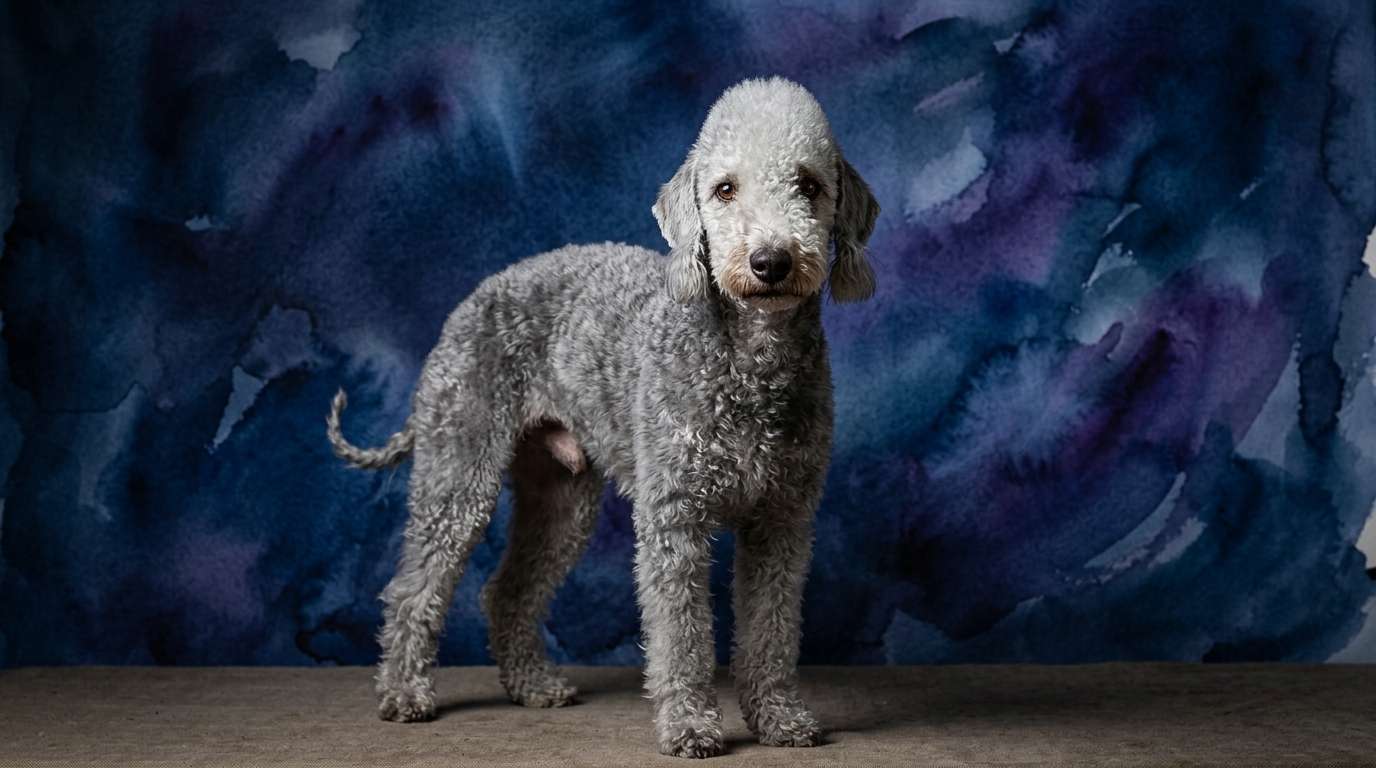
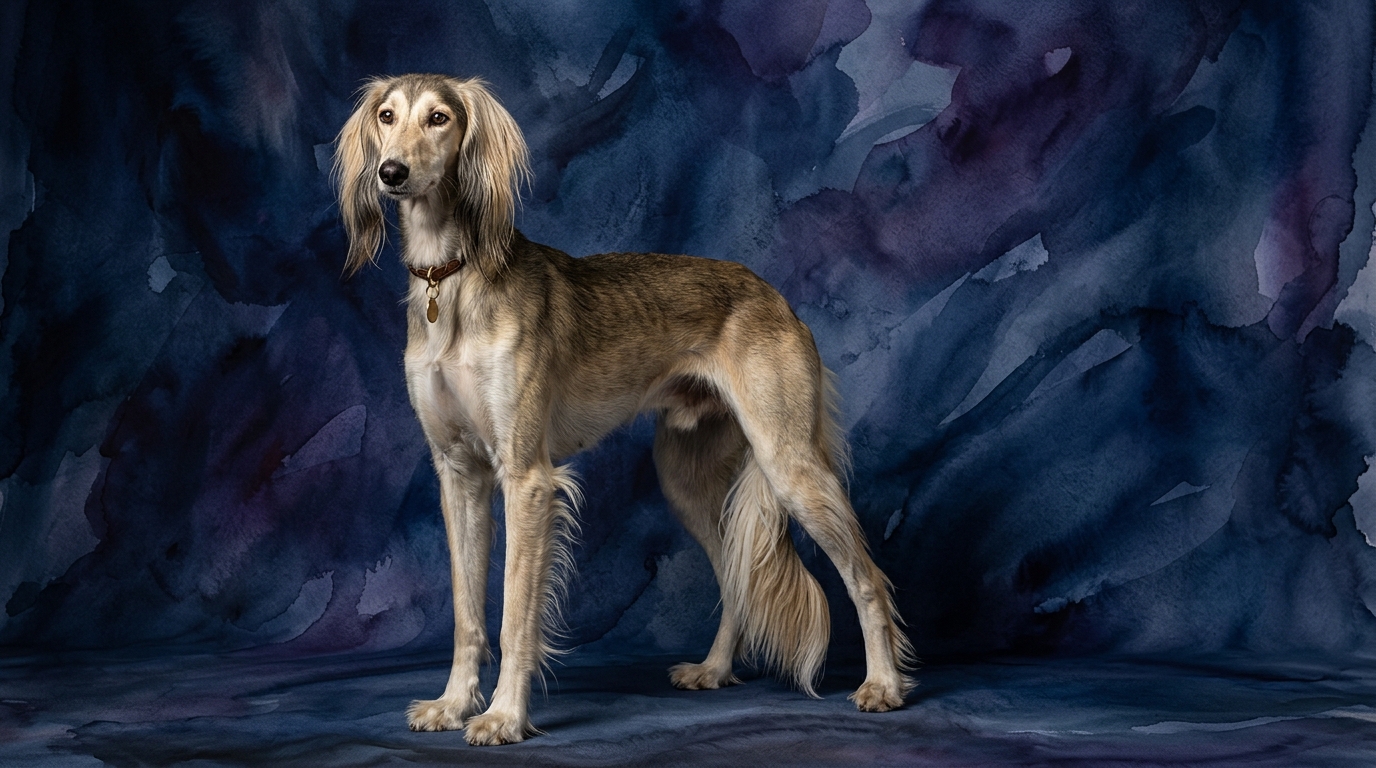
Side-by-Side IQ Profile: Bedlington Terrier vs. Saluki
The Cosmic Pet Pet IQ Lab assesses canine intelligence across five key dimensions, and for both the Bedlington Terrier and the Saluki, the scores are strikingly identical at 3 out of 5 for each category. However, understanding what a '3' signifies for each breed requires looking beyond the number to their inherent breed characteristics.
For the **Bedlington Terrier (Terrier Group)**:
**Problem Solving (3/5)**: This breed demonstrates a keen, practical intelligence, often applying trial-and-error with remarkable persistence. They are resourceful in figuring out how to access perceived treasures, like a forgotten toy under the couch, or navigating complex backyard obstacles. Their problem-solving is often tied to their tenacious nature, meaning they will keep trying different approaches until they achieve their goal, whether it's unearthing a scent or getting to a specific location. They excel at tasks requiring manipulation and focused effort.
**Training Speed (3/5)**: Bedlington Terriers are certainly capable learners, picking up new commands and routines with a decent pace. However, their independent terrier spirit means that while they *understand* quickly, consistent cooperation requires engaging methods and a clear, fair leader. They are not dogs that will blindly obey; they need to be convinced that following a command is worthwhile, often making training a rewarding partnership rather than simple instruction.
**Social Intelligence (3/5)**: These dogs are adept at reading the moods and cues of their primary caregivers, forming deep, loyal bonds. They can be quite sensitive to household dynamics. However, their social circle tends to be selective; they might be reserved or even aloof with strangers, indicating a discerning social awareness rather than a broadly open one. This selectivity means they are excellent at interpreting the nuances of their family's communication but less inclined to engage with everyone equally.
**Instinctive Drive (3/5)**: The Bedlington Terrier's instinctive drive is powerfully rooted in its vermin-hunting heritage. This manifests as an intense curiosity for small, scurrying creatures, a readiness to dig, and a keen alertness to subtle movements or sounds in their environment. This drive fuels their investigative nature and can translate into a strong desire to chase, making secure environments essential when off-leash.
**Memory (3/5)**: They possess a reliable memory for learned behaviors, established routines, and the layout of familiar environments. A Bedlington will remember specific training cues over time, the location of their favorite toys, and the people they consider part of their inner circle, suggesting good retention for practical and social application.
For the **Saluki (Hound Group - Sighthound)**:
**Problem Solving (3/5)**: Salukis exhibit a distinct cognitive agility, particularly in visually-driven scenarios. Their problem-solving often involves spatial reasoning and anticipating movement patterns, crucial for their sighthound role. For instance, they might quickly assess the most efficient route across an open field during a chase or navigate complex terrain with grace and precision. They rely more on observation and quick decisions based on visual input rather than physical manipulation or persistent digging.
**Training Speed (3/5)**: While Salukis learn new commands and concepts with relative ease, their independent and often sensitive sighthound nature means their compliance is not always guaranteed. They absorb information quickly but often decide if and when to perform, requiring patient, reward-based methods that respect their inherent free spirit. Repetitive drills can quickly lead to disengagement, making variety and positive reinforcement vital.
**Social Intelligence (3/5)**: These dogs demonstrate a nuanced understanding of social dynamics, often being reserved, dignified, and highly sensitive to human emotions and household atmospheres. They form deep, loyal bonds with their families but are typically undemonstrative and can be quite discerning about who they interact with. Their social intelligence is characterized by quiet observation and a selective, often subtle, expression of affection.
**Instinctive Drive (3/5)**: The Saluki's instinctive drive is profoundly shaped by its ancient role as a sighthound. This manifests as an intense prey drive focused on visual pursuit over long distances, exhibiting breathtaking speed, agility, and strategic thinking when spotting potential quarry. This drive is a powerful force, requiring secure, fenced areas for exercise and careful management around small, fast-moving objects.
**Memory (3/5)**: Salukis show excellent recall for familiar people, established routines, and the layout of their known territory, particularly when these are associated with positive experiences. They remember kindness and perceived slights, and can navigate complex environments they've traversed before, indicating a reliable memory for their world and its inhabitants.
Where the Bedlington Terrier Wins Cognitively
The Bedlington Terrier's cognitive strengths shine in situations demanding persistent investigation and problem-solving within confined or detailed environments. Their terrier grit means they approach challenges with an unwavering resolve, often trying multiple solutions until they succeed. This manifests as exceptional resourcefulness in tasks like figuring out how to open a child-proof cabinet or retrieving a toy from a tight space, where their tenacity and physical dexterity combine with cognitive effort. Furthermore, their inherent alertness makes them remarkably quick to notice subtle changes in their immediate surroundings – a new sound, a different scent, or an unfamiliar shadow – making them excellent at identifying novel stimuli and signaling their presence. This focused attention to detail in their immediate environment provides a cognitive edge in specific, intricate problem-solving scenarios.
Where the Saluki Wins Cognitively
The Saluki's cognitive prowess truly stands out in contexts requiring expansive spatial awareness and sophisticated visual tracking. Their sighthound heritage has honed their ability to process vast amounts of visual information at speed, allowing them to anticipate movement patterns and navigate open landscapes with incredible precision and grace. This translates into an exceptional understanding of trajectories and distances, whether assessing the path of a thrown lure or identifying a distant moving object. Cognitively, they excel at tasks demanding quick, decisive actions based on visual cues over large areas, rather than detailed manipulation. Moreover, their discerning social intelligence allows them to pick up on subtle emotional shifts in their human companions without being overtly reactive, offering a calm, empathetic presence that reflects a deep, quiet understanding of interpersonal dynamics.
Which is Easier to Train and Why?
Despite both breeds scoring 3/5 for training speed, the *experience* of training them can differ significantly due to their distinct behavioral traits. The Bedlington Terrier, while capable of learning quickly, often brings a terrier's inherent stubbornness and independent streak to the training arena. They might grasp a command in a few repetitions but then decide to 'test' the boundaries, requiring an owner to be consistently firm, fair, and engaging. Training with a Bedlington often feels like a negotiation; they respond best when tasks are presented as fun challenges and when they respect their handler's leadership. Their high prey drive means distractions can be a significant hurdle, demanding intense focus from the trainer to keep their attention.
In contrast, the Saluki's independence manifests as a more 'what's in it for me?' attitude rather than outright defiance. They are highly intelligent and learn new concepts with surprising speed, but their sighthound nature means they are not inherently driven to please in the same way some other breeds are. Repetitive drills bore them quickly, leading to disengagement rather than direct confrontation. Training a Saluki requires immense patience, creativity, and positive reinforcement, focusing on making sessions short, varied, and highly rewarding. Their intense visual prey drive means recall in an open environment can be a lifelong project, as their instinct to chase can override any learned command. Therefore, for an owner seeking consistent, reliable obedience in a variety of high-distraction environments, neither is 'easy' but the Bedlington, with dedicated and consistent leadership, might offer more predictable compliance, whereas the Saluki's compliance will always be more conditional on their current interest and the perceived value of the task.
Suitability for Active vs. Relaxed Owners
The cognitive and physical needs of these breeds dictate different fits for owner lifestyles. The Bedlington Terrier, with its lively intellect and tenacious spirit, thrives with active owners who enjoy engaging in structured activities. They require consistent mental stimulation and physical exertion, flourishing in environments where they can participate in dog sports like agility, earthdog trials, or enjoy long, varied walks that offer new scents and sights. While they can be calm indoors after their needs are met, they are not naturally inclined towards a sedentary existence. Owners who can provide clear boundaries, consistent training, and channel their considerable energy and problem-solving drive will find them a highly rewarding companion.
The Saluki, on the other hand, suits owners who are active in a different sense. They require intense bursts of exercise, ideally in large, securely fenced areas where they can stretch their legs and satisfy their profound sighthound instinct to run. However, once these needs are met, they transition beautifully into a relaxed, dignified indoor companion, often preferring quiet contemplation on a soft bed. They are not typically boisterous housemates and do not demand constant interaction. Owners who appreciate a graceful, independent dog that needs significant, specific outdoor activity but is otherwise a calm, undemanding presence indoors will find the Saluki an ideal match. They are less suited to owners seeking a constantly 'on' or overtly playful companion.
The Verdict
Opt for the Bedlington Terrier if you seek a resilient, engaging companion who thrives on interactive challenges and consistent training, offering a rewarding partnership to dedicated owners willing to channel their tenacious spirit.
Select the Saluki if you appreciate a graceful, independent companion who enjoys intense bursts of exercise followed by quiet dignity, ideal for owners who value subtle affection and a discerning intellect.
🧠 Find Your Pet's IQ Score
Our Pet IQ Lab assessment covers 25+ tests across 5 cognitive dimensions — personalized to your breed.
Take the Full IQ Test →Frequently Asked Questions
Do Bedlington Terriers and Salukis learn at the same pace?
While both breeds score 3/5 for Training Speed, their learning styles differ. Bedlington Terriers can grasp concepts quickly but may challenge boundaries due to their independent terrier nature, requiring consistent and firm, yet positive, reinforcement. Salukis also learn quickly but often require training to be highly engaging and non-repetitive, as their sighthound independence means they might choose to disengage if bored or if they don't see the immediate value.
How do their instinctive drives manifest similarly or differently with identical scores?
Both breeds possess a 3/5 instinctive drive, but its manifestation is distinct. The Bedlington Terrier's drive is rooted in vermin hunting, leading to intense focus on small, scurrying objects and a readiness to dig or investigate. The Saluki's drive is that of a sighthound, primarily focused on visual pursuit over open distances, exhibiting incredible speed and strategic tracking of moving targets.
Are Bedlington Terriers or Salukis better with children or other pets?
Neither breed is inherently 'better' and individual temperament is paramount, but their social intelligence (3/5) offers clues. Bedlington Terriers, with proper socialization, can be playful and loyal family members but their strong prey drive might require careful introductions to smaller pets. Salukis are often gentle and reserved, typically good with respectful children, but their intense sighthound prey drive means small, fast-moving pets could trigger their hunting instincts, requiring careful management.