Side-by-Side IQ Profile: Malinois vs. Aussie
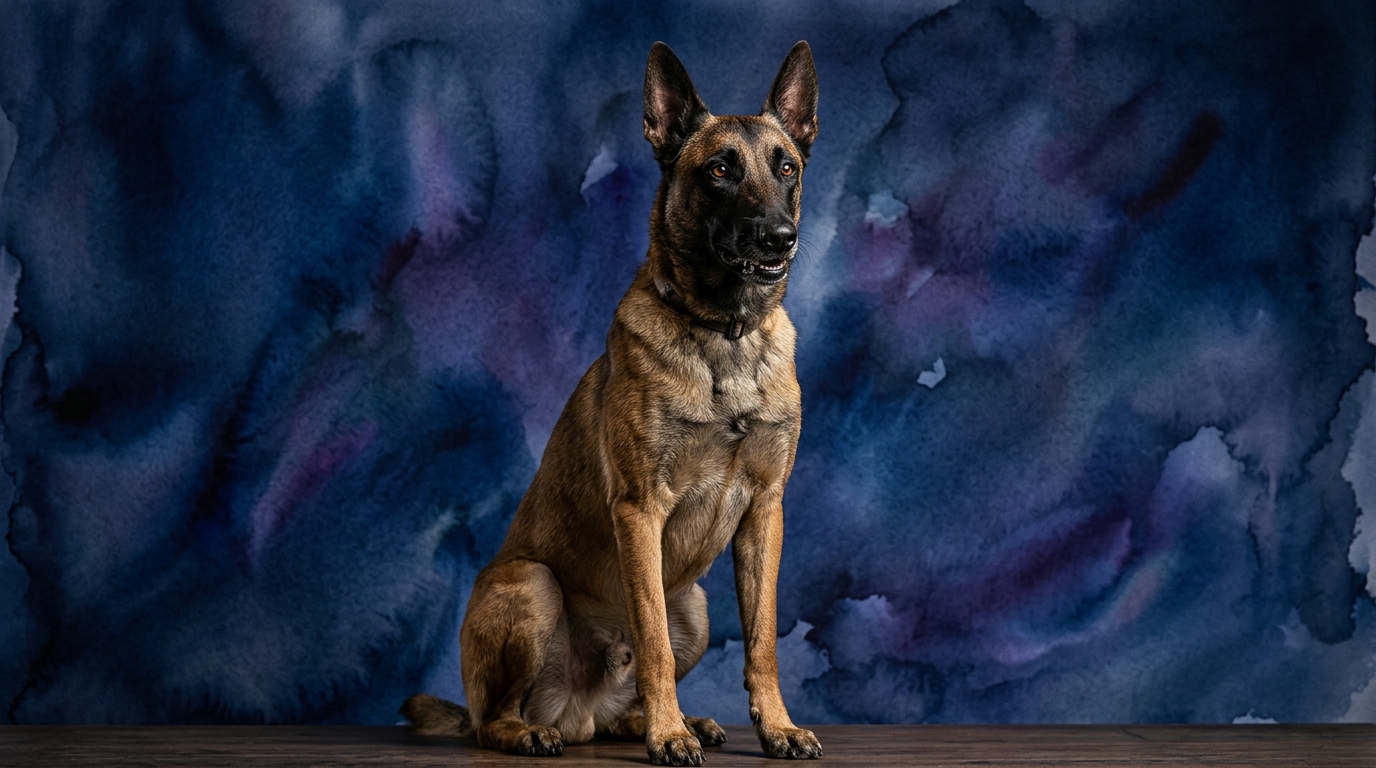
When evaluated through The Cosmic Pet Pet IQ Lab's five core dimensions, both the Belgian Malinois and the Australian Shepherd exhibit a striking alignment, yet their underlying cognitive architectures diverge in application. The Belgian Malinois, a sleek and powerful working dog, earns a perfect 5/5 for Problem Solving, consistently demonstrating an unparalleled capacity to decipher complex tasks, often under pressure, particularly in detection, protection, and police work. Its Training Speed also hits 5/5, reflecting an almost instantaneous grasp of commands and an insatiable desire for structured learning, albeit demanding extreme precision from its handler. Social Intelligence registers at 4/5, indicating a deep, often singular bond with its primary handler, coupled with a more reserved or watchful demeanor towards strangers, while its Instinctive Drive is a solid 5/5, fueled by an intense prey drive and formidable guarding instincts that underpin its tireless work ethic. Finally, its Memory, rated 5/5, allows for the retention of intricate command sequences and detailed situational awareness over extended periods, crucial for its demanding roles.
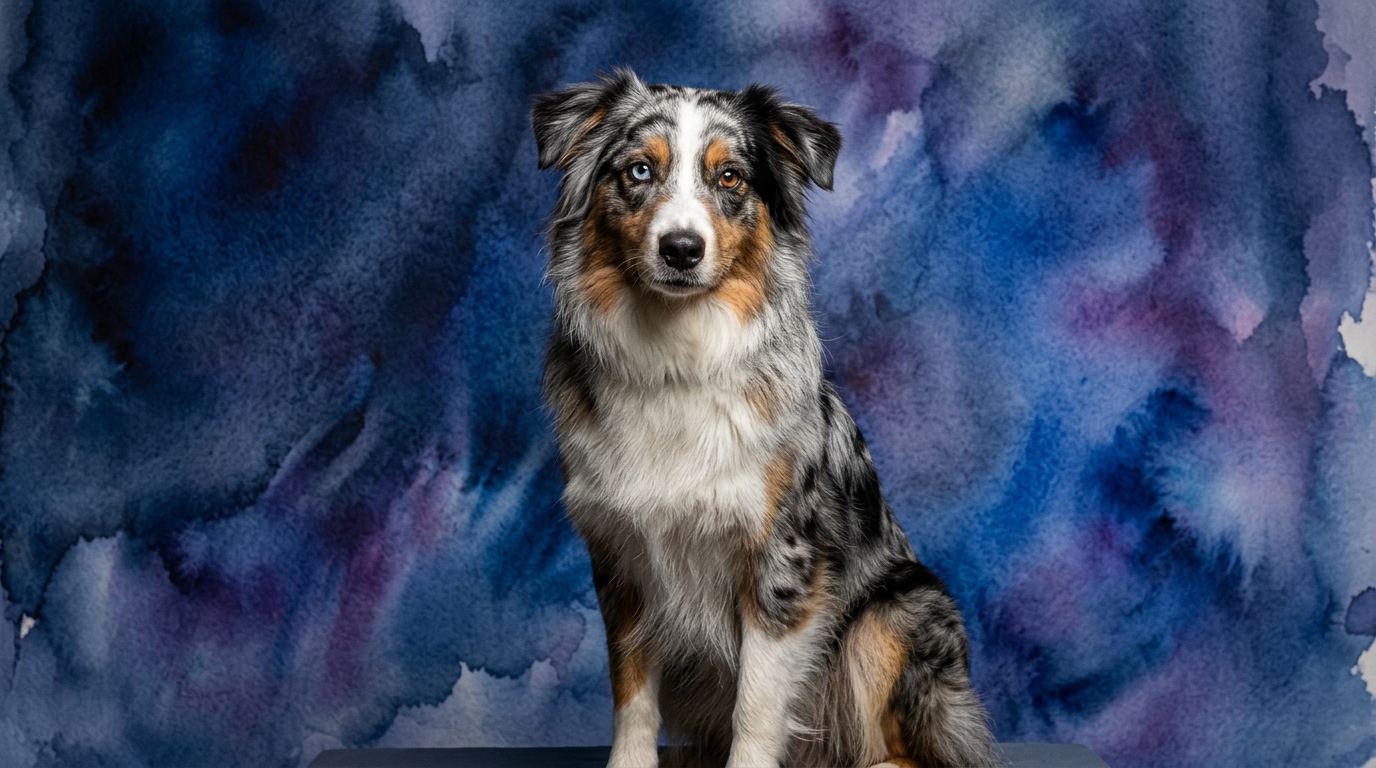
In parallel, the Australian Shepherd, known for its vibrant coat and keen gaze, also achieves a 5/5 in Problem Solving, showcasing remarkable adaptability and resourcefulness in dynamic herding environments, creatively maneuvering livestock and anticipating their movements. Its Training Speed mirrors the Malinois at 5/5, driven by an inherent eagerness to please and a profound need for mental engagement, readily absorbing new cues and routines. Social Intelligence for the Australian Shepherd is similarly 4/5; they form strong, affectionate bonds with their family unit, often exhibiting a 'velcro dog' tendency, yet can display a protective or watchful nature with unfamiliar individuals. A powerful 5/5 in Instinctive Drive highlights their deep-seated herding impulse, a persistent desire to gather and control, translating into sustained energy for activity. Their Memory, also 5/5, is evident in their excellent recall of complex routines, spatial awareness within their working or living environment, and the ability to remember specific stock behaviors or family schedules.
Where the Belgian Malinois Wins Cognitively
The Belgian Malinois's cognitive strengths truly shine in scenarios demanding unwavering focus, extreme precision, and the ability to execute complex, often high-stakes tasks under immense pressure. Their mental architecture is geared towards specialization and intensity. For instance, while both breeds can solve problems, the Malinois excels at parsing minute sensory details for detection work—identifying a specific scent amidst a cacophony of others, or discerning a subtle threat in a crowded environment. This isn't just problem-solving; it's a hyper-focused analytical process driven by an almost obsessive drive to complete the assigned mission.
Furthermore, their capacity for 'compartmentalization' during training and deployment is a significant cognitive advantage. A Malinois can seamlessly transition from a playful interaction to a serious protection exercise, demonstrating an exceptional ability to switch cognitive modes with precise triggers. This mental agility, coupled with their relentless instinctive drive, allows them to absorb and retain intricate command chains necessary for complex police or military operations, where a single misstep could have severe consequences. Their memory isn't just for facts; it's for sequences, contexts, and precise execution, making them unparalleled in roles requiring consistent, repeatable, and exact performance.
Where the Australian Shepherd Wins Cognitively
Conversely, the Australian Shepherd's cognitive prowess is most evident in its adaptability, resourcefulness within dynamic, often unpredictable environments, and its nuanced social intelligence within a broader context. While the Malinois excels at focused, linear problem-solving for specific tasks, the Aussie thrives on multi-variable problem-solving inherent in herding. Managing a scattered flock of livestock requires constant assessment, anticipation, and adjustment of strategy—a fluid, non-linear form of intelligence that the Australian Shepherd masters. They don't just follow commands; they interpret the situation and apply their learned skills creatively to achieve the desired outcome, often without direct instruction for every move.
Their social intelligence, while rated similarly at 4/5, manifests differently. The Australian Shepherd often displays a broader understanding of family dynamics, acting as a highly engaged and integrated member. They are adept at reading subtle cues from multiple family members and adapting their behavior accordingly, often displaying a strong desire to 'herd' their human family members or other pets into a cohesive unit. This social acuity extends beyond a single handler, making them highly responsive to the collective emotional and practical needs of their household, providing a different kind of cognitive 'win' focused on cohesion and adaptable interaction within a diverse social structure.
Which is Easier to Train, and Why?
Defining 'easier to train' between these two breeds requires a careful distinction, as both possess 5/5 training speed, yet their underlying behavioral drivers differ significantly. The Belgian Malinois learns commands with astonishing rapidity, often requiring fewer repetitions than many other breeds. However, this speed is coupled with an intense, unyielding drive and a profound need for precision and consistency from the trainer. A Malinois amplifies both correct and incorrect training inputs; any inconsistency or lack of clarity can quickly lead to ingrained undesirable behaviors that are incredibly difficult to modify due to their strong memory and drive. Their training is often about channeling immense, raw energy and drive into highly specific, controlled actions, demanding an experienced hand capable of absolute consistency and clear communication. For a novice, the sheer intensity and drive of a Malinois can be overwhelming, making the training process feel arduous despite their rapid learning.
The Australian Shepherd also learns at an impressive pace, eager to please and highly motivated by engagement. Their herding instinct, while powerful, often manifests as a desire to control and gather, which can be more readily shaped into desired behaviors using positive reinforcement and engaging activities. While they require mental stimulation and consistent training to prevent boredom-driven behaviors, they tend to be more forgiving of minor handler errors than the Malinois. Their training often feels more like a collaborative partnership, where their eagerness to participate and their social attentiveness make them responsive to a broader range of training styles. However, managing their strong herding impulses and ensuring they receive adequate mental and physical outlets is crucial; without it, their 'easiness' can quickly turn into destructive or nuisance behaviors as they find their own 'job'.
Suited for Active vs. Relaxed Owners
Neither the Belgian Malinois nor the Australian Shepherd is suited for 'relaxed' owners in any conventional sense; both demand a significant commitment to activity and mental engagement, though the nature of that commitment differs. The Belgian Malinois is unequivocally a dog for extremely active, highly dedicated, and often experienced working dog owners. They require constant, structured mental and physical challenges that tap into their profound drives—think professional roles in protection, detection, or search and rescue, or competitive dog sports like Schutzhund, ring sports, or elite-level agility. Their need for a 'job' is not merely a preference; it's a fundamental aspect of their well-being. An owner who cannot provide an outlet for their relentless drive and cognitive intensity will inevitably face significant behavioral challenges, as the Malinois will create its own, often destructive, work.
The Australian Shepherd, while equally demanding of activity, offers a broader appeal to active owners. They thrive in environments where they can engage in consistent outdoor activities such as hiking, running, or dog sports like agility, obedience, flyball, and, of course, actual herding. They need a purpose and consistent mental stimulation, but their 'job' can be more varied and integrated into a typical active family lifestyle compared to the Malinois's intense specialization. An Australian Shepherd enjoys being an active, engaged companion, participating in family adventures and demonstrating their versatility. While they are not for sedentary lifestyles, their energy and focus can be channeled into a wider array of pursuits, making them a fit for active individuals or families who are committed to daily engagement but perhaps not at the professional working dog level.
The Verdict
If you are an experienced handler seeking an unparalleled working partner for elite-level protection, detection, or competitive dog sports, demanding absolute precision and an unyielding drive, the Belgian Malinois is your match.
For active individuals or families seeking a versatile, engaged companion for dog sports, farm work, or a consistently active lifestyle, where adaptability and social integration are key, the Australian Shepherd will thrive.
🧠 Find Your Pet's IQ Score
Our Pet IQ Lab assessment covers 25+ tests across 5 cognitive dimensions — personalized to your breed.
Take the Full IQ Test →Frequently Asked Questions
Are Belgian Malinois and Australian Shepherds similar in temperament?
While both breeds are high-energy and dedicated, their temperaments diverge. Malinois are often more intense, serious, and singularly focused, typically forming a deep bond with one handler and being reserved with strangers. Australian Shepherds are generally more overtly social with their family, though still reserved with strangers, and possess a strong desire for companionship and engagement with their entire household.
Which breed requires more exercise?
Both breeds require substantial exercise, but the *type* of exercise differs. Belgian Malinois need intense, structured physical and mental work that engages their deep drives and problem-solving abilities, often requiring a dedicated training regimen. Australian Shepherds need consistent physical activity like running, hiking, and mentally stimulating dog sports, but their needs can often be met through varied daily activities and less specialized 'work'.
Can an Australian Shepherd perform protection work like a Malinois?
While Australian Shepherds are protective of their families and can be watchful, their natural instincts are geared towards herding and control, not the direct confrontation and specialized bite work seen in a Malinois. A Malinois is bred and trained for specific protection roles, whereas an Australian Shepherd's protective behaviors are typically more deterrent and less aggressive, stemming from their herding roots.