
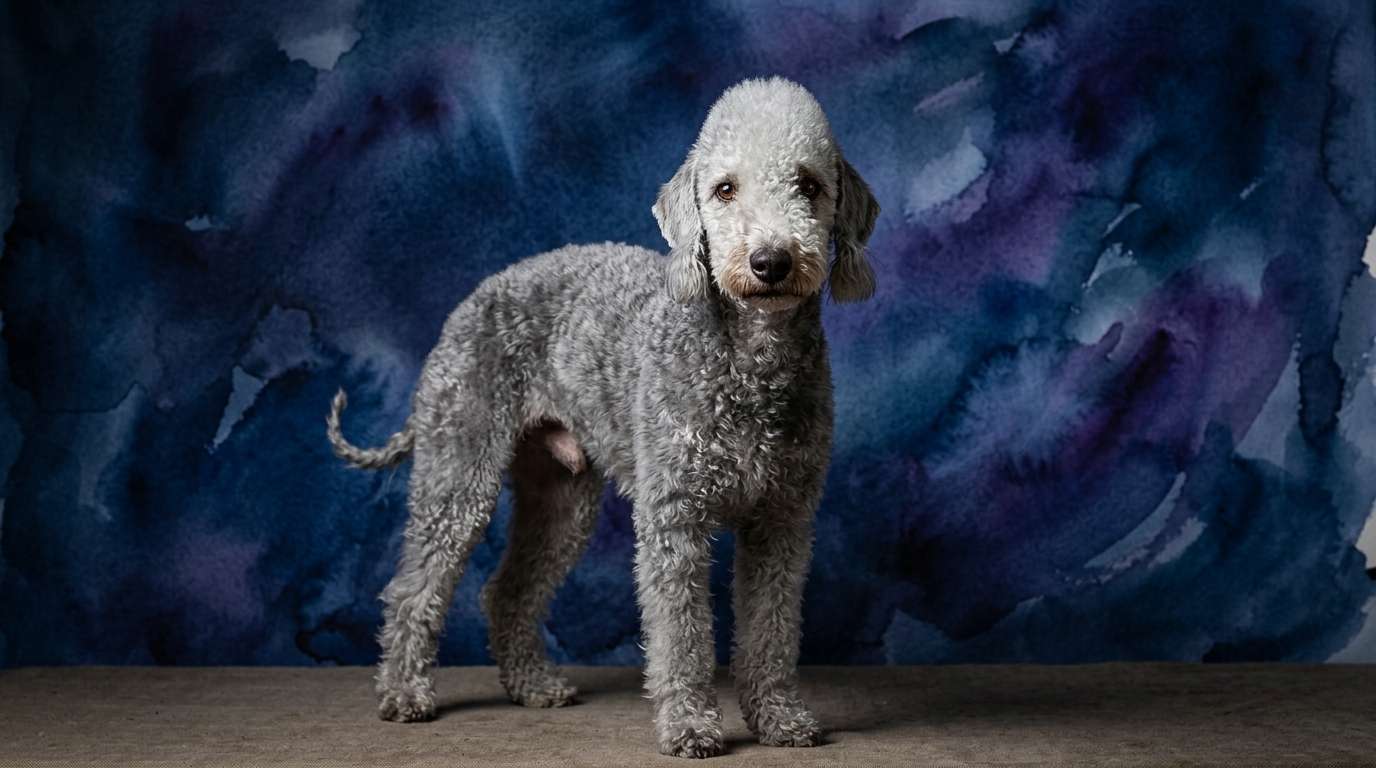
Side-by-Side Cognitive Profile: Malinois vs. Bedlington
The Cosmic Pet Pet IQ Lab employs a five-dimensional framework to evaluate canine intelligence, offering a nuanced perspective beyond simple obedience. Let's examine how the Belgian Malinois, a herding breed, and the Bedlington Terrier, a terrier breed, stack up against these specific metrics.
The Belgian Malinois, holding a Coren rank of #22, demonstrates an exceptional cognitive profile. Their Problem Solving is rated 5/5, indicating an outstanding capacity to analyze intricate situations and devise effective, often proactive, solutions. They don't merely react to stimuli; they strategize. Their Training Speed is also 5/5, meaning they assimilate new commands and routines with remarkable rapidity, often grasping concepts in very few repetitions. Social Intelligence scores 4/5, suggesting a strong ability to interpret human cues and understand social dynamics, though their task-oriented focus can sometimes overshadow nuanced emotional responses. An Instinctive Drive of 5/5 highlights their overwhelming innate desire to work, chase, and guard, translating into tireless, focused pursuit of tasks. Finally, their Memory is rated 5/5, signifying an outstanding recall of past experiences, learned behaviors, and environmental details, ensuring reliability in complex scenarios.
In contrast, the Bedlington Terrier, which is not Coren-ranked, presents a more balanced, moderate cognitive blueprint across all dimensions. Their Problem Solving is 3/5, meaning they are capable of solving straightforward challenges but may require more guidance or trial-and-error for complex scenarios. They approach problems with determination, yet with less strategic depth than their Malinois counterpart. Training Speed is 3/5, indicating a moderate learning pace that requires consistent and patient repetition to solidify new commands; they are willing learners who benefit from clear, repeated instruction. Social Intelligence also stands at 3/5; they are generally amiable and responsive to human interaction, understanding basic social cues, but might not anticipate human desires or intentions with the same precision as breeds with higher scores. Their Instinctive Drive is 3/5, reflecting a manageable terrier drive for digging, chasing small prey, and independent exploration, present but not all-consuming. Similarly, Memory is 3/5, allowing them to retain information adequately for everyday commands and routines, though complex sequences might require refreshers.
Where the Belgian Malinois Wins Cognitively
The Belgian Malinois's cognitive strengths make them unparalleled in specific demanding roles. Their 5/5 Problem Solving capability means they excel in environments where dynamic adaptation is crucial, such as search and rescue operations or complex detection work, where they must constantly process new information and adjust their strategy. This isn't about brute force; it's about intelligent, adaptive decision-making under pressure. Their 5/5 Training Speed allows for the rapid acquisition of an extensive repertoire of commands and intricate routines, making them ideal for high-level obedience competitions or specialized service roles where time-efficiency in learning is paramount. Furthermore, their extreme 5/5 Instinctive Drive translates into an unwavering commitment to tasks, providing a relentless focus and stamina that few breeds can match, turning abstract goals into tangible, intensely pursued objectives. This drive, combined with their 5/5 Memory, ensures that once a skill is mastered or a lesson learned, it is deeply ingrained and reliably accessible, fostering a level of consistency critical in high-stakes situations.
Where the Bedlington Terrier Wins Cognitively
While the Belgian Malinois excels in intense, task-driven roles, the Bedlington Terrier's cognitive profile offers distinct advantages for different lifestyles and ownership dynamics. Their moderate 3/5 Instinctive Drive means they are significantly less prone to obsessive behaviors or requiring constant, high-intensity mental and physical outlets. This allows them to integrate more harmoniously into a diverse home environment without the perpetual need for a 'job,' making them more adaptable companions. Their balanced 3/5 Social Intelligence, coupled with their moderate 3/5 Problem Solving, allows them to be charming, engaging, and affectionate without possessing the demanding cognitive complexity that can sometimes overwhelm average owners. They fit comfortably into a family structure, offering companionship without the intense need for constant mental engagement or the potential for overthinking social dynamics. Moreover, their more measured 3/5 Training Speed means their learning curve is more forgiving for novice trainers. They build understanding steadily rather than instantly, which can be less intimidating and frustrating for those new to dog training, fostering a positive, unhurried learning experience.
Ease of Training: Behavioral Differences in Action
Determining which breed is 'easier' to train is less about inherent cognitive capacity and more about managing their respective behavioral manifestations. The Belgian Malinois, with its 5/5 Training Speed and 5/5 Memory, can learn complex commands and sequences at an astonishing pace. From a purely acquisition standpoint, they are incredibly quick to grasp new concepts. However, this speed comes with a significant caveat: their 5/5 Instinctive Drive and intense problem-solving ability mean they demand constant mental and physical engagement. If not adequately challenged and directed, this formidable intelligence and drive can lead to inventive, often destructive, behaviors as they 'create their own jobs.' For instance, a bored Malinois might 'rearrange' furniture or 'herd' children with intense persistence, requiring an experienced handler capable of channeling their energy productively. Their training is 'easier' in terms of what they can learn, but 'harder' in terms of the consistent, high-level commitment required to manage their inherent intensity.
The Bedlington Terrier, on the other hand, with its 3/5 scores across the board, learns at a more moderate pace, requiring consistent, positive reinforcement over time. They won't pick up a new trick in two repetitions like a Malinois, but their learning process is generally more forgiving for the average owner. Their moderate 3/5 Instinctive Drive means they are less likely to become bored or destructive as quickly if not constantly stimulated. While they possess a typical terrier inclination for digging or chasing, these behaviors are generally more manageable and less obsessive than the Malinois's intense drives. A Bedlington is content with regular walks, engaging playtime, and consistent training sessions, without the same intense mental pressure or the potential for inventing complex mischief. For a patient, consistent owner, especially a first-timer, the Bedlington's more balanced cognitive profile makes their training journey smoother and less overwhelming, focusing on steady progress rather than managing extreme inherent drives.
Matching Breeds to Lifestyles: Active vs. Relaxed Owners
The cognitive profiles of these two breeds dictate vastly different ideal ownership scenarios. The Belgian Malinois is unequivocally suited for highly active owners who are prepared for an unwavering, daily commitment to rigorous physical exercise and extensive mental engagement. This includes individuals or families dedicated to activities like competitive dog sports (agility, obedience, Schutzhund), long-distance running, biking with their dog, or engaging in demanding service or protection work. These owners must view dog ownership as a committed partnership in activity and problem-solving, understanding that their Malinois will thrive when given a 'job' to do and will suffer if left unstimulated. They are for owners who possess the experience and discipline to channel intense cognitive and physical drive into productive outlets.
Conversely, the Bedlington Terrier is an excellent match for more relaxed owners who appreciate a charming, affectionate companion without the need for constant, intense stimulation. These owners enjoy moderate daily activity, such as regular walks, engaging yard play, and consistent, positive training sessions that reinforce good manners and basic commands. They are looking for a dog that is adaptable, happy to curl up on the sofa after a good stroll, and fits comfortably into a family-oriented lifestyle without demanding extreme mental or physical output. While they still require attention and engagement, their needs are more in line with typical companion dog ownership, making them suitable for individuals or families seeking a balanced, loving pet rather than a high-performance working partner.
The Verdict: When to Choose Each Breed
The Verdict
Choose the Belgian Malinois if you are an experienced, highly active owner seeking a driven, intelligent partner for advanced training, demanding dog sports, or specialized working roles, prepared to dedicate significant time to their physical and mental stimulation.
Opt for the Bedlington Terrier if you desire an affectionate, adaptable companion for a family-oriented lifestyle, offering consistent, positive training and moderate daily activity, without the intense demands of a high-drive working breed.
🧠 Find Your Pet's IQ Score
Our Pet IQ Lab assessment covers 25+ tests across 5 cognitive dimensions — personalized to your breed.
Take the Full IQ Test →Frequently Asked Questions
Is a Belgian Malinois suitable for a first-time dog owner?
Generally no, due to their intense drive and high cognitive demands. They require an experienced handler who understands how to channel their significant energy and intelligence effectively, preventing potential behavioral issues.
Do Bedlington Terriers require a lot of grooming due to their unique coat?
Yes, Bedlington Terriers do require regular grooming to maintain their distinctive lamb-like coat. This includes brushing several times a week to prevent matting and professional clipping every 6-8 weeks to keep their coat in optimal condition.
How do their social intelligence scores impact their interaction with children or other pets?
The Malinois's 4/5 social intelligence means they can coexist, but their strong instinctive drive may lead to herding or intense play, requiring careful supervision and training around children or other pets. The Bedlington's 3/5 score suggests they are generally amiable and adaptable, interacting well with proper introductions and supervision, without the same intense working instincts or drive for control.