Side-by-Side IQ Profile: Malinois vs. Poodle
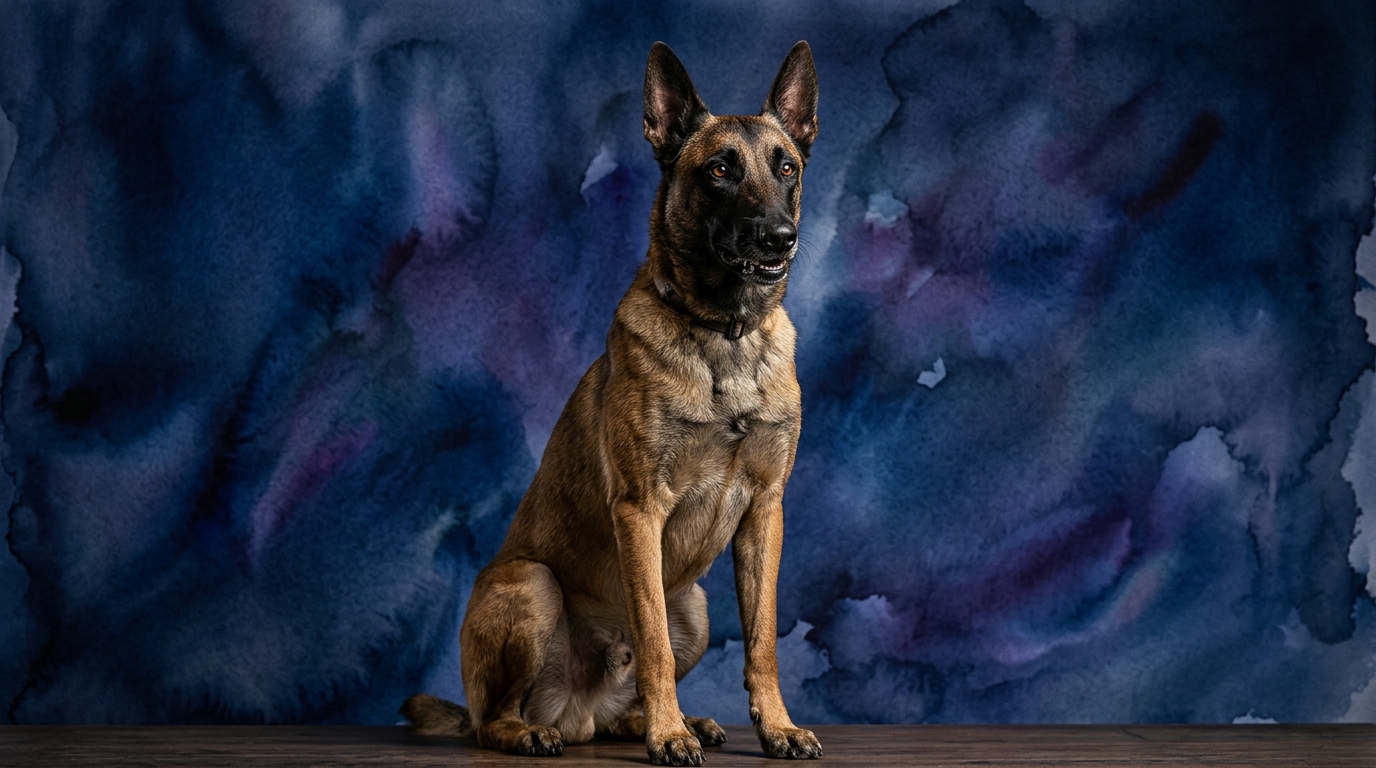
The Cosmic Pet Pet IQ Lab evaluates five critical dimensions of canine intelligence, providing a detailed snapshot of each breed's cognitive strengths. For the Belgian Malinois, a Herding group member with a Coren rank of #22, their profile is robust: problem-solving scores 5/5, training speed is 5/5, social intelligence rates 4/5, instinctive drive is a formidable 5/5, and memory also achieves a perfect 5/5.
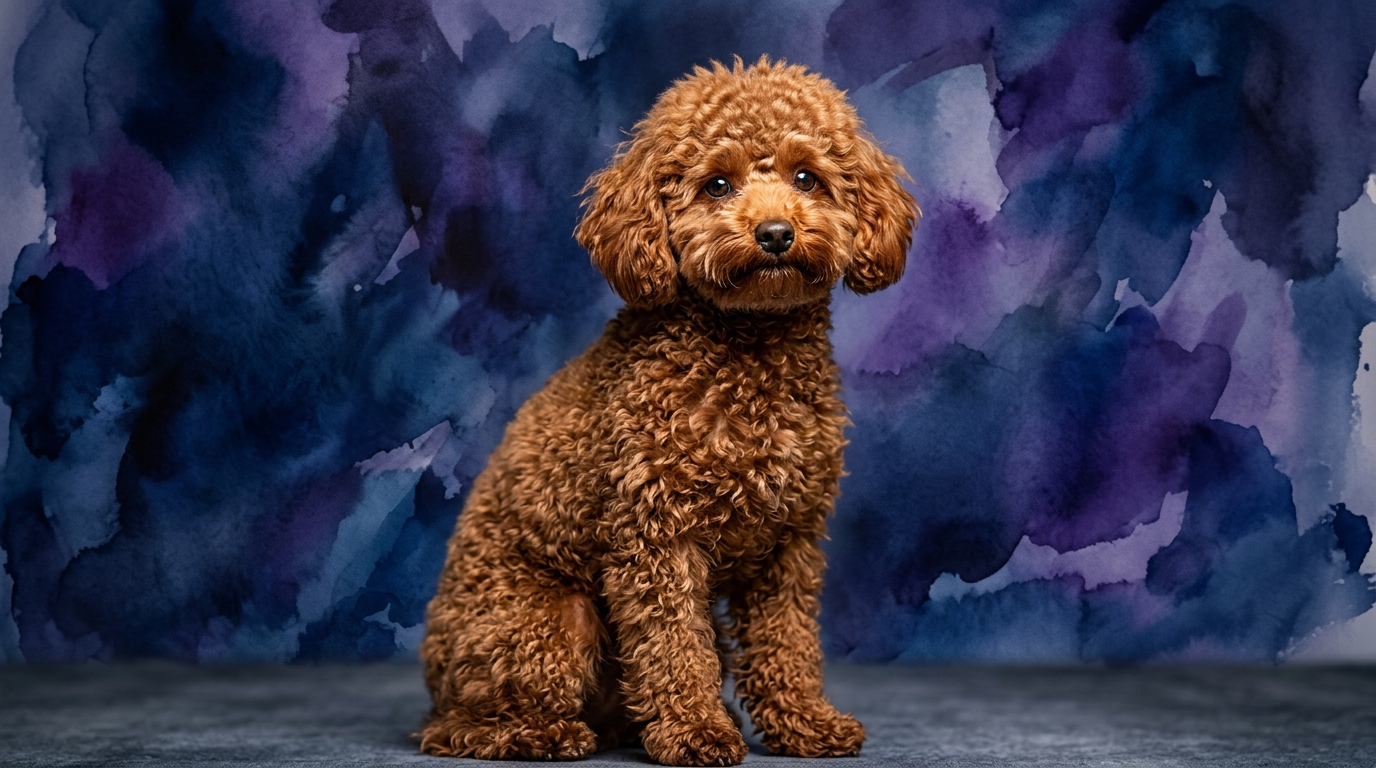
In contrast, the Toy Poodle, a member of the Toy group and boasting an impressive Coren rank of #2, presents a unique cognitive blueprint. Their problem-solving ability is 5/5, training speed matches at 5/5, social intelligence is 3/5, instinctive drive is 3/5, and memory, like the Malinois, is 5/5. While both breeds demonstrate exceptional capabilities in core learning metrics, the subtle differences in social intelligence and instinctive drive paint a clearer picture of their inherent predispositions.
Where the Belgian Malinois Excels Cognitively
The Belgian Malinois's cognitive advantages are most evident in their unparalleled instinctive drive and their nuanced social intelligence, both critical for their traditional working roles. With an instinctive drive score of 5/5, Malinois possess an inherent, powerful motivation to engage in tasks that tap into their herding, protection, and tracking predispositions. This isn't merely a desire to play; it's a deep-seated compulsion to work, solve environmental challenges, and fulfill a purpose, making them exceptionally driven in high-stakes, complex scenarios such as scent detection or agility courses where sustained focus and physical exertion are paramount. Their ability to maintain intense concentration on a task, often for extended periods, stems directly from this profound drive, allowing them to push through distractions that might deter other breeds.
Furthermore, their social intelligence, rated 4/5, allows Malinois to interpret and respond to human cues with remarkable precision, a trait honed by generations of working closely with handlers. This isn't just about understanding commands; it's about discerning subtle shifts in body language, vocal tone, and even emotional states, enabling them to anticipate handler intentions and react appropriately in dynamic situations. For instance, a Malinois might adjust its search pattern based on a handler's slight glance or shift in weight, demonstrating a deep, responsive partnership that goes beyond rote obedience. This cognitive strength makes them adept at collaborative problem-solving, where success hinges on a fluid, communicative bond between dog and human.
Where the Toy Poodle Excels Cognitively
The Toy Poodle, with a Coren rank of #2, demonstrates a general aptitude for understanding and executing new commands with remarkable efficiency, often requiring fewer repetitions than many other breeds. While their problem-solving and training speed scores of 5/5 mirror the Malinois, the Poodle's lower instinctive drive (3/5) can paradoxically be a cognitive advantage in certain contexts. This reduced intensity in primal drives means they are less likely to become fixated on singular, instinct-driven behaviors like intense herding or protection, making them more pliable and adaptable to a wider array of learning scenarios that don't necessarily align with a specific working purpose. They excel at learning diverse tricks, complex obedience routines, and even canine freestyle, where the focus is on precision and varied movement rather than a singular, goal-oriented task.
Their cognitive strength lies in their remarkable capacity for generalized learning and adaptability, making them highly receptive to novel environments and varied training methodologies. A Toy Poodle's mental energy, while not channeled into the same intense working drive as a Malinois, is often directed towards intellectual stimulation through games, puzzles, and intricate training sequences. This allows them to master a broad spectrum of commands and concepts with elegant ease, often surprising those who underestimate their cognitive depth due to their companion breed status. Their memory (5/5) ensures that once a concept is grasped, it is retained, allowing for the continuous building of complex behavioral repertoires.
Which is Easier to Train and Why?
Both the Belgian Malinois and the Toy Poodle boast perfect 5/5 scores in both problem-solving and training speed, indicating that neither breed is inherently 'smarter' or 'quicker to learn' in a fundamental sense. However, the *ease* of training can differ significantly based on the owner's experience and the specific training goals, largely due to their differing instinctive drives and social intelligence. The Malinois's powerful instinctive drive (5/5) means they are profoundly motivated by work and purpose. While this makes them exceptionally trainable for specific tasks like protection, agility, or scent work, it also means their energy and focus must be meticulously channeled. If not provided with structured, challenging outlets, this drive can manifest as unwanted behaviors such as obsessive circling, nipping, or intense reactivity, which can be challenging for an inexperienced owner to manage. Training a Malinois requires a deep understanding of their inherent motivations and a commitment to consistent, purposeful engagement.
The Toy Poodle, with a lower instinctive drive (3/5) and slightly lower social intelligence (3/5), might be perceived as 'easier' for a broader range of owners, especially those new to dog training. Their motivation tends to be more generalized, often responding enthusiastically to positive reinforcement like treats, praise, or toys, rather than a singular, intense drive for a specific job. While they might not possess the same laser-like focus for a specific working task as a Malinois, their adaptability and eagerness to please make them highly receptive to a variety of training methods and environments. Their less intense drives mean they are generally more forgiving of training inconsistencies and less prone to developing severe behavioral issues if their needs aren't met with absolute precision, making them a more approachable choice for many seeking a companion with considerable learning capacity.
Which Suits Active Owners vs. Relaxed Owners
For the highly active owner seeking a canine partner for demanding pursuits, the Belgian Malinois is an unparalleled choice. Their exceptional instinctive drive (5/5) and robust physical capabilities mean they thrive on intense physical exercise combined with rigorous mental challenges. Owners who engage in competitive dog sports like Schutzhund, advanced obedience, agility, or even search and rescue will find a Malinois to be an enthusiastic and tireless collaborator. They require daily, structured activities that tap into their working heritage, and without such outlets, their immense energy and cognitive needs can lead to frustration and destructive behaviors. They are not merely dogs that need a walk; they are dogs that need a job.
Conversely, the Toy Poodle is generally better suited for owners with a more relaxed lifestyle, though they are far from couch potatoes. While they still require regular exercise and mental stimulation, their lower instinctive drive (3/5) means their needs are typically met with moderate daily walks, engaging play sessions, and indoor puzzle toys or training games. They are content to be close companions, participating in family activities without the same intense demand for a 'purpose' that a Malinois exhibits. Their adaptability makes them excellent candidates for urban living or for individuals who enjoy teaching tricks and basic obedience without the pressure of high-level competition or strenuous physical output.
The Verdict
Choose the Belgian Malinois if you are an experienced, active owner committed to providing consistent, high-level physical and mental challenges, seeking a driven working partner.
Opt for the Toy Poodle if you desire a highly trainable, adaptable companion that thrives on moderate activity and varied intellectual engagement, fitting well into a more relaxed home environment.
🧠 Find Your Pet's IQ Score
Our Pet IQ Lab assessment covers 25+ tests across 5 cognitive dimensions — personalized to your breed.
Take the Full IQ Test →Frequently Asked Questions
Do Coren ranks always align perfectly with specific IQ metrics?
Coren ranks, like the Malinois's #22 and Poodle's #2, primarily reflect a breed's ability to learn new commands and obey them on the first try. While they correlate with aspects like training speed and problem-solving, they don't capture the full nuance of individual IQ dimensions such as instinctive drive or social intelligence, which are critical for understanding a breed's overall cognitive profile and suitability for various tasks.
Can a Toy Poodle perform protection work like a Belgian Malinois?
While Toy Poodles can be trained in basic protection skills and alert barking, their lower instinctive drive (3/5) and physical stature mean they are fundamentally unsuited for the intense, high-stakes protection work a Belgian Malinois (instinctive drive 5/5) excels at. Their cognitive strengths lie in adaptability and generalized learning, not in inherent protective drives or the physical robustness required for such specialized roles.
How important is memory in dog intelligence?
Memory, rated 5/5 for both breeds, is a foundational component of dog intelligence, enabling them to retain learned commands, recall past experiences, and recognize individuals or locations. Without strong memory, training would be futile, and dogs would struggle to navigate their environment or form lasting bonds. It underpins all other cognitive functions, allowing for the accumulation of knowledge and skills over time.