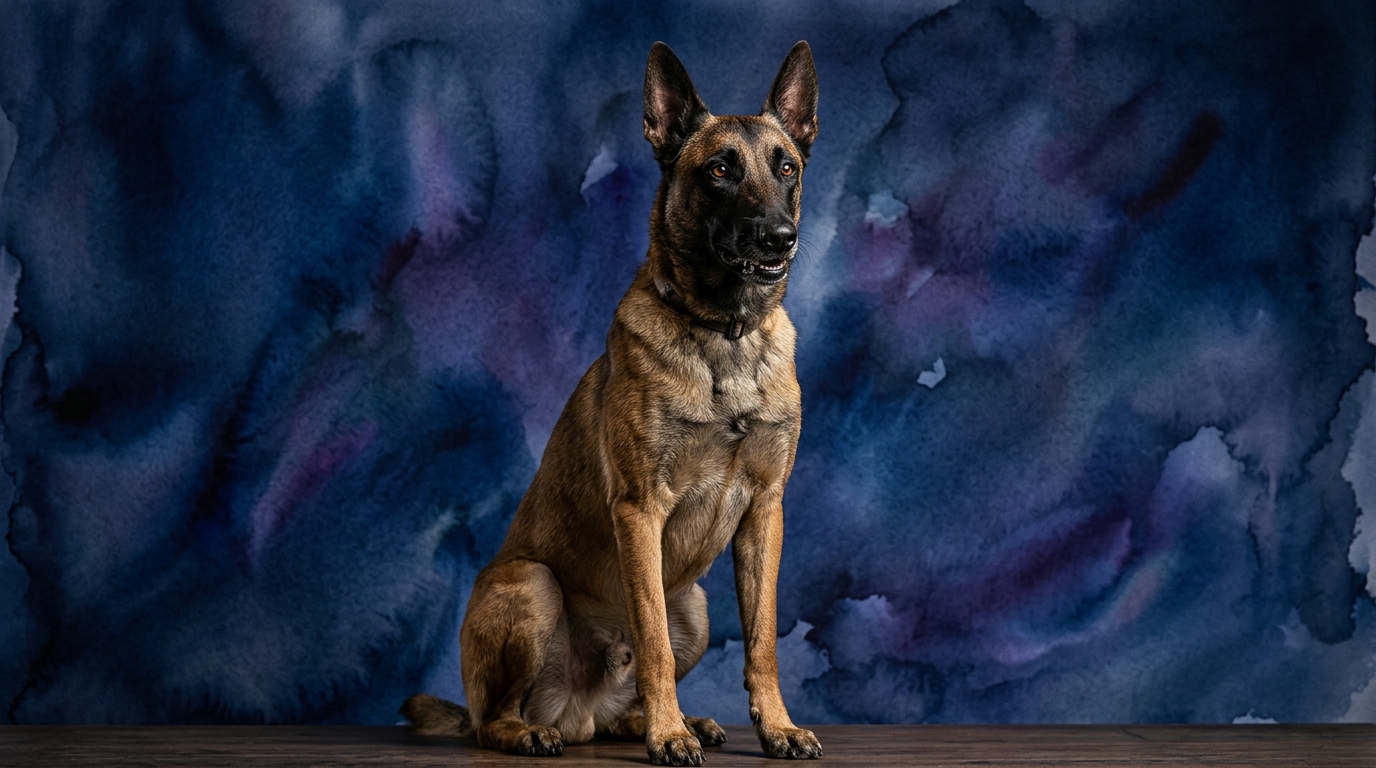
The Belgian Malinois Cognitive Blueprint
The Belgian Malinois, a sentinel of the Herding group, possesses a cognitive profile meticulously honed for demanding work. Their Problem Solving (5/5) is characterized by an exceptional ability to analyze complex situations, devise multi-step solutions, and adapt strategies in real-time, whether navigating an agility course or performing protection tasks. This breed's Training Speed (5/5) is unparalleled; they form associations between commands and actions with remarkable rapidity, often grasping new concepts in very few repetitions.
Their Social Intelligence (4/5) reflects a strong capacity to interpret human cues, understand social hierarchies within their family unit, and engage in highly cooperative tasks, though their focus is primarily on their primary handler. A profound Instinctive Drive (5/5) fuels their relentless work ethic, manifesting as an intense desire to herd, guard, or pursue, making them highly motivated by tasks that tap into these inherent urges. Finally, their Memory (5/5) is outstanding, allowing them to retain vast repertoires of commands, routines, and environmental details, enabling consistent, precise performance over time.
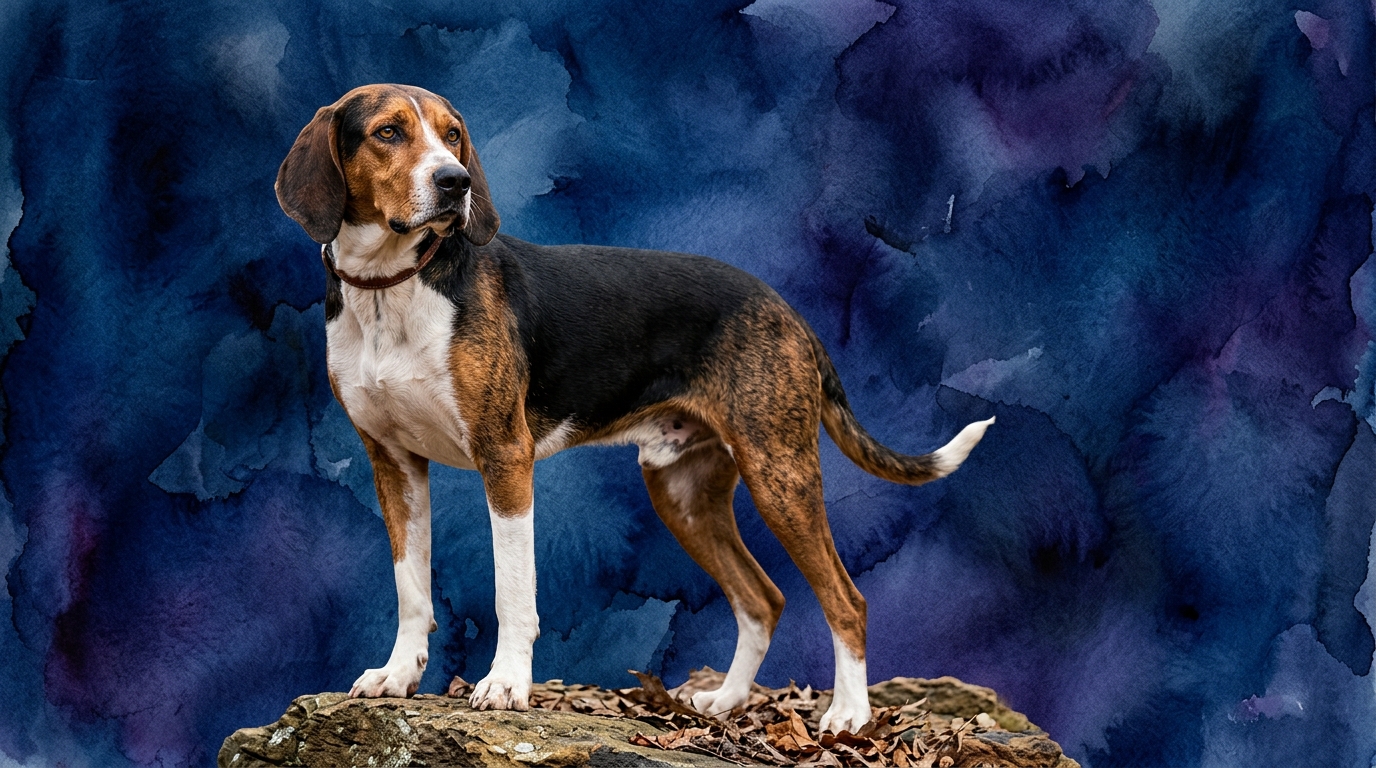
The Treeing Walker Coonhound's Independent Mind
In stark contrast, the Treeing Walker Coonhound, a member of the Hound group, exhibits a cognitive architecture geared towards independent pursuit and scent-driven work. Their Problem Solving (3/5) is specialized; while not adept at human-directed complex sequences, they excel at intricate spatial reasoning and pattern recognition related to following a scent trail, often making autonomous decisions to overcome obstacles. Training Speed (3/5) for a Coonhound is generally moderate; they can learn commands, but their motivation is often secondary to their primary drive, and generalization across contexts may require more repetition and patience.
Their Social Intelligence (3/5) allows them to interact well with their human family and other dogs, often displaying a genial demeanor, but their primary focus during work is on the trail rather than continuous human engagement. The Coonhound's Instinctive Drive (3/5) is intensely focused on scent; their world is largely interpreted through their nose, compelling them to follow a trail with singular determination, sometimes to the exclusion of other stimuli. Their Memory (3/5) is robust for scent profiles, geographical features associated with trails, and the location of “treed” quarry, but less so for abstract command sequences or human-centric routines.
Where the Belgian Malinois Shines Cognitively
The Malinois's cognitive strengths lie in their capacity for highly structured, collaborative work. Their superior Problem Solving allows them to excel in dynamic environments where rapid decision-making and precise execution are paramount, such as police work, search and rescue, or competitive obedience. They don't just follow commands; they understand the *purpose* behind them, enabling them to adapt when conditions change. This is deeply intertwined with their exceptional Training Speed, which facilitates the acquisition of vast, nuanced skill sets, making them responsive partners in complex operations.
Their focused Social Intelligence ensures they are attuned to their handler's subtle cues, fostering a near-telepathic bond in working partnerships. Furthermore, their extraordinary Memory for multi-step commands and intricate routines means they can perform long sequences accurately and reliably, even under pressure, without constant prompting. This combination creates a canine capable of sophisticated, human-directed performance.
Where the Treeing Walker Coonhound Excels Cognitively
The Treeing Walker Coonhound's cognitive prowess is distinctly specialized, geared towards their ancestral role. Their unique Problem Solving shines in the intricate world of scent discrimination and trail navigation. They can independently interpret complex scent patterns, filter out distractions, and strategize the most efficient path to their quarry, often requiring sophisticated spatial reasoning that humans might struggle to replicate. This isn't about following a human's command for a specific solution, but about autonomously finding a solution to a natural puzzle.
Their Instinctive Drive, while rated 3/5 in a generalized scale, is a 5/5 for its specific intensity and focus on scent; it's an unwavering mental commitment that allows them to work tirelessly and independently for hours. Their Memory for scent trails and environmental cues is exceptional, enabling them to retrace steps or recognize familiar hunting grounds, a specialized form of recall crucial for their work. These skills demonstrate a profound, albeit different, form of cognitive mastery, essential for their independent, scent-driven pursuits.
Ease of Training: A Tale of Two Motivations
When considering ease of training, the differences between these breeds are pronounced, stemming from their fundamental motivations and cognitive wiring. The Belgian Malinois, with its 5/5 Training Speed and 4/5 Social Intelligence, typically presents a more straightforward training experience for an owner seeking obedience and task performance. They possess an inherent desire to engage with and please their handler, coupled with a drive for purposeful work and mental stimulation. This translates to rapid learning of commands, a strong focus during training sessions, and a keen responsiveness to positive reinforcement. Their high Instinctive Drive can be channeled effectively into various disciplines, making them eager participants.
In contrast, the Treeing Walker Coonhound, with its 3/5 Training Speed and 3/5 Social Intelligence, often requires a more patient and nuanced approach. Their primary motivation is not necessarily to please the handler or perform abstract tasks, but to follow their nose. While they can learn commands, their independent Instinctive Drive towards scent often overrides human directives, making recall particularly challenging when a compelling scent is present. Training a Coonhound involves understanding their natural inclinations and making training a game that appeals to their desire to track or explore, rather than expecting the same level of human-centric focus seen in a Malinois. Consistency, high-value rewards, and a deep appreciation for their independent nature are crucial for successful training.
Matching Breed to Lifestyle: Active vs. Relaxed Owners
The cognitive and behavioral profiles of the Belgian Malinois and Treeing Walker Coonhound dictate vastly different lifestyle requirements for their owners. A Belgian Malinois demands an exceptionally active owner who is prepared to provide constant mental and physical engagement. Their 5/5 Instinctive Drive and 5/5 Memory mean they thrive on structured routines, complex training, and demanding physical outlets like sport, obedience, or protection work. A Malinois without a “job” will invent one, often destructively, due to their profound need for purpose and stimulation. They are not suited for a relaxed owner seeking a low-maintenance companion; they require a dedicated partner who can consistently challenge their formidable cognitive and physical capacities.
Conversely, while still requiring significant exercise, the Treeing Walker Coonhound can be a better fit for an owner whose “active” lifestyle leans more towards outdoor adventures focused on exploration and scent work, rather than intense, structured training. Their 3/5 Instinctive Drive for scent means they need ample opportunities for long walks, hikes, or supervised off-leash exploration in secure areas where they can indulge their nose. After satisfying their need for outdoor activity, Coonhounds are often content to be relaxed companions indoors, enjoying family time. They do not possess the same relentless demand for continuous mental tasks or human-directed engagement as a Malinois, making them suitable for owners who appreciate their independent spirit and enjoy their specialized form of activity.
The Verdict
Choose Belgian Malinois: When you are a highly experienced, active owner seeking a dedicated working partner for complex tasks, competitive sports, or protection roles, and are prepared to meet their profound need for intense mental and physical engagement.
Choose Treeing Walker Coonhound: When you are an active owner who appreciates an independent, scent-driven companion for outdoor adventures like hiking or tracking, and are patient with training that respects their innate drives, valuing their relaxed indoor demeanor after sufficient exercise.
🧠 Find Your Pet's IQ Score
Our Pet IQ Lab assessment covers 25+ tests across 5 cognitive dimensions — personalized to your breed.
Take the Full IQ Test →Frequently Asked Questions
Can a Treeing Walker Coonhound be trained for advanced obedience like a Belgian Malinois?
While a Coonhound can learn obedience commands, their independent, scent-driven nature means they typically won't achieve the same level of precision, speed, or human-centric focus as a Malinois. Their motivation often lies in following a trail, making consistent, high-level obedience a greater challenge.
Do Belgian Malinois require professional training due to their high drive?
While not strictly mandatory, professional guidance is highly recommended for Belgian Malinois owners due to their exceptional drive and cognitive abilities. Their capacity for rapid learning and strong instincts means they benefit immensely from structured training that channels their energy productively and prevents the development of undesirable behaviors.
Is one breed more affectionate than the other?
Both breeds can form strong bonds with their families, but their expressions of affection differ. Malinois often show affection through intense loyalty and eagerness to work with their primary handler, while Coonhounds tend to be more generally amiable and enjoy being a part of family life, often seeking comfort and companionship after their outdoor pursuits.