
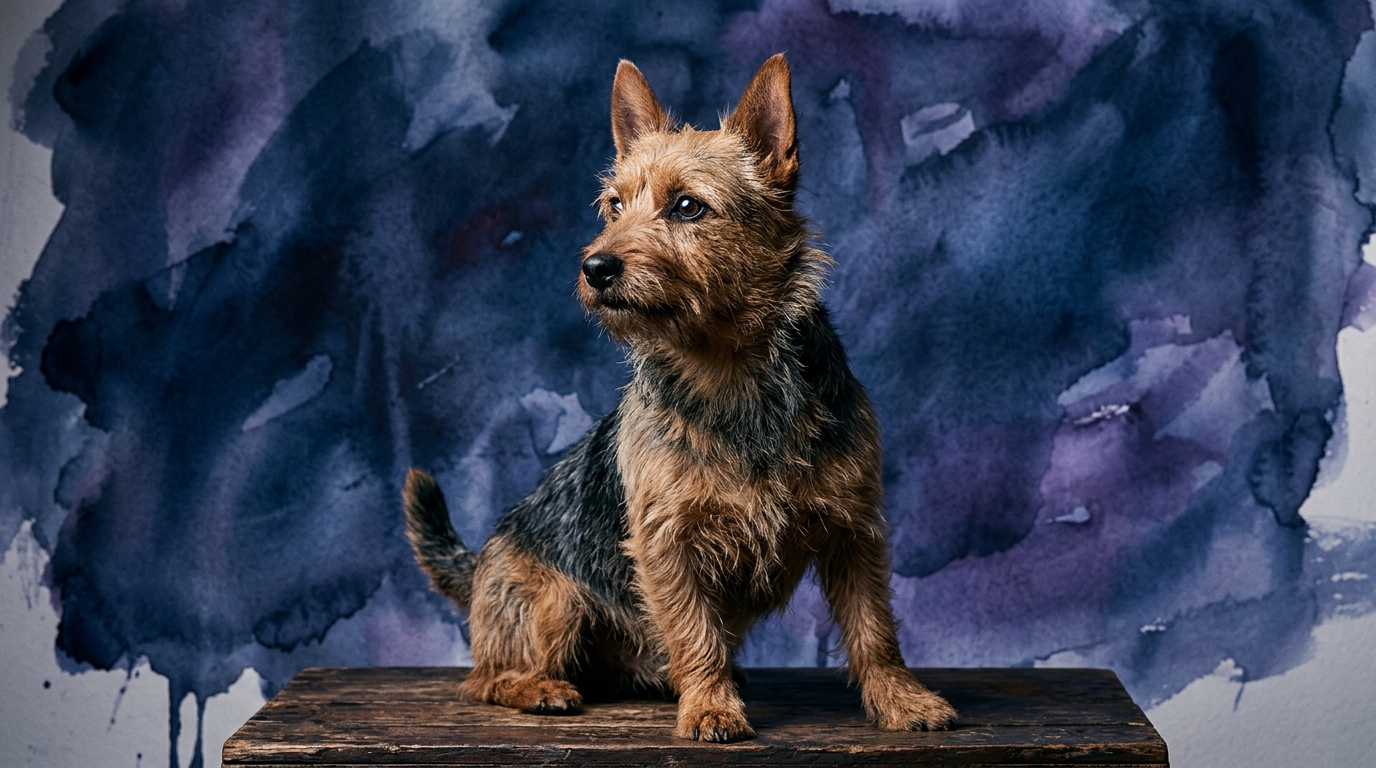
Side-by-Side IQ Profile: Groenendael vs. Australian Terrier
The Cosmic Pet Pet IQ Lab employs five key dimensions to evaluate canine intelligence, offering a nuanced view beyond simple rankings. For the Belgian Sheepdog (Groenendael), we see a profile geared towards high-level cognitive function and trainability, reflecting its heritage as a working herding dog.
**Belgian Sheepdog (Groenendael):** Problem Solving (5/5), Training Speed (5/5), Social Intelligence (3/5), Instinctive Drive (3/5), Memory (5/5). This breed demonstrates exceptional capacity to analyze novel situations and devise effective solutions. Their herding heritage equips them with the ability to strategize movement, anticipate flock behavior, and adapt to changing environments, translating into a strong aptitude for complex tasks and puzzles. Groenendaels are remarkably quick learners, often grasping new commands and routines with minimal repetition; their eagerness to engage and inherent drive to work alongside humans contribute to their rapid acquisition of skills, making them highly responsive to instruction. While capable of forming deep bonds with their primary family, their social intelligence score of 3/5 indicates a more reserved or discerning approach to new people and situations; they are observant and can be sensitive to social cues within their established pack, but may not be universally gregarious. Their instinctive behaviors are moderately pronounced, primarily manifesting in their herding tendencies, which can include a desire to gather or control movement; this drive, while present, is often channeled and refined through training, rather than being overwhelming. Groenendaels possess an outstanding memory, allowing them to retain learned behaviors, routines, and even specific details about their environment over long periods; this cognitive strength underpins their proficiency in complex obedience, agility, and protection work, where recalling sequences is crucial.
In contrast, the Australian Terrier presents a consistent and balanced cognitive profile. While not reaching the peak scores of the Groenendael in specific areas, its steady performance across all metrics speaks to a robust and adaptable intellect, typical of its terrier lineage.
**Australian Terrier:** Problem Solving (3/5), Training Speed (3/5), Social Intelligence (3/5), Instinctive Drive (3/5), Memory (3/5). Australian Terriers exhibit a solid, practical approach to problem-solving. They can navigate challenges and figure out how to achieve their goals, often through persistence and trial-and-error, but may not display the same level of strategic foresight or conceptual understanding as breeds with higher scores. This breed learns at a steady pace, requiring consistent and patient instruction to master new commands; while not as rapid as some working breeds, their willingness to engage, combined with clear, positive reinforcement, yields good results over time. Australian Terriers are generally affable and can adapt well to various social settings once comfortable; their social intelligence allows them to read basic human emotions and respond appropriately within their familiar circle, though they might display the typical terrier caution or assertiveness with strangers. Their instinctive drives are moderately strong, primarily rooted in their terrier heritage of hunting small prey; this can manifest as an interest in chasing small animals or digging, but these drives are typically manageable and can be redirected with training. Australian Terriers have a reliable memory for routines, commands, and familiar people; they can recall learned behaviors and important environmental details, contributing to their ability to adapt and maintain their training, though perhaps not with the same depth or longevity as breeds with a 5/5 score.
Where the Groenendael Wins Cognitively
The Groenendael's cognitive advantages are pronounced in areas demanding complex thought, rapid assimilation of information, and long-term retention. Their perfect 5/5 scores in Problem Solving, Training Speed, and Memory place them in a league apart from the Australian Terrier. A Groenendael can quickly assess intricate situations, such as navigating an agility course with unforeseen obstacles or deciphering a multi-step scent work challenge, often formulating a solution on the fly. This breed doesn't just learn commands; it understands the underlying principles, allowing for greater generalization of skills. For instance, if taught to retrieve a specific toy, they might quickly generalize the concept to retrieving other designated items without extensive re-training. Their superior memory means that once a task is learned, it is deeply ingrained, requiring minimal refreshers even after long breaks. This makes them exceptional candidates for advanced obedience, protection sports, or service roles where precision, quick reactions, and reliable recall of intricate sequences are paramount. Their training isn't merely about rote memorization; it's about building a comprehensive cognitive framework that allows them to apply their knowledge flexibly and efficiently.
Where the Australian Terrier Wins Cognitively
While the Australian Terrier's cognitive scores are consistently 3/5, this balanced profile offers a distinct advantage in specific contexts, particularly where independence and practical tenacity are valued over lightning-fast learning or complex strategizing. Their "average" problem-solving isn't a deficit; it reflects a capacity for persistent, hands-on engagement with challenges. A Groenendael might analyze a puzzle toy and deduce the solution, but an Australian Terrier might simply keep trying different angles until it works, demonstrating a resilient, trial-and-error approach that can be equally effective for certain tasks. Their 3/5 training speed means they are perfectly capable of learning, just at a more deliberate pace, which can suit owners who prefer a gradual, reinforcing training journey rather than constant high-level intellectual engagement. Moreover, their consistent 3/5 across all categories suggests a well-rounded, adaptable intellect that doesn't suffer from extreme highs or lows. This makes them less prone to the potential frustrations of a highly discerning Groenendael who might become bored or under-stimulated if not given enough complex mental work. The Australian Terrier's cognitive strength lies in its robust, practical intelligence coupled with a spirited, independent nature that enables it to thrive in varied environments without requiring constant, advanced mental gymnastics.
Training Aptitude: Which is Easier to Train and Why?
The Belgian Sheepdog (Groenendael) is unequivocally easier to train, stemming directly from its superior Training Speed (5/5) and Memory (5/5) compared to the Australian Terrier's 3/5 in both dimensions. A Groenendael often grasps a new command or concept within a handful of repetitions. For example, teaching "sit" to a Groenendael might take just a few minutes over a couple of sessions, with the dog quickly understanding the verbal cue and hand signal. Their desire to work and please their handler, combined with their capacity for rapid association, makes them incredibly receptive. They are often eager for mental tasks and view training as an engaging partnership. In contrast, an Australian Terrier, while trainable, requires more patience and consistency. Teaching the same "sit" command might involve more repetitions spread over several days or weeks, as they process information at a more moderate pace. Their terrier independence means they might question the value of a command or be more easily distracted by environmental stimuli, demanding a trainer who can make learning consistently rewarding and engaging. Groenendaels also retain information with remarkable longevity, meaning once a behavior is learned, it rarely needs extensive refreshing, whereas an Australian Terrier might benefit from more regular practice to keep commands sharp. This difference translates into Groenendael owners often progressing to advanced obedience, complex tricks, or competitive dog sports with relative ease, while Australian Terrier owners typically focus on solid foundational obedience and practical life skills.
Lifestyle Match: Active Owners vs. Relaxed Owners
The Belgian Sheepdog (Groenendael) is a better match for active owners who can commit to providing substantial physical exercise and, crucially, consistent mental stimulation. Their 5/5 Problem Solving and Memory, coupled with their herding background, mean they thrive on having a "job" to do, whether it's advanced obedience, agility, protection work, or even complex puzzle toys. An under-stimulated Groenendael can become bored and channel its considerable mental and physical energy into less desirable behaviors, such as excessive barking or destructive chewing. They need owners who are prepared for daily walks, runs, or engaging play sessions, alongside regular training that challenges their cognitive abilities. Conversely, the Australian Terrier, with its balanced 3/5 scores across the board and terrier instincts, can suit a wider range of owners, including those who might be described as "relaxed" but still dedicated to daily engagement. While they are energetic and enjoy play, their need for complex mental work is less intense than that of a Groenendael. An Australian Terrier will enjoy walks, playtime in the yard, and interactive toys, but they might be content with simpler training sessions focused on basic obedience and good manners rather than intricate multi-step tasks. Their independence means they can be comfortable entertaining themselves for periods, though they still cherish human companionship. Owners who enjoy moderate daily activity and appreciate a spirited, self-reliant companion, without the rigorous demands of a top-tier working breed, will find the Australian Terrier a rewarding fit.
The Verdict
Opt for a Groenendael if you are an experienced, active owner eager to engage a dog in advanced training, dog sports, or a working role, and can consistently provide substantial mental and physical challenges to satisfy its exceptional cognitive abilities.
Select an Australian Terrier if you seek a spirited, adaptable companion for a moderately active lifestyle, valuing its independent nature and solid trainability for practical obedience, without needing to commit to the intensive, high-level mental engagement a Groenendael demands.
🧠 Find Your Pet's IQ Score
Our Pet IQ Lab assessment covers 25+ tests across 5 cognitive dimensions — personalized to your breed.
Take the Full IQ Test →Frequently Asked Questions
Can an Australian Terrier compete in dog sports?
Absolutely, Australian Terriers can excel in various dog sports like agility, obedience, and earthdog trials, though they may require more consistent repetition and motivation than a Groenendael due to their 3/5 training speed. Their tenacity and moderate instinctive drive make them capable competitors with dedicated training.
Are Groenendaels good family dogs despite their lower social intelligence score?
Yes, Groenendaels can be excellent family dogs, forming deep, protective bonds with their immediate family. Their 3/5 social intelligence primarily indicates they may be reserved or watchful with strangers rather than universally outgoing, which can be a desirable trait for a guardian breed, but requires early socialization.
Do Groenendaels get bored easily without enough mental stimulation?
Yes, Groenendaels, with their 5/5 problem-solving and memory, require significant mental engagement to prevent boredom. Without adequate challenges, they may invent their own "jobs" which can include destructive behaviors or excessive vocalization, making consistent mental work crucial for their well-being.