
Side-by-side IQ profile
The Belgian Sheepdog (Groenendael), Coren rank #15, stands out among the most capable learners, a testament to its Herding group lineage. Its Problem Solving is rated 5/5, indicating an exceptional capacity to navigate complex situations, devise novel solutions, and adapt quickly to changing environments. Training Speed also scores 5/5, reflecting its rapid assimilation of new commands and routines, often requiring fewer repetitions than many other breeds. Memory stands at an impressive 5/5, allowing the Groenendael to retain vast amounts of information, from learned behaviors to past experiences, over long periods. Social Intelligence is rated 3/5, suggesting a moderate ability to interpret human cues and social dynamics, often prioritizing its tasks over nuanced social interaction. Instinctive Drive, also 3/5, points to a moderate but present innate inclination towards its herding roots, which can manifest as a desire to gather or control.
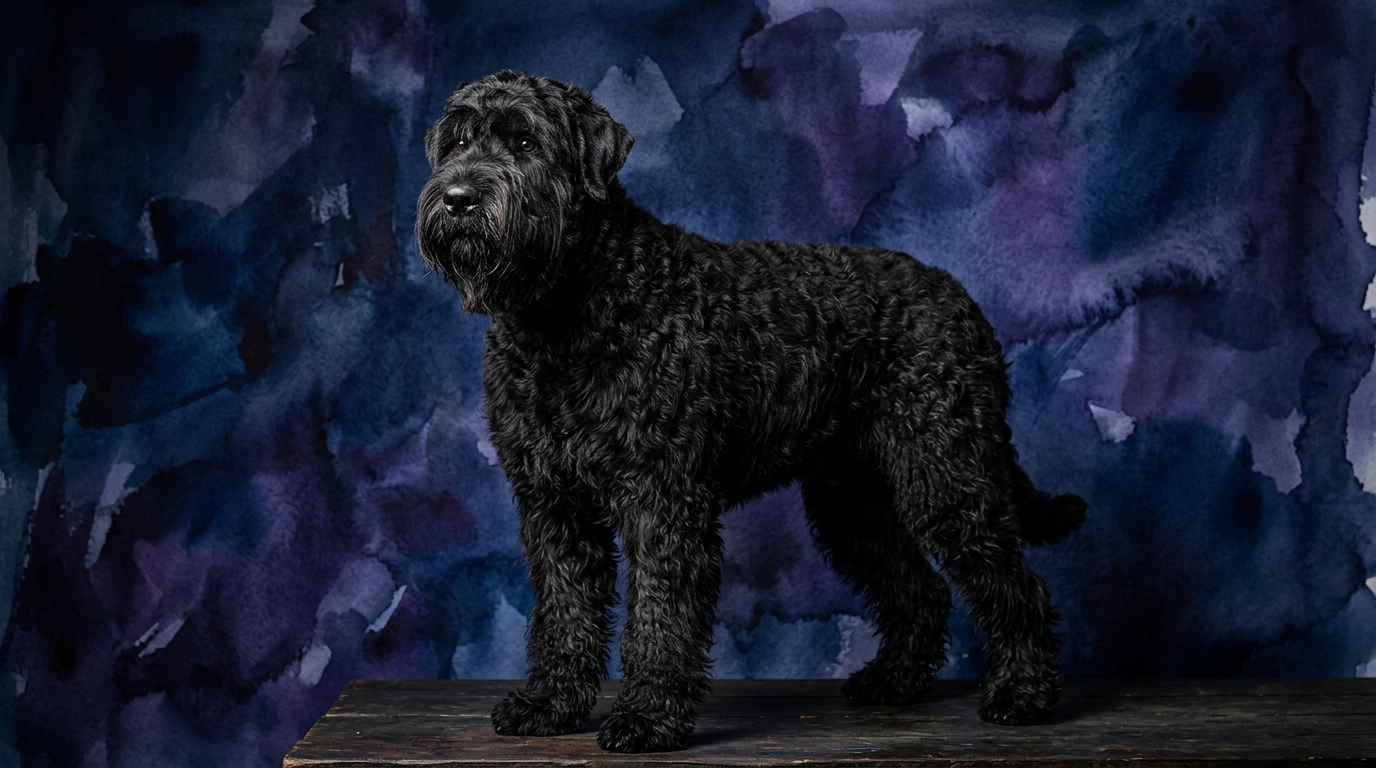
The Black Russian Terrier, from the Working group, does not appear on Coren's ranking, yet possesses a distinct cognitive profile designed for its demanding roles. Across all five dimensions—Problem Solving, Training Speed, Social Intelligence, Instinctive Drive, and Memory—the Black Russian Terrier consistently scores 3/5. This balanced profile indicates a solid, dependable level of cognitive function without the extreme peaks seen in some breeds. Its Problem Solving at 3/5 means it can navigate common challenges and learn from experience, though it may not spontaneously invent complex solutions. Training Speed at 3/5 signifies a steady learning pace, requiring consistent and clear instruction to master new skills. Social Intelligence at 3/5 suggests it understands human cues adequately but might be more reserved or less overtly expressive in social contexts, aligning with its guardian role. Instinctive Drive at 3/5 points to a moderate, but firm, inherent protective and territorial nature. Memory at 3/5 allows it to recall important information and training, though perhaps not with the instantaneous recall of a breed scoring higher.
Where Belgian Sheepdog (Groenendael) wins cognitively
The Belgian Sheepdog (Groenendael) demonstrates clear cognitive advantages in areas demanding rapid assimilation, complex reasoning, and extensive recall. Its Problem Solving score of 5/5 means the Groenendael isn't merely executing commands; it's actively analyzing situations, anticipating outcomes, and often improvising solutions. This manifests in its ability to navigate intricate agility courses, respond effectively to dynamic herding scenarios, or even figure out how to open childproof latches. This breed thrives on intellectual challenge, constantly seeking to understand and manipulate its environment. Coupled with a 5/5 Training Speed, the Groenendael absorbs new information with remarkable efficiency. Where other breeds might require dozens of repetitions, a Groenendael often grasps a new concept in just a handful, making it a dream for competitive obedience or advanced task learning. Furthermore, its 5/5 Memory ensures that these learned skills and solutions are not fleeting. A Groenendael can recall complex sequences of commands or problem-solving strategies even after long periods, indicating a robust and accessible cognitive archive. This combination of superior problem-solving, rapid learning, and enduring memory makes the Groenendael an exceptionally adaptable and mentally agile companion, excelling in roles that demand quick thinking and sustained mental effort.
Where Black Russian Terrier wins cognitively
While the Black Russian Terrier's scores are consistently moderate, its cognitive profile represents a different kind of strength, particularly valuable for its working heritage. The BRT's balanced 3/5 across all dimensions translates into a steadfast, reliable, and often less frenetically driven cognitive approach. In situations demanding unwavering focus and physical resilience over intricate mental gymnastics, the BRT's steady intellect shines. Its 3/5 Problem Solving, for instance, means it approaches challenges with practicality and persistence, rather than seeking the most convoluted solution. This can be a 'win' in scenarios where a predictable, robust response is preferred over an overly creative one, such as patrol or guardian duties where consistent vigilance is paramount. Similarly, its 3/5 Instinctive Drive, while not as intense as a high-drive herder, is channeled effectively into its protective instincts, providing a solid, dependable foundation for its role without the constant need for redirection or mental stimulation that a higher drive might entail. The BRT’s cognitive consistency makes it a profoundly reliable partner for owners who value a steady, resolute presence and a dog whose mental energy is channeled into focused, practical tasks rather than continuous intellectual exploration. Its social intelligence at 3/5, while not effusive, enables it to be discerning and reserved, a valuable trait for a guardian who must assess threats rather than engage indiscriminately.
Which is easier to train and why
Comparing the training ease of these two breeds reveals distinct differences rooted in their cognitive profiles. The Belgian Sheepdog (Groenendael), with its 5/5 Training Speed, is generally far easier to train in terms of raw learning acquisition. This breed possesses an eager-to-please attitude combined with exceptional cognitive processing power. They quickly associate commands with actions and rewards, and their high Problem Solving and Memory scores mean they can generalize learned behaviors to new contexts and remember complex sequences. A Groenendael thrives on structure and mental engagement during training sessions, often picking up new tricks or advanced obedience cues with minimal repetition. Conversely, the Black Russian Terrier, with a Training Speed of 3/5, requires a more patient and consistent approach. While capable of learning, the BRT is less inclined to spontaneously offer behaviors or infer complex instructions. Their training requires clear, concise commands and significant repetition to solidify new skills. Furthermore, the BRT's working dog independence means they might question commands or require stronger motivation to comply, especially if they perceive a task as unnecessary or outside their established routine. This isn't a lack of ability, but rather a difference in cognitive style: the Groenendael is an active collaborator, seeking to understand and execute, while the BRT is a steadfast partner who needs clear direction and a strong, consistent relationship to thrive in training.
Which suits active owners vs relaxed owners
Neither the Belgian Sheepdog (Groenendael) nor the Black Russian Terrier can truly be classified as suitable for a 'relaxed' owner in the sense of minimal engagement. Both are powerful, intelligent working breeds requiring substantial commitment. However, they suit different *types* of active owners. The Groenendael, with its exceptional Problem Solving (5/5), Training Speed (5/5), and Memory (5/5), demands an owner who is prepared for constant mental and physical engagement. This breed thrives with owners who enjoy dog sports like agility, obedience, herding trials, or protection work, where their cognitive prowess and desire to learn are fully utilized. An owner who can provide varied, complex mental challenges daily will find the Groenendael a fulfilling partner. Without sufficient mental stimulation, their sharp minds can turn destructive or anxious. The Black Russian Terrier, while also requiring an active lifestyle, suits an owner seeking a different kind of engagement. Its balanced 3/5 scores across the board suggest a dog that benefits from consistent routines, clear boundaries, and purposeful activities rather than constant novel mental puzzles. Owners who enjoy long walks, structured training, and value a steadfast guardian presence will find the BRT a loyal companion. They need physical exercise and consistent socialisation, but their cognitive demands are less about intricate problem-solving and more about reliable execution within a stable, predictable environment. They are robust partners for owners who appreciate a dog with a strong will and a confident, independent streak, provided that independence is guided effectively.
The Verdict
Choose the Belgian Sheepdog (Groenendael) if you are an experienced owner eager to engage in advanced training, dog sports, or mentally demanding activities, and you thrive on having a canine partner who constantly seeks intellectual challenges and learns with remarkable speed.
Choose the Black Russian Terrier if you appreciate a steadfast, dependable guardian with a robust, balanced intellect, and you are committed to consistent training, clear routines, and providing purposeful activity for a dog whose strengths lie in reliability and protective presence.
🧠 Find Your Pet's IQ Score
Our Pet IQ Lab assessment covers 25+ tests across 5 cognitive dimensions — personalized to your breed.
Take the Full IQ Test →Frequently Asked Questions
Is the Groenendael suitable for first-time dog owners?
The Groenendael's intense cognitive needs and high drive make it a challenging choice for first-time owners. Its intelligence requires consistent guidance and mental stimulation to prevent behavioral issues, often benefiting from experienced handling.
How do the exercise needs compare between the two breeds?
Both breeds require substantial daily exercise, but the Groenendael often needs more varied and mentally stimulating activity due to its herding background and high problem-solving abilities. The Black Russian Terrier requires consistent physical activity and purposeful engagement for its working drive.
Which breed is more protective of its family?
The Black Russian Terrier, with its origins as a military working dog and its 3/5 instinctive drive for protection, generally exhibits a stronger, more overt protective instinct towards its family and territory. The Groenendael's protective tendencies are often secondary to its herding drive and social intelligence.