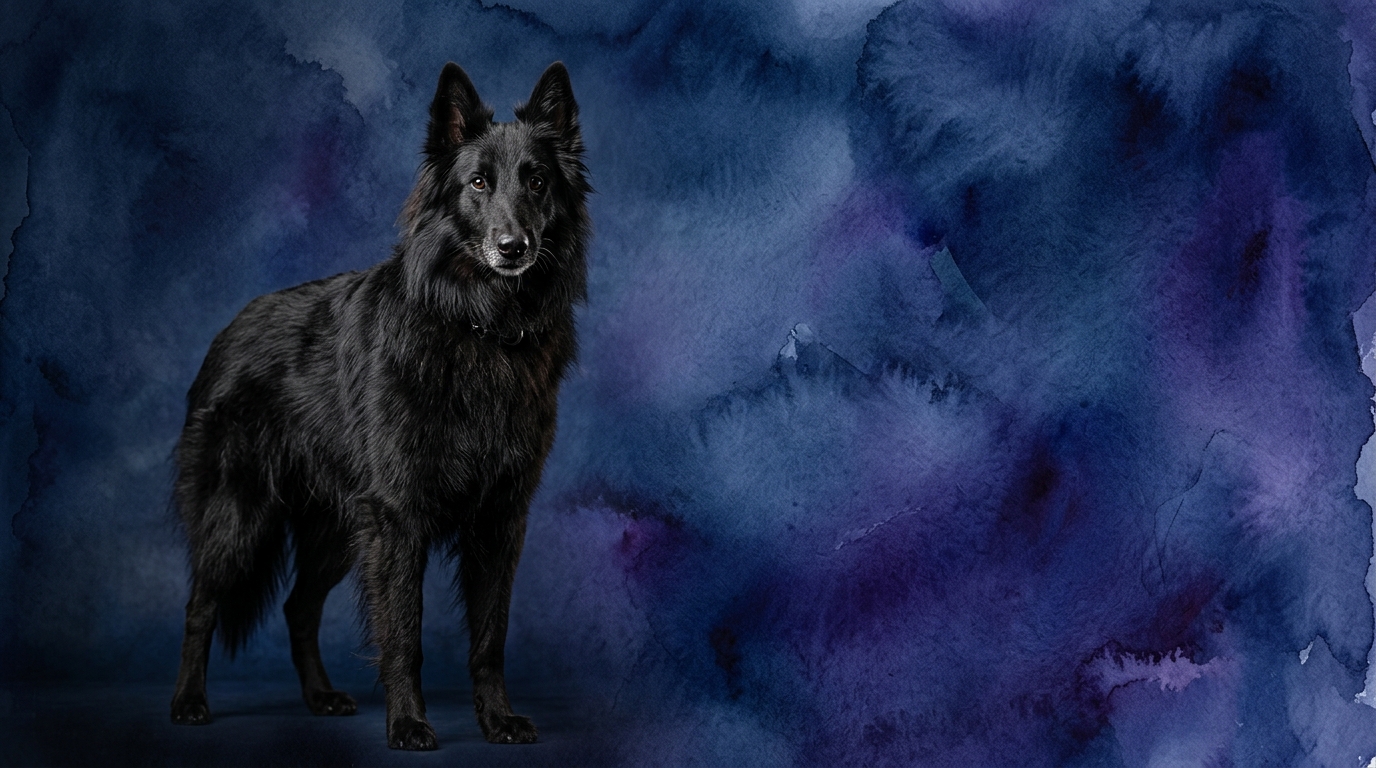
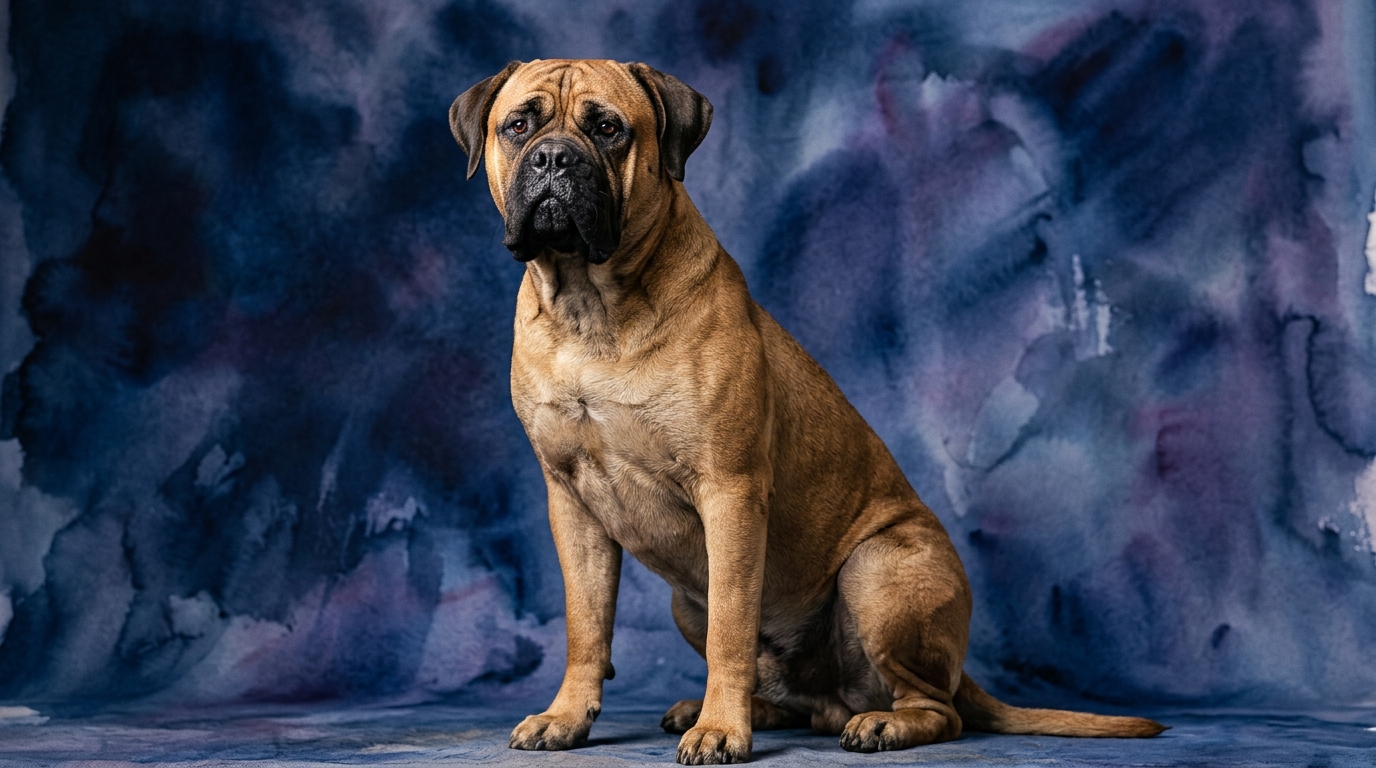
Side-by-side IQ profile
The Cosmic Pet Pet IQ Lab employs five crucial dimensions to map a dog's cognitive landscape, providing a nuanced understanding of their mental strengths. For the Belgian Sheepdog (Groenendael), a breed originating from the herding group, its profile paints a picture of exceptional mental agility: Problem Solving at 5/5, Training Speed at 5/5, Social Intelligence at 3/5, Instinctive Drive at 3/5, and Memory at 5/5. This suggests a dog capable of rapid learning, intricate thought, and excellent retention, alongside an average understanding of social cues and a moderate inherent drive.
In contrast, the Bullmastiff, a member of the working group, presents a different cognitive blueprint. Its scores are Problem Solving 3/5, Training Speed 3/5, Social Intelligence 3/5, Instinctive Drive 3/5, and Memory 3/5. These scores indicate a dog with solid, average cognitive capabilities across the board. While not demonstrating the rapid processing or immediate recall of the Groenendael, the Bullmastiff possesses a practical intelligence, learning at a steady pace and retaining information adequately, alongside an average understanding of social interactions and a moderate, purposeful drive.
Where Belgian Sheepdog (Groenendael) wins cognitively
The Belgian Sheepdog (Groenendael) clearly shines in areas demanding rapid cognitive processing and retention. Its 5/5 score in Problem Solving indicates a dog that quickly analyzes novel situations, devising solutions to challenges with remarkable efficiency. This translates into an aptitude for complex tasks, puzzle toys, and navigating intricate environments, often anticipating outcomes. Complementing this is its perfect 5/5 Training Speed, meaning new commands, routines, and behaviors are absorbed with minimal repetition, making them exceptionally responsive learners. This breed doesn't just learn; it often figures things out independently, sometimes to its owner's surprise. Furthermore, a 5/5 Memory ensures that once a lesson is learned or an experience had, it is retained for a significant duration, building a vast repertoire of understanding and recall that underpins its consistent performance in various activities from obedience to agility. This robust memory also contributes to its consistency in applying learned behaviors over time.
Where Bullmastiff wins cognitively
While the Bullmastiff's scores may not reach the peaks of the Groenendael, its cognitive strengths lie in their grounded, practical application, particularly where a steady presence and discerning judgment are paramount. Its 3/5 in Social Intelligence, equal to the Groenendael, manifests as a calm understanding of human dynamics and a nuanced ability to interpret family cues, crucial for its role as a companion and protector. This isn't about flashy tricks but understanding the emotional landscape of its household. Similarly, its 3/5 Instinctive Drive, also matching the Groenendael, is channeled into purposeful vigilance and guardianship, requiring a specific cognitive focus on assessing surroundings and potential threats. The Bullmastiff's Problem Solving at 3/5, though average, is often geared towards real-world, physical challenges or understanding routines crucial for its comfort and security, rather than abstract puzzles. Their steady memory (3/5) ensures they reliably recall important people, places, and established household rules, fostering a sense of security and predictability in their environment, vital for a guardian breed.
Which is easier to train and why
When it comes to ease of training, the Belgian Sheepdog (Groenendael) holds a distinct advantage due to its exceptional Training Speed (5/5) and Problem Solving (5/5). This breed absorbs new information quickly, meaning fewer repetitions are needed for reliable command execution. They eagerly participate in training, often finding the process mentally stimulating. Their high Problem Solving ability allows them to generalize commands, applying learned behaviors to new contexts with little prompting; for instance, “stay” learned in the kitchen quickly translates to the park. This contrasts with the Bullmastiff, which, with a Training Speed of 3/5, requires more consistent and patient repetition to solidify new commands. While capable of learning, the Bullmastiff's training journey is typically slower and more deliberate. Their Problem Solving at 3/5 means they might need more explicit guidance for task variations, rather than independently inferring solutions. Behavioral differences emerge: a Groenendael might pick up complex commands in a few sessions, while a Bullmastiff might require several weeks to perfect basic obedience, requiring an owner who appreciates steady progress.
Which suits active owners vs relaxed owners
The cognitive profiles of these two breeds clearly delineate their suitability for different owner lifestyles. The Belgian Sheepdog (Groenendael), with its 5/5 Problem Solving and 5/5 Memory, thrives with active owners providing consistent mental engagement and physical exercise. This breed requires daily challenges beyond simple walks, needing structured training, dog sports like agility or obedience, and opportunities to use problem-solving skills in interactive games. An under-stimulated Groenendael can quickly become bored, potentially leading to undesirable behaviors or finding their own “work.” Their high cognitive demand means they are not content to be couch potatoes. In stark contrast, the Bullmastiff, with its 3/5 scores, is generally a better fit for more relaxed owners. While requiring regular exercise and mental stimulation, their needs are less intense than the Groenendael's. A Bullmastiff is often content with a daily walk, some playtime, and a comfortable spot to observe their family. Their cognitive make-up means they are less prone to anxiety from under-stimulation, preferring a calm, predictable routine as a vigilant guardian.
The Verdict
Choose the Belgian Sheepdog (Groenendael) if you are an experienced, active owner seeking a highly responsive, quick-thinking partner for dog sports, advanced training, or a working role, prepared to provide consistent mental stimulation and rigorous exercise.
Choose the Bullmastiff if you seek a steadfast, calm companion and guardian who will thrive in a more relaxed household with consistent but moderate training, valuing a protective presence over high-octane mental engagement.
🧠 Find Your Pet's IQ Score
Our Pet IQ Lab assessment covers 25+ tests across 5 cognitive dimensions — personalized to your breed.
Take the Full IQ Test →Frequently Asked Questions
Can a Bullmastiff participate in dog sports like agility?
While a Bullmastiff can certainly learn and enjoy some dog sports, their 3/5 Problem Solving and Training Speed mean they might not excel in fast-paced, complex activities like agility compared to breeds with higher scores. They might be better suited for activities requiring strength, focus, and a steady temperament, such as carting or weight pull, which align more with their physical and cognitive build.
Do Belgian Sheepdogs (Groenendaels) get bored easily?
Yes, with 5/5 Problem Solving and Memory, Belgian Sheepdogs (Groenendaels) require substantial mental engagement to prevent boredom. Without adequate stimulation through training, puzzles, or interactive play, they can become restless or develop their own, sometimes undesirable, ways to occupy their active minds, making consistent enrichment crucial for their well-being.
How do the social intelligence scores impact interaction with strangers?
Both breeds have a 3/5 Social Intelligence score, indicating an average ability to interpret social cues. For the Groenendael, this means they are generally receptive to new people but might be reserved or watchful initially, relying on their owner's cues. For the Bullmastiff, this score contributes to their discerning guardian nature; they will understand appropriate social interactions but remain vigilant and protective towards unfamiliar individuals, making early socialization important for both breeds to ensure polite, confident responses.