
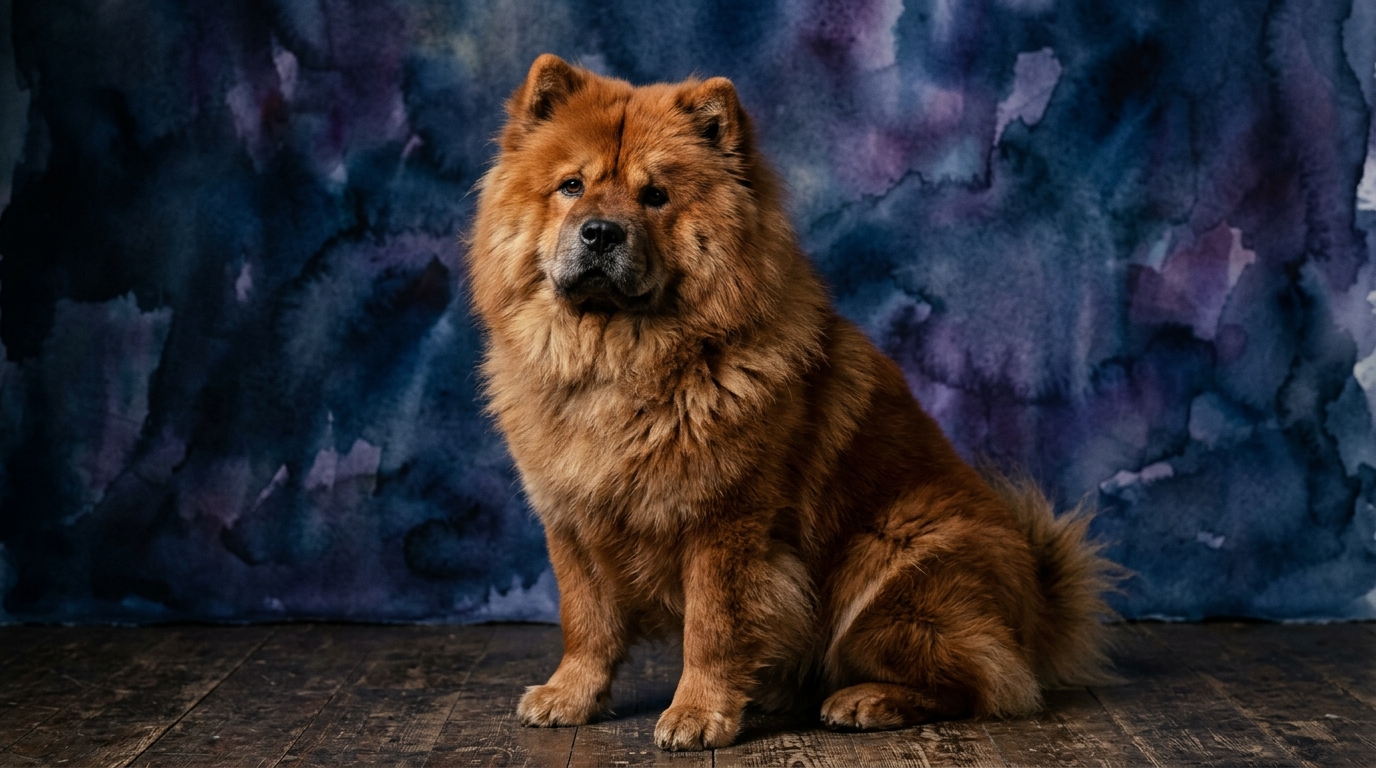
Side-by-Side IQ Profile: Groenendael vs. Chow Chow
The Cosmic Pet Pet IQ Lab employs five key dimensions to map a dog's cognitive blueprint, offering a nuanced understanding beyond simple obedience. For the Belgian Sheepdog (Groenendael), a breed rooted in herding, its Coren rank of #15 immediately suggests a capable mind. Its Problem Solving score of 5/5 indicates a dog that not only recognizes challenges but actively devises solutions, often with a keen sense of purpose. Coupled with a Training Speed of 5/5, this Groenendael exhibits a remarkable capacity to grasp new commands and routines with minimal repetition, making it highly receptive to instruction. Its Social Intelligence, rated at 3/5, suggests an adequate awareness of human cues and emotional states, yet it might not possess the same innate desire for constant human validation seen in some companion breeds. An Instinctive Drive of 3/5 points to a moderate inherent inclination towards its breed's working roots, providing a foundation for purposeful activity without being overwhelming. Finally, a Memory score of 5/5 means the Groenendael retains learned information and experiences with exceptional clarity, building upon past lessons effectively.
In contrast, the Chow Chow, a member of the Non-Sporting group, holds a Coren rank of #76, placing it in a category of dogs often described as more independent thinkers. Its Problem Solving score of 3/5 indicates a capacity to navigate straightforward challenges, but it may not actively seek out complex puzzles or devise intricate solutions on its own. The Chow Chow's Training Speed also sits at 3/5, suggesting it learns at a steady pace, requiring consistent and patient reinforcement rather than rapid assimilation. Like the Groenendael, its Social Intelligence is rated at 3/5, implying it understands social cues but typically maintains a more reserved and self-contained demeanor. Its Instinctive Drive, also 3/5, suggests a moderate level of inherent motivation, not driven by intense working urges but still possessing a sense of self-directed purpose. A Memory score of 3/5 means the Chow Chow retains information reliably for routine tasks and familiar experiences, though perhaps not with the same depth or detail as a breed with a higher score.
Where the Belgian Sheepdog (Groenendael) Excels Cognitively
The Groenendael's cognitive profile showcases several standout strengths. Its Problem Solving at 5/5 means this dog is adept at analyzing situations and formulating effective responses. For instance, if a gate is latched, a Groenendael is more likely to methodically investigate the latch mechanism, perhaps nudging it with its nose or paw, rather than simply waiting for assistance. This proactive approach to obstacles makes them highly adaptable in varied environments.
Furthermore, the Groenendael's Training Speed of 5/5 is a significant cognitive advantage. New commands, complex sequences, or even intricate agility courses are absorbed with remarkable efficiency. An owner might find that after only a few repetitions, a Groenendael can reliably execute a novel trick, demonstrating a rapid neural pathway for learning and recall. This quick uptake is not just about obedience; it reflects a deep engagement with the learning process itself. Paired with a Memory score of 5/5, the Groenendael not only learns quickly but remembers those lessons for the long term, building a robust repertoire of knowledge and skills over its lifetime. This superior retention means less reteaching and a more consistent performance in learned behaviors, from basic manners to advanced tasks.
Where the Chow Chow's Cognitive Style Shines
While the Chow Chow's cognitive scores are generally moderate, its particular blend of abilities offers a distinct advantage for certain lifestyles. Its Problem Solving at 3/5, for example, means it's less prone to overthinking or creating its own complex challenges out of boredom. This can translate to a dog that is content with simpler routines and less inclined to engage in elaborate schemes to outsmart its environment, offering a more predictable and less demanding mental presence for its owner.
The Chow Chow's Training Speed of 3/5, while not rapid, supports a deliberate and enduring form of learning. Once a command is thoroughly understood and accepted, it often becomes a deeply ingrained part of the Chow Chow's behavioral framework, less prone to fleeting compliance. This steady learning process, combined with its 3/5 Memory, means it reliably retains established routines and expectations without constant novelty-seeking. Its Social Intelligence and Instinctive Drive, both at 3/5, align with its independent nature; it is aware of its surroundings and its human companions but typically isn't driven by an overwhelming need for constant interaction or complex tasks. This self-contained cognitive style can be a 'win' for owners who appreciate a dog that is present and observant, yet comfortable and stable within its own space, not perpetually demanding mental engagement or social validation.
Training Dynamics: Groenendael's Eagerness vs. Chow Chow's Independence
When it comes to training, the cognitive differences between these two breeds manifest clearly in their behavioral responses. The Belgian Sheepdog (Groenendael), with its 5/5 Training Speed and 5/5 Problem Solving, approaches learning with an almost insatiable eagerness. They thrive on mental stimulation and the satisfaction of mastering new tasks. This means a Groenendael will typically pick up commands quickly, often anticipating what is expected and offering behaviors readily. Their high memory ensures that once learned, these commands are retained, making advanced training and complex sequences a rewarding endeavor for both dog and owner. They are often highly motivated by praise and the opportunity to work alongside their human, viewing training as a collaborative activity.
The Chow Chow, with its 3/5 Training Speed and 3/5 Problem Solving, presents a different training experience. Its independence is a significant factor; a Chow Chow learns, but often on its own terms and at its own pace. They may require more repetitions and a greater emphasis on consistent, positive reinforcement to solidify commands. Unlike the Groenendael's inherent drive to please, a Chow Chow needs to be convinced that performing a command is worthwhile or beneficial to them. This isn't a lack of ability, but rather a difference in motivation and approach. Behavioral differences include a Chow Chow's tendency to consider a request before complying, sometimes appearing stubborn, whereas a Groenendael is more likely to respond immediately and enthusiastically. Patience, clarity, and understanding the Chow Chow's self-possessed nature are paramount for successful training.
Matching Minds: Active vs. Relaxed Owners
The cognitive profiles of the Groenendael and Chow Chow naturally align with different owner lifestyles. The Belgian Sheepdog (Groenendael), with its exceptional problem-solving and memory, coupled with its herding background, thrives with active owners who can provide consistent mental and physical outlets. These dogs need more than just walks; they require engaging activities like obedience trials, agility, tracking, or even advanced trick training to satisfy their sharp minds. Owners who enjoy teaching complex sequences, participating in dog sports, or engaging in prolonged, interactive play will find the Groenendael's cognitive engagement deeply rewarding. Their moderate instinctive drive means they are driven to work but can channel that energy productively with proper guidance, making them excellent partners for those with an active, purposeful lifestyle.
Conversely, the Chow Chow's moderate cognitive scores and independent nature make it a better fit for more relaxed owners who appreciate a self-sufficient companion. While they still require regular exercise and mental engagement to prevent boredom, their needs are less intense and complex than the Groenendael's. A Chow Chow is often content with a daily walk and some moderate interactive play, rather than demanding constant mental puzzles or high-intensity training sessions. Owners who prefer a dog that is observant and present but not constantly seeking direction or validation will find the Chow Chow's reserved social intelligence and moderate instinctive drive appealing. They fit well into homes where a dignified, less demanding canine presence is desired, offering companionship without overwhelming exuberance.
The Verdict: When to Choose Each Breed
Choosing between a Belgian Sheepdog (Groenendael) and a Chow Chow ultimately depends on the specific cognitive partnership an owner seeks.
The Groenendael is an ideal choice for owners who desire a highly engaged, quick-learning partner for advanced training, dog sports, or a demanding working role, thriving on mental challenges and active collaboration.
The Chow Chow is best suited for owners who appreciate a dignified, independent companion that is content with a more moderate level of mental and physical engagement, valuing a dog's self-possessed nature and reliable, if deliberate, learning style.
The Verdict
Choose the Belgian Sheepdog (Groenendael) if you seek a highly trainable, mentally agile partner eager for complex tasks and active participation in your life.
Opt for the Chow Chow if you prefer a self-reliant, dignified companion whose moderate cognitive demands align with a more relaxed lifestyle, valuing independence over constant engagement.
🧠 Find Your Pet's IQ Score
Our Pet IQ Lab assessment covers 25+ tests across 5 cognitive dimensions — personalized to your breed.
Take the Full IQ Test →Frequently Asked Questions
Do Belgian Sheepdogs (Groenendaels) get bored easily?
Yes, their 5/5 Problem Solving and Memory mean Groenendaels require consistent mental stimulation. Without sufficient engagement, they can become restless and may find their own, potentially undesirable, ways to occupy their sharp minds.
Is a Chow Chow difficult to train due to its independence?
The Chow Chow's 3/5 Training Speed and independent nature mean it requires patience, consistency, and positive reinforcement. While not 'difficult' in terms of ability, they are not as eager to please as some breeds, necessitating a more understanding and persistent training approach.
Which breed is better for a first-time dog owner?
For a first-time owner, the Groenendael's high mental demands might be challenging without prior experience in training active breeds. A Chow Chow's independence, while requiring consistency, might be more manageable for someone new to dog ownership if they understand and respect its self-contained nature and moderate activity needs.