
Side-by-Side Cognitive Profiles
The Belgian Sheepdog (Groenendael) presents a robust cognitive blueprint, rooted in its herding heritage. Its Coren Rank of #15 places it among breeds demonstrating a profound capacity for understanding and executing complex commands. The Groenendael exhibits exceptional Problem Solving at 5/5, indicating adeptness at navigating novel situations, strategizing solutions, and adapting to changing environments, thriving on puzzles and intricate tasks. Its Training Speed is also 5/5, meaning new behaviors and commands are absorbed with remarkable efficiency, making them highly responsive and eager learners in structured settings. Social Intelligence stands at 3/5; while capable of forming deep bonds, their focus often leans towards tasks rather than intricate human social nuances, understanding basic cues but perhaps not as overtly demonstrative. An Instinctive Drive of 3/5 reflects moderate inherent urges, primarily stemming from their herding lineage, manifesting as a desire to gather or control movement. Finally, their Memory is 5/5, an outstanding capacity for recall that retains extensive repertoires of commands, routines, and past experiences, underpinning their consistency.
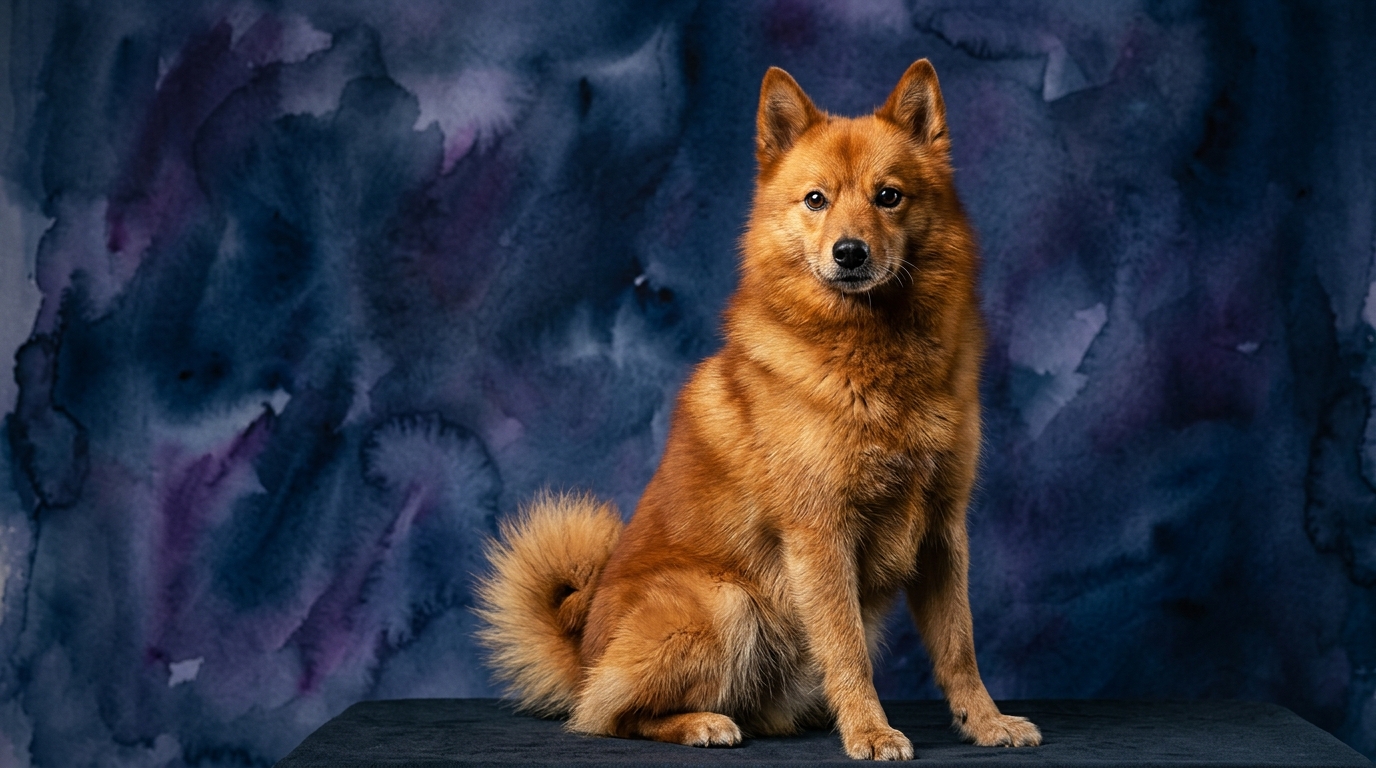
The Finnish Spitz, conversely, operates with a different cognitive emphasis. Not Coren-ranked, its intellect is tailored more towards independent work rather than collaborative obedience. Its Problem Solving is rated 3/5, indicating a moderate ability to figure out new situations, often preferring to do so on its own terms or requiring more explicit guidance. They can be resourceful but may not engage with abstract puzzles with the same enthusiasm. Training Speed is 3/5, meaning new commands proceed at a moderate pace; consistency and positive reinforcement are crucial, as this breed might require more repetition to solidify new behaviors, reflecting an independent learning style. Social Intelligence is 3/5, similar to the Groenendael; they bond closely with their families but maintain a degree of independence, observing rather than constantly seeking interaction. An Instinctive Drive of 3/5 is deeply rooted in their heritage as barking bird dogs, manifesting as a strong inclination to vocalize, explore, and hunt independently, often focusing intently on environmental stimuli. Their Memory is 3/5, a moderate capacity capable of retaining important information and routines, though regular reinforcement helps maintain learned skills.
Where the Belgian Sheepdog (Groenendael) Wins Cognitively
The Groenendael’s cognitive profile clearly positions it as a master of collaborative, complex tasks. Its 5/5 Problem Solving makes it exceptionally adept at navigating intricate obedience courses, learning multi-step routines in dog sports, or understanding the nuances of herding livestock. This isn't just about following commands; it's about interpreting situations and making appropriate choices within a structured framework. Coupled with a 5/5 Training Speed, the Groenendael absorbs new information with remarkable efficiency, translating new concepts into action almost instantly. This rapid acquisition of skills means an owner can progress through advanced training much faster, building a sophisticated communication system. Furthermore, their 5/5 Memory ensures that these complex lessons and intricate routines are retained over time, making them reliable partners who remember what they've learned, even after a break. This breed's intellect is geared towards partnership and performance, excelling in roles demanding precision, foresight, and a deep understanding of human instruction.
Where the Finnish Spitz Excels Cognitively
While the Finnish Spitz's scores are consistently moderate, their cognitive strengths lie in a different domain: independent observation, environmental awareness, and specialized communication. Their 3/5 Problem Solving isn't a deficit, but rather reflects a self-reliant approach; they are capable of figuring out their surroundings and adapting to changes without constant human direction. This breed's historical role as a barking bird dog means their intelligence is finely tuned to discerning subtle environmental cues, tracking scents, and alerting with characteristic vocalizations. Their 3/5 Social Intelligence contributes to a keen awareness of their immediate family unit, but also allows for a degree of self-sufficiency, making them less prone to constant reliance on human interaction for their well-being. The Finnish Spitz's memory, while 3/5, is perfectly adequate for retaining crucial information related to their territory and routine, ensuring they recall important landmarks or household expectations. Their inherent independence and specific instinctive drives mean they excel at self-directed tasks and possess a unique, vocal communication style that is a hallmark of their breed intelligence.
Which is Easier to Train and Why
The Belgian Sheepdog (Groenendael) is unequivocally the easier breed to train, primarily due to its exceptional 5/5 Training Speed and 5/5 Memory. These dogs possess an innate eagerness to engage with their human partners and a remarkable capacity to absorb and recall commands. They thrive on structured learning, quickly understanding what is expected of them and performing tasks with precision. Their high problem-solving ability also means they can generalize learned behaviors to new contexts and even anticipate upcoming steps in a routine. In contrast, the Finnish Spitz, with its 3/5 Training Speed and 3/5 Memory, presents a more patient and nuanced training journey. This breed's independent nature, a cornerstone of its traditional role, means it may not always see the immediate benefit of every command. While intelligent, the Finnish Spitz often requires more repetition, consistent positive reinforcement, and a trainer who understands their self-reliant spirit. They learn, but at their own pace, and trainers must be prepared for a dog that might question the "why" before complying, rather than simply executing.
Which Suits Active Owners vs. Relaxed Owners
The Belgian Sheepdog (Groenendael) is an ideal match for highly active owners who are prepared to provide substantial mental and physical engagement. Their 5/5 Problem Solving and 5/5 Training Speed mean they demand more than just walks; they need a "job" or consistent involvement in dog sports like agility, obedience, or protection work to prevent boredom and destructive behaviors. Owners who enjoy structured training, advanced skill development, and a true canine partner in their activities will find the Groenendael thrives under such conditions. Conversely, the term "relaxed owner" requires careful definition when considering the Finnish Spitz. While they might not demand the same intensity of structured training as a Groenendael, they are not sedentary dogs. Their 3/5 Instinctive Drive means they still require regular exercise, opportunities for exploration, and outlets for their vocalizations. A "relaxed owner" for a Finnish Spitz is someone who appreciates a dog with a more independent streak, is patient with training, and enjoys observing their dog engage with its environment, perhaps less focused on competitive dog sports but still committed to daily walks and mental enrichment that respects the breed's natural inclinations. They are not a couch potato, but their cognitive needs are fulfilled differently.
The Verdict
Choose the Belgian Sheepdog (Groenendael) if you seek a highly trainable, mentally agile partner for advanced obedience, dog sports, or working roles, and are prepared to provide consistent, stimulating engagement.
Opt for the Finnish Spitz if you appreciate an independent, observant companion with a unique vocal communication style, prepared for patient training and a dog that enjoys its surroundings.
🧠 Find Your Pet's IQ Score
Our Pet IQ Lab assessment covers 25+ tests across 5 cognitive dimensions — personalized to your breed.
Take the Full IQ Test →Frequently Asked Questions
Are Belgian Sheepdogs good for first-time owners?
Belgian Sheepdogs, with their strong working drive and need for consistent mental and physical stimulation, are generally not recommended for first-time dog owners. Their high cognitive abilities and energy require an an experienced hand to guide them effectively.
Is the Finnish Spitz a good family dog?
The Finnish Spitz can be a devoted family dog, forming strong bonds with its immediate household members. However, their independent nature and tendency to bark require early socialization and consistent training to ensure they integrate well into a family setting, especially with children.
What kind of mental exercise does a Finnish Spitz need?
A Finnish Spitz benefits from mental exercise that engages its natural curiosity and independent problem-solving skills, such as scent work, puzzle toys, and opportunities for supervised exploration. Short, consistent training sessions and activities that allow them to observe and react to their environment are also valuable.