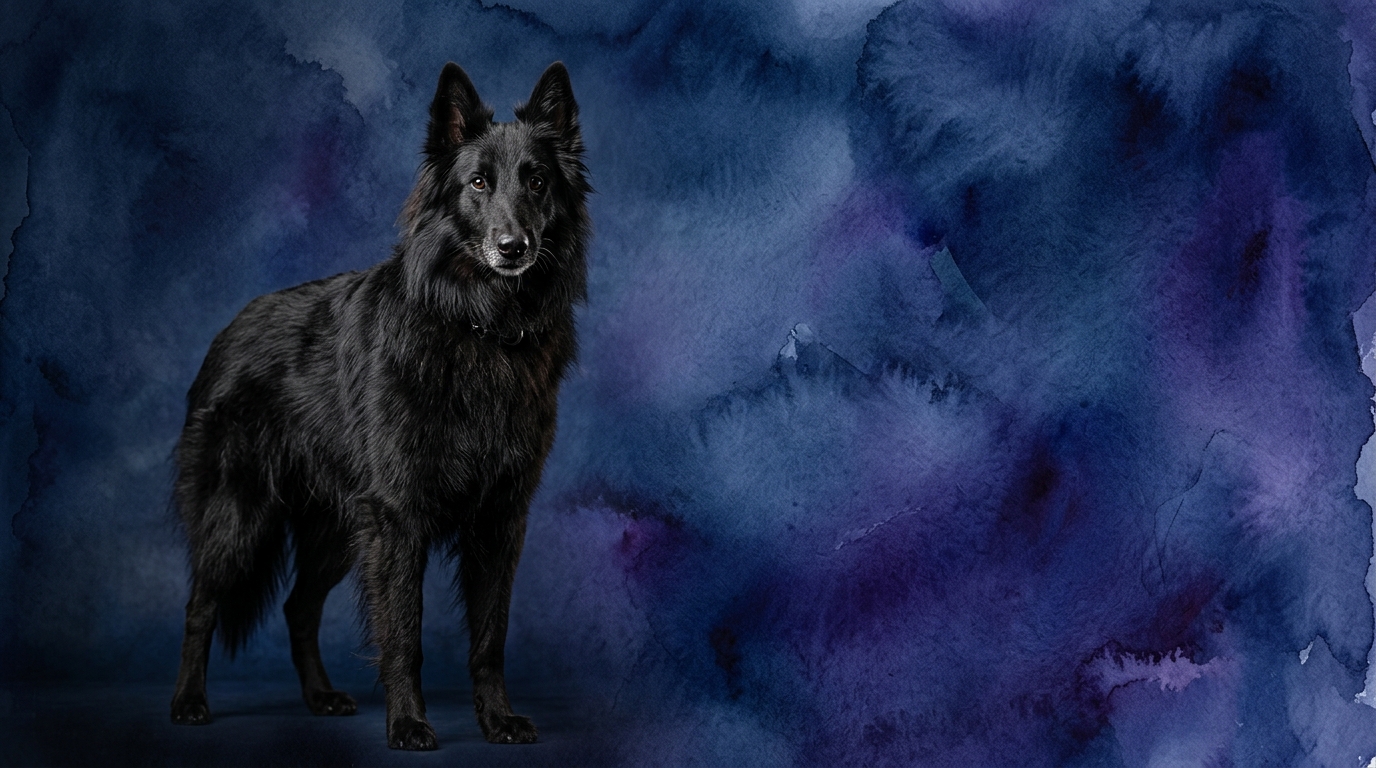
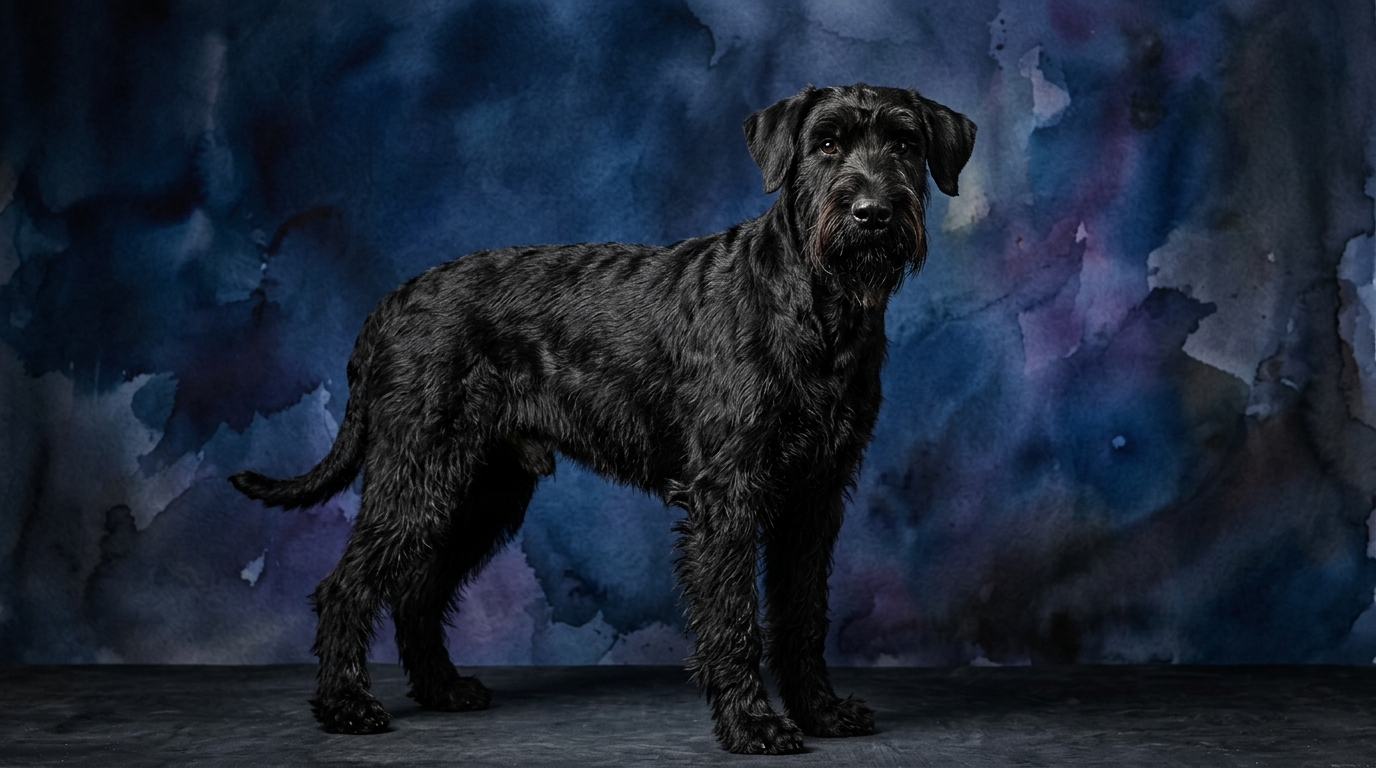
Side-by-Side IQ Profile: Groenendael vs. Giant Schnauzer
The Cosmic Pet Pet IQ Lab employs five crucial dimensions to map canine intelligence, and for the Belgian Sheepdog (Groenendael) and the Giant Schnauzer, these reveal distinct strengths. The Groenendael, ranked #15 by Coren, exhibits exceptional Problem Solving at 5/5, demonstrating an outstanding capacity to analyze new challenges and formulate effective solutions independently. Its Training Speed also earns a perfect 5/5, indicating a rapid grasp of new commands and routines with minimal repetition. Social Intelligence is rated 3/5, suggesting a moderate understanding of human social cues, while its Instinctive Drive is 3/5, reflecting a balanced herding impetus. Memory, crucial for long-term learning, is a flawless 5/5.
Conversely, the Giant Schnauzer, Coren-ranked #28, presents a robust cognitive profile with a 4/5 in Problem Solving, showcasing strong independent thought and good adaptability to novel situations. Its Training Speed is a commendable 4/5, meaning it learns quickly, though perhaps with a touch more deliberation than the Groenendael. Social Intelligence matches the Groenendael at 3/5, indicating a discerning but loyal nature, and its Instinctive Drive is also 3/5, rooted in a powerful working and guarding heritage. Finally, its Memory is a solid 4/5, ensuring good retention of learned behaviors over time.
Where the Belgian Sheepdog (Groenendael) Wins Cognitively
The Groenendael's perfect 5/5 scores in Problem Solving, Training Speed, and Memory truly set it apart, signifying a breed that not only learns quickly but fundamentally understands and retains complex information. This capacity for independent assessment of novel situations and devising solutions is exceptional; for instance, a Groenendael might spontaneously navigate a new obstacle course by strategizing the most efficient path rather than awaiting explicit instructions for each step. This cognitive flexibility, coupled with their rapid skill acquisition, means they can master intricate multi-step commands and advanced routines with remarkably few repetitions. Their superior memory ensures that once a skill is learned, it becomes deeply ingrained and reliably accessible, even after extended periods. This powerful combination of cognitive strengths positions Groenendaels as outstanding candidates for high-level canine sports such as obedience, agility, and protection work, where precision, speed, and independent strategic thinking are critically important.
Where the Giant Schnauzer Wins Cognitively
While the Groenendael often leads in sheer learning velocity, the Giant Schnauzer offers a distinct cognitive advantage through its blend of robust independence and discerning judgment, especially valuable in specific roles. Its 4/5 Problem Solving score reflects a strong, often deliberate, thinking process. This isn't a slower cognitive function, but rather a deeper consideration, particularly when evaluating potential threats or new individuals. Rooted in their working breed history, Giant Schnauzers possess a profound sense of purpose and a watchful demeanor, enabling them to excel in situations demanding steadfast, confident decision-making, such as guarding or protective duties. They are less prone to impulsive actions, instead tending to weigh perceived implications, which is invaluable for roles requiring a calm, authoritative presence. Their social intelligence, while rated similarly to the Groenendael, often manifests as a more selective and protective bond, indicating a nuanced understanding of their immediate family's security needs.
Which is Easier to Train and Why
Considering their IQ profiles, the Belgian Sheepdog (Groenendael) generally presents as the more straightforward breed to train, largely due to its perfect 5/5 scores in both Training Speed and Memory. Groenendaels possess an inherent eagerness to please and a profound desire to collaborate with their handler, which results in an almost instantaneous grasp of new commands. Their exceptional memory ensures that once a behavior is taught, it is rarely forgotten, requiring minimal refresher sessions. For example, a Groenendael could master a complex sequence of agility obstacles in just one session, recalling the precise order and execution weeks later.
In contrast, the Giant Schnauzer, with its 4/5 in Training Speed and Memory, is certainly trainable but approaches learning with a touch more independence. While they absorb information effectively, their strong-willed nature means they might occasionally test boundaries or require more consistent motivation to remain engaged. A Giant Schnauzer might fully comprehend a command but choose to execute it with a slight delay if they perceive a more pressing 'task' or simply wish to assert their will. This is not a deficit in understanding, but rather a manifestation of their independent thought and a need for a handler who consistently reinforces leadership with fairness and clear expectations. Their innate guarding instincts also necessitate early socialization and consistent training to channel their intelligence positively, preventing them from making independent, potentially inappropriate, decisions about who is welcome.
Suitability for Active vs. Relaxed Owners
Both the Belgian Sheepdog (Groenendael) and the Giant Schnauzer are robust, high-energy breeds that unequivocally thrive with active owners, yet their specific needs present subtle divergences. The Groenendael, with its herding heritage and intense cognitive drive (5/5 Problem Solving, 5/5 Training Speed), demands not merely physical exercise but profound and consistent mental engagement. An active owner for a Groenendael must be prepared for daily structured activities like advanced obedience, agility, flyball, or even herding trials. They require a 'job' to fulfill their sharp intellect; without consistent mental stimulation, their minds can easily lead to destructive behaviors born of boredom. They are fundamentally unsuitable for relaxed owners who prefer infrequent walks or minimal interaction; their intelligence demands constant challenge and a true partnership.
The Giant Schnauzer, while equally requiring substantial physical activity, often benefits from an owner who appreciates its discerning nature and strong guarding instincts (4/5 Problem Solving, 3/5 Instinctive Drive). An active owner for a Giant Schnauzer should enjoy long walks, hikes, or jogging, and be ready to engage in protection work, advanced obedience, or tracking. They need purposeful activity that taps into their innate drive to work and protect. While they also necessitate mental stimulation, their problem-solving tends to manifest as a more deliberate assessment of their environment rather than a constant quest for new tricks. A relaxed owner would undoubtedly struggle with a Giant Schnauzer's need for consistent leadership and structured activity, as their powerful build and independent streak demand a firm, experienced hand to prevent unruliness. Neither breed aligns with a truly 'relaxed' owner lifestyle.
The Verdict
Choose the Belgian Sheepdog (Groenendael) if you are an experienced, active owner seeking a highly biddable, lightning-fast learner for advanced canine sports and a deep working partnership.
Opt for the Giant Schnauzer if you appreciate a discerning, robust, and protective companion with a strong independent streak, suited for an active lifestyle and a confident, consistent handler.
🧠 Find Your Pet's IQ Score
Our Pet IQ Lab assessment covers 25+ tests across 5 cognitive dimensions — personalized to your breed.
Take the Full IQ Test →Frequently Asked Questions
Are Belgian Sheepdogs (Groenendael) good family dogs?
Groenendaels can be excellent family dogs when properly socialized and trained from a young age. Their herding instincts mean they might try to 'herd' children, so supervision is key, and they thrive in active families who can meet their intense mental and physical exercise needs.
What kind of exercise does a Giant Schnauzer need?
Giant Schnauzers require substantial daily exercise, including long walks, runs, or vigorous play sessions, totaling at least 60-90 minutes. They also benefit greatly from mental stimulation through training, puzzle toys, and purposeful activities like protection work or tracking to satisfy their working drive.
Do Groenendaels and Giant Schnauzers get along with other pets?
Both breeds can coexist peacefully with other pets, especially if raised together from puppyhood. However, due to their strong prey drive (Groenendael) or protective instincts (Giant Schnauzer), careful introductions and consistent supervision are always recommended, particularly with smaller animals.