
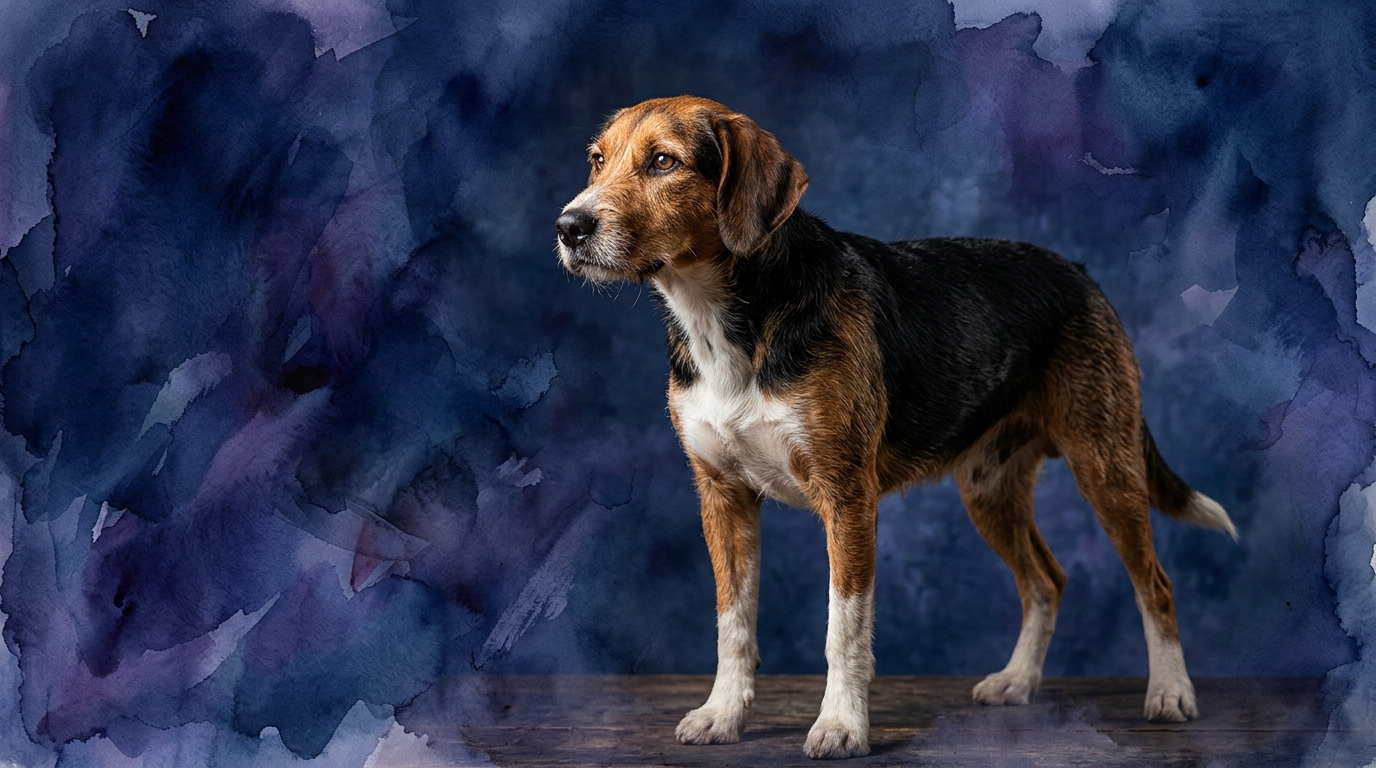
Side-by-Side IQ Profile: Herding Precision vs. Scent-Driven Pursuit
The Belgian Sheepdog (Groenendael) showcases a formidable cognitive toolkit. Their Problem Solving (5/5) indicates a strong capacity to analyze novel situations and devise solutions, often independently. Training Speed (5/5) reflects their rapid acquisition of new commands and routines, eager to collaborate. Social Intelligence (3/5) suggests attentiveness to primary human companions but potentially less nuanced understanding of strangers without specific socialization. An Instinctive Drive (3/5) for herding manifests as a desire to gather or control, typically balanced by high trainability. Their Memory (5/5) is exceptional, retaining complex sequences and learned behaviors over long periods, making them reliable partners in intricate tasks.
The Harrier's cognitive profile is tailored for endurance and focus on specific sensory input. Their Problem Solving (3/5) is practical, often centered around navigating terrain to follow a scent, rather than abstract challenges. Training Speed (3/5) is moderate; they learn, but attention can be difficult to sustain when a compelling scent is present. Social Intelligence (3/5) indicates bonding with their pack but less attunement to subtle human cues when engrossed in scent work. Their Instinctive Drive (3/5) is profoundly rooted in hound heritage, compelling them to follow a trail with unwavering determination, often overriding other directives. Memory (3/5) is functional, allowing recall of familiar routes and learned behaviors, but perhaps not with the Groenendael's complexity.
Where the Belgian Sheepdog (Groenendael) Excels Cognitively
The Groenendael's cognitive architecture is built for intricate, dynamic tasks requiring foresight and adaptability. Their superior Problem Solving (5/5) shines in scenarios where they need to figure out how to open a gate, navigate an agility course, or understand a complex multi-step command. This isn't just following instructions; it's internalizing a goal and strategizing to achieve it, often with minimal human intervention. Their Memory (5/5) complements this by allowing them to store vast libraries of learned behaviors and environmental cues. A Groenendael can remember specific routines from months ago, demonstrating robust long-term retention. This combination means they can tackle complex dog sports like obedience or protection work with a depth that many breeds cannot match, excelling where quick, accurate decisions and applied knowledge are paramount.
Where the Harrier Excels Cognitively
The Harrier's cognitive strengths are deeply rooted in their ancestral purpose: tracking game over varied terrain. Their Instinctive Drive (3/5), while moderately rated, is incredibly focused and persistent. This isn't about broad problem-solving, but an unwavering dedication to a singular, sensory-driven task. When a Harrier locks onto a scent, their cognitive resources are almost entirely dedicated to processing that olfactory information, filtering distractions, and mapping a path. This intense focus, while sometimes perceived as stubbornness, is a profound cognitive advantage for their specific work. Their Problem Solving (3/5) is highly effective within their specialized domain, excelling at navigating obstacles or following a fading trail. This ability to maintain sustained attention on a specific sensory input makes them exceptional at tasks requiring prolonged, focused pursuit, demonstrating unique cognitive resilience and determination.
Which is Easier to Train and Why
Based on their profiles, the Belgian Sheepdog (Groenendael) is distinctly easier to train, primarily due to fundamental differences in inherent drives and cognitive processing. The Groenendael's Training Speed (5/5) reflects their eagerness to learn and rapid capacity to associate commands with actions and rewards. They possess a strong desire to work collaboratively, seeking direction and approval. This drive for partnership, combined with exceptional Memory (5/5) and Problem Solving (5/5), allows them to grasp new concepts quickly and generalize learned behaviors. Teaching a Groenendael complex sequences involves fewer repetitions and quicker mastery because they actively seek to understand and execute the task.
Conversely, the Harrier's Training Speed (3/5) and Memory (3/5) are moderate, and their primary motivation is often internal and scent-driven. While capable of learning, their attention is easily diverted by environmental odors. A Harrier might understand a "stay" command indoors, but a captivating scent outdoors can easily override it, as their instinctive drive to track takes precedence. This isn't inability, but a difference in cognitive priorities. Training a Harrier requires immense patience, consistency, and creative methods to compete with their natural inclination. While good obedience is achievable, it demands more effort and a deeper understanding of hound motivation to integrate commands effectively, especially when their powerful olfactory system is engaged. Their behavior is less about pleasing the handler and more about satisfying innate urges.
Which Suits Active Owners vs. Relaxed Owners
Both the Belgian Sheepdog (Groenendael) and the Harrier thrive with active engagement, making neither ideal for truly relaxed or sedentary owners. Their activity needs, however, manifest differently.
The Belgian Sheepdog (Groenendael) suits owners who are not just active, but also mentally stimulating. Their high Problem Solving (5/5) and Memory (5/5) demand consistent mental challenges alongside physical exercise. They excel with owners enjoying dog sports like agility, obedience, or advanced trick training. A Groenendael needs a "job," whether competitive events or daily structured training. Owners committed to vigorous daily exercise (running, long walks) and dedicated to ongoing cognitive engagement will find a fulfilling partnership. They require purpose and interaction.
The Harrier, while also requiring substantial physical activity, aligns more with owners appreciating endurance-based outdoor pursuits. Their Instinctive Drive (3/5) means they are happiest engaging their powerful sense of smell and covering ground. Owners who enjoy long hikes, trail running, or scent work will find the Harrier an enthusiastic companion. While training benefits them, their primary need is for sustained physical exertion, preferably where their nose can lead. A relaxed owner expecting a Harrier to be content with short walks will quickly find themselves with a bored, potentially destructive, and vocal dog. Their energy is less about complex tasks and more about covering distance and following scents. Neither breed suits a couch potato lifestyle; both demand significant investment, but the type of engagement differs.
The Verdict
Choose the Belgian Sheepdog (Groenendael) if you seek a highly trainable partner for complex tasks and dog sports, valuing a collaborative spirit and exceptional memory in a dedicated companion.
Opt for the Harrier if you are an endurance enthusiast who values a tenacious, scent-driven companion for long outdoor adventures, understanding their independent, focused nature.
🧠 Find Your Pet's IQ Score
Our Pet IQ Lab assessment covers 25+ tests across 5 cognitive dimensions — personalized to your breed.
Take the Full IQ Test →Frequently Asked Questions
Is the Belgian Sheepdog (Groenendael) good with children?
Groenendaels can be excellent family dogs, often forming strong bonds with children within their household. However, their herding instincts mean they might try to "herd" children, so supervision and early training are essential to teach appropriate interactions. Their sensitivity and loyalty make them protective companions.
Do Harriers bark a lot?
Harriers are hounds, and like many in their group, they can be quite vocal, especially when they catch a compelling scent or are left alone for extended periods. Their baying bark is distinct and can be loud, requiring consistent training to manage and considerate neighbors.
How much exercise does a Belgian Sheepdog (Groenendael) need daily?
A Groenendael typically needs at least 60-90 minutes of vigorous physical exercise daily, which should be complemented by significant mental stimulation through training, puzzle toys, or dog sports. Without sufficient activity, they can become bored and develop undesirable behaviors.